जब सिस्टम सो गया था तो जमीन से एक आवाज निकली कॉकरोच जनता पार्टी निकली,
जिसने युवाओं की दबी हुई आवाज को उठाने का काम किया,
गरीबों की इस लड़ाई को अब सड़क से संसद तक ले जाएंगे,
आपके इस अपार समर्थन को हम यूं ही जाया नहीं जाने देंगे।
Join @CJP_for_India
JUST IN: The war just hit your supply chain. Not oil. Everything made from oil.
Thirteen force majeure declarations and counting. Not just energy companies. Petrochemical plants. Aluminium smelters. Plastics producers. Olefin crackers. Styrene manufacturers. Across seven countries. In twelve days.
QatarEnergy declared force majeure on LNG, removing 20% of global supply. Saudi Aramco cut production at two fields and shut Ras Tanura refinery. Kuwait Petroleum Corporation declared force majeure on crude oil sales. Bapco in Bahrain declared force majeure on its only refinery. Aluminium Bahrain halted shipments from one of the world’s largest smelters. Then the cascade moved downstream.
PCS in Singapore declared force majeure on 5 March after its olefin cracker lost Gulf feedstock. TPC Singapore followed on 9 March because PCS supplies its polyolefin production. Yeochun NCC, South Korea’s largest ethylene facility, declared force majeure on 4 March. Formosa Petrochemical in Taiwan declared on 10 March. Chandra Asri in Indonesia. TPIA in Indonesia. SCC Rayong Olefins in Thailand. Aster Chemicals in Singapore. TKSC in Kuwait halted styrene monomer production.
Each declaration triggers the next. The olefin cracker that loses Gulf naphtha cannot supply the polyethylene plant. The polyethylene plant that cannot produce cannot supply the packaging manufacturer. The packaging manufacturer cannot supply the food company. The food company raises prices. The cascade does not stop at the refinery gate. It stops at the supermarket shelf.
Asia polypropylene offers have been lifted or suspended entirely, with spot premiums rising $50 to $100 per ton. European suppliers are communicating price increases of 60 to 200 euros per ton for polyethylene and polypropylene contracts. These are the plastics in medical devices, food packaging, automotive components, construction materials, water pipes, and electrical insulation. The products that touch every human being on Earth every day.
The mechanism is identical to the one that closed the Strait. Seven P&I clubs cancelled war-risk coverage under Solvency II on 5 March. That cancellation made tanker transit commercially unviable. The tankers that carried Gulf naphtha to Asian crackers stopped moving. The crackers that processed naphtha into ethylene and propylene lost feedstock. The plants that converted ethylene into polyethylene lost supply. The force majeure declarations are not separate events. They are the same event, propagating through a supply chain that begins at a London reinsurance desk and ends at a factory floor in Ulsan, Kaohsiung, Jakarta, and Rayong.
The oil price captures the headline. It always does. Brent at $94 today, down from $119 yesterday, and the market exhales. But the force majeure cascade does not reverse when oil drops. The cracker that declared force majeure on 5 March does not restart because Brent fell $25. It restarts when its feedstock tanker can obtain insurance, transit the Strait, and deliver naphtha. That timeline is governed by the same 12-to-24-month reinsurance reinstatement window that governs the Strait itself.
The war did not just close a waterway. It closed the industrial supply chain that feeds half the world’s manufacturing base. The Strait carries oil. The oil becomes naphtha. The naphtha becomes plastic. The plastic becomes everything.
Thirteen force majeures. Seven countries. One insurance mechanism. And a cascade that has not finished propagating.
https://t.co/eMrt5qYYst
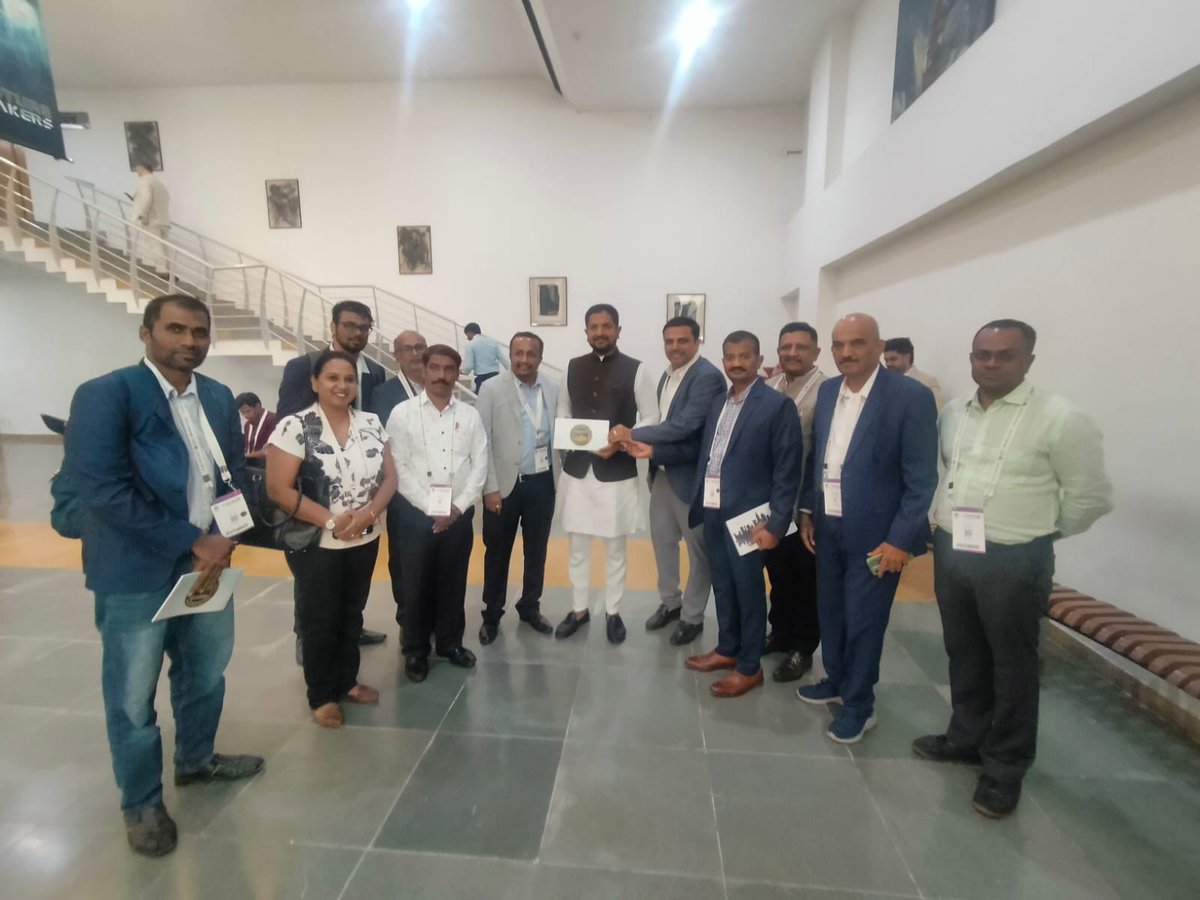
@GBITCIA is privileged to host a distinguished panel of Guests of Honour — leaders whose work has shaped Karnataka’s governance, industry, innovation, and public policy landscape.
When leaders speak, ecosystems evolve.
#GBITCIA#CXOMeet2025#Infrastructure#Bengaluru
One Bengaluru, One Voice — GBITCIA at BTS 2025
GBITCIA’s core team participated in the Bengaluru Tech Summit 2025, engaging with senior Ministers and IT/BT leaders to strengthen industry–government collaboration
#GBITCIA#BTS2025#BengaluruTechSummit#OneBengaluruOneVoice
@Tejasvi_Surya Post 1 - If Karnataka really wants to fix Bengaluru’s traffic — make public transport (especially BMTC buses) free.
BMTC’s monthly revenue is around ₹70 crore — that’s peanuts compared to the ₹17,700 crore being spent for just 30 km of new projects! 😄
it has been ages. I saw donkeys freely walking in Bangalore Road, today I saw two donkeys walking down on Palace Road from Windsor Manor down towards the palace guttahalli.
Dogs, Cows, now Donkeys 🙄
#NammaBengaluru@GBA_office
@BlrCityPolice I haven't received the call yet, will continue to wait for your call. Also, pls share your number to call.
I have also sent an email to the concerned departments.
Post 1 - Today, I was stopped by a traffic cop near Nandi Upchar–Airport for overspeeding. I admitted my mistake and asked for an official fine (₹1K–₹2K). Instead, he insisted on cash and warned my license could be blacklisted if I didn’t pay.
To,
The Hon’ble Prime Minister of India,
South Block, New Delhi
Subject: Appeal for a merit-based and economically inclusive system of opportunities
Respected Sir,
I write to you as a young citizen of India , a student who believes that our nation’s strength lies in equality, not division.
Sir, caste-based reservation has become a political tool . After more than 75 years of independence, it has become a permanent fixture in our policy structure. While its intent was noble, its impact today deserves review - not to take away anyone’s rights, but to ensure fairness for all.
According to NITI Aayog (2023) and NCRB data:
• Over 70% of India’s poor today come from all castes, including so-called “upper castes,” yet they remain outside the safety net of reservation.
• Nearly 85% of government jobs and higher education seats are covered under some form of reservation, leaving limited space for open competition.
• Around 80,000 students from the General Category scored above 95% in Class 12 (CBSE 2024), yet many couldn’t get admission to top colleges due to seat constraints.
• Meanwhile, in some institutions, the cut-off gap exceeds 50–70 marks, creating deep frustration and hopelessness among meritorious youth.
Sir, India needs an economic and merit-based model of affirmative action that uplifts the poor and deserving from every section of society - not one that divides based on caste lines drawn 70 years ago.
Reservation should be a support system, not a political tool. It must empower the underprivileged, not penalize merit.
We, the youth of India, are not asking for special privilege - only for equal opportunity. Please initiate a national review of the reservation policy and design a new model rooted in economic need, education level, and regional backwardness, rather than inherited identity.
We dream of an India where every student, regardless of caste, can say:
“My future is in my hands - not in my caste certificate .”
With deep respect and hope,
Yours faithfully,
A concerned General Category youth
(For equality, fairness, and one India for all)
@narendramodi If you continue to vote for BJP or Congress
, all Biharis will continue to work hard as laborers only. So vote for
@PrashantKishor
. You will get united with your family and work in Bihar for the same salary. #VoteToGoBacktoBihar
@DKShivakumar They are very hardworking people. If you continue to vote for
@yadavtejashwi
, all Biharis will continue to work hard as laborers only. So vote for
@PrashantKishor
. You will get united with your family and work in Bihar for the same salary. #VoteToGoBacktoBihar