Every founder eventually learns this.
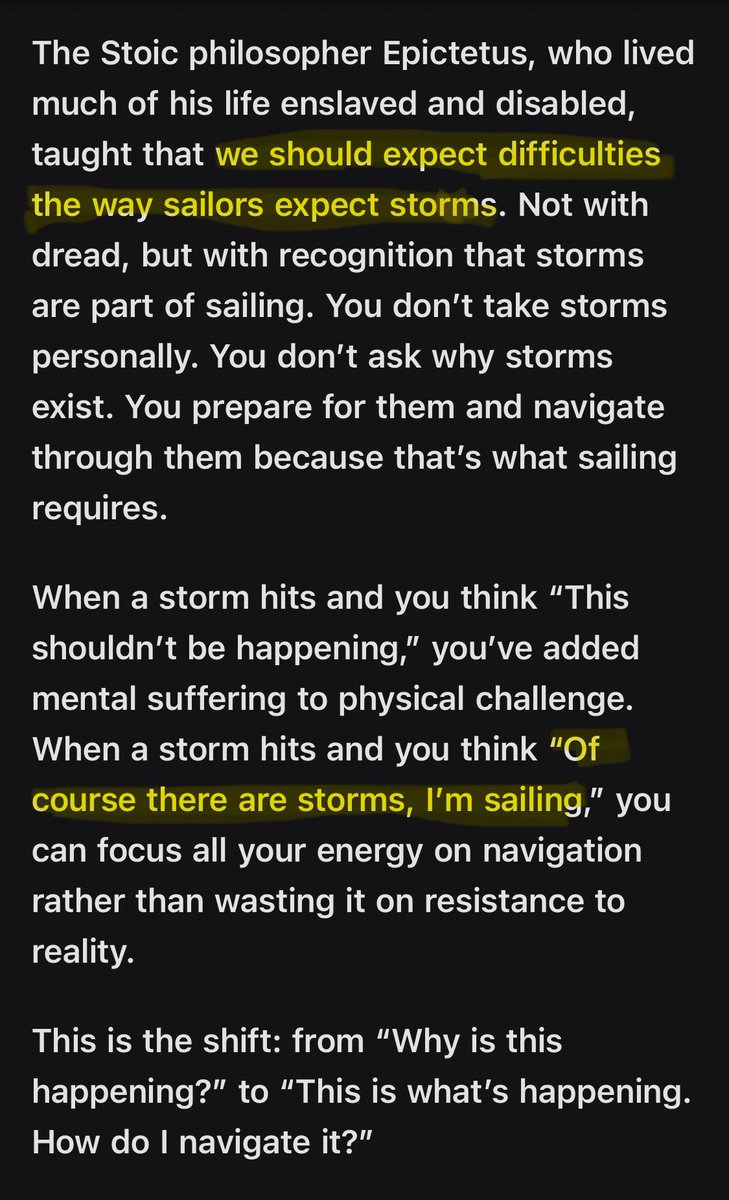
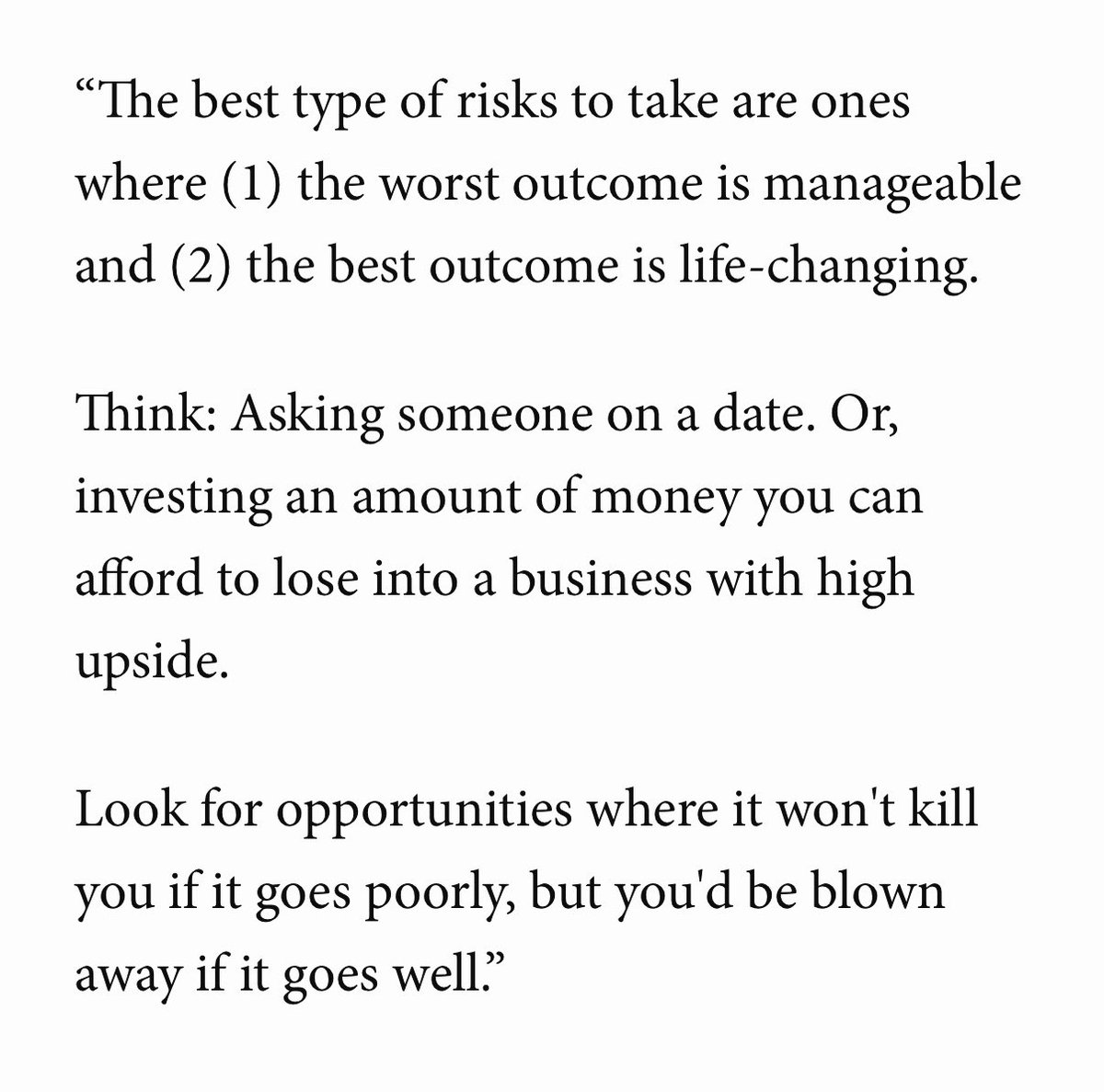
Conviction isn't a feeling you have at the start and keep forever. It drains. Weekly. Sometimes daily. The founders who last are the ones who found a way to refill it.
Phil Knight ran Nike for years while his father told him he was wasting his time. His bank called his loans. His supplier dropped him. He was personally guaranteeing debt on a company that had, at one point, no confirmed future. He wrote about this in Shoe Dog. He described it not as passion but as a compulsion. He couldn't stop. The problem felt too real.
That's a different thing from motivation. Motivation responds to external signals. Conviction doesn't wait for any external thing. It’s something inside.
Howard Schultz was rejected by 217 investors before he raised the money to buy Starbucks. 217!!. Most people treat 2-3 rejections as data about the quality of the idea. Schultz treated it as a filter for who was worth having around the table.
He said in his memoir, "In times of adversity and change, we really discover who we are and what we're made of."
The pattern in all of these is the same. The market was not ready. The feedback was negative. The external environment was not supportive. And the founder kept going anyway, because their conviction about the problem was stronger than their need for validation.
The article below gets into this in detail. What Year 2 actually feels like. The role of the ego. How conviction and stubbornness are different things and why that distinction matters.
The founders who survive long enough to be right almost always had conviction before the market gave them any reason to have it:
Robert Graham on Why Silicon Valley Outpaced the East Coast
Founding Intel employee Robert Graham reveals the unexpected reason Silicon Valley pulled ahead of the East Coast in semiconductors:
It wasn't superior talent. It wasn't more funding. It was the Wagon Wheel bar after work.
"One of the reasons that we were able to just really climb is that, in the early days particularly, and I think it's still true today, in semiconductors only one company solved each problem."
How? Because the engineers who were supposedly cutthroat competitors all drank together.
Graham explains the dynamic:
"They went to the Wagon Wheel after work, they got drunk, and they bragged about it. They told everybody. And then that one was solved for everybody in the area."
The result was a region-wide acceleration that no single company could have achieved alone:
"Very quickly, as a problem arose in semiconductors, it was resolved because all these companies were working on it. When one of them found the answer, they all stopped working on it. They all did that, and they went to the next one. And so it just was an incredible growth."
The contrast with the East Coast was stark:
"That's why it outdistanced the East Coast, because you didn't find that on the East Coast. They didn't have the synergy. These guys were all competitors and they fought like hell, but they all drank together and they were all young and they all liked to brag about what they were doing."
The mechanism was simple bragging rights wrapped in mutual self-interest:
"In many cases they just exchanged information because they felt that it was better to get the damn problem behind them, get some help. And then the next time, when they got help, they gave help the next time."
There's a physicist at Stanford named Safi Bahcall who modeled this exact principle and the math is wild.
He calls it "phase transitions in human networks." When you're stationary, your probability of a lucky event is limited to your existing surface area: the people you already know, the places you already go, the ideas you've already been exposed to. Your opportunity window is fixed.
When you move, your collision rate with new nodes in a network increases nonlinearly. Double your movement (new conversations, new cities, new projects) and your probability of a serendipitous encounter doesn't double. It roughly quadruples. Because each new node connects you to their entire network, not just to them.
Richard Wiseman ran a 10-year study at the University of Hertfordshire tracking self-described "lucky" and "unlucky" people. The single biggest differentiator wasn't IQ, education, or family money. Lucky people scored significantly higher on one trait: openness to experience. They talked to strangers more, varied their routines more, and said yes to invitations at nearly twice the rate.
The "unlucky" group followed the same routes, ate at the same restaurants, and talked to the same 5 people. Their networks were closed loops. No new inputs, no new collisions.
Luck isn't random. Luck is surface area. And surface area is a function of movement.
The lobster emoji is doing more work than most people realize. Lobsters grow by shedding their shell when it gets too tight. The growth requires a period of total vulnerability. No protection, no armor, soft body exposed to the ocean.
That's the cost of movement nobody posts about. You have to be uncomfortable first. The new shell only hardens after you've already moved.
@boneGPT Have you looked into DSCR loans? Have you thought about getting income producing properties that you can “House Hack” and live in a Multifamily or are you looking for SFR?
@TheGladiatorHC@elonmusk More conductive than copper, less oxidative ( doesn’t rust), and dissipates heat at a faster rate than copper…
We need to get rid of copper long term for the country to really address Energy Efficiency and energy demand
@TheGladiatorHC@elonmusk Copper is oxidative and isn’t the long term option for energy transmission. Instead of clinging to the past, we need to utilize new technologies like carbon nanotubes like @DexmatInc
Marc Andreessen: “The person who writes down the thing has tremendous power.”
“There are so few people who will just write down the thing.”
Source: @pmarca on How I Write with @david_perell
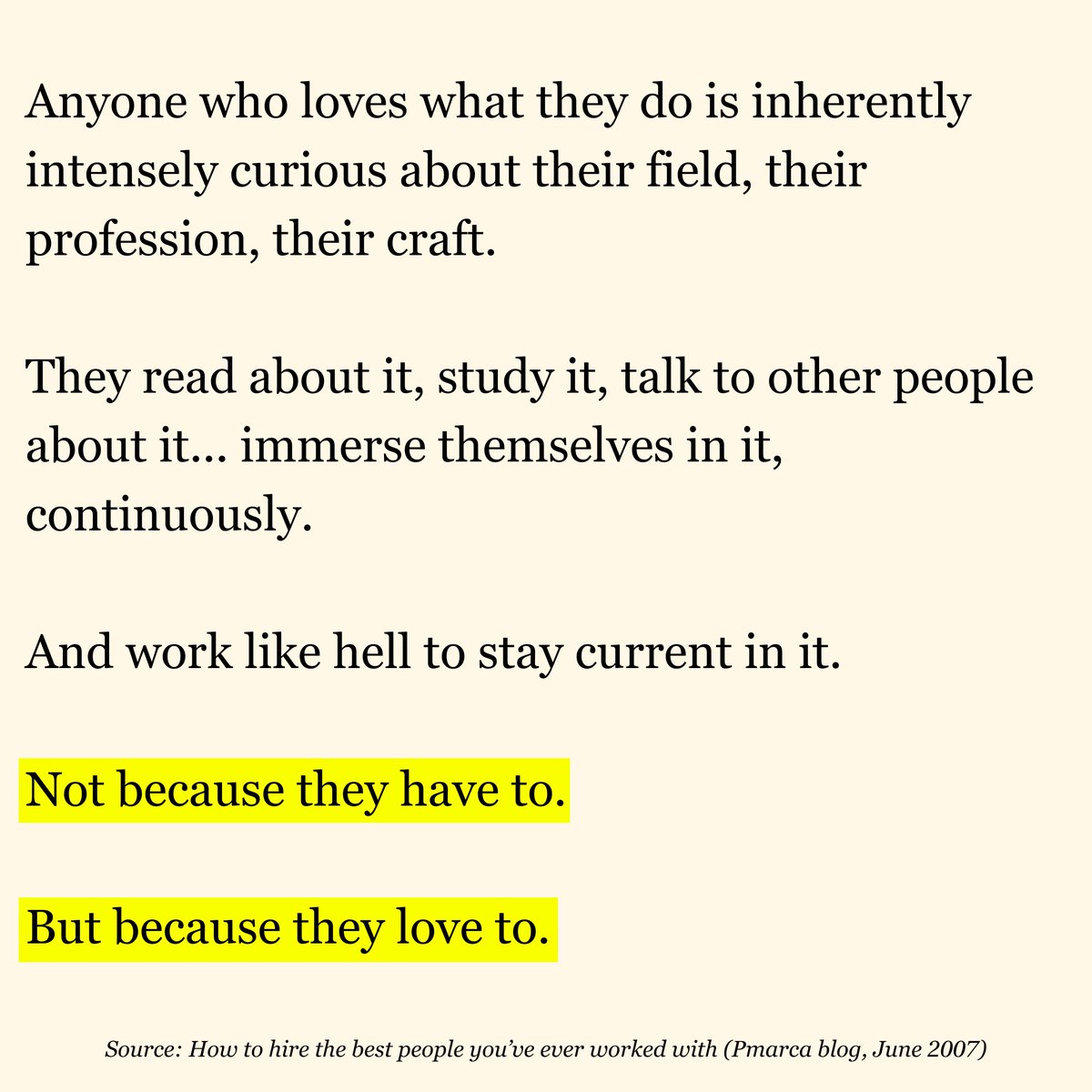
I call it the “Obsession Advantage”.
The person who cares obsessively will always outperform those who don’t, because caring drives persistence and creates meaning where others see none.