🚨 Este peque se llama Junior José Díaz Diáz, dice que es de una sector que se llama El Ricón. Se encuentra en el Hospital Pérez Carreño y está buscando a sus familiares
"Bendición tía, ¿Cómo está? ¿Qué está haciendo? ¿Me puede venir a buscar?".
Difusión máxima. No podemos dejar a los niños solos en estos momentos.
Este pequeño es SEBASTIÁN LANDIS, tiene de 7 años y está solo en PEDIATRÍA en el HOSPITAL DOMINGO LUCIANI .
Está estable. Es de Macuto, pero no saben nada de sus padres. Si conoces a sus familiares, no dudes en contactarlos.
Si la IA hace la tarea de tu hijo, el cerebro de tu hijo no participó en eso. Y ese uso de la IA es un problema. Un estudio de Stromberg, Lei y Wu (https://t.co/8QHcVapdup) siguió a 26,000 estudiantes de secundaria en China durante 30 meses. Muestran que el uso de IA elevó las notas de las tareas en 18% y redujo el tiempo que dedicaban a esas tareas en 30%. Al mismo tiempo, las notas en los exámenes a libro cerrado cayeron 20% luego de seis meses. Analizando un efecto de largo plazo, las notas en los exámenes de ingreso a la universidad cayeron hasta 24%. Como se ve en la figura, mas eficiencia para hacer las tareas, pero menos menos aprendizaje. Por otro lado, los estudiantes que usaron IA pero igualmente dedicaron el mismo tiempo que sus compañeros sin IA obtuvieron en los exámenes notas casi idénticas a las de quienes no usaron IA. Pero los que "externalizaron" su tarea completamente, terminando más rápido y posiblemente poniendo menos esfuerzo, que cualquier estudiante sin IA, solo sacaron notas altas en los ejercicios. La diferencia fue el esfuerzo cognitivo: si el cerebro hizo el trabajo, o simplemente observó cómo la IA lo hacía en su lugar.
La IA es una herramienta. Un bisturí en manos de un cirujano salva vidas. El mismo bisturí en las manos equivocadas hace daño. La misma IA que puede ser un tutor efectivo, desafiando al estudiante a pensar, explicar, luchar productivamente con el problema, se vuelve dañina si elimina el esfuerzo que el aprendizaje requiere. Esto no es grave si le pasa a pocos estudinates. Pero cerca del 80% de los estudiantes que usaban IA cayeron en lo que el estudio llama "tercerización de tareas" (homework outsourcing).
Esto conecta directamente con la clasificación que hacíamos con mis colegas Ezequiel Molina y Maria Barron, (https://t.co/ygsaXKPVfR) de tres grupos de estudiantes, los Empoderados por la IA, que la usan para pensar con más profundidad; los Dependientes de la IA, que la usan para evitar pensar; y los Excluidos de la IA, que no tienen acceso. Nos preocupaba que el grupo de los Dependientes pudiera crecer. Ya creció. Es, con mucho, el grupo más numeroso en este estudio. Completar una tarea no es lo mismo que aprender. El cerebro no construye conocimiento observando cómo trabaja la IA sino equivocándose, esforzándose y resolviendo las cosas por sí mismo. Ese esfuerzo cognitivo es esencial para el aprendizaje .
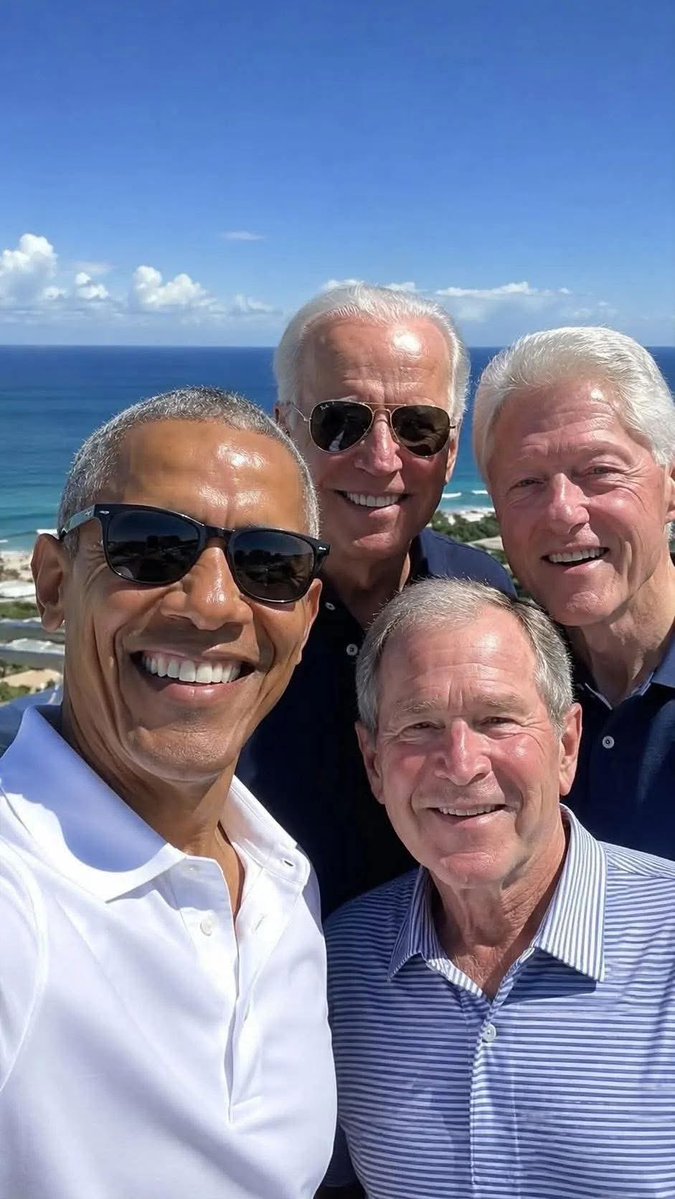
Imagine Trump ever being invited to join a photo like this — not in a million years.
Four presidents. Zero drama. Just smiles, respect, and a shared love of country. 🇺🇸
Michelle giving Barack his flowers 🥹
The former first lady described standing by the president’s side and seeing his “truest essence, stubborn optimism, and unflinching courage” against all odds.
A heartwarming scene unfolds as this big, gentle old Pitbull recognizes a familiar face in the shelter and slowly leans in for a hug. You can feel the joy in the room as the Pitbull melts into the man's arms-proof that dogs never forget the ones they love.
JD Vance released a new book about his conversion to Catholicism. Here is the irony the book cannot escape.
Vance wrote a memoir to prove his faith is real, central, and hard-won, and those charged with guarding that faith keep telling him, first gently and then plainly, that he has missed its opening demand.
The Gospel does not rank the stranger last. The Church Vance joined exists, in no small part, to insist otherwise — at the border, in the holding cell, in the letter a dying pope wrote about how love is ordered.
He called the book “Communion.”
Communion is also what a Catholic enters when he hands his private judgment over to the body of Christ instead of lecturing that body on where it has gone soft.
Vance gave 304 pages to finding his way back to faith.
The harder road — the one his book keeps approaching and never walks — ends in obedience to a Church that has already told him, through two popes in a single year, where love begins. https://t.co/IuQrPOHwE3
I told CNN’s Audie Cornish that the most important part of JD Vance’s book about his conversion to Catholicism was what wasn’t in it.
In his first week in office, Vance accused Catholic bishops of profiting from migrant resettlement and lectured clergy on the teachings of St. Augustine.
It led Pope Francis to rebuke him in a letter to American bishops — a letter ghostwritten by Robert Prevost, the future Pope Leo XIV.
The Church loves its converts.
But a convert who walks in lecturing everyone on how they’re doing it wrong — and gets rebuked by two popes in a single year — is pushing his luck.
This is Garrick, a flight attendant on flight 1264 from Orlando to Newark on Friday, July 8th. In this picture, he’s holding my 9-year-old daughter, Gabby, who has type 1 diabetes and struggles with severe anxiety when flying.
When the plane took off, Garrick noticed Gabby was having a tough time. Throughout the flight, he did his best to make her laugh and even brought her some special drinks. As we got closer to Newark, the weather got rough and there was some turbulence. Gabby started having a full panic attack as the plane began to descend.
Garrick came to the front and asked if she wanted him to sit with her in the empty seat next to her. Since I was flying alone with two younger children, I couldn’t leave my seat, so Gabby was holding my hand from across the aisle. She was happy to have him sit with her. They talked for about 30 minutes to distract her, chatting about his daughter, who is the same age, her pets, and what grade she’s going into.
During the turbulence, Gabby started crying and grabbed Garrick’s arm. He calmly told her she could hold on as long as she needed. Because of the stress, her blood sugar started dropping dangerously low, so Garrick got up to get her some orange juice and came right back to sit with her. Gabby asked if she could keep holding his arm while the plane landed, and he said yes, of course.
Once we landed and were taxiing to the gate, Garrick came on the intercom and said, “My friend, Gabby, in the front row, overcame her fear of flying. Let’s give her a round of applause!” The whole plane clapped for her.
It was such a wonderful experience with Southwest Airlines. We are so grateful to have met such a kind and caring person.
On December 31, 2020, US Rep. Jamie Raskin announced that his 25-year-old son Tommy, a second-year student at Harvard Law School, had died.
Four days later, Raskin posted a tribute that revealed, after a prolonged battle with depression, Tommy had died by suicide.
In a farewell note, the 25-year-old said, "Please forgive me. My illness won today. Look after each other, the animals, and the global poor. All my love, Tommy."
Tommy was buried on January 5, 2021.
The next day, Raskin was in the Capitol with his daughter and son-in-law during the Capitol attack.
Hours later, he started drafting an article of impeachment against Trump, and six days later, House Speaker Nancy Pelosi named Raskin the lead manager of Trump's second impeachment.
Today, Raskin is still one of the loudest critics of the current president, one of the most progressive leaders in Congress, and one of the strongest people — period.
Our current president bullies him on social media weekly.
The FBI had boxes full of serial killer confessions they couldn’t actually use.
Hours of interviews.
Detailed admissions.
Direct conversations with some of the most violent men in America.
And none of it was scientifically useful.
Then a 42-year-old psychiatric nurse walked into Quantico and changed criminal investigation forever.
Her name was Ann Burgess.
1975.
FBI agents Robert Ressler and John Douglas had spent months traveling across the country interviewing imprisoned serial killers. They believed understanding offenders could help solve future crimes.
But when Ann Burgess listened to the tapes, she immediately saw the problem.
“This isn’t research,” she told them.
“These are just stories.”
The room went silent.
“You’re asking them to talk about themselves,” she said. “But every interview is different. There’s no structure. No methodology. You can’t compare one offender to another.”
Then she asked a question nobody else in the room had thought to ask:
“Tell me about the women they killed.”
Not the killers.
The victims.
Who were they?
How old were they?
Where were they approached?
What made them vulnerable?
How did the offender gain control?
The agents were confused.
Ann Burgess explained something revolutionary:
“If you truly study the victims, you’ll understand the offender.”
At the time, Burgess was already a groundbreaking trauma researcher. In 1974, she had co-authored one of the first major studies proving rape caused lasting psychological trauma — at a time when courts barely acknowledged it.
She helped create the term “rape trauma syndrome.”
Now she brought that same scientific rigor to the FBI.
She redesigned the interviews.
Created structured questionnaires.
Introduced victimology as the foundation of profiling.
Distinguished between a killer’s “MO” and their “signature.”
Mapped escalation patterns.
Explained that sexual violence was about power and control — not desire.
Suddenly, the FBI’s Behavioral Science Unit had something it had never truly possessed before:
Methodology.
And it worked.
In 1983, young boys began disappearing in Nebraska.
Using Burgess’s framework, investigators built a profile:
A young white male.
Slight build.
Someone trusted around children.
Likely connected to scouting or youth activities.
A person who kept souvenirs and detective magazines.
Police arrested John Joubert.
The profile was astonishingly accurate.
Almost overnight, criminal profiling became legitimate law enforcement science.
And yet most of the credit went elsewhere.
The public celebrated the FBI agents.
Books were written.
Movies and television series followed.
Ann Burgess became a footnote.
When Netflix released Mindhunter, they based a character on her — but changed nearly everything.
They made her a psychologist instead of a nurse.
Changed her personal life entirely.
Most viewers never even realized she was based on a real person.
Meanwhile, the real Ann Burgess kept working.
Teaching.
Publishing.
Consulting.
Testifying in court.
Training professionals around the world.
More than 150 academic publications.
Multiple landmark books.
Decades of pioneering work.
And through all of it, one truth remained:
Modern criminal profiling exists in large part because a psychiatric nurse walked into a room full of FBI agents and told them they were asking the wrong questions.
Not:
“Why did the killer do this?”
But:
“Who were the victims?”
That shift changed criminal investigation forever.
Ann Burgess is 88 years old now.
Still teaching.
Still working.
Still brilliant.
And finally receiving recognition not as a side character in someone else’s story —
But as herself.
The woman who taught the FBI how to truly understand predators by first understanding the people they harmed.
@VertizPamela@VertizPamela EXACTAMENTE VIDEO MANDA y este es particularmente revelador como te mostraste públicamente como una GEISHA del DICTADOR ASESINO Fujimori