After the ethnic cleansing, journalists never demanded access to #Artskah to report on what happened but spoke to refugees arriving in Armenia instead. Azerbaijan was given time to destroy all evidence. Now journalists, diplomats & politicians dance on destroyed #Armenian ground.
Aliyev:
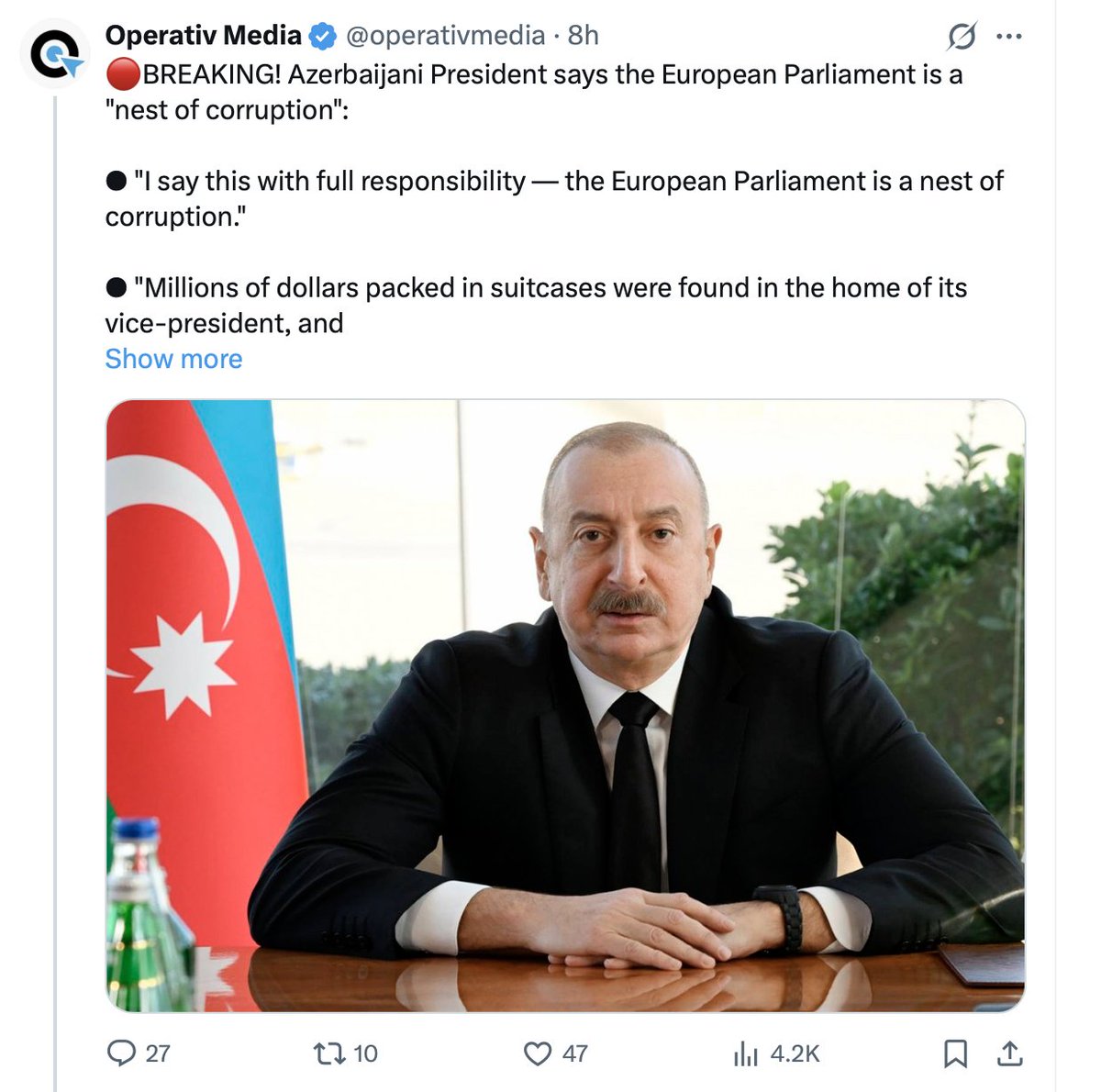
🗣️«El Parlamento Europeo es un nido de corrupción».
Aquí hay que dar la razón al dictador azerbaiyano. Otra cosa no, pero de corrupción sabe un rato...
Montó y operó una trama de corrupción para sobornar a políticos europeos. Durante años sobornó a eurodiputados.
Hope people are also just as loud about human rights violations, dictatorships, invasions and ethnic cleansing during Baku GP next week. @F1 disgraceful, they should be banned and off the calendar.
Aurora Mardiganian, a survivor of Armenian genocide of 1915–1923, described how Ottoman tormentors "crucified" sixteen young Armenian...
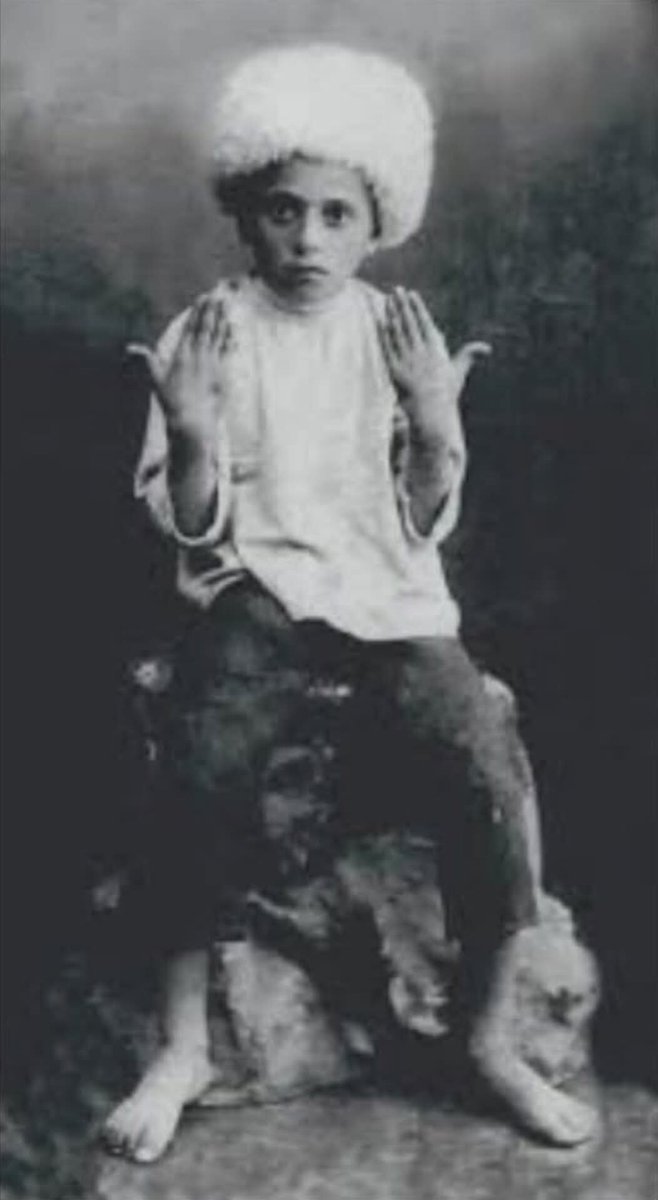
In spring of 1915, in a remote corner of the Van province, during the height of the Armenian Genocide, a 10 year-old boy named Musheghik endured an unspeakable horror — he was crucified. Following orders from Turkish commander Halil Kut, dozens of Armenian children from his village, aged between 5-10, were nailed to wooden crosses as if their very existence posed a threat. One by one, in silence, their innocence was extinguished. But in a twist of fate, Musheghik was pulled from death. A Turkish officer — a Yuzbashi and a friend of the boy's family — defied his orders and rescued him, lifting him from the cross.
The victims were crucified to crosses in the film Auction of Souls (1919), which was based on her novel Ravished Armenia. However, Mardiganian confirmed to film historian Anthony Slide about 70 years later that the scenario was way worse. She recounted what turned out to be a punishemnt of impalement. According to her "The Turks didn't make their crosses like that. Turks made little pointed crosses. They took the clothes off the ...... They made them bend down, and after raping them, they made them sit on the pointed wood, through the ....... That's the way they killed – Turks. Americans have made it a more civilized way....They can't show such terrible things." However, there is the case of Mousheghik,a boy from the village of Dizi of Van province who was photographed showing the holes in his hands after he was crucified, in 1915.
Musheghik came from a family of fourteen. Only he and his mother survived. His father and three uncles were executed while marching with a forced labor battalion en route to Bashkale following Ottoman mobilization of 1914. One of his brothers perished during the deportations from Van, and another, who managed to reach Baku, later succumbed to the despair of exile. From a thriving home filled with voices, love, and laughter, only two remained — scarred, silent, and carrying the unbearable burden of memory.
He bore witness to the collapse of his entire world. Though he lived, the trauma was etched into his flesh — his hands forever marked by the nails that once pinned him to wood. Musheghik's survival was not just a miracle; it was a defiance of annihilation. He rarely spoke of what he endured, but his silence echoed the screams of the lost. His story is not just one of survival, but a haunting reminder of a suffering too vast for words — one that must never be forgotten.
Then there was the propaganda story of the "Crucified Soldier". British newspapers reported that a Canadian POW was crucified with bayonets on a barn door or a tree by his German captors. Around April of 1915, three witnesses claimed to have seen an unidentified crucified Canadian soldier near the battlefield of Ypres, Belgium, but eyewitness accounts were somewhat contradictory, no crucified body was recovered, and the identity of the crucified soldier was not discovered at the time.
#archaeohistories
"Reconciliation cannot be built on the assumption that displaced people should forget their homes, or that their churches should be given a new identity. It must rest on truth, the dignity of victims, and accountability.
Armenia is weak today and cannot fully guarantee its own security. But the continued humiliation of the Armenian people and the disregard for their pain cannot bring peace. They only deepen injustice and further erode the foundations of any possible reconciliation.
I remain convinced that Europe can and must choose the right path".
https://t.co/Z3m74X1Rod
Dear foreign diplomats, I know some of you are willing to bow before a dictator and serve his interests for the sake of oil and gas
But no political convenience can rewrite history: this is historic Armenian territory, & these are #Armenian inscriptions
#Artsakh
Azerbaijani officials repeatedly invoke terms such as “liberated,” “ancient Caucasian Albanian,” and “integral part” as instruments of political intimidation and historical revisionism intended to portray Artsakh as inherently Azerbaijani. Yet authoritative historical scholarship identifies Artsakh as a province of the ancient Armenian Kingdom and documents its centuries-long Armenian political, religious, and cultural presence.
A strong reference is historian Robert H. Hewsen’s widely respected Armenia: A Historical Atlas, published by the University of Chicago Press. It maps Artsakh as a historical province of Armenia while also documenting the region’s later and more complex political transitions.
The Armenian resistance at Musa Dagh remains one of the most remarkable episodes of survival during the Armenian Genocide.
In the summer of 1915, Ottoman authorities ordered the Armenian population of six villages in the Suetia region to abandon their homes and join the deportation routes that had already led countless Armenians to death.
Rather than submit, roughly 5,000 Armenians, including large numbers of women and children, climbed Musa Dagh and organized an armed defense. Around 600 fighters established fortified positions on the mountain with limited weapons and ammunition.
For 53 days, the Armenians resisted repeated Ottoman attacks while food and ammunition steadily ran out. With the Mediterranean below them offering their only realistic hope of rescue, they raised large makeshift flags toward the sea, including one bearing a red cross and another appealing for help from passing Allied ships.
On September 5, the French cruiser Guichen spotted the signals off the coast. Armenian representatives reached the vessel and explained the situation. French naval commander Louis Dartige du Fournet subsequently ordered ships under his command to evacuate the population.
French warships returned and began the evacuation in September. Women, children and the elderly were taken aboard first, followed by the defenders. In total, 4,058 Armenians were rescued and transported to Port Said, Egypt.
The defense of Musa Dagh became one of the best-known examples of Armenian armed resistance during the Genocide. Faced with deportation and almost certain death, the population chose to resist and survived long enough for Allied ships to reach them.
More than a century later, Musa Dagh remains a symbol of Armenian resistance, collective survival and refusal to submit to extermination.
So Azerbaijan destroys thousands of Armenian monuments, removes Armenian inscriptions from others and call them Caucasian Albanian, ethnically removes Armenians from their lands, and Armenians are revanchist for protesting? Even nazis were this shameless. Mr. peace bridge
Armenian woman who was forcibly tattooed during the Armenian Genocide between 1915-1923...
She survived the Armenian Genocide. But the violence followed her onto her own skin.
During the mass deportations and killings of Armenians beginning in 1915, thousands of Armenian women and girls were abducted, sold, enslaved, forcibly married or absorbed into Muslim households. Some were children when they disappeared.
And some were tattooed.
Photographs taken in the aftermath show Armenian survivors with elaborate markings across their faces, foreheads, chins, hands and arms. The tattoos could reflect the Kurdish, Arab or Bedouin communities into which the women had been taken. For survivors who had been forcibly assimilated, those marks could become permanent evidence of a life imposed upon them.
The woman in this photograph is one of them.
We do not need to invent her terror. Her photograph already records what history did to women like her.
Many Armenian women lost their families, their homes, their language and even their names. Some were converted to Islam and given new identities. When rescue organizations later searched for Armenian women and children, returning was not always simple. Years might have passed. Some had children. Some feared rejection. Others carried visible marks connecting them to the households in which they had lived.
The tattoos could not tell anyone whether a woman had submitted willingly, resisted, adapted to survive, or simply had no choice.
That is what makes photographs like this so haunting.
Genocide was not only an attempt to kill a people. For women who were abducted, it could also mean an attempt to rewrite who they were.
Yet she survived long enough to stand before a camera.
Someone photographed her.
And more than a century later, we are still looking back.
#drthehistories
The Mother See of Holy Etchmiadzin has strongly condemned statements by Azerbaijani presidential aide Hikmet Hajiyev during his recent visit to the Armenian monasteries of Gandzasar and Dadivank in occupied Artsakh, accusing him of denying their Armenian identity and falsely presenting them as “Caucasian Albanian.”
In a statement, the Mother See described the effort as an “open falsification” of history and an attack on the historical memory and spiritual heritage of the Armenian people.
It said Azerbaijan’s attempts to distort historical facts for political purposes are part of a broader state policy of anti-Armenian hostility and appropriation of Armenian cultural heritage.
The Mother See also criticized the participation of foreign diplomats and representatives of international organizations in the Azerbaijani-organized visit, warning that their involvement risks lending legitimacy to efforts to appropriate Armenian historical heritage.
It called on those representatives to condemn attempts to distort the identity of Armenian holy sites and attacks on Artsakh’s spiritual and cultural heritage.
The Armenian Apostolic Church said it has repeatedly warned that, following the forced depopulation of Artsakh, Azerbaijani authorities have pursued a policy of appropriating Armenian monuments, destroying churches, khachkars and cemeteries, and removing evidence of their Armenian identity.
The Mother See called on Armenian authorities to take practical steps to prevent further destruction and urged friendly states and international organizations to help protect Artsakh’s ancient Armenian Christian heritage.
“Lasting peace in the region requires respect for the faith, historical memory and fundamental rights of peoples,” the statement said.
The Mother See’s full statement can be read on its official page.
On September 13, 2022, Azerbaijan invaded Armenia.
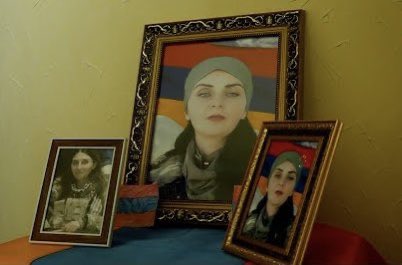
Anush Apetyan, 36, a mother of 3 kids, was killed defending Armenia. She was tortured & dismembered—her legs & fingers cut off, her eyes gouged out. Azerbaijani soldiers filmed her body & posted video online while laughing.
BREAKING: An expanded race weekend is coming in Baku! 🇦🇿
Round 12 of our 2026 season, taking place on 24-26 September, will feature an additional Qualifying session and Feature Race, ahead of our final rounds in Qatar and Abu Dhabi
#F2#AzerbaijanGP