Bitcoin developers just formalized a proposal to freeze over $450 billion worth of Bitcoin.
> Quantum computers are coming. Old wallets with exposed public keys will eventually be crackable.
> They want to freeze them before someone else cracks them.
> The proposal is BIP-361. Co-authored by Jameson Lopp. It just hit Bitcoin's official repo this week.
> The mechanism is a soft fork. Three years after activation, you can no longer send Bitcoin to old wallet types.
> Two years after that, those coins become permanently unspendable.
> Around 6.5 MILLION $BTC affected. Roughly 25% of all supply.
> Lopp himself acknowledges what this is. He rejects the word "confiscation" and prefers "burning."
> Here is the part nobody is talking about.
> The chain cannot tell the difference between Satoshi's dormant coins and a longterm holder waiting for $500,000 to sell.
> They look identical on chain. The early miner who set up a wallet in 2011 and forgot about it.
> The OG who bought at $200 and never moved them.
> The cold storage wallet sitting in a safe. All burned together.
> But the deeper question is how this is even possible.
> Five people have merge authority on Bitcoin Core. One person merges roughly 65% of all code.
> Six mining pools control 96 to 99% of all blocks. Activation requires their signaling.
> A coordinated decision by maybe two dozen people can change the rules and burn 25% of the supply.
> Bitcoin has done this before. In 2010, a bug created 184 BILLION $BTC out of thin air.
> Satoshi himself coordinated a fork to erase it. The chain rolled back 50 blocks.
> Ethereum did it in 2016. The DAO got hacked for $60 MILLION.
> Developers rewrote history to take the money back from a wallet whose owner had not signed off.
> The principled chain that refused to fork is now called Ethereum Classic and it is a fraction of the size.
> The lesson is the same in both cases. When the cost of the principle is high enough, the principle bends.
> Bitcoin was supposed to be the one thing nobody could touch.
> What Bitcoin actually is and what this proposal is forcing into the open, is a network that can be changed when enough of the right people agree.
> Most of the time they don't but the option has always been there.
> Decentralized at the participation layer. Coordinated at the change layer.
> The freeze might never happen. Activation requires consensus that does not exist yet.
> Tether's CEO Paolo Ardoino has already pushed back. "Code is law" he says. Don't touch the rules.
> The plan is already written down. The way to do it is already worked out. The list of people who would need to say yes already exists.
> The only question left is whether someone, someday, decides the reason is good enough.
The freeze might never happen. The fact that it could is the part that matters.
6 months ago KuCoin admitted fault for my $300K liquidation. Here's what happened since.
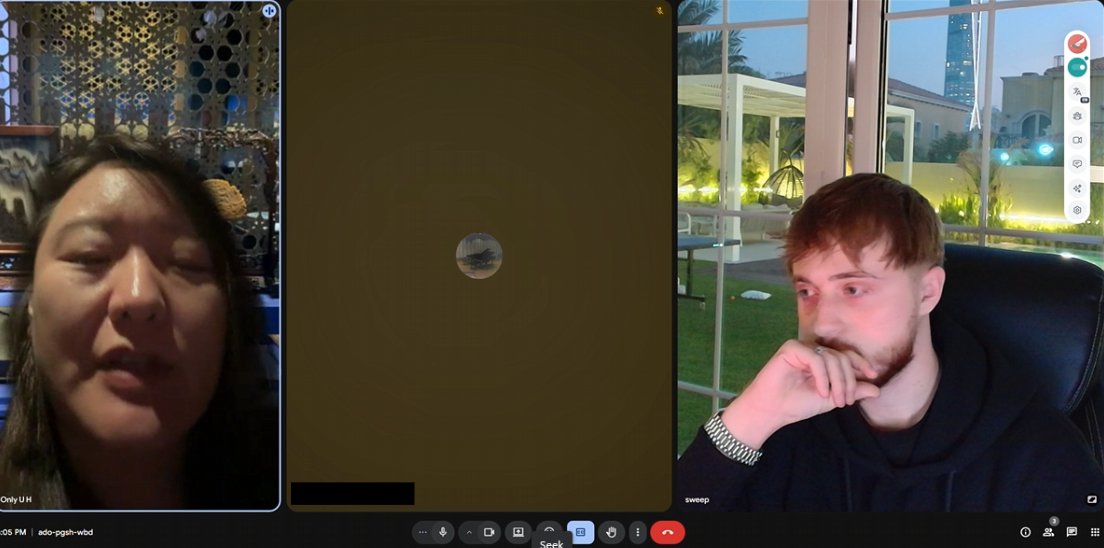
I took a Google Meet with their Head of Futures. I went to an in person meeting at Tribes in Dubai Mall with their Global Business Director. I sent 10+ proposals. I gave them every possible way to make this right.
On the call they took full responsibility. They admitted the liquidation was caused by broken infrastructure. Their platform failed and they said so themselves.
But here's the part that's hard to believe. Their Head of Futures couldn't understand basic futures mechanics. I had to explain how margin, liquidation and order book depth works to the person running the futures division at a top 10 exchange.
The person responsible for resolving my case didn't understand the product that caused it.
Their first offer: bring us $2.5 billion in trading volume and you can "earn it back." I did the math for them live in the chat. $10,000 per 100M volume. That's 0.01% return. To recover $250K I would need to generate the monthly volume of a top 50 institutional desk. For free.
I said no.
Their second offer was worse. $20K upfront, but only if I hit 1,000 active users and $300M in volume first. Then a $30K "cashback" that requires KuCoin's manual approval.
I said no again.
Their third offer was even worse than the second. $10K/month. Halved the numbers from the deal they already couldn't close. After an in person meeting. After a Google Meet. After weeks of negotiations.
Every single offer came with the same condition: delete the tweets, stop talking, and come work for us as a KOL. Promote the exchange that wrongfully liquidated me. Bring them users. Make them money. Then maybe they'd consider giving back what they took.
I told them in the chat: "It's like someone steal from me $250K and then tells me come work for me and you'll make it back (maybe)."
Their response? "Let me think about it."
Then silence. Weeks of silence. I had to chase them for every single reply. Christmas came and went and I gave them a final deadline January 6th. They came back with yet another lowball.
KuCoin had their Head of Futures, their Global Business Director, and multiple senior reps in this group chat. They all saw every message. They all went quiet when it mattered.
Today I'm releasing the full 30 minute Google Meet recording and the complete Telegram history. Every message. Every offer. Every time they went silent. You'll hear them admit fault and then watch them do nothing about it.
They had 6 months to make this right. They chose silence.
Video drops today.