There are moments when you feel the world is too much. Days and even weeks when you want to (or perhaps do) pull up the covers and half-sleep in bed until nightfall, avoiding a feeling of hopelessness that seems insurmountable. Long-awaited deals fall through without warning, haters attack you without reason or fact, circumstances turn good decisions into awful realities—sometimes it just feels like the deck is stacked against you and there is nothing you can do about it.
I’ve felt the same on more than a few occasions.
It’s an integral part of building anything remarkable, whether a business, a relationship, or a life. Expanding your sphere of comfort and abilities comes with a cost: repeated self-doubt.
Meditate on all of the things you’ve done that you once considered impossible. The odds you’ve overcome, the critics you’ve proven wrong, and the small defeats that — through making you stronger and smarter — made huge victories possible later.
Get back up. Bigger and better things are waiting for you.
This column, my favorite I've ever written, was a Notable Mention in the Best American Sportswriting anthology
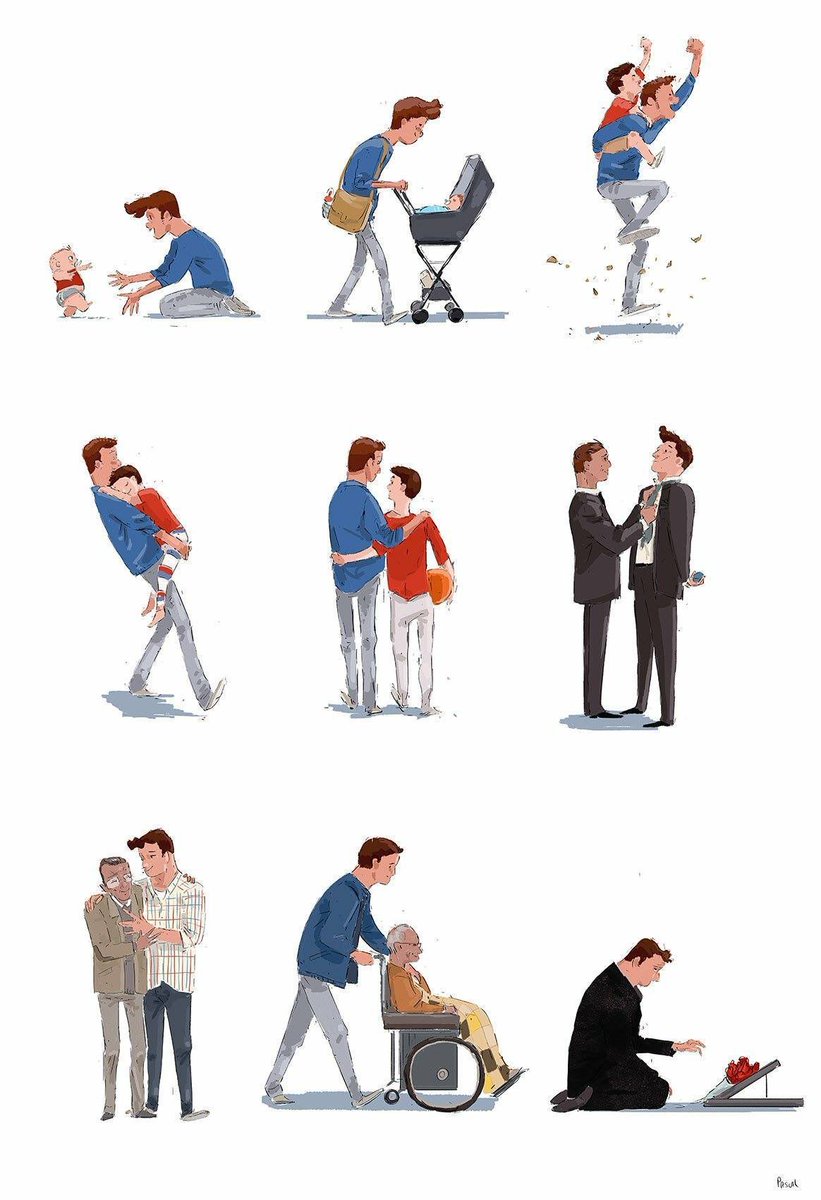
One of my proudest stories about one of my favorite life moments involving driveway hoops, my dad, my brother and an impossible feat.
Enjoy:
https://t.co/sR5N3PNzEY
6. Don't be hard on others
Your standards are for you. It's called self-discipline. Marcus Aurelius' rule was to "be tolerant with others and strict with himself."
The Stoics would have liked Confucius' line, "A great man is hard on himself; a small man is hard on others."
After observing a similar habit among highly creative people (Einstein, Mozart, da Vinci, etc), the neuroscientist Dr. Nancy Andreasen designed a brain-imaging study to understand the neural basis of this habit.
Essentially, these creative people all carved out time each day for...
“Free-floating periods of thought,” Andreasen writes in her book, “The Creating Brain: The Neuroscience of Genius.”
The mechanics of the habit differed from person to person.
Leonardo da Vinci, for example, would often sit in front of a painting “and simply think, sometimes for as long as a half day.”
Whereas Einstein had a wooden boat he called the “Tinef” (Yiddish for “piece of junk”) on which he liked to aimlessly drift wherever he could find a body of water. He had to be rescued by boaters or the Coast Guard so frequently that a friend eventually bought him an outboard motor for emergency use, but Einstein refused it.
“To the average person, being becalmed for hours might be a terrible trial,” the friend said. “To Einstein, this could simply provide more time to think.”
In any case, Dr. Andreasen conducted the first study of brain activity during these “free-floating periods of thought,” when the body is in a “resting state” and the mind is free of inputs, and therefore, free to wander.
“We found activations in multiple regions of the association cortex,” Dr. Andreasen wrote. “We were not [seeing] a passive silent brain during the ‘resting state,’ but rather a brain that was actively connecting thoughts and experiences.”
Essentially, Dr. Andreasen found that the brain defaults to creativity.
When the body is still and the mind is allowed to float freely, the brain engages in what she termed REST (“random episodic silent thinking”).
And during REST, Dr. Andreasen writes, the brain “uses its most human and complex parts...areas known to gather information and link it all together—in potentially novel ways.”
So whether it's sitting in front of painting in your office or on a piece of wood out at sea, if you want to be more creative, carve out time each day for “free-floating periods of thought.”
- - -
“Men of genius are sometimes producing most when they seem least to labor, for their minds are then occupied in the shaping of those conceptions to which they afterward give form.” — Leonardo da Vinci
Follow @bpoppenheimer for more content like this!





![bpoppenheimer's tweet photo. After observing a similar habit among highly creative people (Einstein, Mozart, da Vinci, etc), the neuroscientist Dr. Nancy Andreasen designed a brain-imaging study to understand the neural basis of this habit.
Essentially, these creative people all carved out time each day for...
“Free-floating periods of thought,” Andreasen writes in her book, “The Creating Brain: The Neuroscience of Genius.”
The mechanics of the habit differed from person to person.
Leonardo da Vinci, for example, would often sit in front of a painting “and simply think, sometimes for as long as a half day.”
Whereas Einstein had a wooden boat he called the “Tinef” (Yiddish for “piece of junk”) on which he liked to aimlessly drift wherever he could find a body of water. He had to be rescued by boaters or the Coast Guard so frequently that a friend eventually bought him an outboard motor for emergency use, but Einstein refused it.
“To the average person, being becalmed for hours might be a terrible trial,” the friend said. “To Einstein, this could simply provide more time to think.”
In any case, Dr. Andreasen conducted the first study of brain activity during these “free-floating periods of thought,” when the body is in a “resting state” and the mind is free of inputs, and therefore, free to wander.
“We found activations in multiple regions of the association cortex,” Dr. Andreasen wrote. “We were not [seeing] a passive silent brain during the ‘resting state,’ but rather a brain that was actively connecting thoughts and experiences.”
Essentially, Dr. Andreasen found that the brain defaults to creativity.
When the body is still and the mind is allowed to float freely, the brain engages in what she termed REST (“random episodic silent thinking”).
And during REST, Dr. Andreasen writes, the brain “uses its most human and complex parts...areas known to gather information and link it all together—in potentially novel ways.”
So whether it's sitting in front of painting in your office or on a piece of wood out at sea, if you want to be more creative, carve out time each day for “free-floating periods of thought.”
- - -
“Men of genius are sometimes producing most when they seem least to labor, for their minds are then occupied in the shaping of those conceptions to which they afterward give form.” — Leonardo da Vinci
Follow @bpoppenheimer for more content like this!](https://pbs.twimg.com/media/GCdcaz3WQAApmMI.jpg)


