52 years ago today, Alberta Williams King was assassinated while sitting at the organ, playing ‘The Lord’s Prayer,’ in Atlanta’s historic Ebenezer Baptist Church..
She was an influential, inspiring matriarch who played a significant role in the Civil Rights Movement. While primarily known as the wife of Rev. Martin Luther King, Sr. and the mother of Rev. Dr. Martin Luther King, Jr., Alberta King was a powerful force in her own right.
She not only nurtured her family, but also her community, with strength, love, wisdom, and grace.
#AlbertaKing #AlbertaWilliamsKing #MLK #TheKingCenter
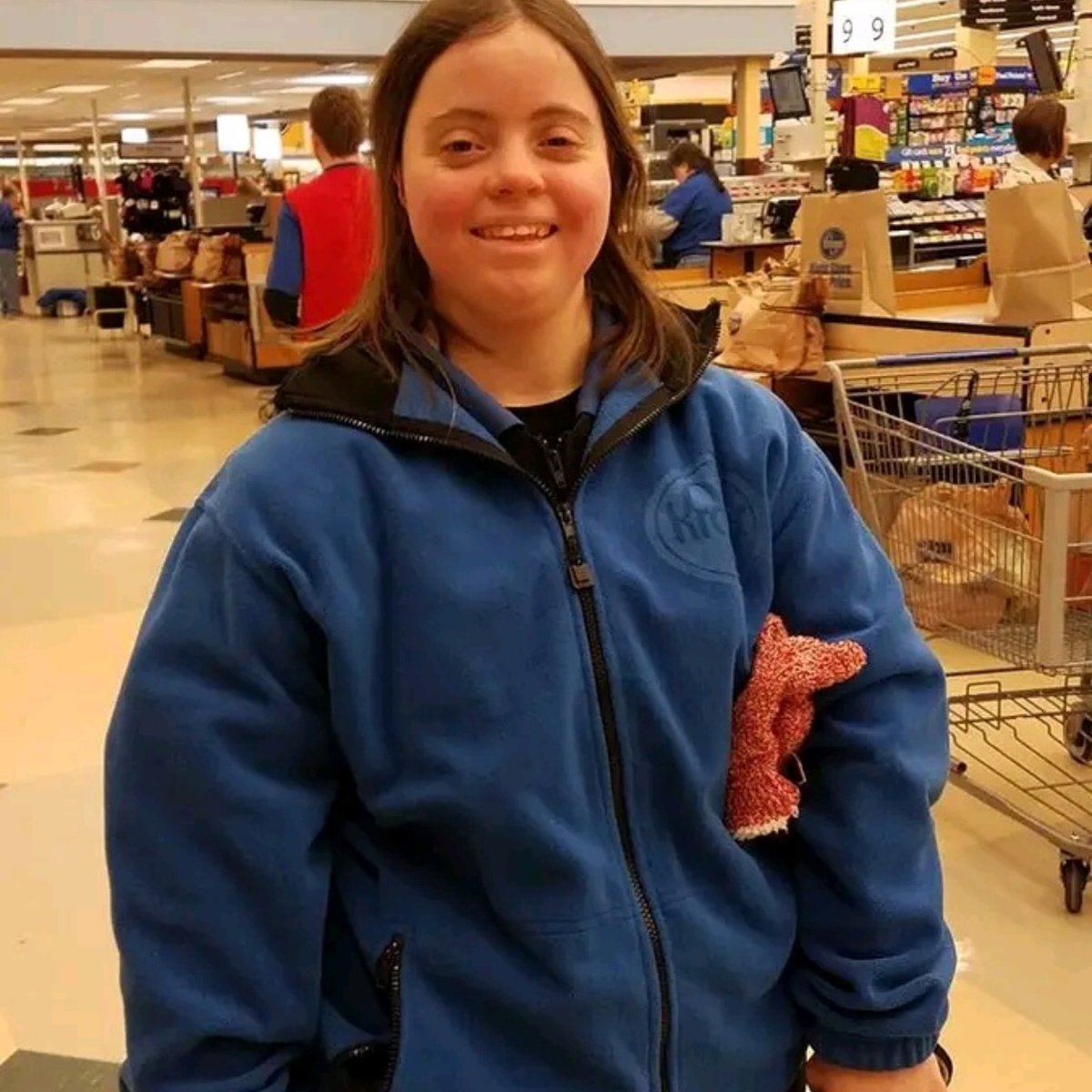
I met a girl named Jessica today. She was working at Kroger, outside in the wind, trying to push some really heavy carts.
As I walked by, I saw a cranky lady in a car roll down her window and yell at Jessica for being in her way.
Jessica looked so embarrassed—like she was about to cry. I gave her a quick hug and told her she did nothing wrong, that she was doing a great job, and that some people are just mean.
We walked into the store together, and she asked me to stay with her while she told her manager what had happened. She got upset again just talking about it.
I let the manager know Jessica didn’t do anything wrong and that she handled the situation really well. I also asked the manager how many people with special needs work there.
He said they have at least 12 and they never turn anyone away who wants to work. Big shout out to Kroger in New Albany for being awesome!
An incredible honor for the No. 8 team.
On behalf of the Busch Family, Captain Kyle Thomas, Commanding Officer of the Navy Reserve Center North Island in Coronado, California, presented a United States flag that was flown aboard the USS Makin Island.
We are proud to receive this meaningful symbol of service, sacrifice, and dedication to our country.
"If you marry that woman with Down syndrome, you're out of my will."
My mother said it plain as day. No hesitation.
I was 25 when I met Hannah. It was a small café near my workshop — the kind of place where the chairs don't match and the coffee is always slightly too hot. She was sitting alone by the window, reading.
On our very first date, she looked at me and said, quietly and without any drama: "I have Down syndrome. I live with my parents. I just wanted you to know that up front — no surprises."
I didn't say much. I just thought: whoever raised this woman did something right.
When I told my family, my mother said I'd ruin my future. That people would talk. That she wouldn't help us. A few friends stopped calling — slowly at first, then all at once.
Hannah never argued with any of them. She never once asked me to defend her or fight for her. She just kept showing up — meeting me after work, ordering the same chamomile tea, making me laugh at things I hadn't noticed before.
Coffee became dinners. Dinners became Sunday mornings. One year later, I proposed in the same church where I was baptized, surrounded by the twelve people who hadn't walked away.
We married that same year.
Ten years later, we are raising our son, Caleb. Every night, Hannah falls asleep holding my hand. Every morning, Caleb climbs into our bed before either of us is ready to be awake. That's our family. The one they said wouldn't last.
Last month, I ran into an old friend who had stopped calling. He looked at a photo of the three of us on my phone and said, "You look really happy, man."
"I am," I said. And that was enough.
My mother never changed her mind. She missed the wedding. She's missed every birthday Caleb has had.
I don't tell this story for sympathy. I tell it because someone out there is standing exactly where I stood — being told that love has conditions, that the people who are supposed to be in your corner get a vote on who deserves to be in your life.
They don't.
This Friday, June 26 marks the 39th anniversary of FULL METAL JACKET's theatrical release. REPOST by 6/29 for a chance to win this signed copy on 4K Ultra HD + Blu-ray! I'll pick one winner at random and announce next #ModineMonday! Good luck!
If you'd like to support the @FMJDiary project and exhibition, you can order a very limited + signed item here. First come, first served!
https://t.co/ddQmTgW0Tm
Happy Dispatcher Appreciation Day! Today, we're recognizing the dedicated dispatchers who help keep CU Transit moving every day. Thank you to our dispatchers for everything you do! 🚌💙
Happy Transit Appreciation Week! 🎉 We’re kicking things off with Customer Appreciation Day!
Stop by the Transit Center today until noon to pick up a special thank-you gift while supplies last.
She Wasn't Supposed To Be In Combat. She Was Shot Down, Bled On The Controls, And Fired On The Enemy Hanging Off A Helicopter. Then The Pentagon Said It Never Happened.
That was the official position of the United States Department of Defense.
Major Mary Jennings "MJ" Hegar was an Air National Guard pilot — decorated, experienced, on her third deployment to Afghanistan. She flew medevac missions. She extracted wounded soldiers from locations no other aircraft would approach. She did this repeatedly, under conditions that most people cannot hold in their imagination.
But according to Pentagon policy, she was not a combat soldier.
On July 29th, 2009, that policy collided with reality at full speed.
Three American soldiers were bleeding out in Kandahar. Their convoy had been ambushed. The margin between their survival and their deaths was measured in minutes.
MJ co-piloted the medevac helicopter moving toward them at maximum speed.
As the aircraft approached the landing zone, Taliban fighters opened fire on it directly.
Rounds punched through the helicopter's frame. The windshield disintegrated. MJ registered the burning sensation before she understood what it was — shrapnel, driving into her arm. Then her leg. Blood soaked steadily through her flight suit.
She scanned her instruments.
"I can still fly. We're landing."
They touched down in the middle of an active firefight. Her crew moved out of the aircraft to load the wounded soldiers. MJ held the controls steady — bleeding, under fire, keeping the helicopter exactly where it needed to be while the engagement continued around her.
The wounded were loaded. The crew scrambled back aboard. MJ lifted them out.
Ninety seconds into the flight, a new emergency announced itself.
"Fuel tank's hit. We're losing it fast."
They crash-landed in hostile territory.
Four pilots. Three critically wounded soldiers. Taliban fighters converging from multiple directions.
Smaller Kiowa helicopters arrived for extraction — but their passenger capacity was limited to one person per aircraft per run. There wasn't enough capacity for everyone, and there wasn't time for repeated trips.
One option remained.
Riding the skids.
This means securing yourself to the exterior of the helicopter. Feet planted on the landing rails. One hand gripping the airframe. Fully exposed — to the rushing wind, to incoming fire, to the ground moving past at over a hundred miles an hour.
MJ secured herself to the left skid of a Kiowa. Rifle positioned across her chest. Blood still moving from the wound in her arm.
The helicopter lifted off.
Seventy yards away, a Taliban fighter emerged from cover. He raised his weapon and aimed directly at them.
MJ was suspended off the exterior of a moving aircraft. One hand on the frame. Shrapnel wounds registering with every movement.
She unslung her rifle with her free hand. Pressed it against her body.
And fired.
The fighter went down. The Kiowa banked sharply and climbed to altitude.
MJ held on.
They reached the base.
Every crew member survived. All three wounded soldiers survived.
MJ went into surgery for shrapnel removal. Weeks of recovery followed.
The military awarded her the Purple Heart for wounds sustained in combat.
The Distinguished Flying Cross with Valor — one of the most significant recognitions available for aerial heroism — for what she had done on that mission.
And then the Pentagon issued a statement that was extraordinary in its particular absurdity.
Women were not permitted in combat roles. Therefore, officially, she had not been in combat. None of what had occurred on July 29th could be formally recognized as combat experience for the purposes of her military career.
She had been shot down. She had bled onto the flight controls. She had engaged enemy combatants while suspended from the exterior of a moving helicopter.
And officially — it hadn't happened.
Because she was a woman. And the policy said women didn't serve in combat.
In 2012, MJ Hegar sued the Department of Defense.
She and three other female service members filed the lawsuit that became known as Hegar v. Panetta — arguing that the Ground Combat Exclusion Policy was constitutionally indefensible. That it denied women equal standing to serve, to advance in their careers, and to receive appropriate recognition for what they demonstrably, documentably did.
The Pentagon's position was that the policy existed to protect women.
MJ's response was characteristically straightforward: "I was shot down and hung off a helicopter shooting at the Taliban. Protect that."
The case generated national attention. Congressional hearings convened. A public conversation that the military establishment had successfully avoided for decades was no longer avoidable. In January 2013, Defense Secretary Leon Panetta announced the Ground Combat Exclusion Policy would be formally rescinded. By 2016, every military occupational specialty — infantry, armored units, special operations — was open to women who could meet the established standards.
A door that had been sealed for generations opened.
MJ Hegar went on to write a memoir — Shoot Like a Girl — documenting her career, the combat mission, and the legal battle that followed it. She ran for Congress. Then for the United States Senate.
She kept fighting. The way she always has.
Because her story is actually about facing two distinct and separate enemies.
The Taliban shot at her in the open. No pretense. No institutional language.
The Pentagon smiled and issued statements of support while systematically erasing everything she had actually done.
The Taliban wounded her with shrapnel from an ambush.
The Pentagon wounded her by insisting she had never been present.
She beat both of them.
The mission on July 29th, 2009 was heroism of the most direct and unambiguous kind.
The lawsuit was revolution — quieter, conducted in courtrooms rather than cockpits, but no less consequential.
There is a particular kind of courage required to fly a medevac helicopter into an active firefight in Kandahar.
There is a different kind — arguably harder to sustain — required to return from that firefight and spend years fighting your own government in court for the right to have it acknowledged.
MJ Hegar did both.
She won both.
Major Mary Jennings "MJ" Hegar. Purple Heart. Distinguished Flying Cross with Valor. The pilot who altered the landscape of American military service permanently — not by requesting permission.
By refusing to accept that the answer could be no