🇺🇸 The Little Chapel That Stood
The day after the towers fell, a priest named Lyndon Harris walked down Broadway toward St. Paul’s Chapel. He had already decided it was gone. When he saw the spire, he wept.
He opened the door. Ash on the floor. The chandeliers still up. Not one window broken.
A sycamore in the northwest corner of the churchyard had caught debris, including a steel beam from the North Tower. The tree was damaged. The chapel was not.
Workers off the pile started using the porch to sit down and wash. On September 15 the Seamen’s Church Institute showed up with food and lit a grill on the sidewalk.
After that the doors stayed open. For nine months.
Cots in the pews. Eighty asleep at a time, helmets for pillows. Boots and belts marked the wood. Podiatrists set up in George Washington’s pew, the one he used after the inauguration in 1789. Massage tables in the aisle. Musicians played seven hundred times for whoever happened to be in the room.
Half a million meals were served before they closed the doors. Socks, boots, eye drops, cigarettes. Schoolchildren’s letters on the walls. The iron fence outside vanished under photographs, unit patches, teddy bears, and names.
They shut the relief operation down in early June 2002. They still ring the Bell of Hope every September 11.
St. Paul’s went up in 1766. It lived through the fire that burned Trinity in 1776. Oldest public building still in use in the city.
On this day in 1776, about 400 men from Maryland threw themselves, again and again, at an entire British army that outnumbered them roughly twenty to one, knowing they would die, so that the rest of the American army could live. It is one of the greatest acts of sacrifice in American history, and most people have never heard of it.
Set the scene, because it followed straight from the trap sprung the night before. The British had marched around the American flank in the dark through the Jamaica Pass, and at dawn on August 27 they came crashing in from front and side at once. The Battle of Long Island, the largest battle of the entire Revolution, turned instantly into a rout. The American lines buckled and broke, and thousands of men began running for the safety of the fortifications at Brooklyn, with the East River at their backs. If the British caught that fleeing mob in the open, the war was over.
The one thing that could save the army was time, and time had to be bought with blood. On the American right, near a stone farmhouse by the marshy Gowanus Creek, stood General Lord Stirling and a body of Continentals that included the 1st Maryland Regiment, tough, well-drilled young men, many from prominent families. Stirling saw the whole army streaming past behind him toward the one narrow crossing to safety, and he understood what had to happen. Someone had to hold the British long enough for those men to get across. The Marylanders volunteered to be that someone.
What followed was almost beyond belief. Roughly 400 Marylanders turned and charged directly into the teeth of a British force of thousands, backed by artillery, dug in around the Old Stone House. They should have been swept away in a single volley. Instead they hit so hard they actually drove the British back and seized the house. Then they were thrown out. So they charged again. And again. Six times these men attacked, into cannon and musket fire, buying minutes with their lives, twice fighting all the way back into the stone house itself before being repulsed.
From a hill across the creek, George Washington watched it happen, watched a few hundred men deliberately sacrifice themselves to save his army, and he could not stop it and could not look away. He is said to have wrung his hands and cried out, "Good God, what brave fellows I must this day lose!"
And lose them he did. Of the roughly 400 Marylanders who made that stand, only a small fraction came back. Something like 256 were killed, wounded, or captured. Many of the dead were buried where they fell, in a mass grave somewhere under what is now the streets of Brooklyn, its exact location lost to this day. But their sacrifice worked. The minutes they bought with their bodies let the bulk of the American army escape the killing ground and reach the Brooklyn defenses, where, two nights later, John Glover's fishermen would row them all to safety.
Maryland has never forgotten. The state's old nickname, the Old Line State, is said to honor these men, the Maryland Line who held the line when holding it meant dying. Four hundred young men who looked at a hopeless charge and made it anyway, six times over, so that the army, and the Revolution, could survive to fight another day. Say their name. The Maryland 400.
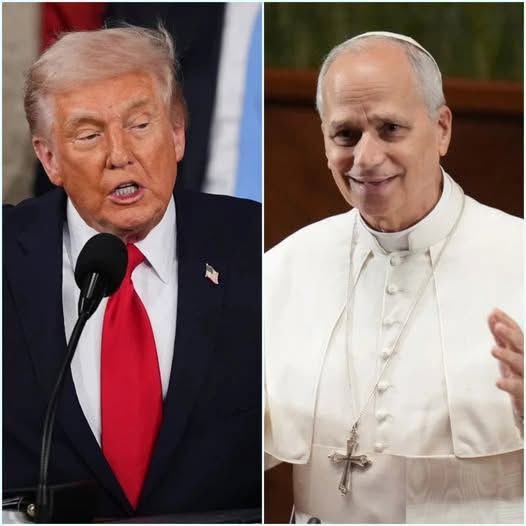
SHOCKING CLASH: Donald Trump CALLS POPE LEO XIV “AN INSULT TO JESUS” — THE POPE’S RESPONSE STUNS THE WORLD
Donald Trump believed he could score easy political points by calling Pope Leo XIV “an insult to Jesus,” after the spiritual leader once again spoke out in defense of peace, compassion, and human dignity. However, he was challenging a voice rooted not in politics, but in moral authority.
Standing before a solemn gathering at the Vatican, Pope Leo XIV did not respond with anger. Instead, he delivered a powerful and deeply moving message grounded in faith, responsibility, and truth.
“The President of the United States has said that I insult Jesus,” Pope Leo XIV began, his voice calm yet firm. “But let us reflect honestly — what truly insults the teachings of Christ?”
Then, with quiet intensity, he answered:
“You want to know what truly insults Jesus? It is when we turn away from those who suffer, when we close our hearts to the poor, and when we choose power over compassion while others cry out for mercy.”
He continued:
“You know what insults Jesus? It is forgetting the dignity of every human being, ignoring the pain of families in crisis, and refusing to hear the voices of the most vulnerable among us.”
His message then deepened, becoming not just a response, but a moral call that reached far beyond the moment:
“You know what insults Jesus? It is creating division where there should be unity, spreading fear where there should be hope, and turning away from justice when we have the responsibility to uphold it.”
This was not merely a political rebuttal — it was something far more profound. Pope Leo XIV, known for his humility and steadfast commitment to peace, transformed the confrontation into a reflection on conscience rather than conflict. Instead of escalating tensions, he elevated the conversation to a universal moral level.
“I do not claim to be perfect,” he admitted. “But I strive each day to walk the path of compassion — to serve, to listen, and to love as we are all called to do.”
Then came the line that resonated far beyond the walls of the Vatican:
“If we truly believe in a world shaped by peace and mercy… then why do we not work harder to bring that reality into our lives — here and now, for one another?”
That was his response. Not with anger. Not with division. But with conviction — and grace.
Trump sought to challenge him. Instead, Pope Leo XIV delivered a message now echoing across millions, reminding the world that true strength is found not in power alone, but in conscience, humility, and love.
BREAKING: #TrumpIsUnfitForOffice is currently trending on Twitter in the aftermath of Trump’s unhinged and threatening letter to Norway’s Prime Minister. Can we get 1,000 retweets on this post to amplify this effort?