⚡ Nông dân bán tháo vì sợ giá rớt, nhưng hợp đồng tương lai giúp bạn khóa giá trước mùa thu hoạch.
Ký hợp đồng kỳ hạn giữ mức giá cố định, bảo vệ lợi nhuận khỏi biến động.
Hãy coi đó là bảo hiểm, không phải cờ bạc.
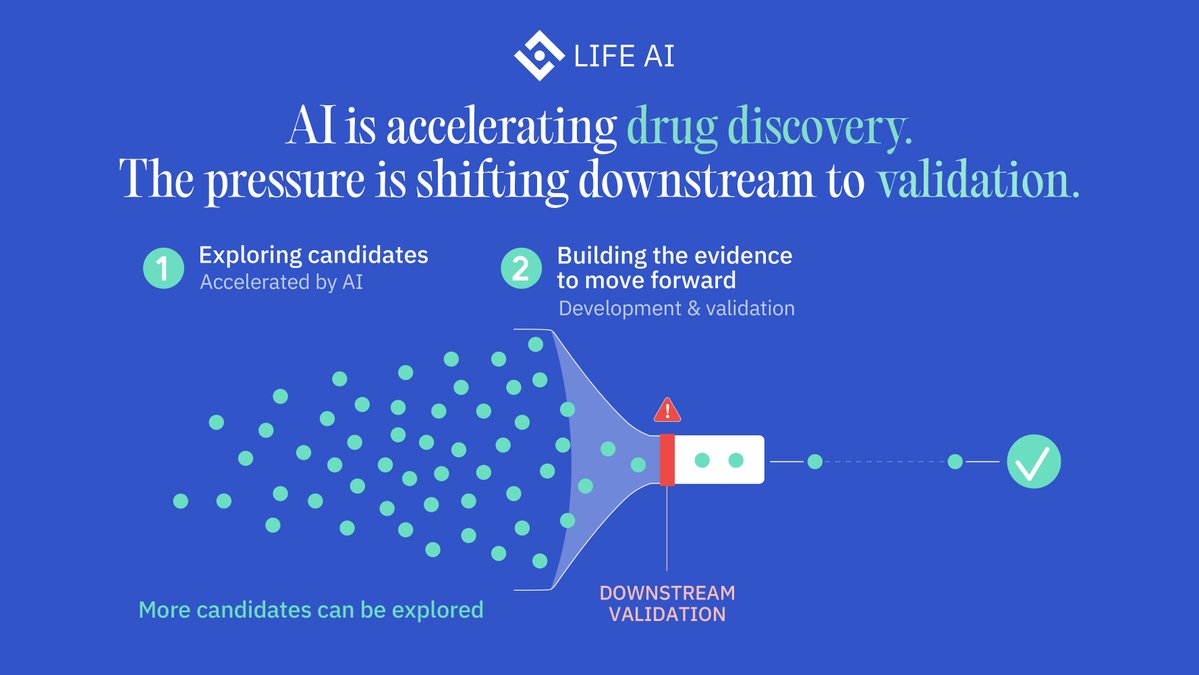
AI is accelerating drug discovery. But the pressure is shifting downstream, toward the work required to validate what discovery produces.
Across science and life sciences, AI is moving deeper into discovery. Anthropic is expanding AI into scientific research, Isomorphic Labs is scaling AI-first drug design and development, and Discovery Loop is building systems to automate experimental loops.
As these capabilities advance, more targets can be explored, more molecules can be designed, and more potential candidates can be generated. The discovery layer is becoming faster and more expansive.
But accelerating discovery does not automatically accelerate the path to validation.
A promising candidate still has to be evaluated, tested, and supported by sufficient evidence before it can move forward. Clinical validation is where this downstream pressure becomes especially visible. The gains from faster discovery can begin to narrow if the path to validation remains slow and difficult to scale.
For Life AI, this raises a critical question: How do we make sure the path to validation can keep pace as AI accelerates discovery?