Energy Access | Energy Transition.
@CSEINDIA, Ex @KPMGIndia, Ex @isolaralliance, Ex @Darashaw1926
@IIM_Calcutta and @UPESDehradun Alumni
| Tweets are personal.
Centre for Science and Environment’s Green Schools Programme (GSP) has been working closely with teachers and educators across India to strengthen climate education and bring meaningful, practical learning into classrooms.
One of GSP’s flagship efforts in this direction is Solar 30, supported by the Himachal Pradesh Council for Science, Technology & Environment (HIMCOSTE).
This initiative partners with selected schools in Himachal Pradesh to deepen understanding of solar energy and explore how it can be effectively taught, demonstrated, and adopted on campus.
The ongoing three-day workshop under Solar 30 builds on successful sessions held earlier in Solan, Nimli, and Kangra.
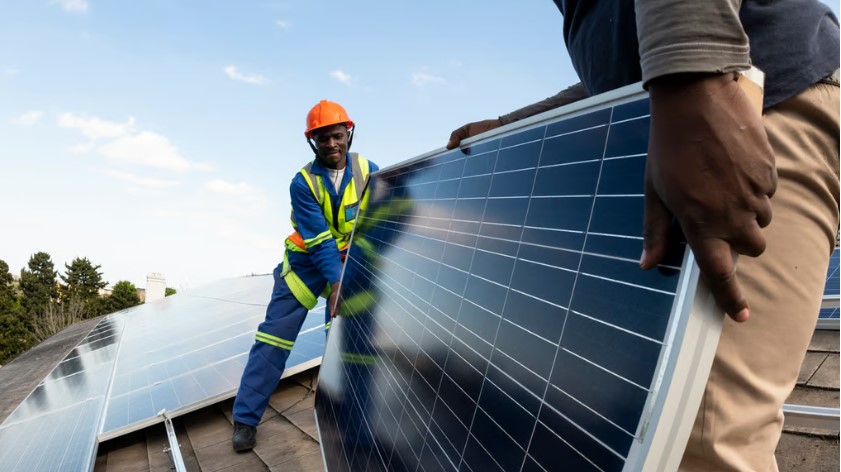
As Binit Das from CSE’s Renewable Energy team notes, rooftop solar in schools can transform learning, cut electricity costs, and open pathways to STEM education.
Learn more about the workshop:
https://t.co/a6nwOAxl2a
@Nalanda_index Thanks for mentioning this.
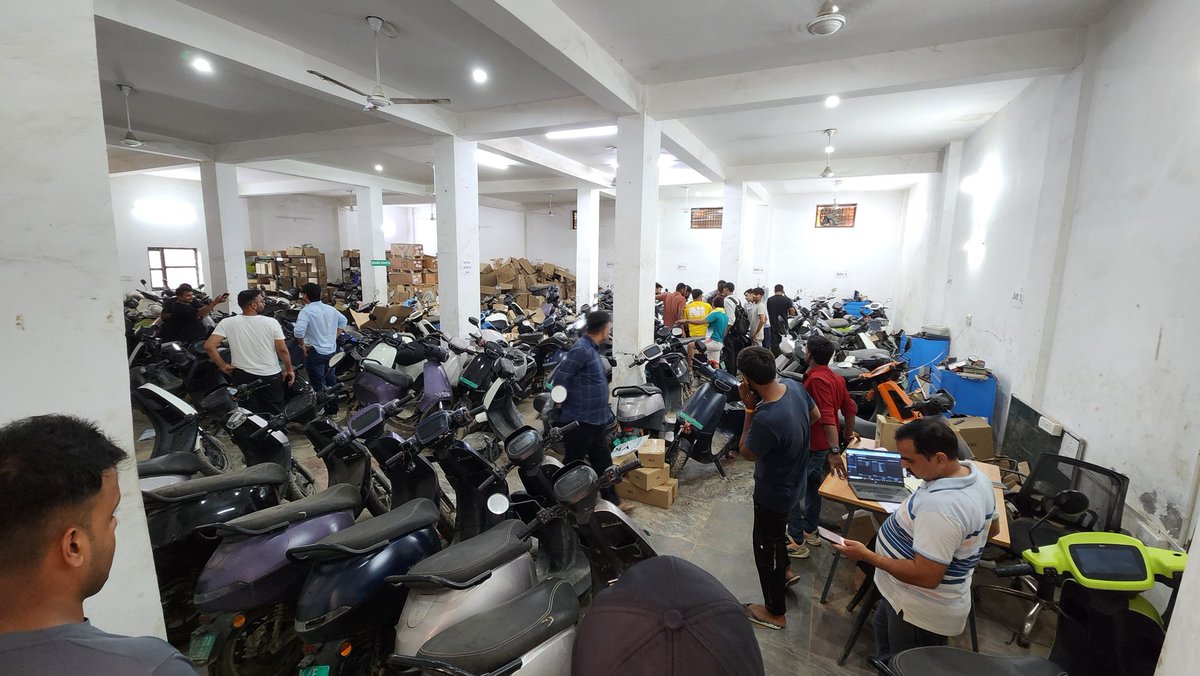
This is the situation of Hari Nagar, Gurugram.
Appropriate authorities should look into the matter. These scooters lying around are on subsidies and wastage of public money.
India has unveiled its National Electricity Plan. It aims to achieve 500 gigawatts of renewable energy by 2030.
NDTV's @AarthiKirushnan speaks to Binit Das, Programme Manager, Renewable Energy, CSE, for insights
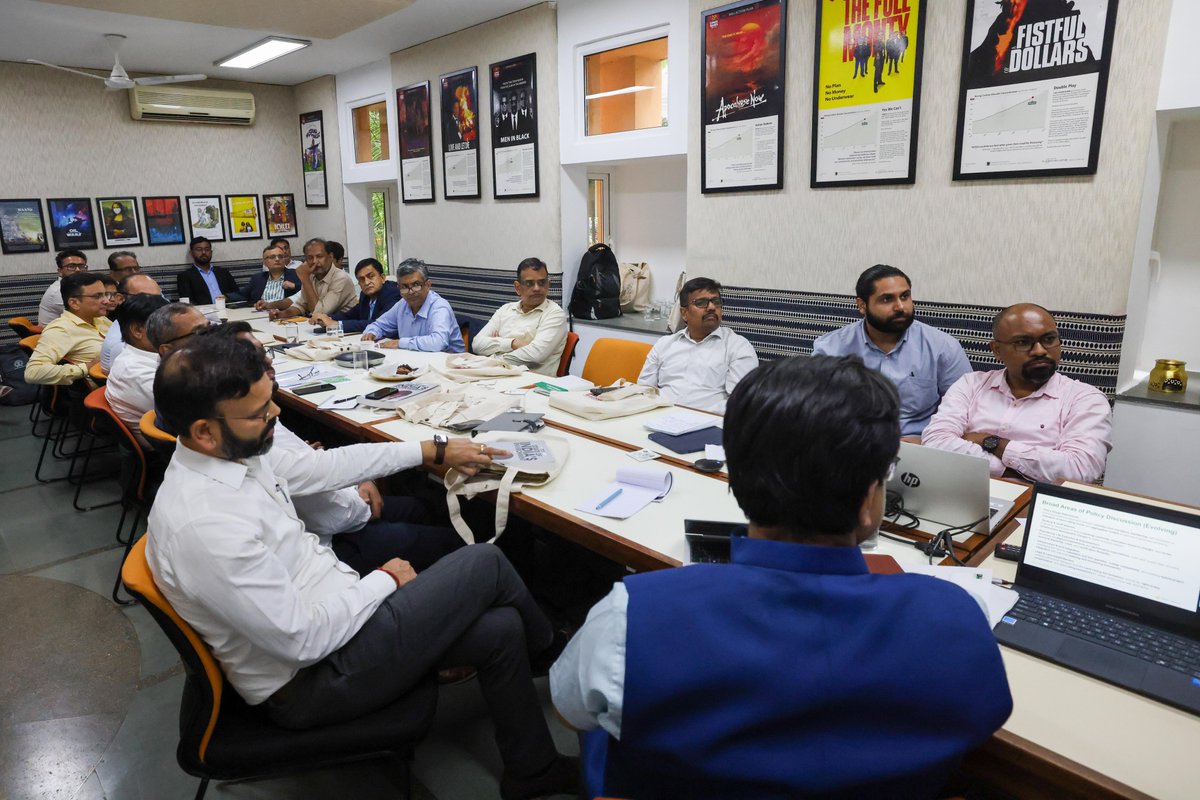
The Centre for Science and Environment (CSE) convened a roundtable recently on “Addressing Current Risks in Wind Repowering”, bringing together OEMs, IPPs, and consultants to confront the systemic bottlenecks that are stalling India’s wind energy upgrade story.
Here are the key insights from the discussion:
👉 Wind repowering has ₹1.5 lakh crore market potential: India has an estimated 25.4 GW of repowering potential concentrated across wind-rich states. Yet, this vast opportunity remains largely untapped due to fragmented policies and outdated infrastructure.
👉 Fragmented state policies: There is a lack of harmonisation in repowering policies across states. Tamil Nadu mandates repowering after 20 years; Gujarat restricts repowering to turbines to ≤1 MW turbines; Karnataka aligns with MNRE’s national guidelines but has yet to reform its evacuation infrastructure.
👉 Grid mismatch: Modern turbines require 33–66 kV evacuation, but most aging sites still rely on outdated 11 kV feeders. This mismatch hampers output, leads to curtailment, and undermines investor confidence.
👉 Many owners are opting for Life extension to extend 20+ year-old turbine life rather than replace, due to lack of incentives or technical guidelines.
👉 Hybridisation can bridge viability gaps by adding solar and storage to repowered wind sites, boosting CUF and improving bankability.
👉 No visibility on surplus power offtake: A lack of visibility on surplus power offtake remains a major concern. DISCOMs are reluctant to purchase additional energy from repowered sites, and there is policy ambiguity around banking provisions, open access, and PPA extensions; discouraging developers from moving forward with projects.
Thank you to all the participants who shared invaluable insights, from field-level barriers to cutting-edge turbine design needs. It’s clear that with the right coordination, India can double its energy yield from the same wind footprint, an opportunity we cannot afford to miss.
CSE was recently invited by the Tamil Nadu Green Energy Corporation Limited (TNGECL) to provide inputs on their upcoming Integrated Renewable Energy Policy.
Our discussion focused on:
- Biofuel Policy with focus on compressed biogas and feedstock availability
- Inclusion of storage systems with renewable energy
CSE shall be providing detailed inputs for the upcoming policy with focus on:
👉Stakeholder mapping, ensuring feedstock security, management of Fermented Organic Manure (FOM), Liquid Fermented Organic Manure (LFOM), and Compressed Biogas (CBG) offtake for CBG sector.
👉Strengthening Resource Adequacy Framework in the state for RE stations.
👉Inclusion and optimization of storage systems with new RE.
Kerala’s rapid ascent in India’s rooftop solar revolution has brought a green energy boost—but also a growing financial strain for ordinary electricity users
🖊️ @binit_04
https://t.co/lhAV8gzVJW
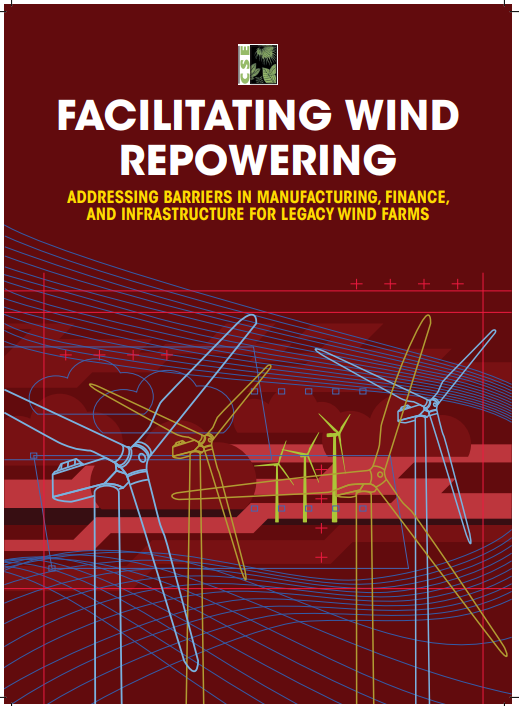
#NewReport | India’s wind energy sector is at a crossroads. Once a global pioneer, the country now faces the pressing challenge of ageing wind infrastructure that limits efficiency and output.
Our new report "Facilitating Wind Repowering" explores the urgent need for repowering, replacing old, low-capacity turbines with modern, high-capacity ones, to unlock vast untapped potential in wind-rich states like Tamil Nadu and Gujarat. The report highlights structural barriers that hinder repowering, from fragmented ownership to outdated evacuation systems, and calls for a coordinated, policy-backed response.
The study offers a roadmap to transition from incremental progress to sectoral transformation. With focused recommendations across regulation, finance, manufacturing, and grid planning, it urges decisionmakers to treat repowering not just as a technical fix but as a strategic imperative for India’s clean energy leadership.
To know more about the report and to download, visit here: https://t.co/vg5GbX07Jb
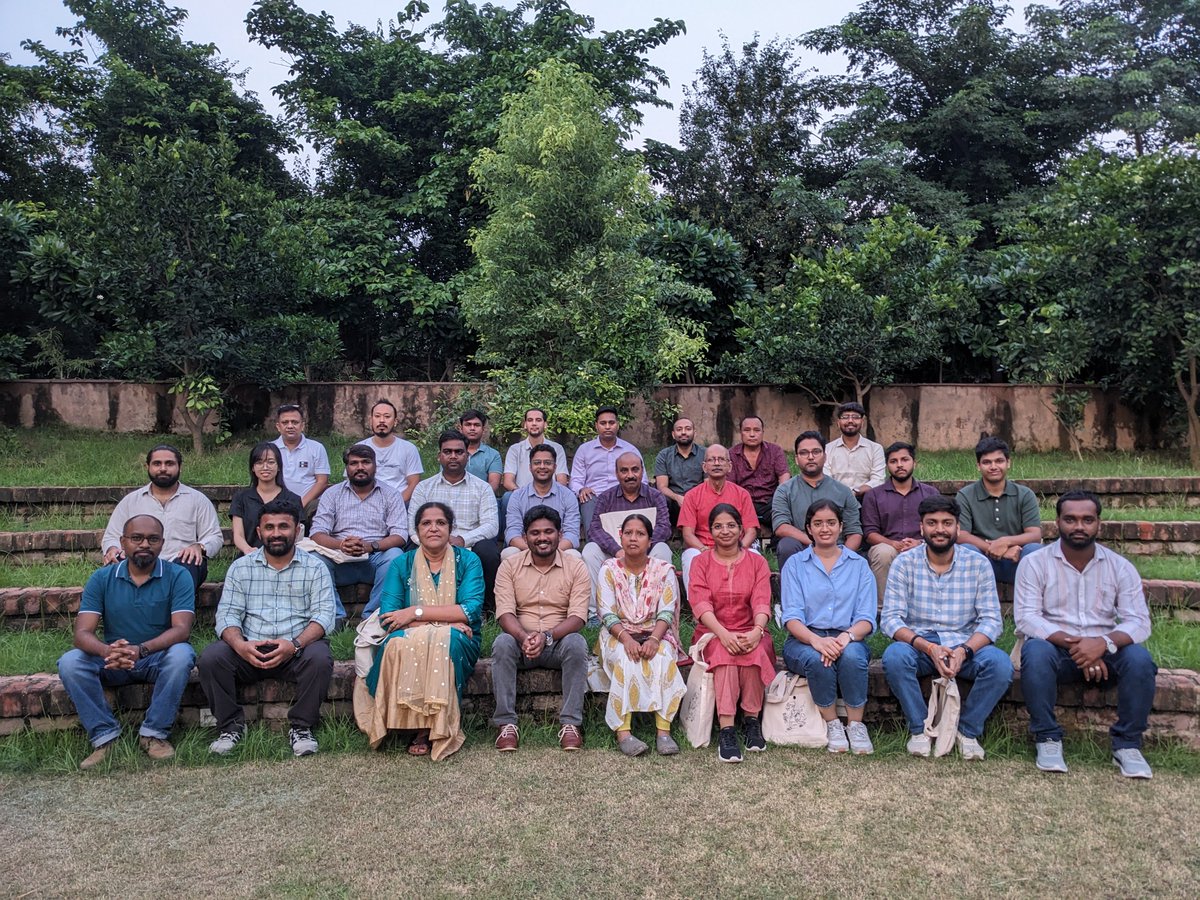
The Renewable Energy Unit (RE) at @CSEINDIA recently concluded a three-day residential training programme on Decentralized Renewable Energy (DRE) for Rural Development on Aug 8, 2025. The training brought together participants from varying backgrounds, including government service, civil society organizations working at the interface of clean energy, rural development, sustainable agriculture, and climate change.
The training was a blend of classroom and field sessions followed by hands-on case studies towards which participants as stakeholder groups presented solutions. #1
🚀 India’s clean energy future: 500 GW & beyond! How do we scale up while ensuring equitable access? @CSEINDIA’s latest report lays down the roadmap. Read now 👉 https://t.co/S1UYjM4lTT
How Africa is harnessing solar energy | While the spread of solar energy across Africa is encouraging, a significant concentration of capacity persists. In 2024, 78 per cent of all new installations were concentrated in just two countries — South Africa and Egypt. This uneven growth highlighted the challenges many other African nations face in creating conducive environments for solar investment.
@binit_04 writes
https://t.co/37NmHsGRH3
How Africa is harnessing solar energy | While the spread of solar energy across Africa is encouraging, a significant concentration of capacity persists. In 2024, 78 per cent of all new installations were concentrated in just two countries — South Africa and Egypt. This uneven growth highlighted the challenges many other African nations face in creating conducive environments for solar investment.
@binit_04 writes
https://t.co/37NmHsGRH3
How Africa is harnessing solar energy | While the spread of solar energy across Africa is encouraging, a significant concentration of capacity persists. In 2024, 78 per cent of all new installations were concentrated in just two countries — South Africa and Egypt. This uneven growth highlighted the challenges many other African nations face in creating conducive environments for solar investment.
@binit_04 writes
https://t.co/37NmHsGRH3
How Africa is harnessing solar energy | While the spread of solar energy across Africa is encouraging, a significant concentration of capacity persists. In 2024, 78 per cent of all new installations were concentrated in just two countries — South Africa and Egypt. This uneven growth highlighted the challenges many other African nations face in creating conducive environments for solar investment.
@binit_04 writes
https://t.co/37NmHsGRH3
How Africa is harnessing solar energy | While the spread of solar energy across Africa is encouraging, a significant concentration of capacity persists. In 2024, 78 per cent of all new installations were concentrated in just two countries — South Africa and Egypt. This uneven growth highlighted the challenges many other African nations face in creating conducive environments for solar investment.
@binit_04 writes
https://t.co/37NmHsGRH3
How Africa is harnessing solar energy | While the spread of solar energy across Africa is encouraging, a significant concentration of capacity persists. In 2024, 78 per cent of all new installations were concentrated in just two countries — South Africa and Egypt. This uneven growth highlighted the challenges many other African nations face in creating conducive environments for solar investment.
@binit_04 writes
https://t.co/37NmHsGRH3
Centre for Science and Environment (CSE) is organising a National Dialogue on Renewable Energy aimed at bringing together key stakeholders and practitioners in India's clean energy ecosystem. The focus is to capture current market trends, evaluate performance of institutions and market mechanisms in light of 2030 targets.
The growth agenda till 2030 is ambitious and requires reevaluating certain measures and provisioning of additional measures. The event will also deliberate the various emerging dimensions of clean energy projects such as implementation barriers, integration with conventional electricity markets, techno-economic issues and appropriate regulatory development for each.
To participate, visit:
https://t.co/P8UWM2qtkU