People who spend long periods of time at home and slowly lose the desire to go outside often think they're just resting. But psychologically, many of them are experiencing something called mental rumination. It's a state where the brain starts slowing down while the number of thoughts inside keeps increasing and the motivation to do anything slowly disappears. The mind gets stuck in the past, worries about the future and burns itself out. This isn't laziness, it's a nervous system stuck in survival mode. And the longer it lasts, the more distant normal life begins to feel. And the difficult part is that you usually can't escape it through one massive burst of motivation. And sometimes,recovery starts with just one small step.
Let's talk about the difference between wild and feral animals, for those who don't know.
A wild animal is one that is born in the wild, to wild parents, and lives its entire life in the wild. A feral animal, on the other hand, is one that started out as a domestic animal but left the care of its owner at some point and returned to roaming and living like a wild animal.
The animal in this video is a feral cat, not a wild cat. These are the ones we call akátá in Yorùbá. When domestic cats go out from time to time, some of them discover the freedom to fully follow their instincts, fighting, hunting and mating as they please. So they simply stop coming home. Over time, they develop wild habits and become almost indistinguishable from animals that were never domesticated at all.
It is worth noting that feral cats are actually one of the most widespread feral animals on the planet. Domestic cats have been living alongside humans for roughly 10,000 years, since the days of early agricultural settlements. Unlike dogs, cats were never selectively bred to depend on humans, which is part of why the transition back to feral life happens so easily and so often.
Thanks for coming to class. Submit your assignments and leave in an orderly manner.
If you know students approaching graduation, or MSc candidates considering PhD opportunities, you may find this useful to share.
The video, presented by Arewa Mentorship, provides a step-by-step guide to applying for international scholarships in Hausa.
The link below 👇
Since the past 24 hours that I made the tweet on child parenting solution, my DM has been buzzing. I checked them, and one thing was quite common to all: Parents who are not happy about their kid’s performance in school, and they have approached it the wrong way.
If you fall in this category, this post is for you.
Many of us use brutal force because expectations are too high, and the anger is just too much. The scholar Ibn al-Jawzi explained in his book Sayd al-Khatir that intellect is a Rizq (provision) from God, just like money or health.
He said some people are born with a wide vessel and others with a narrow one. If you try to force the water of a whole sea into a small cup, you will only spill the water and ruin the cup. This is what many of us are doing. We are trying to force a "doctor's brain" into a child whose cup was designed for something else.
By that, it causes a soul-crushing resentment in the child. Imam Al-Ghazali described this beautifully in Ihya’ Ulum al-Din. He warned parents about a state called “Al-Malal”, where a child builds resentment because they are pushed beyond their limit. Everyone wants the best for their child. No doubt. However, if you keep yelling at them for things they cannot grasp yet, you make them hate the very sight of a book. You are closing the door to their heart while trying to kick open the door to their mind.
Then what is the solution? It is simple.
Going forward, every parent should make efforts to start looking for the Fath (the opening) in their kids. What does this mean? This is the lane the Almighty has prepared for them. In our history, if a child is slow with grammar or math, the scholars don’t call them a failure. They move them to a trade, a craft or a service.
How then do you identify this Fath (Opening) in your child? Please pay close attention to me…
(1) The first phase is Observation. Ibn al-Qayyim mentioned a concept called Istid’ad (natural readiness) in his book titled: Tuhfat al-Mawdud. This means you want to watch/observe/look at the child when they think nobody is looking. This is your first tool. For the next two weeks, stop talking about school. Do not worry yourself about how they perform on their homework.
Instead, keep a "Strength Log." Every evening, write down one thing they did well that had nothing to do with a classroom. Did they fix a broken toy? Did they calm down a crying sibling? Did they organise their shoes? You are looking for their Istid’ad (natural readiness). If they are "book-slow" but "people-smart" or "hand-smart," that is where the key has been placed.
(2) Introduce “Project or Craft” early on. Ibn Khaldun, in his Muqaddimah, argued that projects/crafts are high forms of intelligence that build civilizations. He argued that some minds are designed to understand the physical world better than the abstract one.
Give them a "Project Day." Buy a basic tool kit, a sewing machine, or a coding starter kit. Give them a broken radio or a piece of furniture to fix. Delegate. Give them a real-world task that has a visible result. When a child who fails at math sees that they can build a table or bake a perfect loaf of bread, their internal shame starts to heal. They realize they are not stupid; they were just in the wrong room.
(3) Kill the Comparison Virus. Imam Al-Zarnuji, in his classic work Ta’lim al-Muta’allim, explained that a student should only study what fits their nature. He said that forcing a student into a field they have no taste for is a waste of their life and the teacher's time. When you compare your child to others, you are catching a virus that blinds you to their path. Always filter.
When family members start bragging about their kids' grades, you must be the shield. Tell them, "My child is mastering the art of (so so and so)." You are teaching your child that success is not a single ladder. There are many ladders to it. And if you do not value their ladder, they will stop climbing.
(4) Prioritize Character Building. Put more efforts to praise your kids for their good character. Always tell them you love them when they behave well or show good character. Character recognition helps the child build a good self-image, which translates into self-confidence and barrier-breaking for the child. Prioritise this.
(5) Don’t underestimate the power of your words. Always pray to God to grant them their opening. The scholars taught that the "opening" is a gift from Al-Fattah (The Opener). Supplicate.
In your Sujud or in your prayers, stop asking for them to be a doctor/engineer, and what have you. Ask for the door that was made for them to be opened. Ask Him to show you the Fath so you can stop pushing them against a closed wall.
Always remember, a parent who finds the "Fath (The Opening)" for their child has given them a gift better than a degree. You have given them a purpose. Start that journey NOW. It’s never too late…
Thank you for your attention.
Allah knows best.
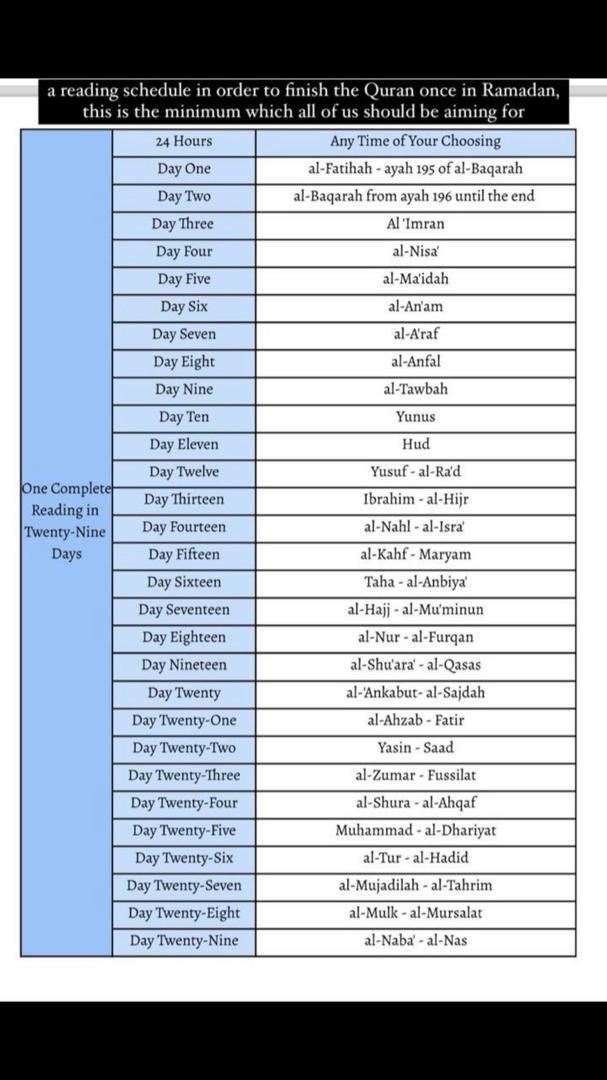
Following this table allows you to complete the Quran in 29 days
We are still accepting donations for the Ramadan feeding program. Kindly send your donation to
6002053780
moniepoint
sakiru ajadi
May Allah reward you as you donate and RT this
@lilacshadesfsky 80 free online resources:
https://t.co/OwA6fEEjyq
Lean Arabic with khasu (beneficial channel)
https://t.co/TB7zS2Hg2e
Arabic 101 (go to playlists and see which ones you want to watch from them)
https://t.co/05Qz2GQZdy
Hopefully these will help and if you have a specific
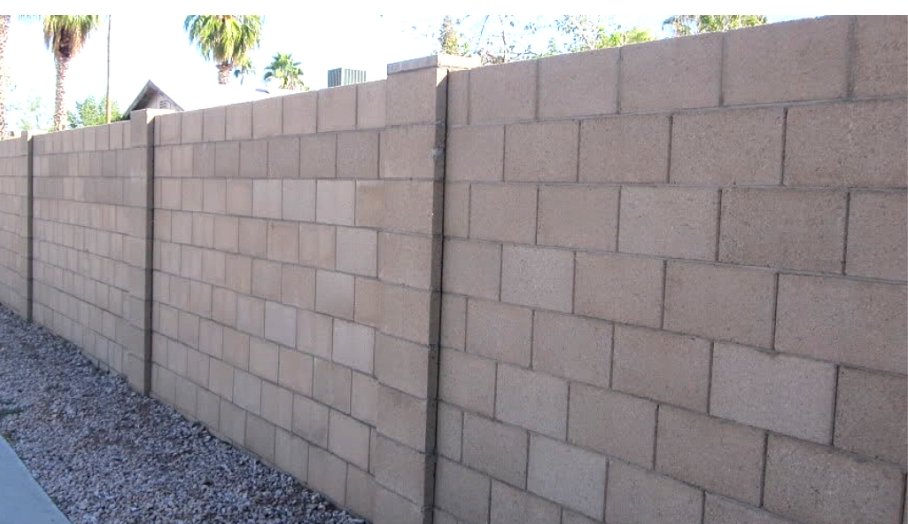
STOP WASTING MONEY: HERE'S HOW TO CALCULATE BLOCKS FOR YOUR FENCE LIKE A PRO
You're about to fence your land, and the first question hits you: "How many blocks do I actually need?"
Get it wrong, and you'll either run out of blocks mid-project (causing delays and extra transport costs) or you'll over-buy and waste money on blocks you'll never use.
But here's the thing, calculating blocks for fencing isn't complicated. You don't need to be a mathematician or an engineer. You just need to follow a simple step-by-step process that I'm about to show you.
Let me walk you through exactly how to do this, using a standard Nigerian plot as an example.
THE 7-STEP FORMULA TO CALCULATE FENCING BLOCKS
STEP 1: Calculate Your Land Perimeter
First, you need to know the total distance around your property, that's your perimeter.
A standard full plot in Nigeria is typically 50 feet by 100 feet.
The formula for perimeter is simple:
Perimeter = 2 × (Length + Width)
So for a full plot:
Perimeter = 2 × (100ft + 50ft) = 2 × 150ft = 300 feet
If your land has different dimensions, just plug in your numbers.
For example:
* Half plot (50ft × 50ft) = 200 feet perimeter
* 60ft × 120ft plot = 360 feet perimeter
STEP 2: Find the Length of a Standard Hollow Block
In Nigeria, a regular 9-inch hollow block measures 18 inches long, which is 1.5 feet.
However, when you're laying blocks, you need to account for the mortar joints between them. So instead of using 1.5 feet, we use 1.7 feet per block to include the mortar space.
This small adjustment makes your calculation much more accurate.
STEP 3: Divide Perimeter by Block Length
Now divide your total perimeter by the length of one block (including mortar):
Number of blocks per row = Perimeter ÷ Block length
Using our example:
300ft ÷ 1.7ft = 176.5 blocks
Round this up to 177 blocks for one complete row around your fence.
STEP 4: Determine the Number of Courses (Rows)
A "course" is simply one horizontal row of blocks.
How high do you want your fence? That determines how many courses you'll need.
For example:
* 6 courses = approximately 4 feet high (typical for most residential fences)
* 8 courses = approximately 5.3 feet high
* 10 courses = approximately 6.6 feet high
* 12 courses = approximately 8 feet high (for maximum privacy/security)
Let's say you want a standard fence of 6 courses high.
STEP 5: Multiply Blocks Per Row by Number of Courses
Now multiply the blocks needed for one row by your total number of courses:
Total blocks = Blocks per row × Number of courses
177 blocks × 6 courses = 1,062 blocks
So you need 1,062 blocks for your fence. But wait, don't order yet!
STEP 6: Add Allowance for Breakages, Corners & Waste
In real construction, things happen:
* Some blocks arrive broken
* Some crack during handling
* Corners require special cuts and positioning
* You might make mistakes during laying
Professional builders always add a 5-10% allowance for these inevitable losses.
Let's use 5%:
Allowance = 5% of 1,062 = 0.05 × 1,062 = 53 blocks
STEP 7: Add Your Main Number and Allowance
Finally, add your calculated blocks to your allowance:
Final total = 1,062 + 53 = 1,115 blocks
So for a standard 50ft × 100ft plot with a 6-course fence, you need approximately 1,115 blocks.
QUICK REFERENCE: BLOCKS NEEDED FOR COMMON PLOT SIZES
Here's a handy table for standard Nigerian plots (6 courses high, with 5% allowance):
* Half plot (50ft × 50ft): ~706 blocks
* Full plot (50ft × 100ft): ~1,115 blocks
* 60ft × 120ft plot: ~1,338 blocks
* 100ft × 100ft plot: ~1,412 blocks
For different fence heights, just adjust the number of courses and recalculate.
PRO TIPS TO SAVE MONEY AND AVOID MISTAKES
1. Measure Your Land Accurately
2. Consider Your Gate Openings
3. Buy Quality Blocks
4. Store Blocks Properly
It takes just 5 minutes to do the math, but it can save you thousands of naira and weeks of project delays.
#BSATProperties
Your parents could have shares and unclaimed dividends worth millions of naira that’s existing somewhere that they don’t remember. Just ran a search for a friend dad and found he has shares with over 3 million with Conoil since the 90s. Man doesn’t even remember anymore 😩
I don’t know who you are, but I hope this reaches you in good faith.
If you’ve been earning ₦140k and still managing to survive, that alone shows strength and discipline. Now, an opportunity worth ₦800k has come your way — take it. Not just for the money, but for the growth, exposure, and experience that come with it.
Here’s my advice:
1. Say Yes to the ₦800k Offer
Jobs like this don’t just change your income — they shift your mindset, expand your network, and sharpen your skills. You’re stepping into a new level.
2. Maintain Your Current Lifestyle (For Now)
As tempting as it’ll be to upgrade, resist lifestyle inflation for at least the first year. Live like you’re still earning ₦140k. Be intentional about this.
3. Save Aggressively
Lock away ₦500k monthly — consistently — for the next 12 months. Use the remaining ₦300k to sort your needs.
Do this without fail, and in one year, you’ll have ₦6 million in savings. That’s financial breathing space and future leverage.
4. Year 2: Upgrade Gradually, But Wisely
If you want to switch up your wardrobe or move apartments, go ahead — but do it with sense. Still, don’t touch your savings. Your salary can cover reasonable upgrades.
5. Year 3: Plan Your Exit Before the Contract Ends
Start applying for new roles 6 months before your contract ends. With 2+ years of solid experience at ₦800k, your next move should meet or exceed that figure.
Your benchmark has changed — don’t settle for less.
In Summary:
Take the offer.
Don’t upgrade your lifestyle immediately.
Save like your future depends on it (because it does).
Use the job to grow, not just earn.
Plan your next move before the contract ends.
You’re not just earning more — you’re entering a new season. Walk in with clarity and leave with power.
I wish you the very best.🤲🤲
Nobody talks about this…
But if you prompt ChatGPT right, it becomes the best teacher you’ve ever had.
Here are 8 prompts that helped me learn anything 10x faster:
I know you don’t know but I will tell you
All the career essential courses are free on LinkedIn. These include:
1. Career Essentials in Administrative Professional
2. Career Essentials in Project Management
3. Career Essentials in Business Analysis
4. Career Essentials in System Administration
5. Career Essentials in Data Analysis
6. Career Essentials in Software Development
7. Career Essential in Cybersecurity
8. Career Essentials in Generative AI
9. Microsoft Azure AI career essentials
10. Human Resources foundation by the chartered institute of personnel and development
How to benefit from these course
1. Download LinkedIn learning
2. Login with your LinkedIn account
3. Search for your desire course(s) and enjoy
Share for awareness