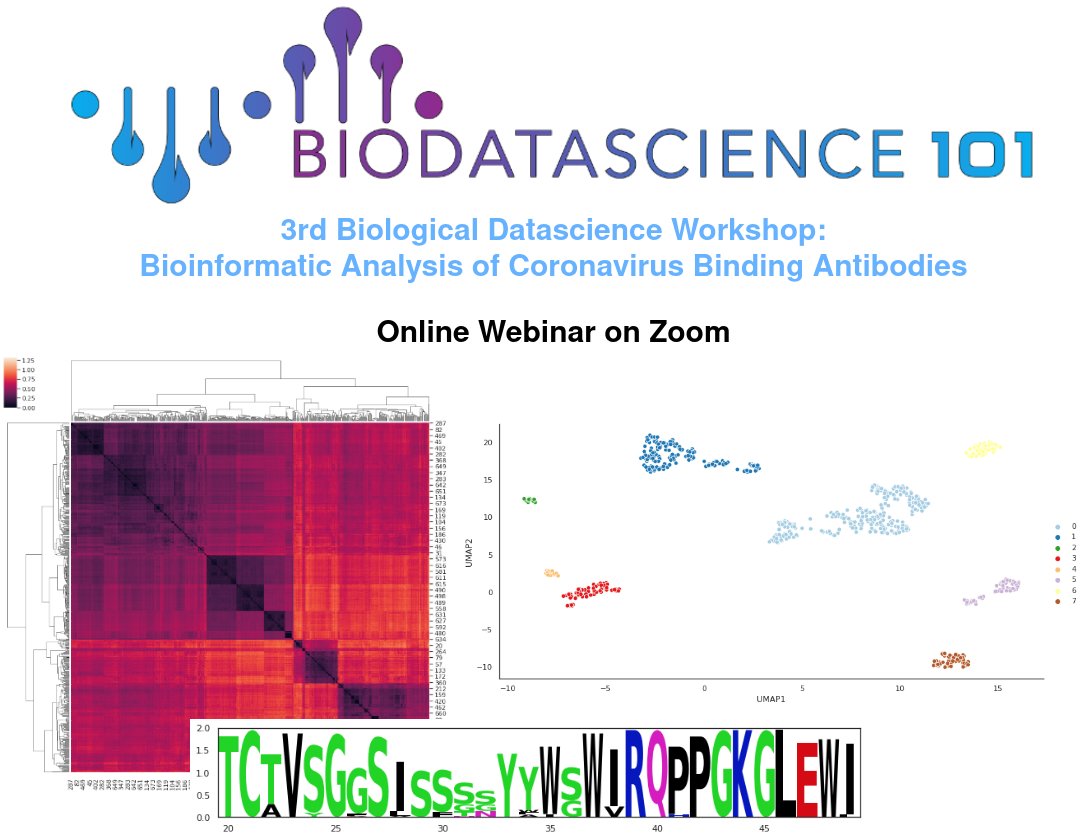
Sign-up is closing soon (16th November)! Join us to learn state-of-the-art clustering and visualization techniques on SARS-CoV2 antibodies using Python and JupyterLab!
Join our online workshop on 25th November 9:00-15:40 CET. Sign-up here: https://t.co/r3mxlQbVqI
We are back with our third online workshop, focusing on using state-of-the-art clustering and visualization techniques, to see what anti-SARS-CoV2 antibodies look like!
Join our online workshop on 25th November 9:00-15:40 CET. Sign-up here: https://t.co/r3mxlQbVqI
I've tried this "artificial intelligence" plant identification app multiple times on the same tree and get a different answer each time. They must be using random forest
Just 5 more days to register for our second #Biodatascience101 workshop, introduction to #MachineLearning with an expert panel discussion from @novonordisk and @Rigshospitalet. 30th June 0900-1230 CET, with fundamental methods generalizing to all datasets.
https://t.co/Ovh7aNo8xv
Registrations are open for our live introduction to #MachineLearning on tumor imaging features in #Jupyter notebooks, with model analysis in @scikit_learn !! Teaching directly in your browser. Join our online workshop on 30th June 0900-1230 CET. Sign-up: https://t.co/Jai8TPW6pe
This team almost won a 25 000 USD kaggle competition. They shared an excellent write-up and Jupyter notebooks with code on how they predicted open ion channels from electrical signals using hidden markov models. @Gillesvdwiele
https://t.co/nkh9ktAW0Q
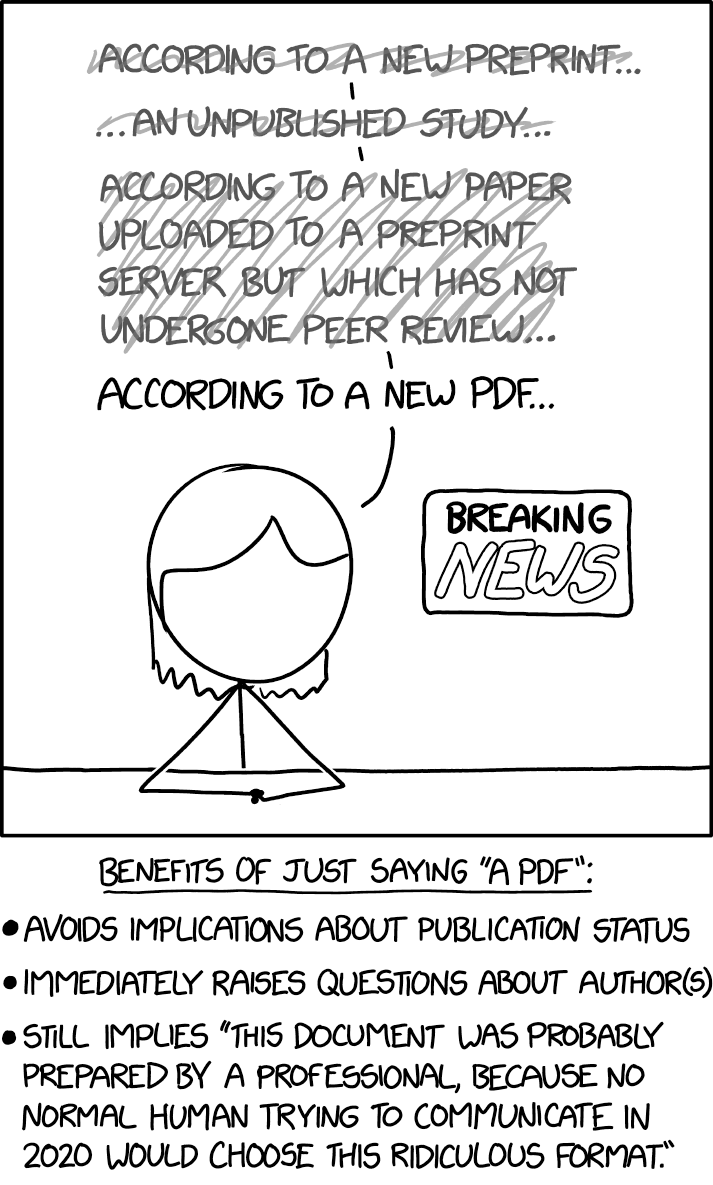
.@xkcdComic "This document was probably prepared by a professional, because no normal human trying to communicate in 2020 would choose this
ridiculous format"
https://t.co/Nx6aFT5TRf