AI for immunological Molecules (AIM) group headed by Paolo Marcatili. We can mostly be found hiding behind the computer screen cracking immunological puzzles.
CASP14 #s just came out and they’re astounding—DeepMind looks to have solved protein structure prediction. Median GDT_TS went from 68.5 (CASP13) to 92.4!!!! Cf. their 2nd best CASP13 struct scored 92.8 (out of 100). Median RMSD is 2.1Å. I think it's over https://t.co/dQ1BOJWuwn
2010: some people put papers on ArXiv
2012: we put papers on ArXiv after peer-review is done
2016: we put papers on ArXiv the day after deadline
2018: we just put stuff on on ArXiv
2020: you wake up with a headache and wonder if you drunk-posted something on ArXiv you will regret
Just 5 more days to register for our second #Biodatascience101 workshop, introduction to #MachineLearning with an expert panel discussion from @novonordisk and @Rigshospitalet. 30th June 0900-1230 CET, with fundamental methods generalizing to all datasets.
https://t.co/Ovh7aNo8xv
The Rosetta Commons is a consortium of >60 labs around the world that develop the Rosetta program for protein structure prediction & design. We have put together a "Black Lives Matter Statement." It's been signed by 297 RC members incl. 64 PIs. Please RT! https://t.co/orzq8OEUUm
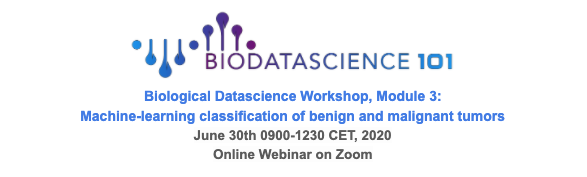
Registrations are open for our live introduction to #MachineLearning on tumor imaging features in #Jupyter notebooks, with model analysis in @scikit_learn !! Teaching directly in your browser. Join our online workshop on 30th June 0900-1230 CET. Sign-up: https://t.co/Jai8TPW6pe
This team almost won a 25 000 USD kaggle competition. They shared an excellent write-up and Jupyter notebooks with code on how they predicted open ion channels from electrical signals using hidden markov models. @Gillesvdwiele
https://t.co/nkh9ktAW0Q
We recently held our first online workshop, teaching biological data science to over 60 participants across the world.
Module 1 covered biomarkers of cerebral malaria, while Module 2 explored protein sequence feature impact on thermostability. Livestream: https://t.co/UPf0FW3Tln
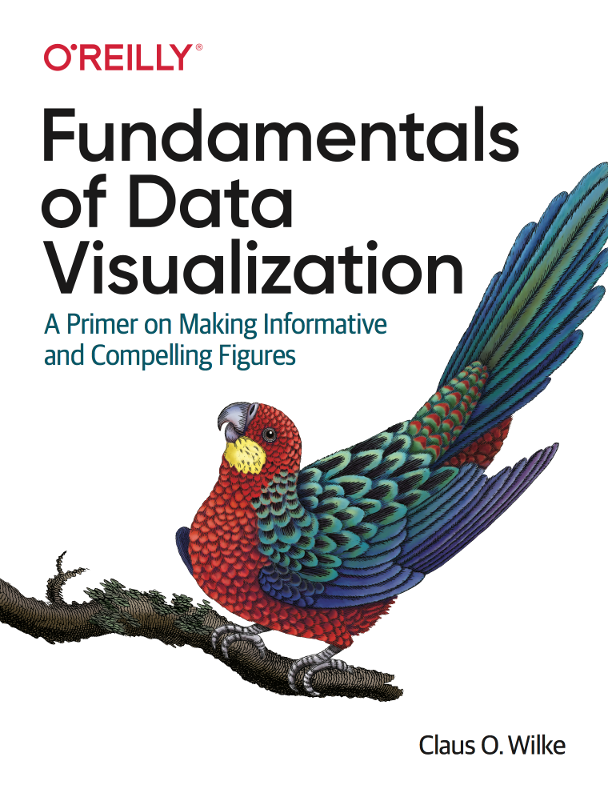
Last month we had our first BioDataScience webinar, and this book was a great source of inspiration! We also had the chance to see @ClausWilke in action at the #LinderstrømLang centre - amazing talk on covariation methods
We can highly recommend this free ebook on #DataViz by @clauswilke:
https://t.co/1WXqQrIYZI
R code for many of the beautiful plots can be found on Github:
https://t.co/20ax0huekR
Last spots left for our #BioDataScience101 webinar closing today! Live introduction to #Jupyter notebooks, data visualization and statistical analysis in #Pandas and #Numpy. 2 live notebooks, directly in your browser, delivered from
@DTU_HealthTech
https://t.co/qCpNzdmFHg
Want to learn how to analyse high-throughput expression data, visualise millions of sequences at once, or set up a machine-learning model in 10 lines of code?
On March 26th from 9.00 to 17.00, BioDataScience101 will hold its first…https://t.co/gQUBJhXB3M https://t.co/gXCDE0fZ3O
Today's #PDB release includes the structure of the spike glycoprotein (6vsb) from the COVID-19 strain of coronavirus, solved by @McLellan_Lab@TexasScience, published @sciencemagazine. View all the @emblebi data on the COVID-19 strain at https://t.co/FMSEP2ndlW
Researchers from @DTUbioengineer are the first in Europe to publish results on mapping proteins on a single-cell level using Mass Spectrometry-based proteomics. Read about that and about the state-of-the-art Protein Core facility. https://t.co/9iCii74OIR
@DTUtweet#research
Interested in doing a PhD with me @uni_copenhagen on #machinelearning for improving our understanding of #proteins? Open PhD call https://t.co/2DxsbQXFoG. Get in touch if you would like to apply (and meet the eligibility requirements). Deadline Feb 13.
Great article about Nikolina Udikovic Kolics work showing how pharma pollution causes increased antibiotic resistance right here in Europe. https://t.co/yNUBNlhpOY
PhD positions in Structural Bioinformatics available to work with me and @_amelie_rocks in 🇩🇰. If you love proteins and are interested in using computational biophysics and sequence analysis to study effects of protein variants at large scale have a look https://t.co/DsldVjP3ry
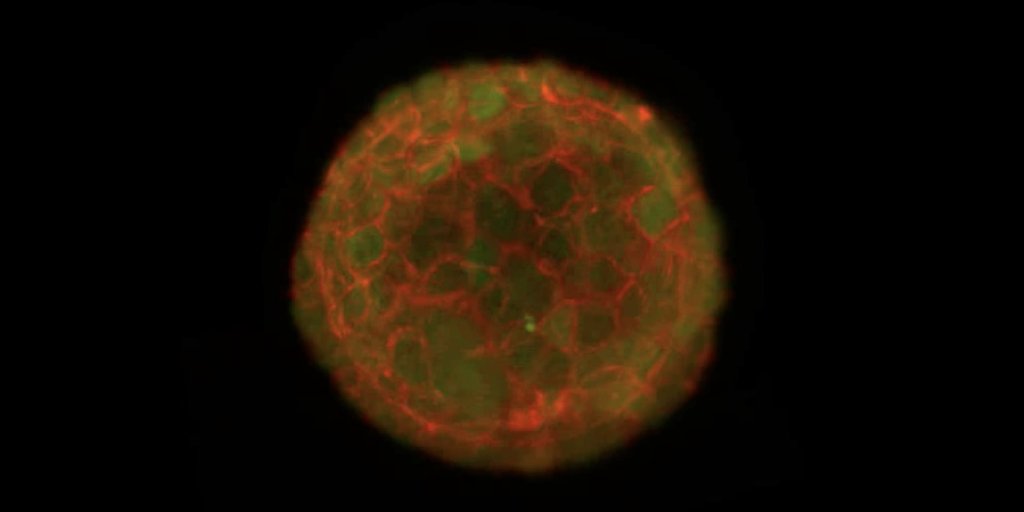
We are hiring a PhD student to work on colon cancer disease modelling using patient derived organoids. Collaboration with Matthias Ebert @prof_ebert.
Apply now through the @DKFZ international #PhD program: https://t.co/UIHkdCKPZy
Application deadline: Jan 5th, 2020. Please RT