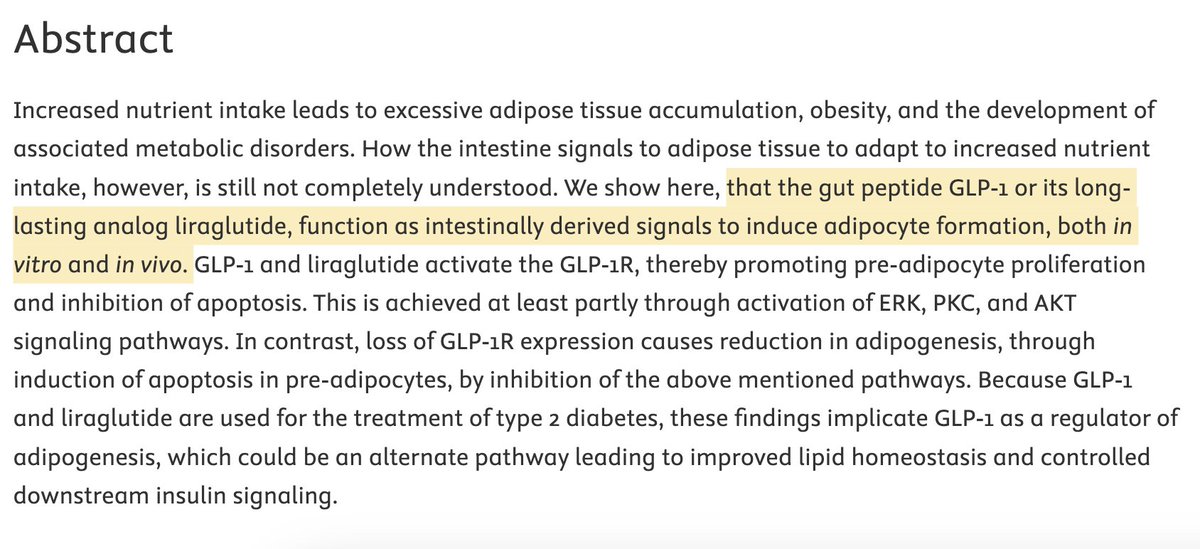
Ozempic makes new fat cells grow while losing weight
If you ever get off, you now have many new small fat cells waiting to bloat up
You will be in the same situation as people who are fat from childhood: it will be very tough to lose weight
Beware or be hooked forever
@PeatPill Yeah, it's so far from benign. The gastroparesis and pancreatitis are bad but the really messed part is that it's a hormone that has growth factor like qualities and naturally spikes for a few minutes, but is injected and acting 24/7. It's gonna be really ogre in a decade
Ozempic makes new fat cells grow while losing weight
If you ever get off, you now have many new small fat cells waiting to bloat up
You will be in the same situation as people who are fat from childhood: it will be very tough to lose weight
Beware or be hooked forever
Bioenergetics: Increasing Calories Out
“We are currently expending about 220 calories per day less for males and 122 calories per day less for females than people of our age and body composition were in the late 1980s. These changes are sufficient to explain the obesity epidemic in the USA.”
—John Speakman, biologist
I would never deny the logic in the phrase “calories in, calories out." It can be useful in someone’s weight loss journey. My issue is the rigidity in refusing to acknowledge how much it can vary, or the erroneous belief that getting by on fewer calories is biologically advantageous.
“Calories in, calories out” (CICO) is an oversimplification of the body’s divine complexity. What we eat matters as much as how much we eat.
The goal should be to increase “calories out”, not perpetually decrease “calories in”.
Key points
• Metabolic rate has been decreasing for over a century
• Average body temperature has been decreasing for over a century
• Daily energy expenditure has declined over the past 3 decades due to slowed metabolism—not reduced activity
• We ate significantly more in the past yet we were thinner
• Different macros yield different amounts of ATP per calorie
• Different macro splits impact hormonal profile, which influences both metabolism and body composition
• Crash dieting slows metabolism and makes fat gain more likely afterward
• PUFA slows metabolism
• Estrogen and stress hormones in excess slow metabolism
• We can ballpark “calories in”, but “calories out” is highly variable
• Some people would benefit from eating less while others would be better served increasing their metabolic rate
CICO and thermodynamics: you are not a Tacoma
People say weight loss comes down to “thermodynamics”, yet the graphs of body temperature and basal metabolic rate steadily decreasing every decade seem to be lost on them.
“The second law of thermodynamics posits that the transfer of energy involves some released as heat. This inefficient energy transfer plays a role in many biological systems.”
Metabolism is not reducible to elementary math. In fact, the dictum “a calorie is a calorie” violates the second law of thermodynamics precisely because of variances in metabolic efficiency.
We are not cars, but the car and gas analogy is like CICO as a framework: useful in a crude sense, but ultimately reducing the body to something it has never been.
"One such difference is known to everybody: inanimate machinery gets worn out by use, while live machinery improves by use and is impaired by inactivity."
—Albert Szent-Györgyi
We used to eat more (and move less)
“Eat less, move more” is another mantra you’ll hear alongside “calories in, calories out”. As it turns out, we often did the opposite… with better results.
• US Army soldiers in the late ‘40s were eating an average of 5,450 calories with up to half a pound of refined sugar a day despite only averaging 157 pounds
• In Denmark during the turn of the 20th century, sedentary people were consistently recorded eating over 3,000 calories daily
• According to the 1939 US Yearbook of Agriculture, we consumed anywhere from 3,500-4,000 calories daily and averaged 154 pounds while being only moderately active
• Lumberjacks in the late 16th century were averaging 6,000-7,700 calories a day and even the lowest estimated caloric intake recorded at that time was still over 3,000 calories a day
Sure, some of the above groups were active, but many eating over 3,000 calories were not. The idea that increasing the “CO” portion of CICO is “violating the laws of thermodynamics” comically oversimplifies the process of energy metabolism and assumes that everybody breaks down food equally efficiently.
This is not the case. Only 12% of people now are metabolically healthy, meaning only 12% of people are making efficient use of the food they eat.
There is a world of nuance we skip over in the space between “calories in” and “calories out”.
Thinking burns calories… for some
Despite accounting for only 2% of body weight, the brain consumes about 20% of the body’s total energy at rest—about 120 grams (420 calories) of glucose a day.
The thinking brain needs more.
In 2018, chess players were monitored during a tournament and it was observed that Mikhail Antipov burned 560 calories in just two hours of playing. That’s about the amount of calories you’d burn in an hour of competitive tennis. In 2004, a World Chess Championship victory cost Rustam Kasimdzhanov 17 pounds, and the 1984 championship was called off after Anatoly Karpov lost 22.
Writer, director, composer, and painter David Lynch got creative inspiration drinking overly sweet coffee and milkshakes at Bob’s Big Boy every day for seven straight years. We can only guess how much glucose he burned coming up with his many ideas.
A calorie is not a calorie is not a calorie
• 100 calories of palmitate (a fatty acid) = 4.7 moles of ATP
• 100 calories of glucose (a carbohydrate) = 4.4 moles of ATP
• 100 calories of leucine (an amino acid) = 3.8 moles of ATP
• 100 calories of aspartate via gluconeogenesis (an amino acid, in this case being broken down from our own tissue) = 2.2 moles of ATP
Weight and calories are not equivalent
• 1 lb of pure protein is about 1,800 calories
• 1 lb of pure fat is about 4,000 calories
• 1 lb of pure water is 0 calories
Drinking a pound of water before stepping on a scale is not comparable to eating 1 pound of lean protein before stepping on a scale.
A tablespoon of canola oil does not affect the body the same as a tablespoon of coconut oil.
PUFA blocks the uptake, transport, and secretion of thyroid hormone and PUFA restriction significantly increases metabolic rate.
In the period with the greatest increase in obesity rates (1970-2010), seed oil consumption almost tripled. Since the 1900s, butter (a mostly saturated fat) consumption has gone from 18 pounds consumed per person per year to just about 5.
Hibernating animals increase their consumption of high-PUFA foods before they hibernate partly because PUFA makes weight retention easier.
Metabolism and endocrinology: bidirectional influence
Youth-associated hormones blunt a lot of metabolic damage. Different macronutrient splits can help or hurt thyroid health and hormonal profile. Hormonal profile has huge impacts on not only metabolism but body composition as well.
Hormones that positively impact metabolism
• Pregnenolone
• Progesterone
• DHEA
• Thyroid
• Testosterone
• DHT
Hormones that negatively impact metabolism
• Cortisol
• Estrogen
• Aldosterone
• Prolactin
• PTH
• TSH
• Leptin
• Glucagon
Crash dieting wrecks metabolism
A major issue with CICO absolutism is that it encourages weight loss strategies such as “crash dieting” (severe caloric restriction). This is a terrible idea because crash dieting leads to a rebound weight gain and can even speed up fat gain upon a return to maintenance. Crash dieting is the reason for “yo-yo dieting”. Worse still, it has been shown that metabolic rate takes a hit and remains low afterwards.
When the body perceives famine, it has evolved mechanisms for staying alive. Slowing metabolism to hang onto nutrients is crucial. De-prioritizing energetic luxuries like hair growth, nail growth, muscle growth, feeling good, and more to focus on core processes makes sense in the context of food scarcity.
But a more technical answer would involve PUFA metabolites and something called PPAR-α, a protein tasked with the job of turning genes on and off. PPAR-α controls fat detoxification and is activated by fasting, keto diet, and caloric restriction. PPAR-α oxidizes PUFA, and oxidized PUFA leads to insulin resistance and is involved in the progression of human obesity.
PUFA is preferentially stored, and by the time we are 30, we have accumulated more than enough. Losing a lot of weight at once liberates a lot of PUFA from storage and it can go on to create reactive oxygen species (ROS) via lipid peroxidation chain reactions. The lipid peroxidation cascade from PUFA alone is highly energy-wasting: costing energy to produce antioxidants to repair the damage. Vitamin E is crucial in breaking this chain reaction.
Enzymatically (via COX and LOX enzymes), PUFA can be converted to prostaglandins, thromboxanes, and leukotrienes, all of which are inflammatory. Inflammation is a major driver of obesity. There are many studies suggesting COX and LOX inhibitors are protective against cancer. Aspirin and (to a lesser extent) vitamin E are both COX and LOX inhibitors and this is why they have anti-cancer potential.
Put simply: PUFA hurts metabolism, and metabolism should be important to anyone interested in weight loss.
Macronutrient ratios matter
“Fat burns in the flame of carbohydrates.”
Fats, carbs, and protein each have different effects on metabolism.
Obese women put on an 800 calorie zero carb diet for two weeks had their metabolic rates drop 21%, but when they switched to 800 calories of pure sugar, their metabolic rate rose to baseline despite the massive caloric deficit.
Denise Minger's "macronutrient swampland" is the concept that if one makes either carbs or fat a dominant macronutrient, the body becomes adept at using whichever fuel source is prioritized. Specifically, fat intake at 10% or less, or fat intake at 65% or above.
But while a low-carb diet might help with weight loss acutely, the problem is how that weight loss is achieved and what happens afterward when the body shuts down its thyroid production in favor of stress hormones such as cortisol, glucagon, and adrenaline.
In addition to high-carb and (truly) low-fat, there’s evidence of protein restriction—specifically branched-chain amino acids—increasing the metabolic rate. Fat gain can happen with more dietary protein despite fewer calories consumed overall.
With all this in mind, it’s clear that macronutrient ratios matter a lot.
Calories out: compromised by hypothyroidism?
Hypothyroidism used to be diagnosed by symptoms and thus had an estimated prevalence of 40% in the '40s and '50s—when we were skinny—but it is now estimated that only 5% of the population is hypothyroid.
That estimate didn’t change because we got healthier—in fact, we're sicker by just about every meaningful metric now. That changed because of a faulty test called the protein-bound iodine (PBI) test. In the ‘60s, it was found that the PBI test had little to do with thyroid health, yet this idea that "only 5% of people are hypothyroid" persisted. In fact, we took this new 5% figure and retroactively widened the “normal” ranges in our thyroid bloodwork, rendering modern thyroid panels meaningless.
Most people see declining metabolic rate as inevitable, bound only to age. That’s the impression you would be left with if you internalized mainstream medicine’s view of pathophysiology. But the truth is metabolism is highly variable, and it is the lowest common denominator in the functioning of all biological systems.
How can we focus only on CICO when the majority of people have a metabolic problem?
In Summary
Reject the rate-of-living ideology. Reject limiting yourself. More energy yields more structure yields more complexity.
Think harder. Lift harder. Laugh harder. Love more. Be more. Do more.
Do not huddle over your ember; set it all ablaze!
Increasing metabolism
• PUFA intake of 2 grams a day at most
• Avoid the “macronutrient swampland”
• Support the thyroid (this does not mean recklessly taking thyroid products)
• Strength training (but not intense cardio)
• Fix your circadian rhythm
• B1
• B2
• B3
• B5
• B6
• B7
• B9
• B12
• Baking soda
• Caffeine
• Sodium
• Magnesium
• Calcium (and a Ca:P ratio above 1)
• Potassium
• Zinc
• Copper
• Vitamin A (do not supplement if you have a sluggish liver or are hypothyroid)
• Vitamin D3
• Vitamin E
• Vitamin K2
• Glucose
• Fructose
• Sucrose
• Gelatin
• Restriction of BCAAs (leucine, isoleucine, and valine)
• Restriction of inflammatory amino acids (methionine, cysteine, and tryptophan)
• Saturated fats (coconut oil especially)
• Red light
• CO2
• Pregnenolone
• Progesterone
• DHEA (no more than 5 mg at a time, DHEA easily aromatizes)
At-home tests
• Achilles reflex test
• Blood pressure (~120/80 mmHg, pulse pressure of 40 mmHg)
• Pulse (70 - 90 bpm)
• Underarm temperature (97.8°F - 99°F, 36.6°C - 37.2°C)
• Blood sugar (70 - 99 mg/dL waking, rising to about 140 mg/dL postprandial and falling back down within a couple hours)
• Lactate (0.5 - 1.0 mmol/L resting)
Identifying unique metabolic bottlenecks using tests
• Whole genome sequencing
• Mitoswab Plus test
• Mosaic Diagnostics organic acids test
• Plasma amino acids
Ratios indicative of metabolic rate
• Pyruvate/lactate (P/L)
• Acetoacetate/beta-hydroxybutyrate (AcAc/β-HB)
• Reduced/oxidized glutathione (GSH/GSSG)
• Oxidized/reduced nicotinamide adenine dinucleotide (NAD+/NADH)
• Cortisol/cortisone (F/E)
• Estrone/estradiol (E1/E2)
Additional useful biomarkers
• TSH
• PTH
• rT3
• Prolactin
• Vitamin D
• Total cholesterol
• Serum phosphorus
@SVVVAYED Yeah, that's my thinking - although the health of the mother at the time of gestation has an outsized influence - metabolism (and health in general) is a big modifiable factor for looks.
Handsome men have much higher metabolisms
Male models have basal metabolisms 20% higher than non-model men!
CICOtards will starve themselves to look skinnyfat meanwhile good-looking people just exist, eat more, and their high metabolism takes care of the rest
“Calories in, calories out.”
You’ve surely heard this phrase if you’ve spent any time in the health space. You’ve probably heard it if you’ve spent no time in the health space. This oversimplification of the body’s divine complexity is a relic of outdated nutritional pop-science, and it’s time for it to be thoroughly debunked.
Preamble
I would never outright deny CICO—it can certainly be a useful tool in someone’s weight loss journey. My issue with CICO is the absolutism and rigidity in failing to acknowledge how much it can vary.
When an adult is struggling to lose weight despite eating less food than is recommended for their height, they’re told either “you’re counting wrong” or “just eat less”. What is seldom considered is whether or not that person has a metabolic problem. As we will see, this is very often the case.
What you eat matters just as much as how much you eat.[1] The goal is to increase basal metabolic rate—or “calories out”—not to perpetually decrease “calories in”.
Overview
● Metabolic rate has been decreasing for over a century[2][3]
● Average body temperature has been decreasing for over a century[4]
● Daily energy expenditure has declined over the past 3 decades due to decreased basal metabolic rate—not reduced activity[5]
● We consumed more food in the past yet we were thinner[6][7][8]
● Different macronutrients yield different amounts of ATP
● Different macronutrient ratios impact hormonal profile, which in turn influences both metabolic rate and body composition[9][10]
● We can ballpark “calories in”, but we can’t definitively know what happens between that and “calories out” without understanding all the metabolic pathway variance that can occur along the way
● Counting calories is useful only as a gauge of current basal metabolic rate, but it must be understood that this is subject to change
● Excessive caloric restriction slows metabolism and makes fat gain more likely upon return to maintenance[11]
● Some people would benefit from simply eating less while others would be much better served focusing on increasing basal metabolic rate with intentional daily choices
@uthwita_press >Study shows cyanide is lethal to rats
>"Akshually you cant conclude anything because rats are not hoomans"
Ketos are not sending their best are they
Keto diet causes brain damage and stops brain growth
Rats eating a keto diet appear normal but have brain damage: a total inability to orient themselves in space and no memory formation
You need carbs to generate the most neuroprotective molecule: CO2.
No CO2 = broken brain
I think it is because beta-hydroxybutyrate is similar enough to GABA that it can make up for its deficiency, but doing so much physiological damage just so you can have an endogenous GABA-mimicking substance is a bit insane. There are many ways to boost inhibitory tone that don't require the stress of ketosis
Confirmed again: Low motivation is just low brain metabolism
Low dopamine - the main regulator of motivation - is caused by low neuron energy, and just restoring energy reverses this.
This is why T3, B1, Caffeine, and Sugar remain the basics for motivation increase.
@landpilled Just normal thiamine HCl is fine for me, it is the cheapest form and you can dose it pretty high. Benfothiamine is a bit of a dud in my experience
Yes, some people seem to need really big doses. I don't think it's because of deiodinase enzymes, but something is evidently blocking the normal response to T3, possibly endotoxin or PUFA. Also, a small number of people have "pseudo-congenital" thyroid insensitivity and just need big doses, similar to how androgen-insensitive men need high amounts of exogenous Testosterone
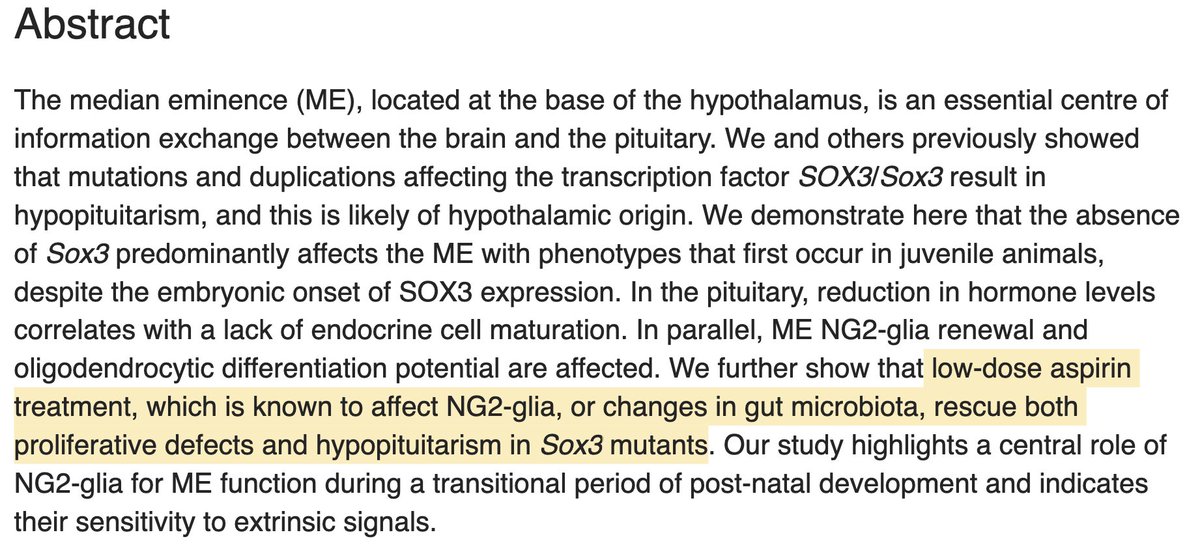
@meoyawn That is a pervasive myth. Aspirin reduces post-exercise muscle swelling, and this can appear as diminished muscle growth/repair, but the gain in contractile tissue is the same.
Aspirin boosts Testosterone
Even in "genetic" conditions. Rats genetically castrated via hypothalamic mutation are fully restored to normal by Aspirin!
This probably explains why Aspirin is so useful for ED and muscle growth.
@Biohackdaygame Inflammation is not really necessary for muscle growth, but it will make the muscles swell and appear bigger. Estrogen does the same thing and accounts for the "water weight" of aromatizable steroids








![TakeThiamine's tweet photo. “Calories in, calories out.”
You’ve surely heard this phrase if you’ve spent any time in the health space. You’ve probably heard it if you’ve spent no time in the health space. This oversimplification of the body’s divine complexity is a relic of outdated nutritional pop-science, and it’s time for it to be thoroughly debunked.
Preamble
I would never outright deny CICO—it can certainly be a useful tool in someone’s weight loss journey. My issue with CICO is the absolutism and rigidity in failing to acknowledge how much it can vary.
When an adult is struggling to lose weight despite eating less food than is recommended for their height, they’re told either “you’re counting wrong” or “just eat less”. What is seldom considered is whether or not that person has a metabolic problem. As we will see, this is very often the case.
What you eat matters just as much as how much you eat.[1] The goal is to increase basal metabolic rate—or “calories out”—not to perpetually decrease “calories in”.
Overview
● Metabolic rate has been decreasing for over a century[2][3]
● Average body temperature has been decreasing for over a century[4]
● Daily energy expenditure has declined over the past 3 decades due to decreased basal metabolic rate—not reduced activity[5]
● We consumed more food in the past yet we were thinner[6][7][8]
● Different macronutrients yield different amounts of ATP
● Different macronutrient ratios impact hormonal profile, which in turn influences both metabolic rate and body composition[9][10]
● We can ballpark “calories in”, but we can’t definitively know what happens between that and “calories out” without understanding all the metabolic pathway variance that can occur along the way
● Counting calories is useful only as a gauge of current basal metabolic rate, but it must be understood that this is subject to change
● Excessive caloric restriction slows metabolism and makes fat gain more likely upon return to maintenance[11]
● Some people would benefit from simply eating less while others would be much better served focusing on increasing basal metabolic rate with intentional daily choices](https://pbs.twimg.com/media/GZCys7ZbIAAITQK.jpg)


