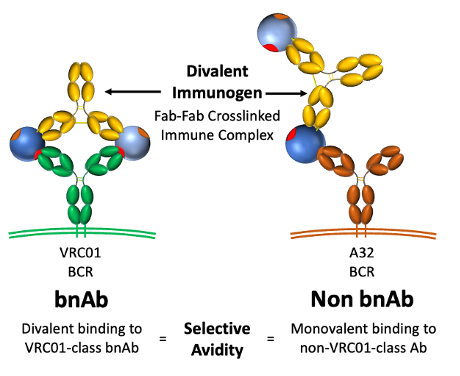
Excited to share our new preprint: ‘Divalent HIV gp120 Immunogen Exhibits Selective Avidity for Broadly Neutralizing Antibody VRC01 Precursors’! We’ve designed a vaccine immunogen that binds divalently to target B cell receptors (like VRC01) but only monovalently to non-target BCRs. Check it out: https://t.co/3RExJRALuz
1/7
Yesterday's automated binder design. Agent's note:
"We ran RFdiffusion3 against HIV gp120's CD4-binding face, testing two distinct targeting strategies"
screened for clashes
Guys, how do you invent a vaccine? Or wilder, how do you invent a vaccine during your PhD?!
In a new episode of Hard Drugs, we talked to someone who did just that: @Kat_a_Collins!
A single malaria parasite that reaches your liver is enough to cause an infection. Worse, malaria has a complicated lifecycle with multiple stages, during which it changes shape and switches its surface proteins. And it’s co-evolved with humans for thousands of years, learning to evade and misdirect our immune system.
That’s why it’s been so much harder to develop vaccines against than viruses or bacteria. But not impossible!
In this episode, @JacobTref and I are joined by Katharine Collins, who co-invented the second malaria vaccine, R21, during her PhD at the Jenner Institute in Oxford!
After reading the expired patent of the first malaria vaccine (RTS,S), she stripped out the excess Hepatitis B surface antigen that RTS,S, leaving a particle with a much higher proportion of malaria antigen, used many newer processes, and paired it with a cheaper, more scalable adjuvant.
The result is a vaccine that’s around a third of the price, easier to manufacture at scale, and may be more durable as well.
It also means a vaccine that can reach far more children and save far more lives. Efficiency and scale matter enormously in the real world.
It’s probably our coolest episode ever. You will learn lots of secret, behind the scenes information about how innovation really works.
We chat about all this and much more!
Timestamps:
00:00 Introduction
05:08 Our favourite parasites
10:12 How to invent a vaccine during your PhD
34:18 Why is it called the R21 vaccine?
37:32 Moving from the bench to hundreds of millions of doses
41:43 The vicious life cycle of malaria parasites
46:15 Malaria research IN MICE
53:03 The murderer in malaria research
55:51 Would you volunteer to get infected by malaria?
1:08:21 Why did the first malaria vaccine take so long?
1:18:26 Could we have had the vaccine sooner?
1:40:48 Vaccine versus vaccine: which one’s better?
1:46:53 If we did this again today, could we make better vaccines?
2:04:55 Conclusion and our reasons for pessimism and optimism
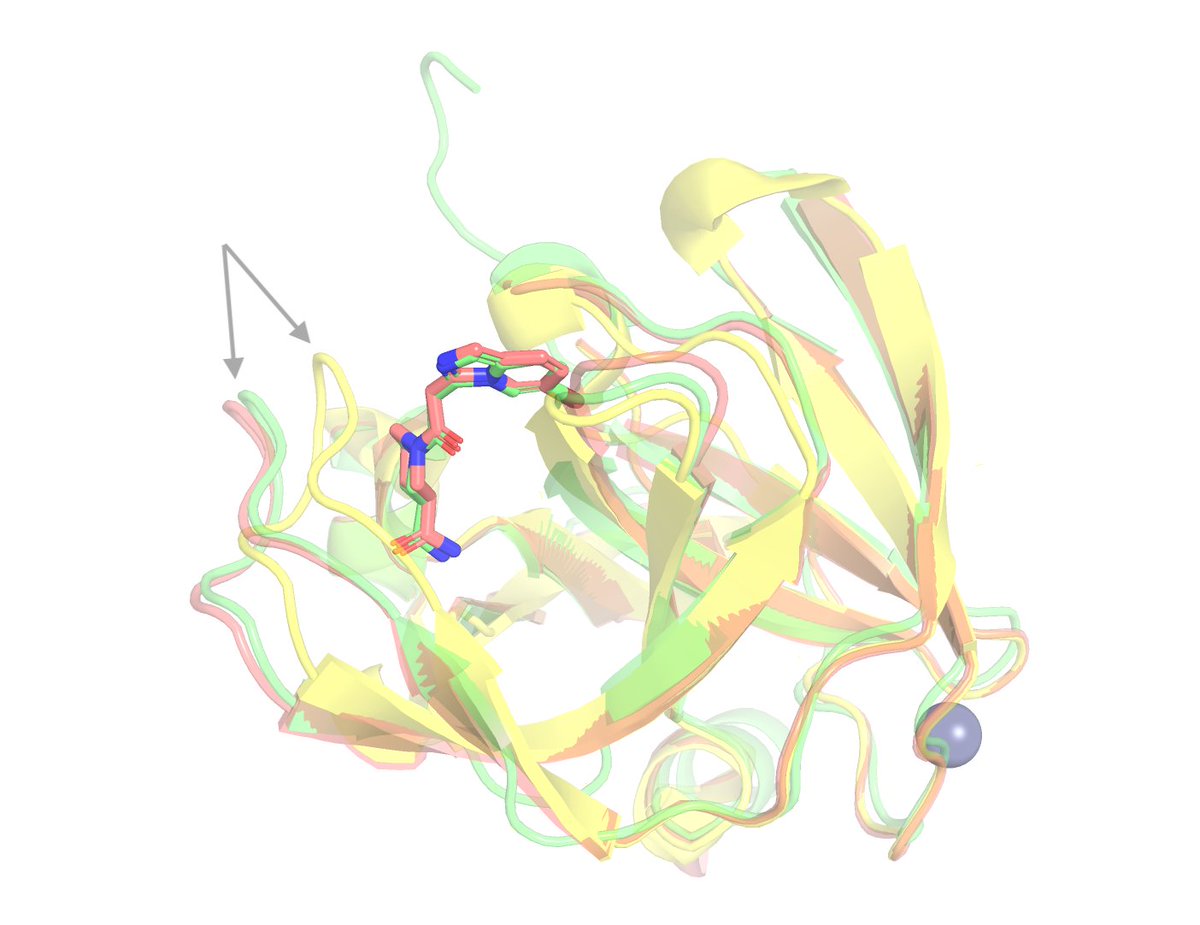
Most docking and cofolding methods assume the protein pocket is roughly fixed: place the ligand into a shape that's already there. That assumption breaks on a lot of real targets, and EV-A71 2A protease is a clear example. When a ligand binds, a loop next to the site moves about 4 Å. Every one of the 802 structures in OpenBind's benchmark needs that rearrangement, which is why classical docking into the unbound structure has only 5% success rate.
Turns out, the real problem isn't "where does the ligand needs to go" it's "what shape does the protein become when this specific ligand shows up." Ligand and protein are coupled, and you have to solve them together.
Pearl predicts that motion from sequence and the ligand alone. On one compound that no other zero-shot method in the benchmark solves, it placed the ligand within 0.28 Å of the crystal structure and got the loop rearrangement right. Modeling induced fit instead of assuming a rigid pocket is a big part of why this holds up on actual programs.
Hannu Rajaniemi grew up as the great D&D nerd of northern Finland.
He turned his story telling skills and smarts - degrees in math and physics from fancy places - toward science fiction and became a beloved sci-fi author. Then he made his way to Silicon Valley and kept going with more big ideas and a bio-tech start-up.
Now, Rajaniemi wants to save the world. His new start-up Red Queen Bio seeks to outpace the AIs when it comes to bio defense. In other words, Rajaniemi would like to help us avoid civilization destroying plagues and thinks he has a plan to do so.
Rajaniemi, who is not as giant as he looks in the wide shot of this video, nor I as tiny as I appear, takes us through his life and career and his massive ideas around AI. He is very fun to listen to. You will enjoy.
The Core Memory podcast is available on Apple, Spotify, YouTube and everywhere really. Love you.
Timestamps
00:00 Intro
03:38 Growing up nerdy
07:19 Nordic LARP
13:05 How Iceland built Eve Online
17:16 Is AI just Frankenstein's monster?
25:40 Things are about to get weird
38:43 The book that started coming true
51:51 Producing a dark twin
1:03:46 Inside Red Queen Bio
1:29:02 Why lone wolves are the new threat
1:37:01 Building a civilizational immune system
@silvirouskin@socalartgal3 I think that is a foreign bot designed to sow division. Tough to spot these days but keep an eye open for them and don’t feed them. ❤️
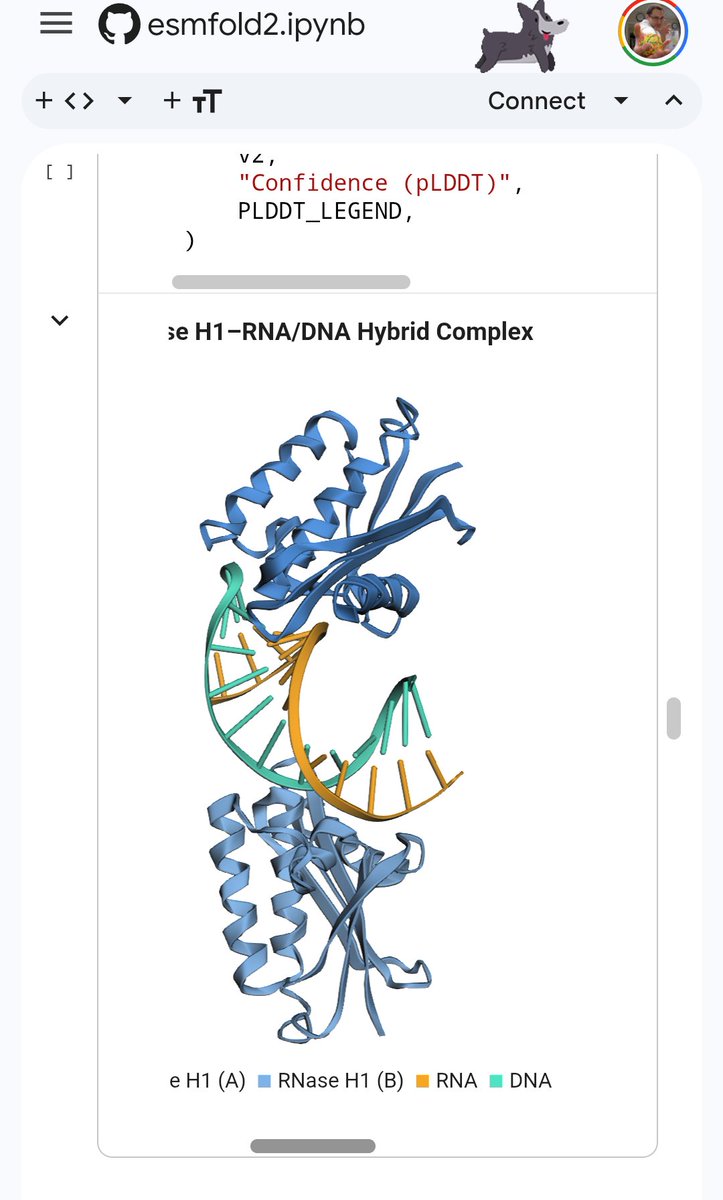
Announcing ESMFold2, our new state-of-the-art structure prediction model capable of predicting structure from single sequences or MSAs. ESMFold2 improves on benchmarks of protein-protein interaction and is particularly strong on predictions of antibody-antigen complexes.
Today we're announcing ESMFold2, an open scientific engine to power prediction, design, and discovery across protein biology.
The new model delivers state of the art performance on protein interactions, especially antibodies, a critical modality for therapeutics.
We have designed and validated miniprotein binders and single chain antibodies across five therapeutic targets that are important in cancer and immunology. We are seeing very high success rates, and affinities at levels consistent with therapeutic activity.
We’re also releasing an atlas of 6.8 billion proteins, and 1.1 billion predicted structures.
ESMFold2 is built on a state of the art language model that has been trained on billions of protein sequences.
A world model of protein biology emerges through language modeling.
We’ve used the techniques of mechanistic interpretability developed to understand large language models to understand the concepts ESM uses to represent proteins.
The model’s representation space has a compositional organization of features across scales, levels of complexity, and abstraction, that reflects and mirrors the understanding of protein biology developed through a century of empirical science.
This understanding emerges without prior knowledge, just from language modeling of protein sequences.
Language models are becoming a powerful substrate to understand and program biology.
The design of protein interactions is one of the most fundamental problems in biophysics, and has critical implications for the discovery of new medicines. A simple gradient based search with the model was able to discover high-affinity protein binders.
I'm excited by the potential this has to accelerate basic science and the understanding of proteins. And especially for the new avenues it opens up for therapeutic design and medicine.
the blogs that @tamarindbio write legitimately make it possible to understand the whole landscape from one article
every other field needs this, and no other field has it
B for Biotin: This video showcases the biotin-streptavidin system, highlighting the small biotin molecules bound within the pockets of the tetrameric protein, streptavidin. This pairing represents one of the strongest non-covalent interactions found in nature.
LAUNCH DAY 🚀 Today I’m launching a new podcast, Hard Drugs, with Jacob Trefethen (@JacobTref)
Our first episode is about lenacapavir — a new HIV drug that blocks infections with an efficacy rate of nearly 100%, and which could completely change the fight against HIV worldwide.
It’s also about the scientific journey leading up to this point, and how HIV was transformed from a lethal to a manageable condition.
3:52 How was HIV discovered? Where did it come from, and how does it attack the body and cause AIDS?
38:10 Antiretrovirals: How did scientists develop breakthrough HIV drugs — from azidothymidine to protease inhibitors to PrEP?
1:51:35 How does prevention and treatment work today?
2:19:03 HIV’s capsid and the breakthrough of lenacapavir, the first-approved HIV capsid inhibitor
2:50:36 How to develop long-lasting treatments
3:14:45 Lenacapavir’s near 100% efficacy in clinical trials
3:48:40 The impact of global programs against HIV, and can we now end HIV?