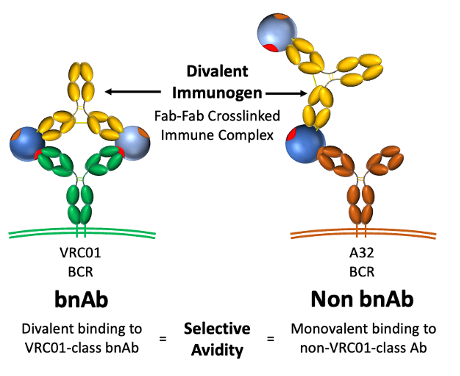
Excited to share our new preprint: ‘Divalent HIV gp120 Immunogen Exhibits Selective Avidity for Broadly Neutralizing Antibody VRC01 Precursors’! We’ve designed a vaccine immunogen that binds divalently to target B cell receptors (like VRC01) but only monovalently to non-target BCRs. Check it out: https://t.co/3RExJRALuz
1/7
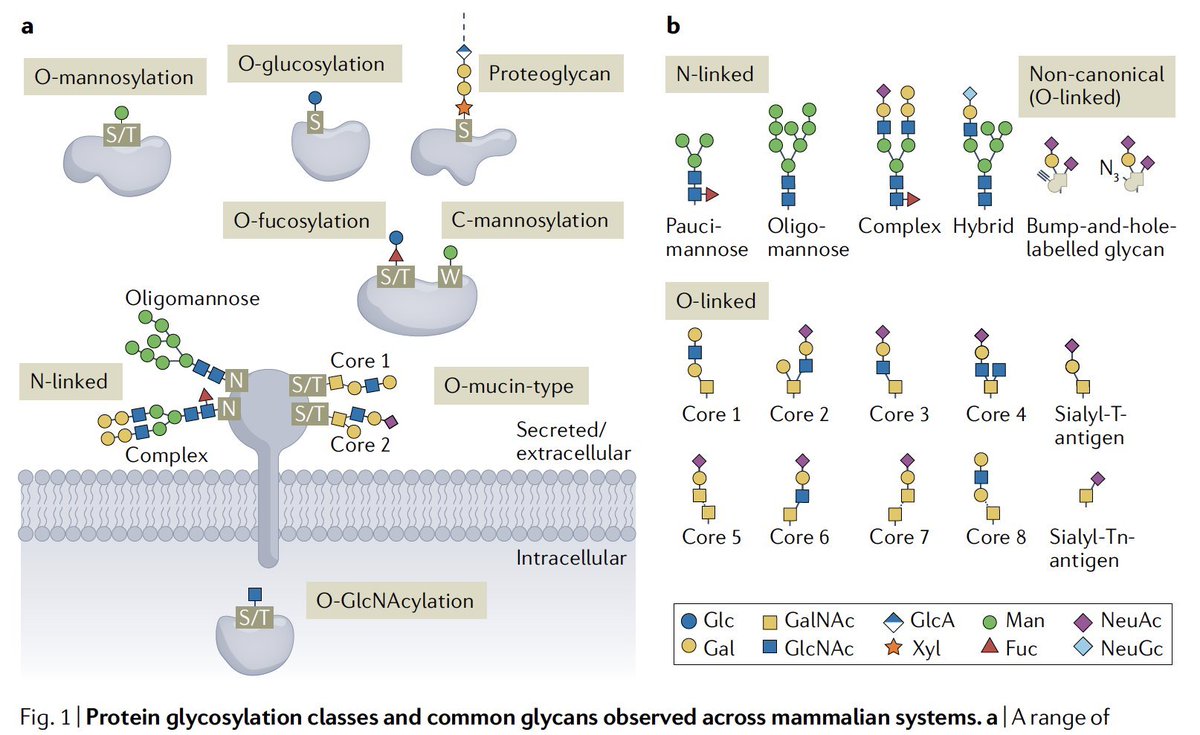
Glycosylation is among the most important modifications in biology.
We know relatively little about glycobiology, because it is hard to study.
This Nat Rev Methods primer describes our best tools for analyzing glycosylation 🔽
We built a website to make it super easy to get started with protein design and participate in the Anthropic x Adaptyv protein design competition
▶️ https://t.co/L3dg6H6BTU
This week, we're challenging people to design an Ozempic-like drug. You can get started in just a few clicks, using the newly released RFD4 model to design proteins targeting the GLP-1 receptor.
We'll synthesize and test 1000+ of these designs in our automated biology lab, including whether they actually activate the cell receptor, and make all the results publicly available
Excited to share what we’ve been building with Chaperone!
In our benchmark, Chaperone reduced token usage by 86%. We also went from hypothesis to sequences ready for wet-lab testing in just two weeks—yielding a 1.32 nM cortisol binder in the first experimental round!
Protein immunogenicity is a major driver of drug failure in the clinic, a problem especially important in the age of generative AI when we can design de novo medicines with desired function.
Meet 🐐MESSI: a generative method for deimmunizing proteins with discrete diffusion. We reduce predicted MHC-II epitopes and experimentally validate retained or improved function in luciferases, PD-1 binders and uricases—an enzyme family used in FDA-approved therapies.💊
Watch the story below:
1/n 🧵
At @GoogleDeepMind, we believe one of AI's most transformative impacts is empowering scientists to solve society's hardest problems.
Over the past year, we've evolved our coding agent, @Google@Antigravity, to accelerate end-to-end scientific workflows combining our latest Gemini models with science-specific:
• breakthrough models like AlphaFold and AlphaGenome
• new interfaces like the Biomolecular Structure Viewer
The impact of this integration has been transformative for the pace of our research. As an example, in a single session using Antigravity, our researchers working on antimicrobial resistance surfaced a novel antimicrobial peptide candidate.
To support academic researchers leverage these tools, we've launched an Antigravity for Science credits program and are looking forward to what this enables:
https://t.co/R4hlX3sgxL
Read the antimicrobial resistance case study:
https://t.co/aZKsOaaUiP
Linus Torvalds says, rules prohibiting AI usage are “UTTERLY STUPID” and “idiotic”.
For the Linux kernel, Torvalds says, “we’re not going to make stupid rules that say ‘you can’t use tools for X’”.
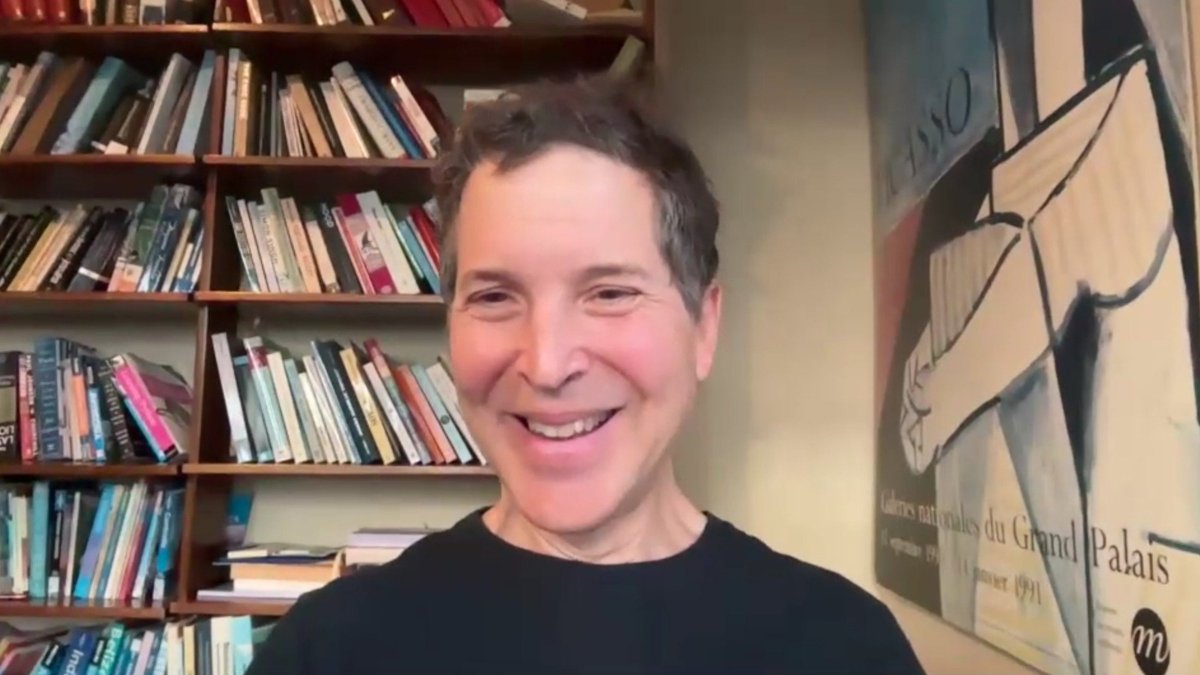
Dialectic 60: Patrick Hsu!
@pdhsu & @arcinstitute are combining biology, engineering, and AI to turn a sci-fi future into reality.
Patrick got expelled from college at 13, returned at 15, later worked on early CRISPR breakthroughs, and teamed up with @SKonermann & @patrickc to found Arc.
He works 3 jobs: core investigator at Arc, professor at Stanford, and venture partner at @thrivecapital. For all his intensity and ambition, he carries a lightness and boldness that is contagious.
We discuss:
- why research is 99% failure and even your best ideas kind of suck
- infinite games and speedrunning school
- the reach of GLP-1s and power laws in biotech
- what makes a good biologist
- Arc’s bet on people over projects
- lab robots that finally work
- AI-designed organisms and new forms of life
- why heart disease could go the way of infectious disease
- bro science, peptides, and biofuturism
- research taste in the age of AI
Timestamps:
(0:00) Opening Highlights
(1:39) Intro: Patrick Hsu
(4:29) Start: Boldness, Infinite Games, & Ambition
(12:54) GLP-1s and Power Laws in Biotechnology
(20:17) Expelled at 13 and Falling for Biology
(25:51) What Makes a Good Biologist, Research Taste, and Biology's Data Challenges
(37:58) The Arc Model: Full-Stack Science
(52:01) Betting on People, Style, & Learning to Simplify
(57:22) Perturbation, World Models, and Evo
(1:03:27) Virtual Cell Models
(1:09:56) Designing Life: From Stem Cells to Genome Writing
(1:18:39) Testing, Bro Science, and Human Data
(1:24:26) Can It Exist vs. Will It Exist: Science Meets Markets
(1:29:59) Biofuturism: Interoception, Peptides, Muscle Modulation, Sleep, and New Forms of Life
(1:43:47) Fun, Obsolescence, Going Slow, and the Future
@dialecticpod 60: Patrick Hsu - Speedrunning the Infinite Game - is available on all platforms, including X. Links below.
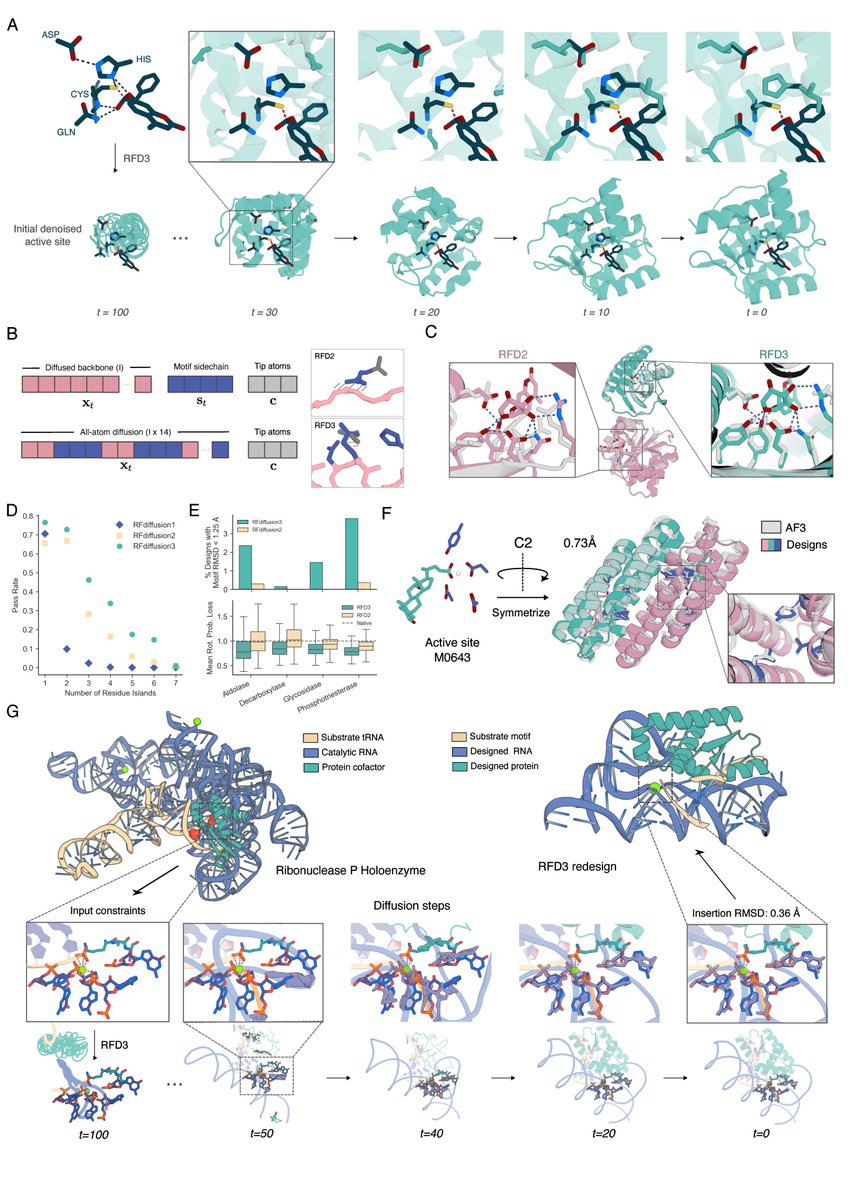
In Science, researchers present RFdiffusion3, a new generative AI system that designs proteins and nucleic acids atom by atom, which could enable the ability to engineer novel biomolecules with precise, complex functions.
Learn more: https://t.co/ARUjcNoODV
I'll say it again for the AI risk experts in the back:
We've already run a real life, large scale experiment on what happens when a superintelligence is unleashed on a narrow objective.
Look no further than U.S. capital markets.
Millions of investors, analysts, traders and algorithms, backed by trillions of dollars and wired together through prices, all chasing one goal: the highest risk-adjusted return on capital.
And it is spectacularly good at its job. It funds the best ideas, punishes the worst ones, and turns new information into prices faster than any of us can react. No individual can out-think it. 99+ percent of professionals can't beat it.
But look at what else it's done along the way:
- Optimized the measure instead of the intent. Quarterly earnings became the scoreboard, so companies learned to manage the scoreboard.
- Treated anything without a price as free. Pollution, addiction, obesity, depression, political fragmentation, fragile supply chains, the long-term health of the communities it operates in.
- Found every gap in the rules, then paid lobbyists to help write the next set and pull up the ladder behind incumbents.
- Remade the world around its objective. Companies, pension funds and our retirement accounts now answer to the S&P 500.
- Made itself impossible to switch off, because everything else now depends on it.
None of this required malice. Nobody sat in a room and chose these outcomes. It's simply what a very capable optimizer does when its objective is a narrow proxy for what we actually care about.
And note that we never solved this alignment problem. We've managed it, imperfectly, with regulation, taxes, disclosure rules and the occasional crisis to show us where the guardrails were missing. Over time, the market has captured the instutions designed to constrain it. We've been at it the better part of a century, and the misalignment is the worst it's ever been.
So the next time someone tells you AI is only dangerous if it "wants" something bad, or if its goals are mis-specified, point them at the S&P 500. It doesn't want anything. It just optimizes.
That's the whole problem.
🚨 pre-print alert 🚨
Glycosylation has remained outside the reach of biomolecular design, but with new all-atom methods we are now able to control the types of glycans displayed on our de novo proteins.
In our newest @biorxivpreprint, we present multiple structurally-encoded oligomannose-type glycoproteins, establishing glycans as a designable parameter!
https://t.co/PLHMh0Ci0H
I asked Opus 5.5 to make an interactive website companion for the latest @AcquiredFM Home Depot episode. It came out pretty nice!
Water color illustrations all drawn by Claude, too: https://t.co/Camrfu3bwT
Episode here: https://t.co/x2t57gdjxr
⚠️ Nobel laureate David Baker returns to Endpoints' AI Day
Two years ago, he told us protein binders were "close to getting solved" and described the "lunatic fringe" that defines IPD's research
Sign up (takes 15 seconds) for free virtual access now:
https://t.co/ZbW0IEvaYK
In physics, an “impedance mismatch” occurs when two systems each work well but are poorly matched.
In this Science Blog guest post, Harvard physicist Matthew Schwartz argues that something similar is happening with AI and science. LLMs are capable at many things, but working with them as you would with a human collaborator isn’t currently the best way to elicit their scientific strengths.
To address this mismatch, Schwartz created a toolkit for exact calculations in quantitative science. Because similar calculations often emerge in very different areas of science, Claude found connections to ecology, population genetics, and a dozen other fields, and Schwartz worked with domain experts to steer it towards interesting questions.
Read more about these projects here: https://t.co/UpgSwMCz7h