@Cartesien243 Tout comme vous,
elle ne roule pas pour le peuple.
Comme vous,
Elle s’agite avant tout pour les intérêts personnels de la classe politique.
@ogata_itaru Waouh ! La nourriture japonaise est un Must !
Chef, dans le cadre de l'amitié de nos peuples, est-ce possible d'organiser une soirée de dégustation en cette fin d'année ?
@wembi_steve La haine germe vite. Qui plante division, récoltera tourments. Les fruits sont déjà lourds, la cueillette est prochaine ; Nul ne doit s’étonner si l’avenir enchaîne.
PLUS D’EMPLOIS, PLUS D’ENTREPRENEURIAT 🇨🇩
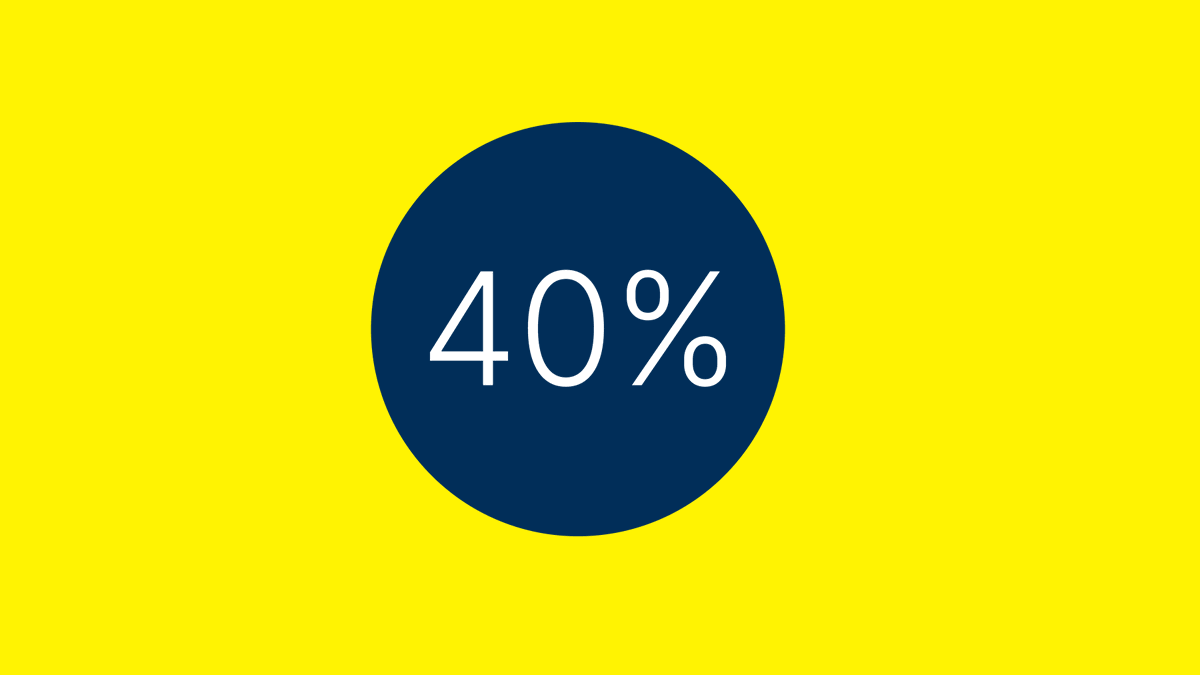
Et si le gouvernement #SUMINWA consacrait un quota exclusif de 40 % des marchés publics aux PME locales dirigées et appartenant aux jeunes et aux femmes congolaises ?
Je veux votre avis !
@ASA_Today The ADF/IS-CAP doesn’t just fight it infiltrates. False defectors, dual agents, and urban networks have corrupted intel flows in FARDC, UPDF & even MONUSCO. Until counter-intel becomes a priority, operations will keep failing before they begin. #DRC#ADF#Security#IntelWar
@ASA_Today Asymmetric coordination, poor timing between airstrikes (July 6) and ground ops (July 7–9): the ADF exploited the gap. My take? Plans likely leaked. The insurgents’ 3-layer defense and prepared escape route suggest they knew what was coming. Invisible hand at play?
@ASA_Today My hypothesis: Musa Baluku wasn’t fleeing , he was exfiltrated with the help of corrupt elements within FARDC or local admin. His fallback to a repurposed Chinese site (Mungu Iko) suggests high-level planning, logistics, and protection from a cross-border support network.
@ASA_Today Deployment delays on key axes, Musa Baluku’s escape through known gaps, was it just poor coordination or deliberate sabotage? The FARDC-UPDF operation against ADF shows signs of possible infiltration within the ranks.
Good job @ASA_Today
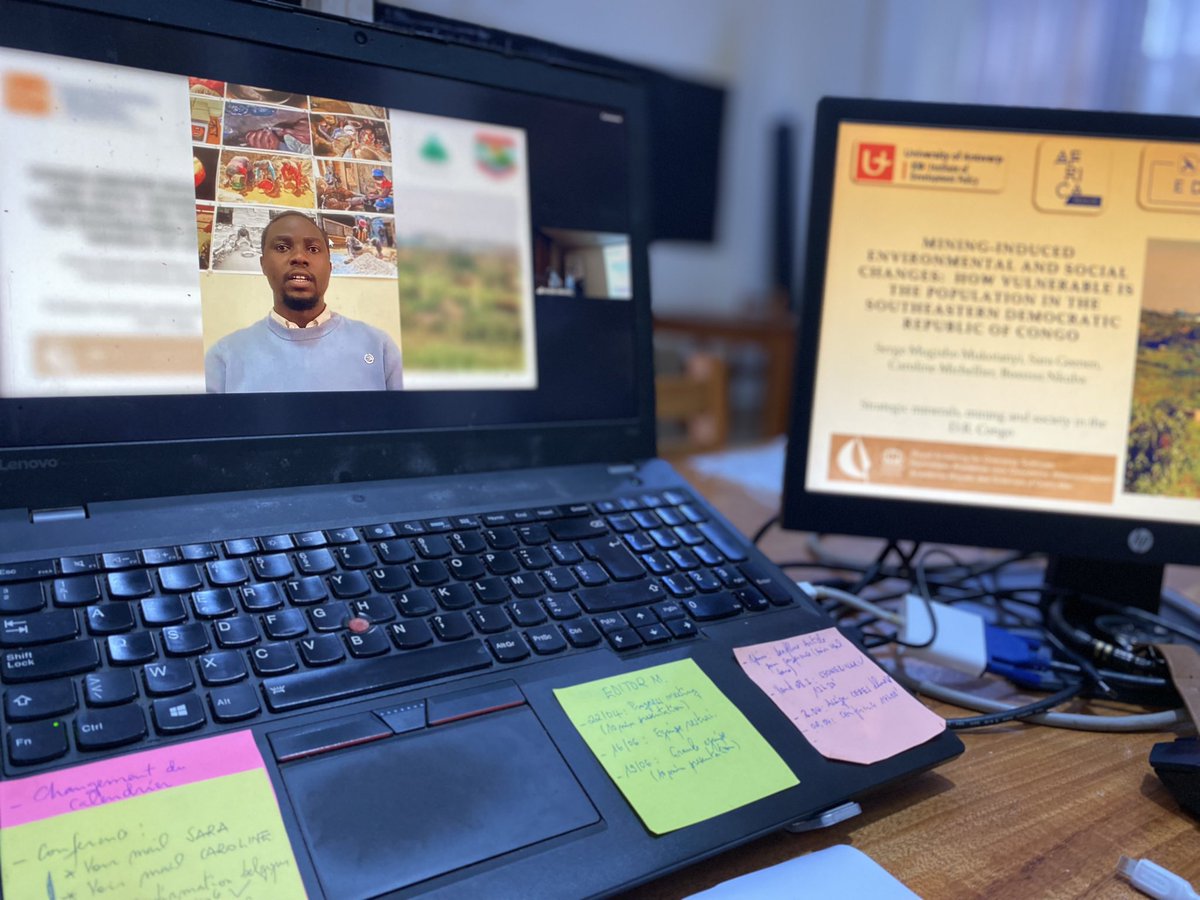
Happy to have taken part in the conference organized by Royal academic for overseas Sciences. As one of my promoters put it: "Don't worry, we've got time! 😉"; a time for sharing what we're doing and what we're going to do in the southeastern part of the Rdc.
Mme Francine Iragi(enseignante à @ucbukavu) défend sa thèse PhD en Economie de Développement à @UAntwerpen ce 9 juin à 16h
📖"The hammer and/or the hoe? Analysing the linkages between artisanal mining and small-scale agriculture in South Kivu/Eastern DRC"
https://t.co/2MIPS4932M
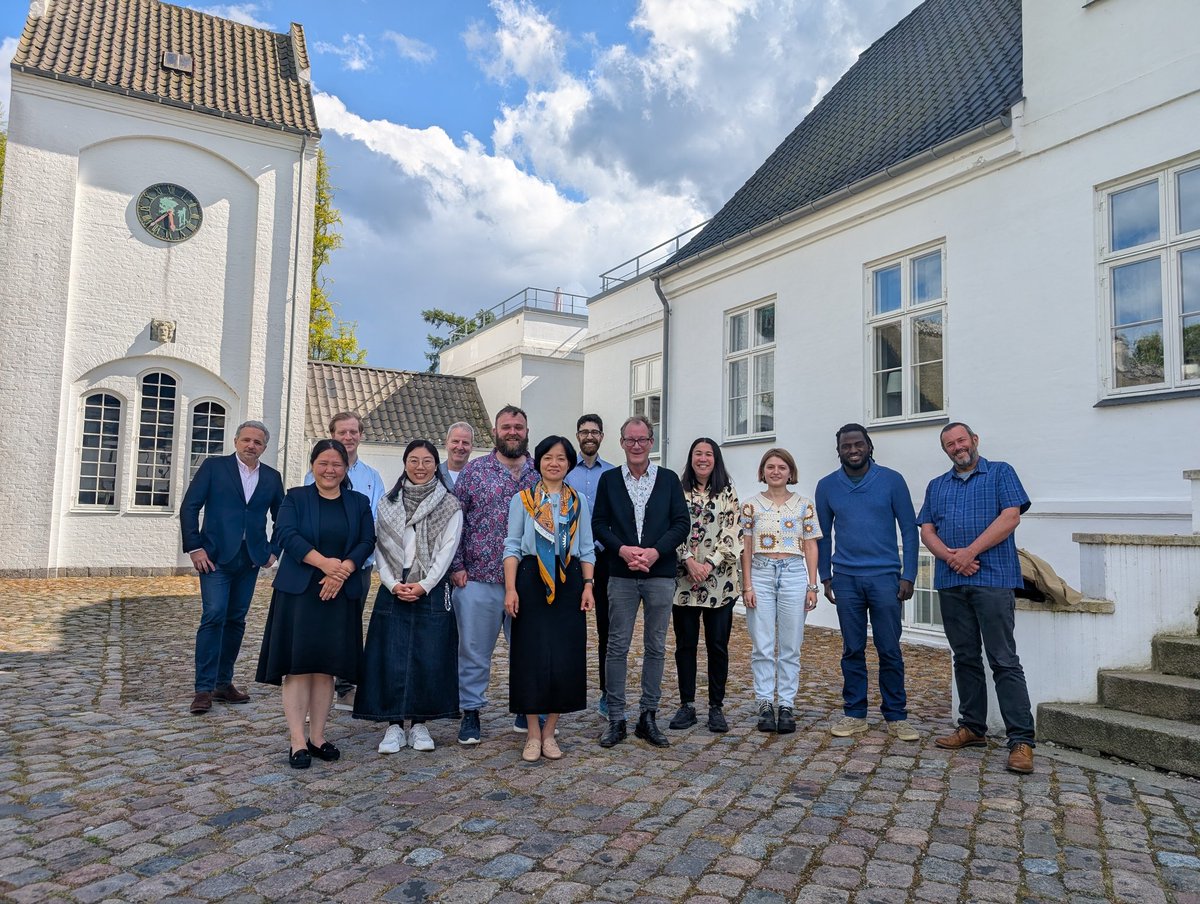
Friendship& collaboration, from China🇨🇳 to Chile🇨🇱 and now Denmark🇩🇰. Trying to understand how lithium& cobalt are managed globally. From industrial& artisanal mining, to battery& EV manufacturing, and then to formal & informal recycling. All good, except swimming in cold water🥶
@Hi_FromLaura@SilveyCorp@Hilbe All for fixing exploitative working conditions, but can we be honest about the scale of the problem?
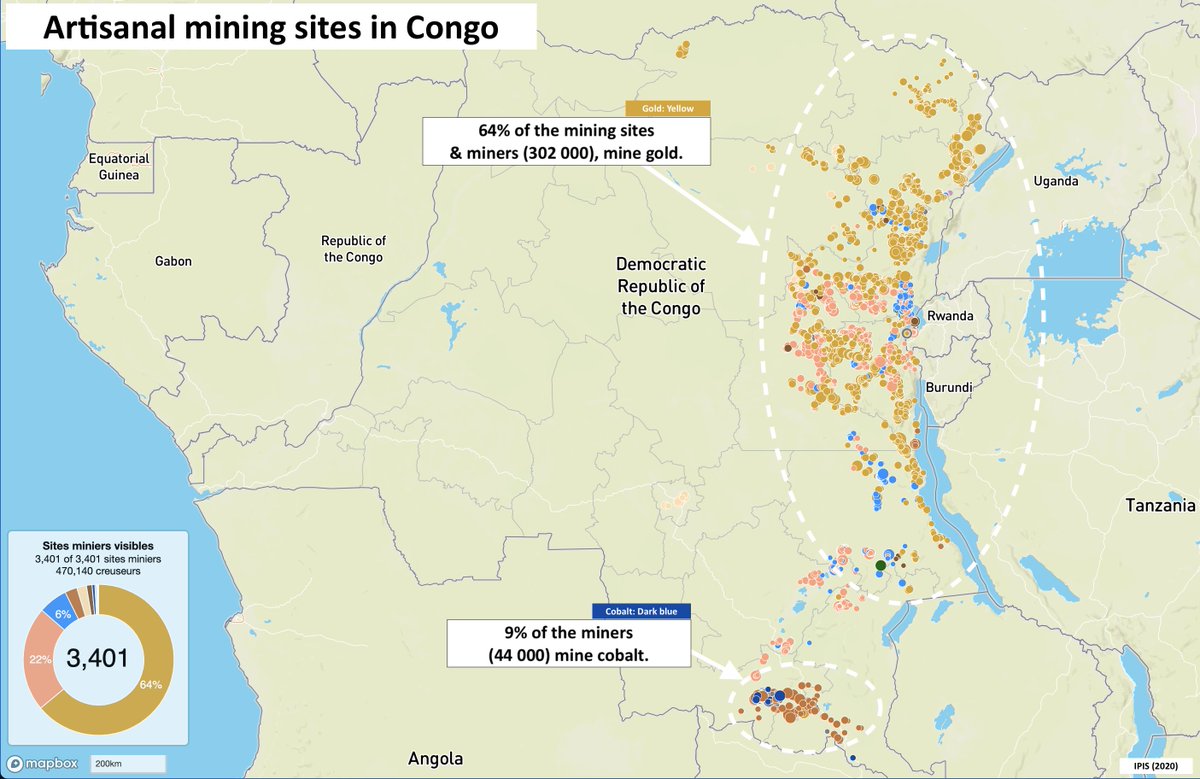
About 10 times as many people mine OTHER materials such as gold under abysmal conditions ⬇️
Not to mention that no ICE vehicle or oil refinery would work without it?
Can we get real about cobalt? This is a map of artisanal mining sites in Democratic Republic of the Congo. 64% of the 3400 artisanal mining sites are for gold (IPIS).
Out of 470 000 diggers, 302 000 mines gold, 95 000 cassiterite, 56 000 copper, and 44 thousand cobalt.
Numbers are indicative but if we really care about artisanal mining and its problems, we should talk openly about every mineral, miner and not only cobalt.
https://t.co/KhSIrnwzEU