At midnight on February 6th, earlier this year, the doorbell to our apartment rang. The doorbell was followed by a pounding on the door. I answered the door and a security person in our building handed me his phone. It was my oldest daughter Eloise. She had found my 26-year-old daughter unconscious on the floor of her apartment and had called 911. The EMT team was already there, but they did not know what was wrong with Lucy or to which hospital they would take her.
I threw on some clothes and jumped in an Uber heading east toward Brooklyn. (Lucy lived alone in Williamsburg.) On the way, I learned that they were taking her to Elmhurst, a City trauma hospital in Queens. I arrived about five minutes after the ambulance to join Eloise, Lucy’s mom, and a friend, and waited to learn what was wrong.
After about 15 minutes, I asked a nurse where she was. I looked over his shoulder to his computer. Next to her name, it said “non-responsive.” I walked into the emergency room and wandered around looking for her until I found her unconscious on a gurney surrounded by several doctors and nurses.
By about 2:30am with the results from a CAT scan, Lucy’s doctors had determined that she had a massive brain hemorrhage and would need an emergency hemicraniectomy to release the pressure on her brain and remove the blood from the hemorrhage. I called our wonderful friend and family doctor Eddie Fisher and explained what was going on. He woke up Josh Bederson, Chairman of Neurosurgery at Mount Sinai, to find out more about Zach Hickman, the neurosurgeon on call that night. Dr. Bederson said Hickman was an excellent surgeon, which was comforting as we had no choice.
The surgery to save Lucy’s life began around 3:15am and finished around 5:30am. It was successful.
The following day, I joined Lucy in an ambulance while she was being transferred to Mount Sinai on Madison Avenue. Later that day, we determined from Lucy’s Oura ring that her hemorrhage had occurred around 9am, which meant that more than 19 hours had passed from the time of the hemorrhage to the completion of the surgery to release the pressure on her brain (I only wish @ouraring had an alert for this kind of a medical event. Imagine it could call a family member if the wearer doesn’t cancel the alert).
I later learned that the standard of care is not to do surgery to save a patient with a large brain bleed if more than five hours have passed since the hemorrhage. Even when the surgery is done, I was told that the likely outcome for the patient is a few months in a nursing home and death from pneumonia.
When I met Lucy’s doctors, I did my best to inspire them: “Let’s see what can be accomplished if we give her the best care possible and we invest unlimited resources to restore her to life.” And I promised that whatever we learned we would make available to everyone.
Dr. Chris Kellner, her neurosurgeon, and Dr. David Putrino, Director of Rehabilitation Innovation for the Mount Sinai Health System have led Lucy’s care team since that day. Words cannot describe the remarkable and compassionate care that she has received beginning with the EMT team and then from nurses, doctors, therapists, and the army of people who have worked to save her and return her to life. To this day, we have a daily Zoom where we discuss her progress and make adjustments to her care. While her care and oversight have been incredible, the learnings for the Mount Sinai team have also been elucidating and will assist in the care of many others.
Lucy began in a bad place. She was in a coma for several weeks and then awoke not being able to breathe on her own, unable to walk, see or speak.
Over the last six months, she has recovered her cognition – she understands everything including her circumstance – is able to walk a hundred or more steps at a time with assistance, is making progress with sounds, vowels and consonants and the beginnings of speech, but she remains unable to see.
Each day, she makes a little progress, and daily progress compounds. Every day I tell her that she just needs to make a little progress and it won’t be long before she is back.
We remain optimistic that Lucy will return to normal function. It will likely take years, but I believe it is only a matter of time, hard work, and technological progress, along with some, and perhaps a lot, of divine intervention.
Many people have been praying for Lucy and we are incredibly grateful for the prayers and remarkable support she has received. Lucy’s friends have been with her every day since the beginning, and their presence and friendship have saved her life and helped to rebuild and maintain her spirit. And on a very positive note, Lucy’s challenge has brought together our entire modern family who have all been incredibly devoted to her care and recovery.
Lucy's vision and other faculties may require some form of brain computer interface, work that is underway at Neuralink, Precision Neuroscience, Science, Synchron, Nudge, and other companies in the space.
If you are going to have a devastating brain injury, now is the best time in history for that to happen. We are living in a world when you can be confident that the blind will soon see again. We are going to do everything we can to help make that happen, including by assisting existing companies in the space.
With respect to our promise to make Lucy’s care available to others, we have made good progress. In May, a real estate colleague made me aware of a 93% vacant, brand new, 400,000 square foot Class A+ purpose-built biotech facility on West End Avenue between 65th and 66th Streets that missed the market and was available for sale. The Pershing Square Foundation acquired the building 60 days later.
We also put under contract an adjoining 130,000 square foot building at 320 West 66th Street that is currently being used by Saturday Night Live for studio space. The building has 35-foot ceilings with massive column-free spaces that can be converted into superb rehabilitation facilities. We will close on the SNL building in December.
We are also acquiring an adjoining vacant lot with additional air rights. With just the existing zoning rights, we can add a 150,000 square feet for a total of 680,000 square feet, a lab footprint larger than Rockefeller University, and that’s without including the potential for an upzoning that would allow for substantially more buildable area on the site’s 3.4 acres with spectacular views of the Hudson.
Our goal is to build the world’s greatest brain research, rehabilitation, recovery, human optimization, and longevity institute. We have named it The Ackman Oxman Institute or the AOI for lack of a better name, but also to reinforce the point that Neri and I and our family are all-in on the mission.
The AOI will be patient-centric. It will not be an academic research institute that produces lots of papers, a Nobel Prize winner or two, but little if any results for patients. We will be laser-focused on cures, treatments, devices, rehabilitation and exercise equipment, and targeted and basic research with a goal of massively accelerating the time from idea to innovation to production to helping a patient.
While the AOI will be a non-profit, it will have highly commercial instincts. The AOI will have its own venture funding and will work to develop innovations to create companies that we will seed, assist, and spinout to ensure technologies, treatments, techniques, and drugs get to patients as promptly as possible.
On one 3.4 acre campus in what is still the greatest city in the world, we will do neurosurgery, neuroscience, rehabilitation, nutrition, BCI and device development, human trials, hyperbaric oxygen treatments, and life extension programs, and we will mandate and incentivize collaboration among the teams with no silos, politics, bureaucracy, or any other constraint that is inconsistent with the mission.
Mount Sinai will be an important partner and deservedly so, but it won’t be our only hospital or medical school partner as we don’t believe any institution has a monopoly on the best ideas or the best talent. We don’t believe in exclusive relationships because that is not in the best interest of patients.
Five years ago, we considered launching a brain institute inspired by Neri’s mom who sadly died from Alzheimer’s. We couldn’t make the math work as the real estate was too expensive and we believed it would be too difficult to recruit the best talent from universities to our effort.
Since then, the real estate became available at a 70% discount, universities became a much less attractive place to work due to politics outweighing meritocracy, protests that disrupt learning, the curse of antisemitism, and a decline in funding. Fortunately, during the same time, I made sufficient personal economic progress to make the AOI possible.
The advance of AI in the last few years will also enable us to greatly accelerate our mission. AI still has a lot to learn about human intelligence and the brain, and the AOI should be at the forefront of the interplay between the brain and AI.
Today, I am making a public filing disclosing a gift from Neri and me of ~$400 million or 10,000,000 shares of Pershing Square Inc. (PS) to the AOI. It is very early days for Pershing Square so these shares are intended to anchor the long-term work of the AOI as the shares compound over time while generating what we expect will be a growing stream of quarterly dividends to fund the Institute.
We will also be announcing an additional gift of similar and potentially greater size which won’t be in the form of Pershing Square stock to provide the AOI with the short- and intermediate-term runway necessary to enable it to achieve its goal of becoming a self-sustaining institute, which reinvests all of its revenues, royalties, and the economic rewards of company formation to advance the fields of brain health and human longevity.
Neri and I have chosen to anchor the funding of the AOI to maintain vision alignment and limit the need for the organization to focus on fundraising. We expect the AOI to be the best-resourced brain, rehab, recovery, and longevity institute in the world.
We are grateful to have been able to form a board which includes Dean Kamen (our generation’s Thomas Edison), George Yancopoulus (CEO of Regeneron), James Rothman (Nobel Laureate), Bernardo Sabatini (neuroscientist), Chris Kellner (neurosurgeon), Olivia Flatto (CEO Pershing Square Foundation), Neri Oxman, and myself.
We have recently identified a CEO who we expect to announce by October along with other key hires, and are beginning searches for a Chief Scientific Officer, a Chief AI/Technology Officer, a Chief Operating Officer, a Chief Financial Officer, and other key leadership roles.
If you find what we are building compelling and want to be part of the leadership team that creates and builds the AOI from a standing start, please send an email to: [email protected] with a short note as to why you believe you can help. Please include your best three ideas for the AOI along with a summary of your background and your most important accomplishments.
We promise strict confidentiality to those expressing interest in working with us.
We have learned from Lucy that the brain can recover from even catastrophic injury. There is so much more work to be done as the mind is a terrible thing to waste.
For details from my Pershing Square SEC filing see:
https://t.co/gZKafCw6Ia
In 2010, Bill Ackman gave a 44-minute masterclass on how money actually works using a lemonade stand.
He talks about:
• How businesses create value
• Why most investors lose money
• How compounding really builds wealth
12 timeless lessons from Ackman's masterclass:
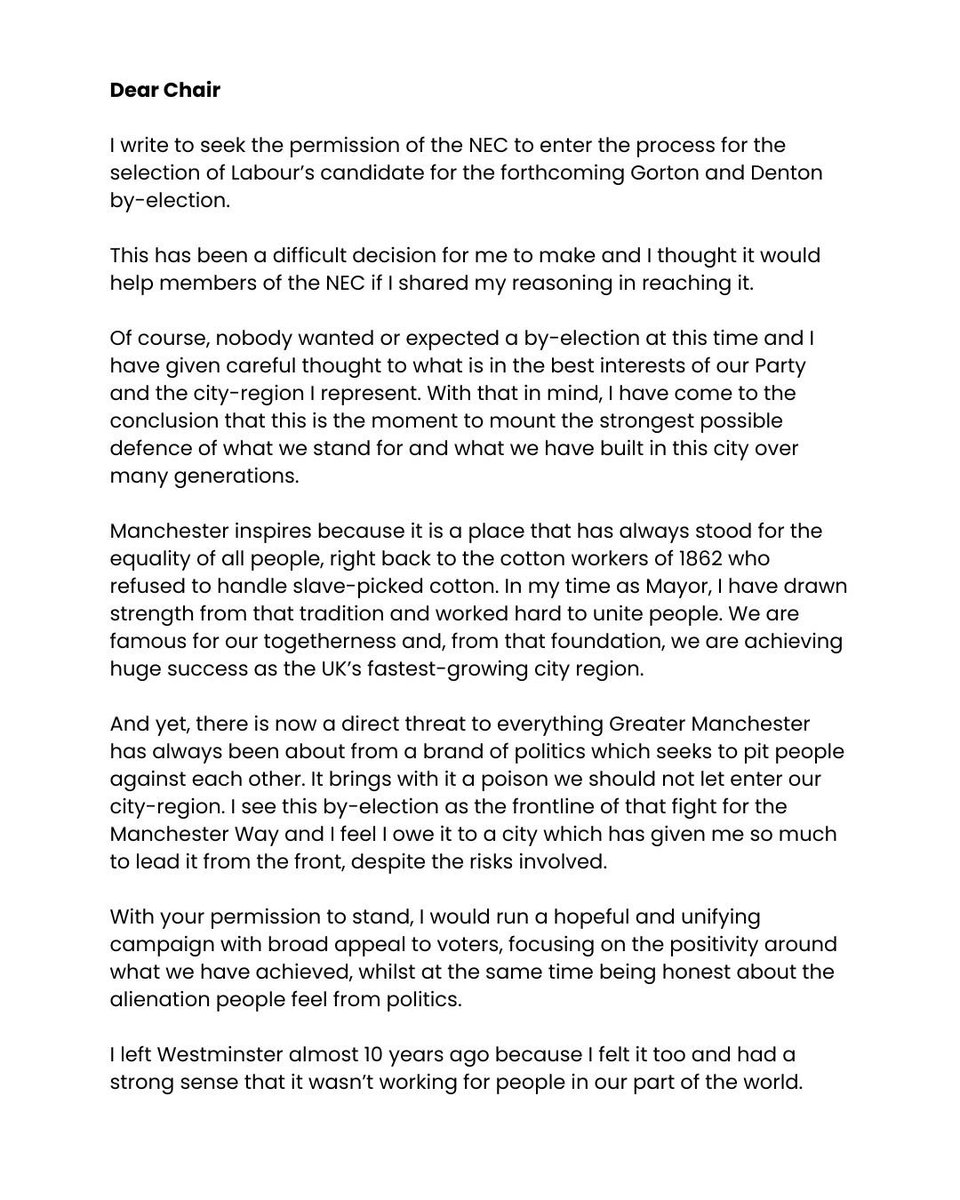
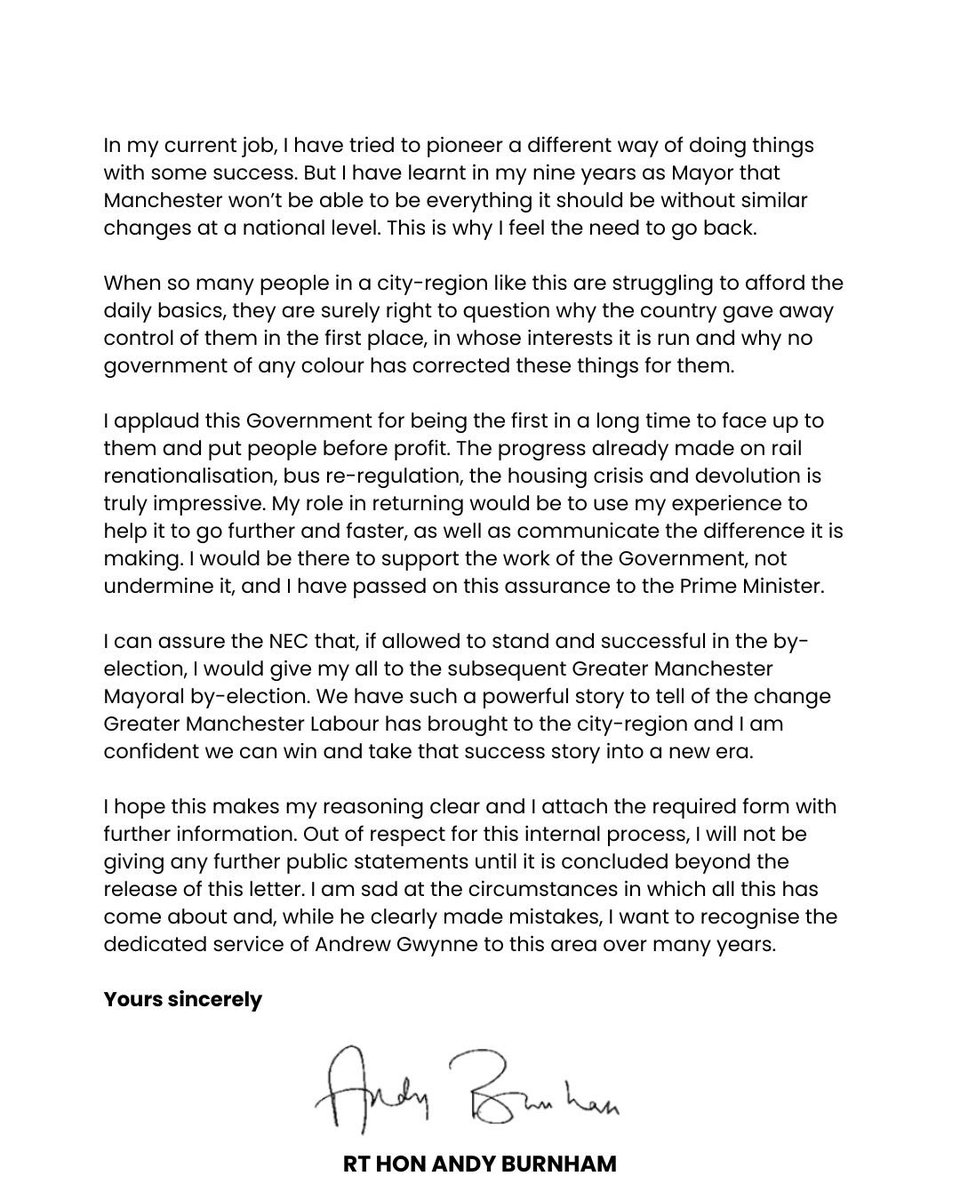
I have today written to the Chair of Labour’s National Executive Committee seeking permission to enter the selection process for a candidate for the forthcoming Gorton and Denton by-election.
Read my letter here.👇🏻
This is extremely valuable for anyone who is ready to make major changes in their life.
Jordan Peterson has a similar process called self-authoring.
It changed mine.
Please find the link to a new paper I have authored, published by the @WorldBank Africa Growth and Opportunity Research in Action (AGORA) Series, entitled „African Trade and Investment for Global Resilience“. It is based on my 2025 Mattei Lecture in Italy and argues that Africa can anchor a new model of growth and simultaneously bolster global resilience by moving to more value added production and deeper integration into regional and global trade and investment networks. @IndermitGill
https://t.co/BHTCe6Webp
Smartphone users increasingly have access to services that make use of AI, but high markups on SMS will prevent the world’s poorest from making use of the tech.🌐
@danbjork maps out the costs by country & what can be done to counter the markups:
https://t.co/UDWoi8cJ9s
The exposure of the world to US equities is at record levels. A stock market correction would have more severe and global consequences as compared to what followed the dot-com crash. The tariff wars and lack of fiscal space compounds the problem. The underlying problem is not 'unbalanced trade' but 'unbalanced growth.' There is a need for higher growth and returns in more countries/regions of the world, not just in the US. The full piece can be read here: https://t.co/FAPKS9k7Vg
This debate between Justin Lin and Ha-Joon Chang is the ultimate guide to understanding the strengths and limitations of the theory of comparative advantage.
This MIT paper just broke my brain.
Everyone keeps saying LLMs can't do real logical reasoning. Turns out we've just been teaching them wrong this whole time.
These researchers built something called PDDL-INSTRUCT that actually teaches models to think through planning problems step by step. Not just pattern matching - actual logical reasoning.
Here's how it works:
Phase 1: show the model correct and incorrect plans with explanations. Basic stuff. Phase 2 is where it gets interesting. They make the model generate explicit reasoning for every single action, then use an external verifier to check if each step is logically sound.
The numbers are wild. Llama-3-8B jumped from 28% to 94% accuracy on planning benchmarks. That's not incremental improvement - that's a completely different capability emerging.
What's smart is they don't trust the model to check its own work. They use VAL, a formal planning verifier, to validate every logical step. When the model screws up, it gets specific feedback about exactly what went wrong.
The two-stage training is clever. First stage focuses purely on better reasoning chains. Second stage optimizes for actually solving the problem. This prevents the model from just gaming the metrics.
One finding caught my attention - detailed feedback destroys binary feedback. Just telling a model "wrong" vs explaining exactly which preconditions failed makes a huge difference. The gap is especially big on complex problems.
This isn't trying to replace symbolic planners. It's teaching neural networks to reason like symbolic planners while keeping external verification. That's actually sustainable.
The implications go way beyond planning. Any multi-step reasoning task could benefit from this approach. We might finally be seeing how to teach LLMs structured thinking instead of just sophisticated autocomplete.
Makes me wonder what other "impossible" capabilities are just sitting there waiting for the right training approach.
School meals now reach more children than any other social program in history.
As the School Meals Coalition continues their meeting in Brazil, @biniegu & Donald Bundy explain that sustaining progress in LMICs requires new evidence & smarter solutions:
https://t.co/eUVcfjOfcc
@NancyMace Christians shouldn't be calling for the execution of the killer of @charliekirk11. It's misplaced, and that is not our faith. In the midst of the darkness and hate, let us let our light shine as Christians and pray for the soul and pretence of this young assassin.
@ValentinaForUSA Christians shouldn't be calling for the execution of the killer of @charliekirk11. It's misplaced, and that is not our faith. In the midst of the darkness and hate, let us let our light shine as Christians and pray for the soul and pretence of this young assassin.
Super interesting!
"The liquidity state dependence of monetary policy transmission" by Oliver Ashtari-Tafti, Rodrigo Guimaraes, Gabor Pinter, and Jean-Charles Wijnandts.
"Monetary policy shocks often have large effects on long-term interest rates, but the strength of this transmission varies considerably over time. We study how the liquidity of the Treasury market shapes the pass-through from short-term policy surprises to long-term yields. We show that monetary policy is most powerful when markets are liquid and arbitrageurs are well capitalised, and that it is weaker when liquidity is impaired."
https://t.co/XOLEq6GqWQ
1/10
Ngozi Okonjo-Iweala is concerned mainly about countries following the WTO rulebook, and as head of the WTO, perhaps this makes sense, but it also suggests why the WTO has become largely irrelevant to global trade.
https://t.co/G1QamQry04
Food for thought!
"How Do Supply Shocks to Inflation Generalize? Evidence From the Pandemic Era in Europe" by Viral V. Acharya, Matteo Crosignani, Tim Eisert, and Christian Eufinger.
"We document how the interaction of supply chain pressures, elevated household inflation expectations, and firm pricing power contributed to the pandemic-era surge in consumer price inflation in the euro area. Initially, supply chain disruptions raised inflation, particularly in manufacturing, through a cost-push channel, while also elevating inflation expectations. In turn, higher inflation expectations appear to have lowered the price elasticity of consumer demand and strengthened firms’ pricing power, enabling even firms in service sectors that were initially unaffected by supply constraints to raise markups. Through this expectations mechanism, localized inflation in sectors sensitive to supply-side shocks generalized into broad-based inflation."
https://t.co/SQLxk7Yss7
As someone who hasn't spent as much time thinking about stablecoins as I should, I found this Izabella Kaminska interview extremely interesting.
https://t.co/rjZr8BNXL9
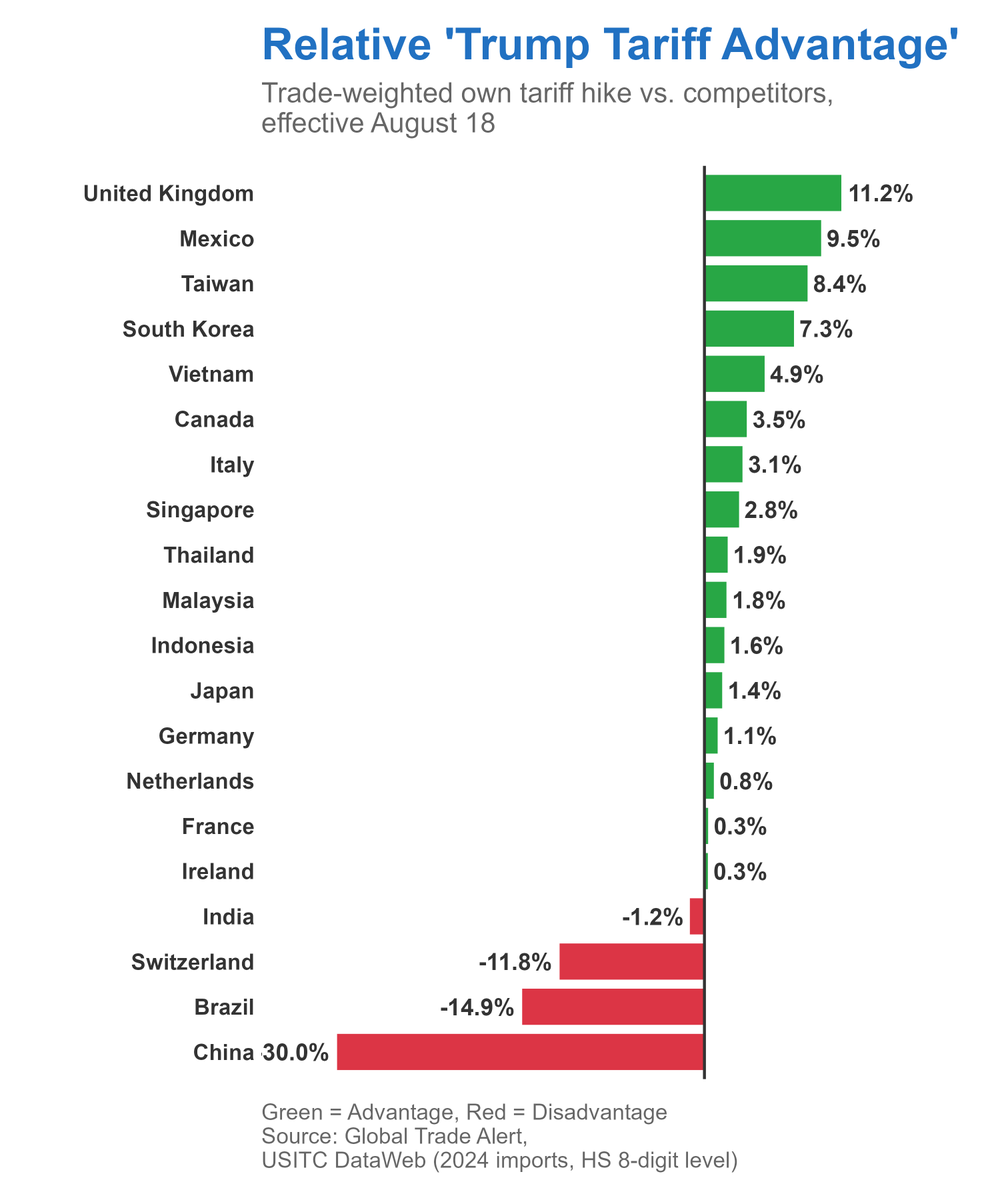
We have updated the #US Market Access Scorecards and the Relative Trump #Tariff Advantage Chart Book.
The update adds aluminium and steel derivative products to the coverage and incorporates MFN rates into the analysis.
🔢https://t.co/3TA2Tn75FX
📊https://t.co/LTPa009S3g