Let us #PrayTogether that the mental health ministry be established throughout the Church, helping to overcome the stigma and discrimination of persons with mental illnesses. Be a part of this prayer: https://t.co/RQWBPajjtx #PrayerIntention@clicktopray_en
This statement is from Rachael Wong, CEO of Women's Forum Australia, and I fully concur with her...
https://t.co/AS1ce0rxIs
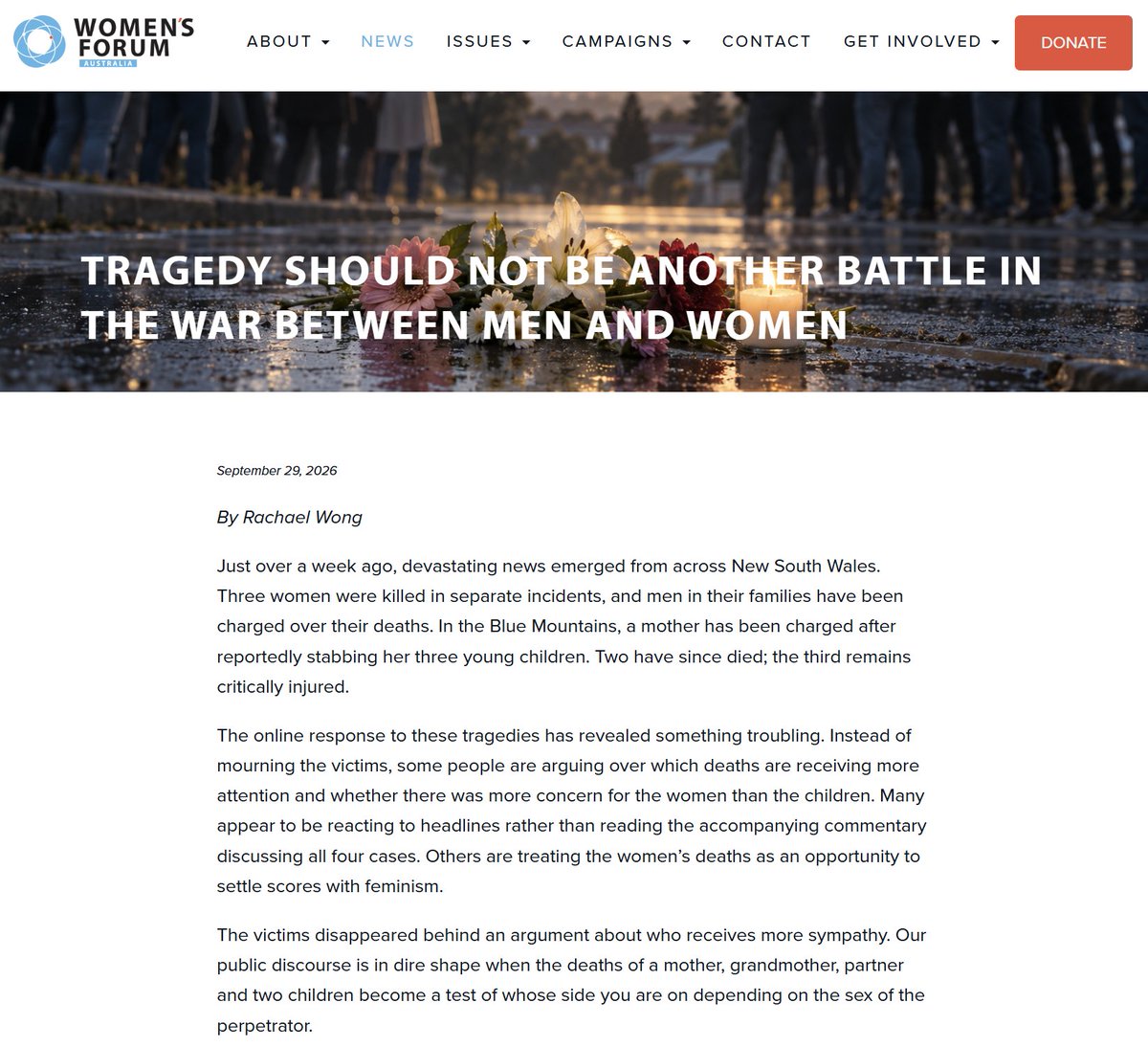
Tragedy should not be another battle in the war between men and women
Just over a week ago, devastating news emerged from across New South Wales. Three women were killed in separate incidents, and men in their families have been charged over their deaths. In the Blue Mountains, a mother has been charged after reportedly stabbing her three young children. Two have since died; the third remains critically injured.
The online response to these tragedies has revealed something troubling. Instead of mourning the victims, some people are arguing over which deaths are receiving more attention and whether there was more concern for the women than the children. Many appear to be reacting to headlines rather than reading the accompanying commentary discussing all four cases. Others are treating the women’s deaths as an opportunity to settle scores with feminism.
The victims disappeared behind an argument about who receives more sympathy. Our public discourse is in dire shape when the deaths of a mother, grandmother, partner and two children become a test of whose side you are on depending on the sex of the perpetrator.
The anger did not come from nowhere. For years, men have heard sweeping claims about “toxic masculinity” and been asked to take collective responsibility for violence committed by other men. Their difficulties are too often dismissed because women are assumed to be the disadvantaged sex in every setting.
In 2024, around 2,500 Australian men took their own lives: roughly seven every day and more than three in four of all suicides. That is a national emergency we rarely describe as one. Men and boys face real problems, and women are capable of grave violence. Any account that cannot acknowledge both facts deserves scrutiny.
The reaction to the Lindsay Clancy case in the United States has deepened the distrust. Clancy killed her three children. Her trial ended in a mistrial this month after eleven jurors reportedly believed she was not criminally responsible because of mental illness. Many people have asked whether a father who killed his children would have received the same benefit of the doubt or been met with the same public compassion.
It is a fair question. We should be able to ask whether our judgements change with an offender’s sex. We should also be able to take mental illness seriously without losing sight of the children or turning their deaths into a contest between mothers and fathers.
Yet an understandable objection to unfairness can become unfairness of its own. Some people now say women should not vote or hold women generally responsible for every social change they despise. Others seem so determined to correct what they see as excessive sympathy for women that they struggle to show any to women who have been killed.
Fairness must go both ways. Women should not be held responsible for every bad argument made in the name of feminism, any more than all men should be held responsible for the actions of violent men. Treating women as a single guilty class repeats the very mistake men rightly object to when it is made about them.
At Women’s Forum Australia, we speak about male violence against women because it is a serious, persistent threat to women’s lives and safety. The men charged over the women's deaths must face justice if found guilty. So must the mother charged over the children’s deaths. The circumstances of each case matter. But the sex of an accused person should not determine whether we hold them accountable, just as the sex of a victim should not determine whether they receive our compassion.
I have worked alongside many good men who care deeply about women and children. I know fathers, brothers and husbands who protect and sacrifice for the people they love. Advocacy for women should never require contempt for men. Equally, valuing men should never require silence about violence against women.
Men and women are equal in dignity, though we are not identical. We depend on one another in families, friendships, workplaces and communities. Children, above all, need adults who are more interested in their welfare than in winning an argument between the sexes. A society in which men and women increasingly regard each other as adversaries will be poorer and less safe for both.
We can challenge double standards without creating new ones. We can support men in crisis and protect women in danger. We can have genuine conversations about mental illness and the root causes of family violence. We can judge offenders by what they did rather than by their sex.
The people at the centre of these stories were human beings, not symbols in an online dispute. We owe them, and each other, better.
@RachaelWongAus@WomensForumAust
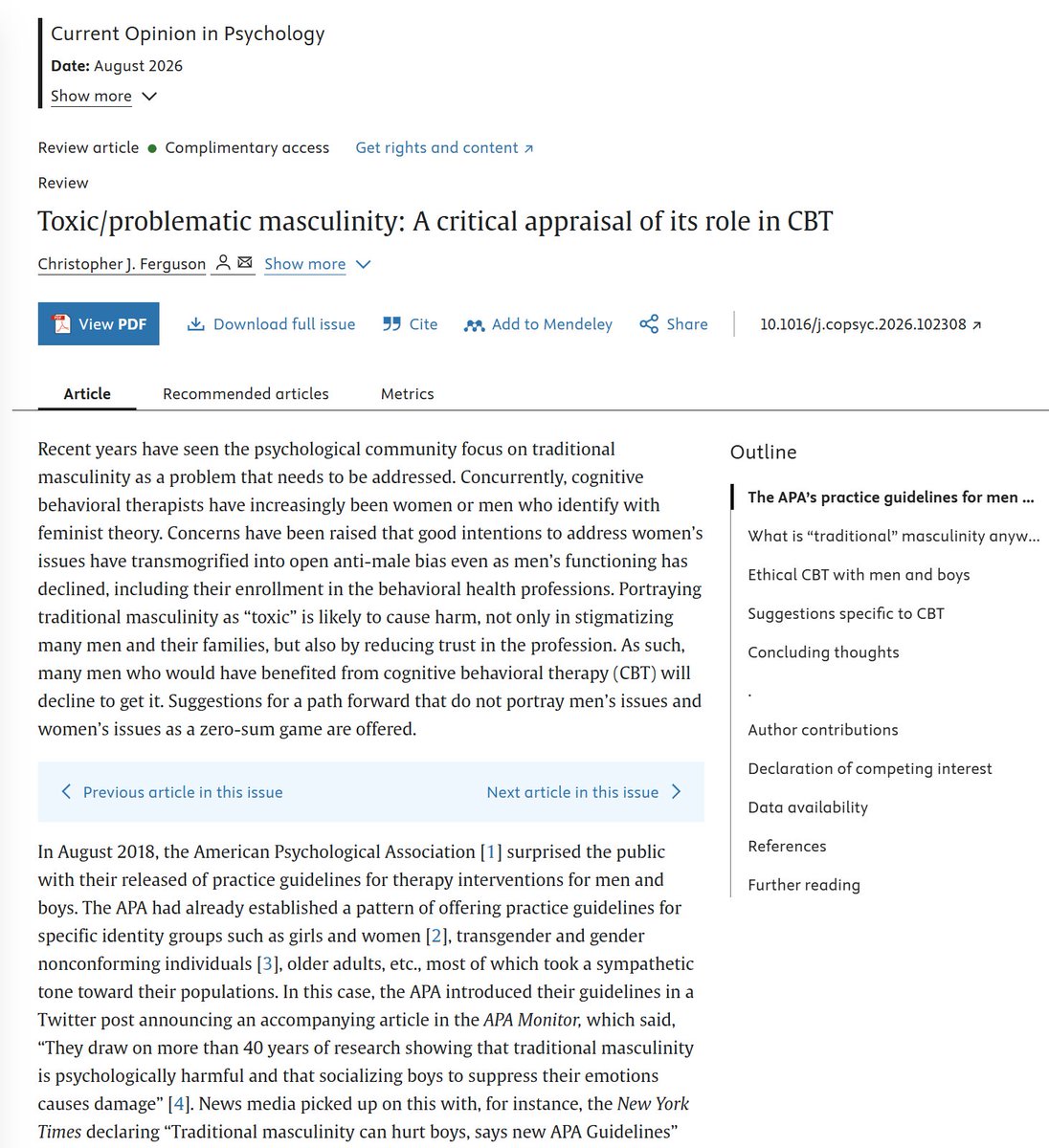
“Stop Trying to ‘Fix’ Masculinity.”
That is one of the central messages from psychologist Christopher J. Ferguson in a new 2026 review in Current Opinion in Psychology.
For too long, discussions about men’s mental health have often begun with a deficit model: masculinity is the problem, men need to change, and traditionally masculine traits need to be dismantled.
Ferguson argues for something very different...
Rather than labelling masculinity itself “toxic”, psychology should identify specific harmful behaviours while recognising that traditional masculinity also contains genuine strengths: courage, protecting others, honour, resilience and stoicism.
That distinction matters a lot.
A man who wants to become stronger, provide for his family, compete, protect others, play physical sport, shoulder responsibility or remain composed under pressure doesn't need those instincts “fixed”. Therapy should help him use his strengths well.
Ferguson argues that Cognitive Behavioral Therapy (CBT) should return to being centred on the individual: evidence-based, respectful and focused on the patient’s own legitimate goals; not on the therapist’s preferred ideology or model of masculinity.
Perhaps most importantly, he calls for respect for all men.
Traditional and non-traditional men do not need to be pitted against each other. Men should have the freedom to express masculinity in ways that work for them, provided they respect the rights and wellbeing of others.
This is the strengths-based approach to Male Psychology that we need.
Don’t ask: “What is wrong with masculinity?”
Ask: “What strengths does this man or boy possess, and how can we help him flourish?”
Men don’t need to become less male to become healthier men.
Christopher J. Ferguson, Toxic/problematic masculinity: A critical appraisal of its role in CBT, Current Opinion in Psychology, August 2026.
https://t.co/AO6BbSvTQH
#Masculinity #PositiveMasculinity #MensMentalHealth #MalePsychology #MenAndBoys #MensHealth #Boys #Psychology #CBT #StrengthsBased
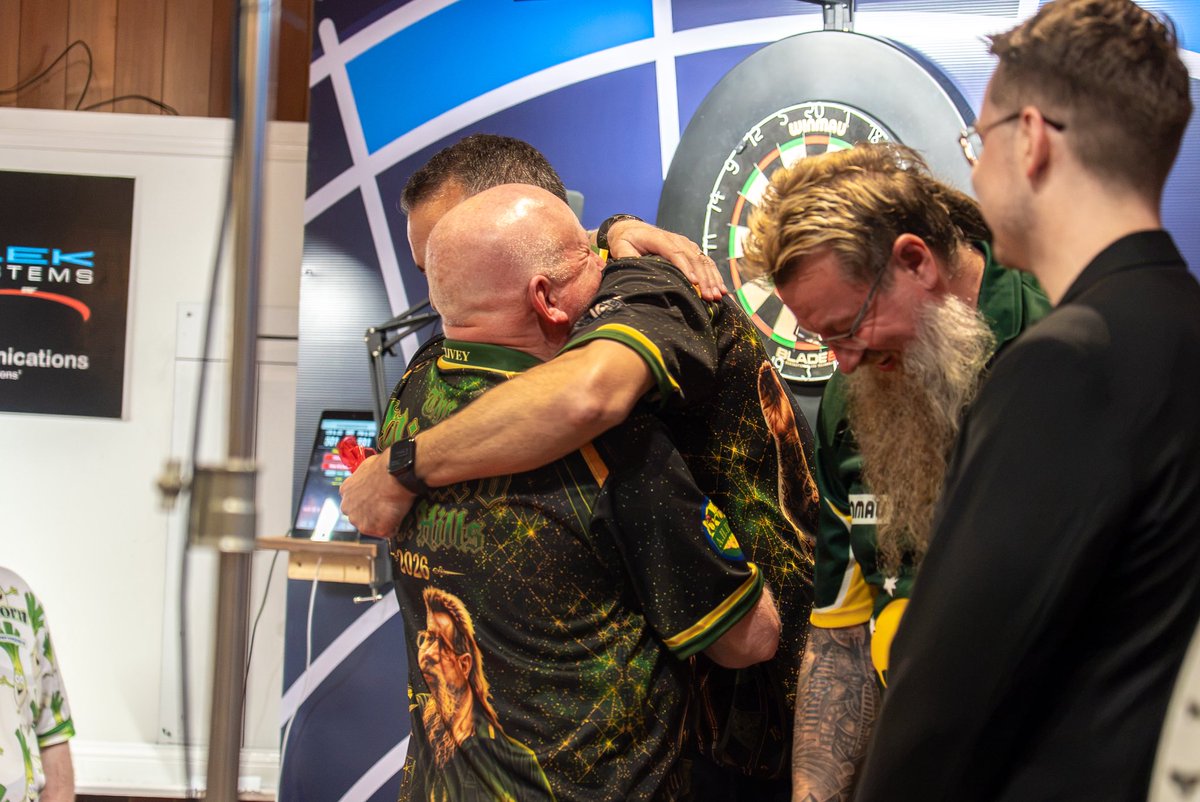
Great to join Simon “The Wizard” Whitlock tonight at Bridgewater Sports and Social Club for a night of darts.
Anything that brings people together and strengthens our local communities is wholeheartedly a good thing. Thanks to the organisers for making it happen.
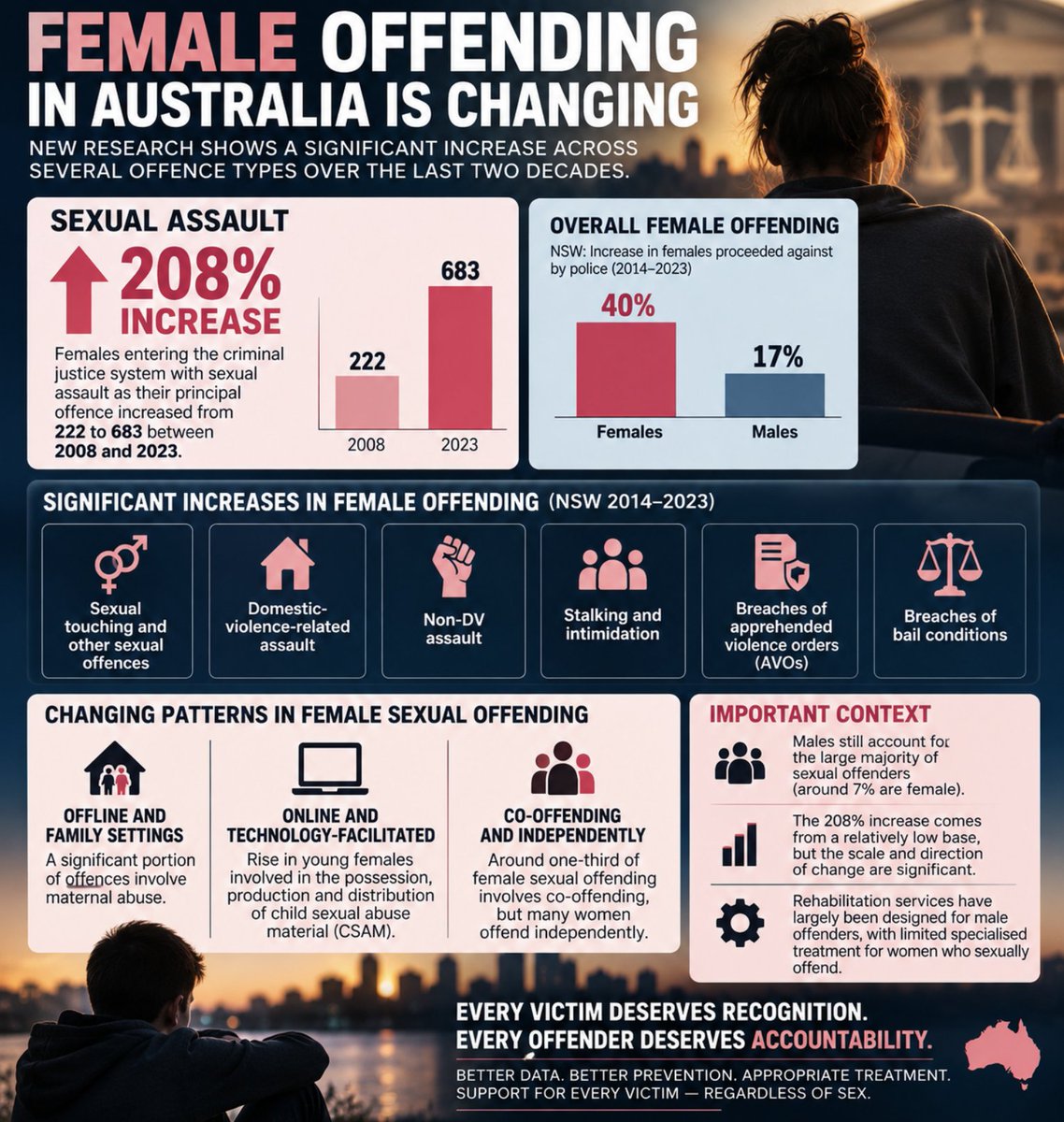
FEMALE OFFENDING IN AUSTRALIA IS CHANGING, AND WE NEED TO TALK ABOUT IT
Research highlighted by the University of the Sunshine Coast reveals a striking trend: between 2008 and 2023, the number of females entering Australia’s criminal justice system with sexual assault as their principal offence increased by well over 200% (from 222 to 683).
The scale and direction of change deserve attention. And sexual offending isn’t an isolated example.
NSW Bureau of Crime Statistics and Research data show that between 2014 and 2023, the number of female offenders proceeded against by police increased 40%, compared with 17% for males.
Significant increases among females occurred across offences including:
📈 sexual touching and other sexual offences
📈 domestic-violence-related assault
📈 non-DV assault
📈 stalking and intimidation
📈 breaches of apprehended violence orders
📈 breaches of bail conditions
Researchers are also identifying changing patterns within female sexual offending itself.
Some offending occurs within families, including maternal offending. Around one-third of identified female sexual offending involves co-offending (often with a male partner) but two-thirds of women offend independently.
Researchers have additionally highlighted an emerging cohort of young female online sexual offenders, including offences involving the possession, production and distribution of child sexual abuse material.
This matters particularly for boys and men victimised by women, whose experiences are often overlooked, minimised or misunderstood.
Researchers also warn that rehabilitation systems have overwhelmingly been designed around male offenders, leaving limited specialised treatment for women who sexually offend.
This isn't about shifting blame from one sex to another.
It is about following the evidence wherever it leads: better data, better prevention, appropriate treatment, equal accountability.
We can’t prevent what we refuse to see. Every victim deserves recognition and support.
Sources: University of the Sunshine Coast; NSW Bureau of Crime Statistics and Research; The Conversation.
#FemaleOffending #MaleVictims #SexualAbuse #CrimeTrends #CriminalJustice #PublicSafety
We talked about this over breakfast. We decided Trevor's would be (possibly excessive) generality in an engineering solution, Jessica's would be either curiosity about someone's character or degree of incapacitation when laughing, and mine would be amount of change in an idea.