The weekly Tari Tinkerer’s space is quickly approaching
Join us this Thursday at 5pm UTC / 1pm ET as we chat tips & tricks for filling out those pesky McDonald's job apps!
https://t.co/M9bFN9QNrh
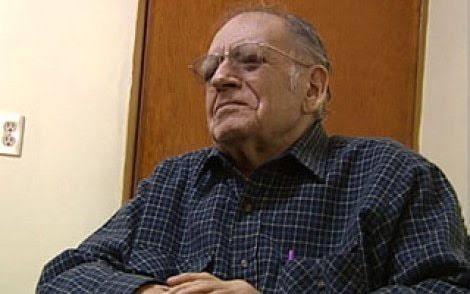
From Monterrey's Infamous Surgeon to Hannibal Lecter: The Chilling Tale of Alfredo Ballí Treviño.
Alfredo Ballí Treviño was a Mexican surgeon who became notorious for a brutal murder in 1959. He was convicted of killing his lover, Jesus Castillo Rangel, during an argument. Treviño slit Rangel's throat with a scalpel, then dismembered and buried the body in an empty lot. This crime led to Treviño's death penalty sentence, which was later commuted to 20 years imprisonment. He was released from prison around 1980 or 1981.
In an intriguing twist of history, Treviño's life and personality became a source of inspiration for one of the most iconic characters in literature and film: Dr. Hannibal Lecter, created by author Thomas Harris. Harris met Treviño in 1963 while he was working on a story at the Nuevo León State Prison in Monterrey, Mexico. Initially, Harris thought Treviño was a prison doctor, but he later learned of Treviño's true identity as an inmate convicted of a gruesome murder.
Treviño's interaction with Harris had a profound impact on the author. Harris described Treviño as a small, lithe man with an elegant demeanor, which contributed to the creation of the sophisticated and enigmatic character of Hannibal Lecter. This character debuted in Harris's 1981 novel "Red Dragon" and was further popularized in the 1988 novel "The Silence of the Lambs" and subsequent films.
Despite his dark past, Treviño reportedly spent his later years helping the poor and elderly. He died in 2009 at the age of 81. His story remains a fascinating example of how real-life events and personalities can inspire fictional works
Manipulating Memories: The Perils of Coaching in Police Photo Lineups.
Suggestive identification procedures, is a form of improper influence that can occur during the process of witness identification. This practice is highly problematic and can lead to wrongful identifications and convictions.
Nature of Coaching in Photo Lineups:
Leading Statements: This could involve an investigator making comments or gestures that hint or suggest that a particular photo is of the suspect, either directly or indirectly.
Reinforcing Responses: Giving positive feedback or affirmation when a witness picks a particular photo, thereby reinforcing the choice even if it's incorrect.
Expressing Expectations: Subtly or overtly indicating that the investigator expects the witness to identify someone from the lineup.
Repeated Lineups: Showing the same suspect’s photo in multiple lineups to the same witness, which can suggest to the witness that this person is of particular interest to the investigation.
Implications of Coaching:
Memory Contamination: Coaching can lead to witnesses becoming unsure of their original memory and instead relying on the cues provided by the investigators.
False Identification: This is one of the leading causes of wrongful convictions, as it can strongly influence a witness to identify someone they are not sure about or even someone they did not originally recognize.
Legal and Ethical Concerns: Such practices violate ethical guidelines and can be legally challenged, potentially leading to the dismissal of crucial evidence.
Preventing Coaching in Lineups:
Double-Blind Procedure: The person conducting the lineup should not know who the suspect is (blind), and the witness should not know whether the actual suspect is included in the lineup (double-blind).
Standardized Instructions: Witnesses should be given standardized instructions that clearly state the suspect may or may not be in the lineup and that they are not required to make an identification.
Documentation: The process should be thoroughly documented, including the witness's confidence level at the time of the identification.
Sequential Lineups: Showing photos one at a time, as opposed to all at once, to avoid comparative judgments.
Neutral Presentation: Ensuring that all photos in the lineup are similar in appearance and quality to avoid any photo standing out.
The integrity of photo lineups is crucial in criminal investigations, and any form of coaching or suggestion can severely undermine the justice process. Therefore, law enforcement agencies are generally required to follow strict protocols to ensure the fairness and accuracy of witness identifications.
Can you recognize him?
Try to squint or you look at him from afar.
Artist Timur Zagirov has created it using 425 polished, colored wooden blocks of pine.
Necrophilia, also known as thanatophilia or necrolagnia, is a paraphilia characterized by a sexual attraction to corpses. It's a rare and taboo subject, often associated with severe psychological disorders. The term itself is derived from the Greek words "nekros" (dead) and "philia" (love, affection).
Key Aspects of Necrophilia:
Psychological Basis: It is often rooted in mental health issues. Individuals with necrophilic tendencies may have problems with interpersonal relationships, a fear of rejection, or a desire for a non-resisting and non-rejecting partner.
Legal and Ethical Concerns: Necrophilia is considered a serious crime in many jurisdictions due to its violation of human rights and desecration of a corpse. It is also a significant societal taboo.
Classification: The Diagnostic and Statistical Manual of Mental Disorders (DSM) categorizes necrophilia under the paraphilias, which are conditions involving intense sexual arousal to atypical objects, situations, fantasies, behaviors, or individuals.
Variations: There can be different levels or types of necrophilia, ranging from fantasies about dead individuals to actual physical contact with corpses.
Associated Crimes: In some cases, necrophilia is linked with other crimes, such as murder or grave robbing, as the perpetrator may seek to create situations where they have access to a corpse.
Cultural Depictions: While it's a real psychological condition, necrophilia has been sensationalized in some films, books, and media, often being portrayed in a way that amplifies its shock value.
Treatment and Management: Treatment for necrophilia is challenging and often focuses on psychotherapy and medication to manage any underlying mental health conditions.
Understanding necrophilia requires a nuanced approach, recognizing both its psychological underpinnings and the profound ethical, legal, and social issues it encompasses.
The "Murder Castle" of H.H. Holmes, which once stood at the corner of 63rd Street and Wallace Avenue in the Englewood neighborhood of Chicago, met a fiery end. The building was destroyed by a fire in August 1895, under mysterious circumstances. Following the fire, the remaining structure was torn down.
Today, the site where the "Murder Castle" once stood is no longer a sinister landmark. It has been redeveloped and the area has changed significantly since the late 19th century. Currently, the United States Postal Service operates a post office on this site. The address is 611 W 63rd St, Chicago, IL 60621, which now corresponds to the Englewood branch of the USPS. This transformation of the site from a place of infamy to a mundane, functional part of the community marks a significant change in its history and use.
The Infamous 'Murder Castle' of H.H. Holmes: A Labyrinth of Deception and Death. Unveiling the Horrors Within the Walls of Chicago's Most Notorious Building.
Name: H.H. Holmes
Other Names: Herman Webster Mudgett
Number of Victims: Confessed to 27.
Country/City of Activity: United States, Chicago
Time Span of Crimes: 1886 to 1894
Date of Death: May 7, 1896. Hung.
Notable for: Building the infamous "Murder Castle" in Chicago, a hotel with traps and hidden rooms, and being one of America's first documented serial killers.
H.H. Holmes, whose real name was Herman Webster Mudgett, embarked on his criminal activities in Chicago between 1886 and 1894. He confessed to 27 murders, but some speculate the number could be much higher, with estimates exceeding 200 victims. His crimes were marked by extreme severity, involving torture and murder, primarily targeting young women.
Holmes' method of luring victims was deceptive and manipulative. He constructed a building in Chicago, later dubbed the "Murder Castle," which was a maze of trapdoors, secret passages, and rooms designed for killing and disposing of bodies. He used his charm to attract victims, often promising fortune or marriage, before entrapping them in his deadly schemes. He sometimes sold the skeletons of his victims to medical schools.
The discovery and arrest of Holmes were triggered by his murder of a business partner, Benjamin Pitezel, in Philadelphia. This crime led to an investigation uncovering the horrific reality of his activities in Chicago. His arrest in Boston in late 1894 followed an insurance fraud investigation. During the subsequent investigation by Detective Frank Geyer, the bodies of three of Pitezel's children were discovered, further implicating Holmes in multiple murders.
At his trial, Holmes was charged and convicted primarily for the murder of Pitezel. His trial revealed his extensive criminal activities, including insurance fraud, and eventually led to his execution on May 7, 1896.
H.H. Holmes was executed by hanging on May 7, 1896, at Moyamensing Prison in Philadelphia for the murder of his business partner Benjamin Pitezel. During his execution, his neck did not snap immediately; instead, he strangled to death over a 20-minute period. After his death, Holmes' body was buried in a coffin encased in cement and buried 10 feet deep, as he had requested to protect against grave robbers. In 2017, his body was exhumed to confirm his identity, which was verified through dental records
The "Murder Castle" contained rooms that were soundproofed and could be made airtight by closing iron plates. There were trapdoors, gas jets to asphyxiate victims, and chutes that led to the basement. The basement housed a dissection table, a crematorium, and pits of acid and quicklime for body disposal.
The Interrogation Techniques That Turned the Tables on Notorious Murders's.
Interrogation methods are the techniques used by law enforcement officials to elicit information, confessions, or clues from suspects in criminal investigations. These methods range from direct questioning to more complex psychological techniques. Understanding these methods can offer insights into how investigators approach the challenging task of solving crimes. Here are some of the key interrogation methods:
The Reid Technique: One of the most famous interrogation methods, developed in the 1940s. It's a three-phase process starting with fact analysis, followed by the behavior analysis interview (a non-accusatory interview to assess the suspect's truthfulness), and ending with the Reid Nine Steps of Interrogation, a more direct and accusatory process.
PEACE Method: Standing for Preparation and Planning, Engage and Explain, Account, Closure, and Evaluate, the PEACE method is a non-confrontational alternative developed in the UK. It focuses on creating an environment where the suspect feels comfortable and is more likely to provide information voluntarily.
Information-Gathering Approach: This is a less confrontational method compared to the Reid Technique. It's used primarily in countries like the UK and New Zealand, focusing on gathering information rather than eliciting a confession. It encourages open-ended questioning and active listening.
The Kinesic Interview Technique: This method focuses on analyzing the body language and verbal cues of the suspect to detect deception. The interviewer observes signs of stress, anxiety, or dishonesty, which can guide the questioning process.
Cognitive Interviewing: Used particularly for interviewing witnesses and victims, this method focuses on helping the interviewee reconstruct their memories of an event. It uses various techniques to enhance recall and retrieve more accurate and detailed information.
Good Cop/Bad Cop: A psychological tactic where two interrogators take seemingly opposing approaches to the suspect. One acts aggressive and accusatory (bad cop), while the other appears supportive and understanding (good cop), creating a stress-relief model for the suspect to open up.
Sympathy and Empathy Techniques: Here, the interrogator shows sympathy or empathy towards the suspect, trying to build a rapport and trust. The idea is to make the suspect feel understood and less threatened, potentially leading them to share information.
Maximization and Minimization: These techniques involve exaggerating the severity of the offense and the evidence (maximization) or downplaying the seriousness of the crime and offering moral justifications (minimization) to make the suspect more likely to confess.
Narrative Building: The interviewer encourages the suspect to tell their story in their own words, often starting before the time of the crime, to establish a baseline and identify inconsistencies.
Factual Analysis: This method involves a careful review of the facts of the case and the evidence against the suspect, used to confront the suspect with inconsistencies or gaps in their story.
Unbelievable Survival: How One Brave Nurse Outsmarted a Notorious Serial Killer and Lived to Tell the Tale.
Corazon Amurao is most notably known for her role as a key witness in the infamous Richard Speck murders in 1966.
Born in the Philippines, she came to the United States as part of a group of Filipino nurses.
On the night of July 13, 1966, in Chicago, Richard Speck broke into the townhouse where Amurao and her fellow nurses lived.
In a horrific event, Speck murdered eight of the nurses, but Amurao miraculously survived by hiding under a bed while the murders took place.
Her survival and bravery were crucial in bringing Richard Speck to justice. After the murderer left the scene, Amurao, despite her fear and trauma, managed to climb out of the window and seek help.
Her detailed description of Speck, including a unique tattoo, led to his rapid arrest.
Amurao's testimony during the trial was pivotal, and Speck was convicted and sentenced to death, which was later commuted to life in prison.
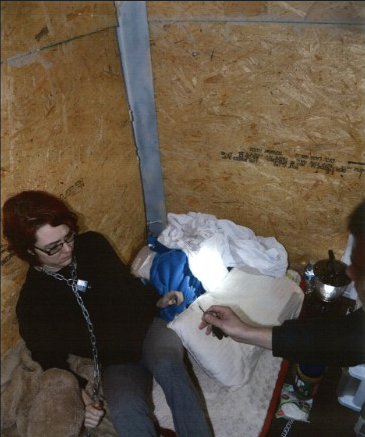
"Shocking Discovery: Woman Found Alive After Being Chained Like an Animal by a Serial Killer!" #murder
Summary: Kala Brown's story is one of extraordinary survival and horror. In 2016, she was found alive in a storage container in South Carolina, where she had been held captive for two months by Todd Kohlhepp, a real estate agent turned serial killer.
Brown and her boyfriend, Charles David Carver, went missing after they were hired by Kohlhepp for a cleaning job. Tragically, Carver was found deceased on the property. Brown's rescue led to the unraveling of Kohlhepp's crimes, including multiple murders.
Her ordeal and resilience captivated the nation, highlighting both the depths of human cruelty and the strength of the human spirit to survive against all odds.
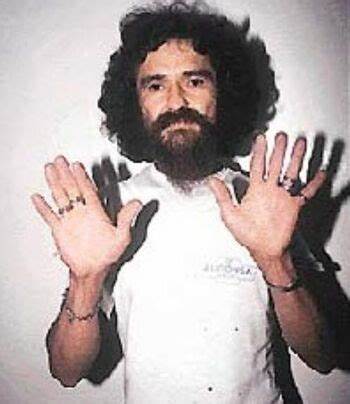
The Macabre Tale of Dorángel Vargas: #Venezuela#murder Cannibal Killer. Aka - "The People Eater"
José Dorángel Vargas Gómez, also known as "El comegente" or "The People Eater," is a notorious Venezuelan serial killer and cannibal. Born on May 14, 1957, in Mérida, Venezuela, Vargas is known for his crimes committed between 1995 and 1999. He was a homeless man who preyed on passersby in a park in San Cristobal, Táchira State.
Vargas was apprehended in February 1999, following the discovery of the remains of several missing persons. Upon his arrest, he confessed to killing and consuming the flesh of at least ten men over a two-year period prior to his capture. His victims were primarily men, including drunkards, drug addicts, and beggars. Vargas employed a brutal method of murder, often using a metal tube or rocks to beat his victims to death.
Interestingly, Vargas expressed a preference for consuming muscle-rich parts of the body, such as thighs and calves, and avoided eating women, children, and overweight men, citing reasons such as purity and high cholesterol levels. His crimes were particularly shocking due to the rarity of serial killers in Venezuelan history, earning him a media reputation comparable to the fictional character Hannibal Lecter.
Vargas' life prior to his notorious crimes was marked by poverty and mental health issues. He had been previously arrested for minor offenses and was diagnosed as a paranoid psychopath. His case has sparked discussions and controversies regarding the treatment of mentally ill criminals in the criminal justice system.
In 2016, Vargas was involved in a prison riot where he killed two inmates and allegedly served their remains to other prisoners. This incident added another layer to his already gruesome legacy.
Dorángel Vargas' case remains a disturbing and complex example of extreme criminal behavior intertwined with issues of mental health and societal neglect.
@AltcoinPsycho About 310 days to go. A lot of uncertainty around regulation in the USA, plus recession talk. Im looking for another big move down before moving into alts. They are all overvalued given the above. Give me -30/50% and I'll consider it.