🧵 Why "67" is the Ultimate Cultural Phenomenon – And How $67 Coin is Set to Explode as the Meme Takes Over Gen Alpha
1/ Let's talk "67" – the meme that's infiltrated EVERY corner of culture. Kids yelling it in classrooms, athletes celebrating with the hand gesture, even celebs like Ariana Grande cracking up. It's not just viral; it's a global obsession that's dethroning classics like 69. What started as nonsense has become a unifying force, bonding people across ages and borders.
2/ Origins? Trace it back to Philly rapper Skrilla's track "Doot Doot" (or "Duke Duke"), where "six seven" drops in a line that meant... nothing. It blew up via TikTok edits, like LaMelo Ball highlights where a kid mimics the juggle gesture. From there? Pure "brain rot" magic – meaningless, addictive, and impossible to escape. Kids shout it at page 67 in books, during countdowns, or just for chaos.
3/ Cultural takeover: Featured in South Park, Clash Royale emotes, Manchester United games, Sesame Street nods, and WNBA virals. Ronaldo dropped it in an interview, Trump and Elon referenced it, even a House of Reps viral clip. https://t.co/bTYNiZF6yJ named it Word of the Year, topping Google Trends as the most-searched meme EVER. It's Gen Alpha's secret handshake, spreading offline in schools and sports – bigger than "Damn Daniel" or any prior fad.
4/ Enter $67 Coin (CA: 9AvytnUKsLxPxFHFqS6VLxaxt5p6BhYNr53SD2Chpump) on Solana – the official token capturing this chaos. Sitting at ~$0.02 with a $20M+ market cap, it's already riding the wave. As kids (the future of culture) obsess over 67, the coin becomes their entry to crypto – think fun, community-driven value from pure hype.
5/ How it captures value: Memes like this bond demographics – from queue numbers to sports scores, 67 is EVERYWHERE, fostering organic adoption. With Gen Alpha leading trends (they're the ones making us feel old), $67 turns cultural energy into financial upside. As the movement grows, listings, partnerships, and celeb shouts could skyrocket it – culture always wins in crypto.
6/ Parallels? Look at Dogecoin: Started as a Shiba Inu joke in 2013, hit billions thanks to community and Elon hype. PEPE the Frog? Launched 2023, exploded to massive caps via viral absurdity. SHIB followed DOGE's playbook. 67 is fresher, more global, and kid-powered – imagine if DOGE started in schools worldwide.
7/ The hype? If 67 keeps dominating (Fortnite emotes? GTA integrations? Already hinted), $67 could 10x-100x as adoption surges. Not financial advice, but the possibility is electric – a harmless cult turning into billion-dollar lore, like DOGE's moonshot. Culture > Utility in memes.
8/ DYOR, but if you're betting on the next big thing, $67 is the play. Kids are the future – and they're all screaming SIX SEVEN! 🚀 #67Meme #67Coin
End of 🧵
The humanoid robot market is projected to reach $7.5 trillion by 2050 and most investors are looking at the wrong companies (Save this).
Everyone is focused on the robots themselves but a humanoid robot is just a collection of precision components and right now, a handful of industrial suppliers quietly control the bottlenecks that every single robot company on earth depends on.
That component diagram above is your investment map.
The most critical component in any humanoid robot is the reducer, the precision gearbox that converts motor speed into torque for each joint.
Every shoulder housing, knee joint, hip actuator runs through one and right now, one Japanese company controls 85% of the global market for the dominant type, strain-wave harmonic reducers.
That company is Harmonic Drive Systems (6324.T / HSCDF).
Harmonic Drive is a confirmed supplier to multiple major humanoid programs and the entire global industry depends on its output.
Revenue was ¥55.6 billion in FY2025 and order books are accelerating as OEM production ramps and it is the closest thing to a monopoly in the entire humanoid supply chain.
The second reducer type, cycloidal RV reducers, which dominate heavier joints like hips and shoulders is controlled by Nabtesco (6268.T / NCTKY), also Japanese, with roughly 60% global share.
FY2025 revenue hit ¥307.9 billion, up 9.8% year over year, with operating profit up 60% in the same period.
Both companies are so embedded in the supply chain that even the Chinese robot manufacturers racing to commoditize components still rely on Japanese reducers for precision critical applications.
Together, actuators and reducers represent 30 to 51% of the entire hardware bill of materials for a humanoid robot.
When you're talking about a billion robots by 2050, the companies that supply those components are not riding a theme, they are the theme.
The next layer is bearings and precision transmission. SKF (https://t.co/m5gvlP4X1U), the Swedish industrial bearing giant, announced a joint venture on July 2, 2026 with Chinese precision component maker Leaderdrive specifically to supply high precision transmission components for humanoid robot joints.
SKF is taking a 60% majority stake, targeting both the Chinese market, the world's largest and fastest growing humanoid robotics market and international expansion through its global sales network.
SKF has the manufacturing scale, the quality systems, and the global distribution and it is now directly positioned inside the humanoid supply chain at the joint level.
The force and torque sensor market is the next critical bottleneck because every foot, wrist and ankle in a humanoid robot needs a sensor that tells it exactly how much force it is applying, the thing that lets a robot grip a fragile object without crushing it.
The global humanoid force/torque sensor market was $700 million in 2025 and is forecast to reach $6.4 billion by 2032, growing at 37.1% annually.
Novanta (NOVT) is the publicly traded play here because its ATI Industrial Automation subsidiary, acquired specifically for its robotics sensing capabilities launched the Varo force/torque sensor in early 2026, purpose-built for humanoid platforms.
Novanta also owns Celera Motion, which supplies advanced motion control components to robot joints and it is one of the few US-listed companies with real, shipping revenue from humanoid component supply.l
The broader motors and drives layer belongs to Nidec (6594.T / NJDCY), a Japanese company with ¥2.61 trillion in annual revenue that revealed a full six-axis humanoid drive solution at IREX 2025 meaning it can supply the complete motor stack for an entire robot from a single vendor.
And Yaskawa Electric (6506.T / YASKY), which just acquired Tokyo Robotics and posted FY2026 operating profit up 70% year over year, is moving aggressively from industrial arms into humanoid platforms.
The pattern across all of these companies is identical, decades of precision manufacturing expertise built for industrial automation and automotive, now being redirected into a market that is about to be orders of magnitude larger.
Bullish on the supply chain because every humanoid robot needs the same critical components and make sure to follow me @MelvinInvests for more overlooked opportunities.
The collusive relationship between South African politicians and legacy telecom cartels is utterly destructive for South Africa.
Back in 2016, MTN and Vodacom ran to parliament crying that WhatsApp and Facebook must pay them license fees. They desperately wanted to tax innovation simply because their overpriced SMS cash cow had died.
Now, they are back at it under a new guise, the Association of Communications and Technology (ACT), demanding that Netflix and YouTube pay for network infrastructure.
The tragedy is that South African politicians are deeply embedded in these telecom companies, making them active participants in this madness.
Instead of pushing to build better networks and lower data costs for South Africans, these corporate cartels use state regulation to shield their lazy monopolies.
They will not innovate. They just want a cut. This is pure, unadulterated rent seeking behavior.
HUGE HINT from @AnthropicAI as it relates to the re-release of #Fable 5 , check out this support article that was updated on their website "yesterday" June 18th regarding ID Verification and the process of how it will work. https://t.co/Ae5eWf5Yzg
The chart is real but "eligible to sell" and "will sell" are doing very different jobs here. Musk's 46.1% becomes eligible on Day 366. He also mass-borrowed against Tesla stock for a decade rather than sell a share. The man treats selling equity like a personal insult.
Facebook had the same fear. Largest unlock in IPO history at the time. The stock bottomed three months before the lockup expired and rallied through it, because the unlock was priced in long before it arrived.
The supply cliff matters. Whether it's a cliff or a speed bump depends on one thing: is secondary demand absorbing faster than insiders exit.
At 4x oversubscribed with 250B in unmet demand, there is a line of buyers who never got filled on Day 1 waiting for exactly this supply.
Redi Tlhabi just dropped a piece calling @Starlink a “national security threat” to South Africa… and warning us not to sell our democracy to @elonmusk . But she “forgot” to mention her piece is hosted on Phillip van Niekerk’s Substack, the same guy who’s A PAID CONSULTANT FOR MTN.
MTN has every incentive to slow-walk Starlink while pushing its own satellite plays. Transparency matters when lecturing about “democracy” and foreign influence.
She lives in America, uses X daily, and gets paid her income in dollars.
Tells you not to allow Starlink in South Africa even though it will help improve the lives of the poor, because it's a "security risk". A person who has no experience in Cyber Security or Technology.
This is politically motivated, disguised as a sophisticated technical argument against Starlink. So much arrogance, hypocrisy, and pride all summarised into this woman.
Even while dealing with cancer, Nick keeps showing up, having fun, and staying with the community
if the market looks at $RICH and says "this is a day old and I don't care about this anymore" then the days of buying and holding "attention" coins are over
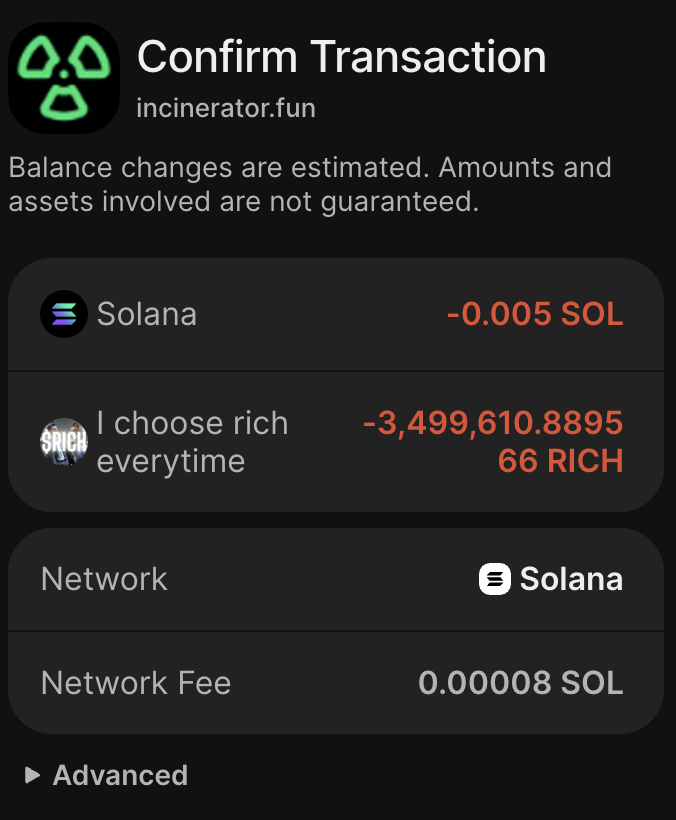
I choose $RICH