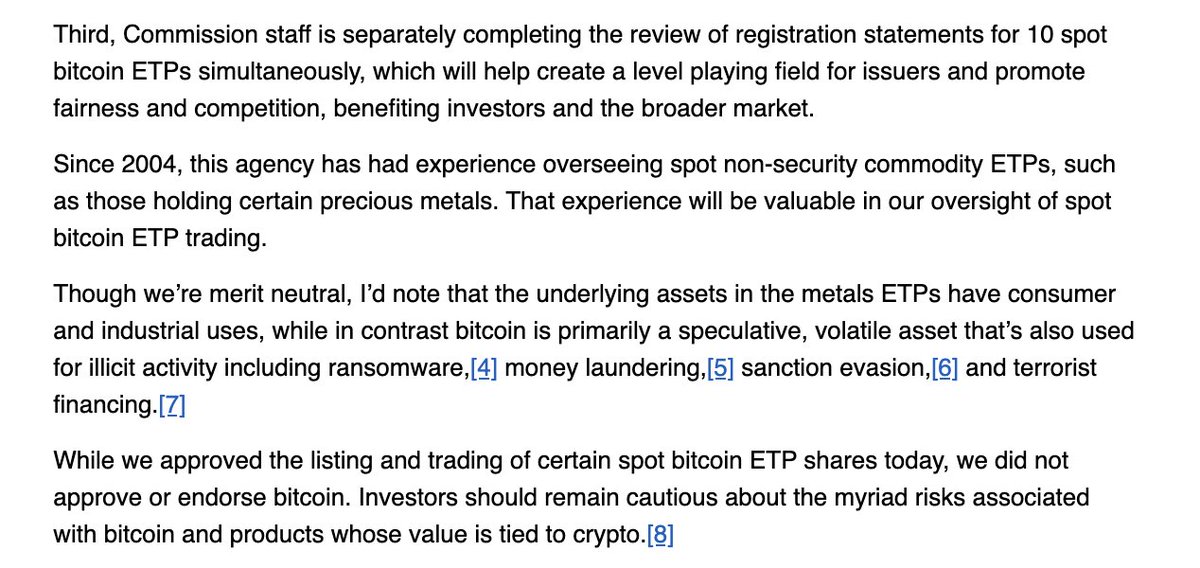
So the whole tech world is learning about OCP2.0 today via pmarca on Rogan. What happened exactly? For those curious, let's dig into OCP as it pertained to crypto. Quick thread
The reason MSTR works is over-regulation.
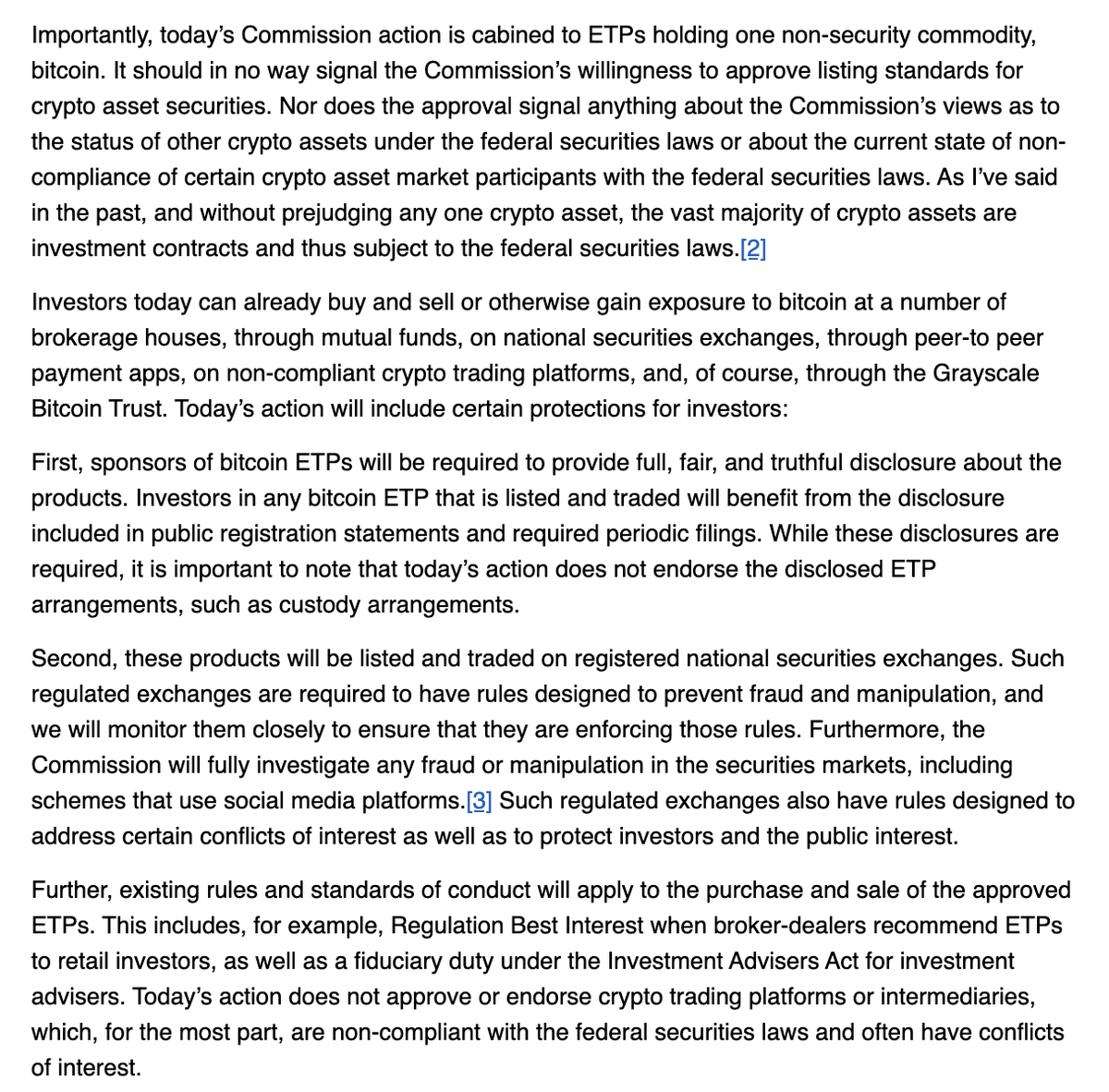
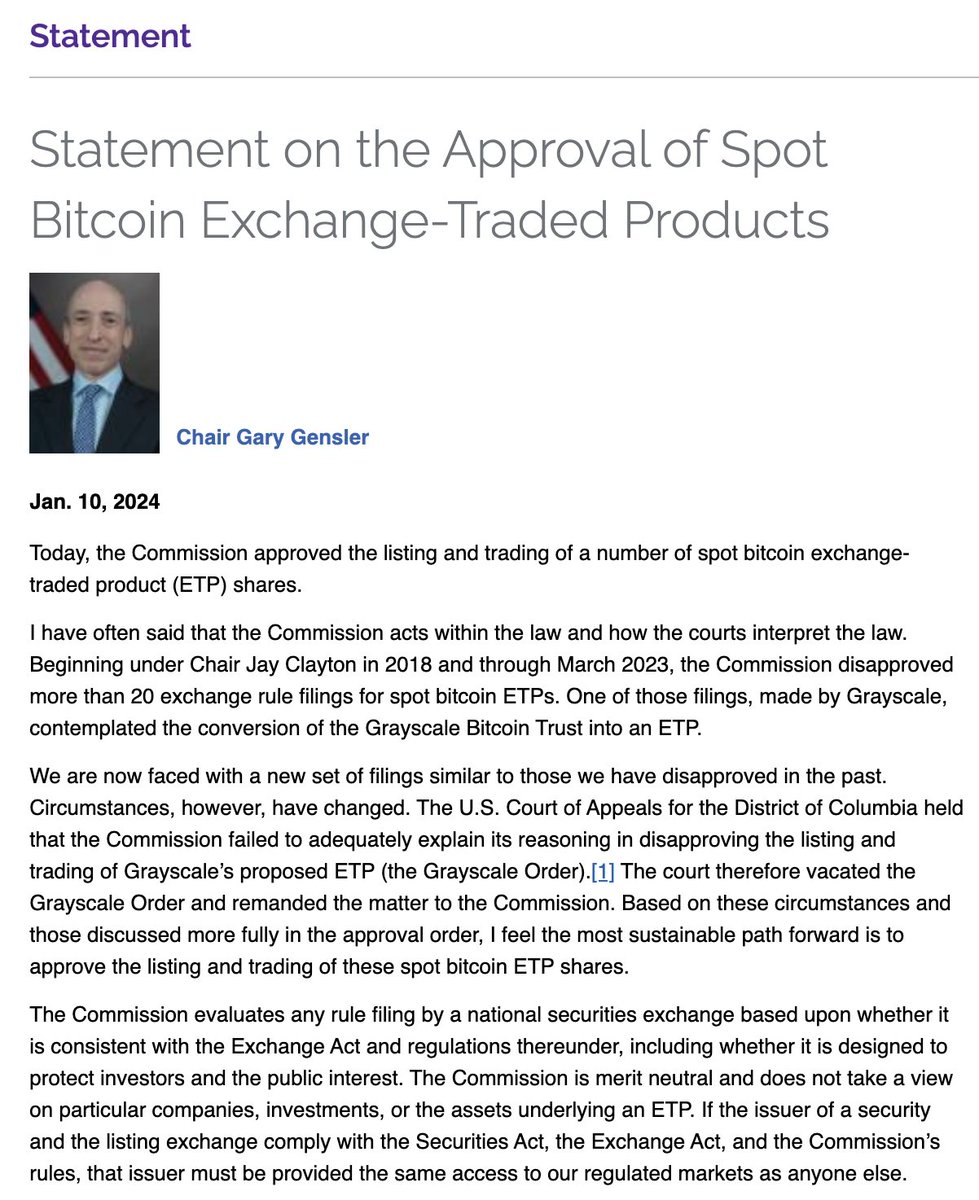
British Citizens can't buy BTC ETFs. They need proxies like MSTR. Same is true for Singapore. And South Korea.
Goldman Sachs, Merrill and Morgan Stanley are subject to bank regulation. They can't generally offer the ETFs.
Most 401Ks don't allow you to own the ETF.
This regulatory window creates a world in which "buying a dollar bill for 3 dollars" is the only solution.
This creates a demand for the shares, which allow the converts to be hedged.
A tax inefficient structure, with key man risk, and a massive multiple is winning over perfectly efficient IBIT.
But in the end, it's all just a consequence of an intense anti-crypto regulation. Ironically, this is enabling a true Bitcoin juggernaut, and placing a permanent bid on BTC.
Nice work, Mrs. Warren.
MicroStrategy 101
@MicroStrategy lets people to invest in Bitcoin via familiar financial tools such as stocks and bonds. This makes investing in Bitcoin accessible to anyone unable to buy Bitcoin directly due to legal or practical reasons.
What MicroStrategy Offers
Stock
MicroStrategy sells new $MSTR shares and buys Bitcoin.
Convertible Bonds
MicroStrategy sells convertible bonds and buys Bitcoin.
Why It’s Working
By issuing stock or convertible bonds and using the proceeds to buy Bitcoin, MicroStrategy increases the Bitcoin per share for $MSTR shareholders. Shareholders usually dislike the creation of new shares because it dilutes their ownership, but in this case they support it because their Bitcoin per share grows.
Measuring Success
MicroStrategy has created a financial metric called Bitcoin Yield, that measures how the Bitcoin per share of $MSTR changes over time. Investors have adopted this metric as the primary way of measuring how successful MicroStrategy is at executing its strategy.
Market Opportunity
Demand for Bitcoin is growing as investors increasingly view it as a viable investment. MicroStrategy estimates there are $450 trillion in investable assets worldwide. Bitcoin’s market cap is $1.8 trillion, which is about 0.4% of the total. MicroStrategy believes this could grow to 7% in the next 20 years, a 17.5x increase. MicroStrategy is capitalizing on this opportunity by facilitating the transfer of capital from fiat systems to the Bitcoin network via their stock and convertible bond offerings.
Risks
All investments involve risk. Here are some of the noteworthy risks for MicroStrategy investors:
Regulatory
Regulators could deem MicroStrategy an investment company instead of an operating company, which could negatively impact the business. Changing laws around Bitcoin could adversely impact the company.
Premium Risk
MicroStrategy is currently able to sell stock and bonds at a 3.3x premium over the value of their underlying Bitcoin holdings. By using the proceeds from this sale to buy Bitcoin, they can deliver a positive Bitcoin Yield. If demand for MSTR stock and bonds decreases, the premium could decrease and impact the Bitcoin Yield.
Bitcoin Price Violatility
MicroStrategy’s performance depends on Bitcoin’s price, which can be very volatile. It’s unclear how demand for $MSTR will change when Bitcoin’s price is going down.
$MSTR Bros
MicroStrategy has a cult-like online following. Self-aggrandizing social media influencers are flaunting sports-car purchases, posting their options portfolios, bragging about their gains, and encouraging people to take risky bets on $MSTR options. They use tortured analogies to describe MicroStrategy to unsophisticated investors. They regularly downplay the risks of $MSTR and attack those that caution prudence. Following their advice is going to get people wrecked. Regulators will take notice. The fallout could harm MicroStrategy’s reputation and potentially lead to legal consequences for these promoters. To his credit, MicroStrategy CEO Michael @Saylor doesn’t engage with these individuals.
Conclusion
I support MicroStrategy’s efforts to advance Bitcoin adoption. Michael Saylor is a survivor, an innovator, and a powerful advocate for Bitcoin. I think anyone with significant Bitcoin holdings should consider owning some $MSTR to support his mission.
If you like this post, please share and follow me on X.
- @WayneVaughan.
Everyone is talking about, MicroStrategy, $MSTR:
The stock is up more than EVERY S&P 500 component in 2024 with just $116 million in quarterly revenue.
In fact, $MSTR is now up nearly TRIPLE as much as Nvidia YTD.
What is MicroStrategy doing and is it a bubble?
(a thread)
Some questions I have about the strategic Bitcoin reserve:
1.) Assuming the idea works, and when we use the BTC to "pay down the debt", whom specifically do we pay the Bitcoin to? Do we pay back holders of Treasuries with BTC *instead of USD* even if they don't prefer it? If debt holders insist upon dollar payment at maturity instead (because they have dollar liabilities themselves and because they bought treasuries expecting dollars), what would be the point of the Bitcoin? Are we selling BTC on the open market FIRST, which requires private sector buyers, and then sending the dollars as payment? Sketch it out for me.
2.) if BTC is meant for paying down debt, are we intending to issue less debt going forward? Or are we going to run the same deficit playbook in perpetuity? This is important because a strategy of balancing out our debt burden comes with an implicit presumption of fiscal discipline *at some point*.
3.) BTC's market cap took 15 years to capture 5% of total US debt by market share (pictured). Do we expect Bitcoin's relative performance vs US debt to *accelerate* beyond this point? Because mathematically, its % gains cycle over cycle are diminishing while the growth rate of debt is rising. How do these forces balance over the next 10-20 years with conservative CBO estimates of 5-7% deficits in perpetuity?
These are questions I am pondering and which I don't see ANYONE having reasonable discussion about. It's all euphoria around our bags getting pumped by Uncle Sam. However gains aren't the only reason this matters, and we need to understand the mechanisms for this plan before allowing the govt to embark on radically new policy. I am disappointed with the lack of analytical rigor from the Bitcoin community on this issue and hope to see more robust debate before any bill or EO is actioned by Washington.
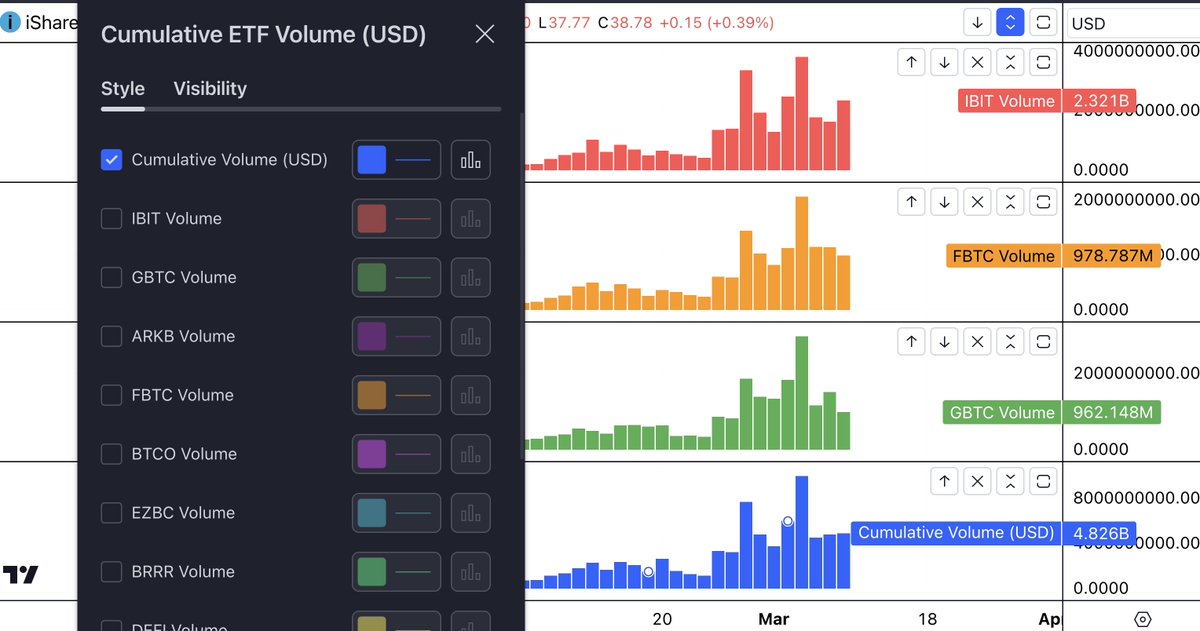
I created a public indicator in TradingView for daily spot $BTC ETFs volumes (cumulative & individual tickers) for anyone that is interested.
Link: https://t.co/KsbxtfHsQm
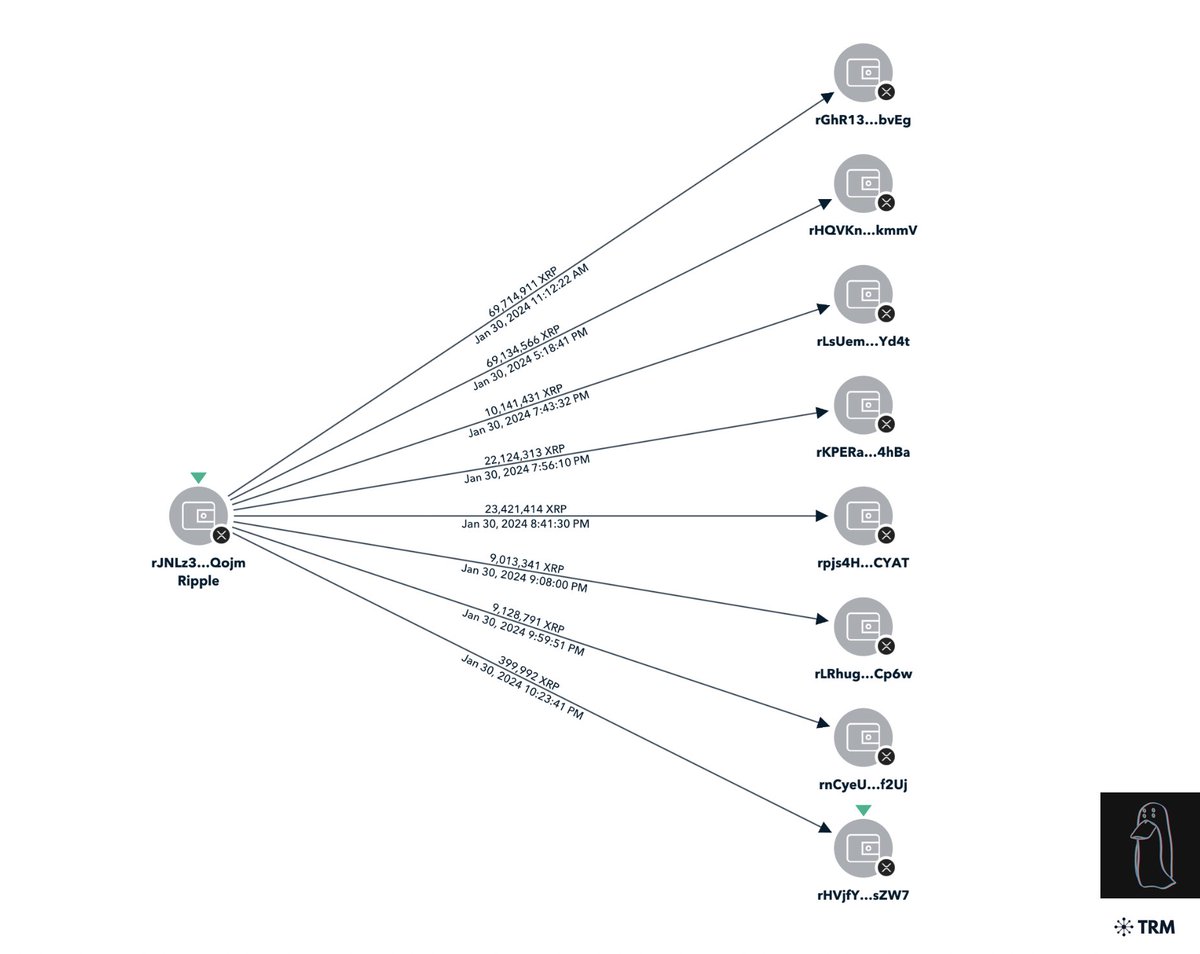
It appears @Ripple was hacked for ~213M XRP ($112.5M)
Source address
rJNLz3A1qPKfWCtJLPhmMZAfBkutC2Qojm
So far the stolen funds have been laundered through MEXC, Gate, Binance, Kraken, OKX, HTX, HitBTC, etc
𝗛𝗼𝘄 𝘁𝗼 𝗖𝗵𝗮𝗿𝘁 #𝗕𝗶𝘁𝗰𝗼𝗶𝗻
As part of Education Month, @AshBennington talks to master chartist @PeterLBrandt 🧙♂️, about how he applies his knowledge, experience, and skillset to #BTC.
1/7
Binance will make a "complete exit" from the U.S. as part of its settlement with FinCENand appoint a monitor for five years who will oversee the exchange's sanctions compliance program. The U.S. Treasury Department will have access to Binance's record and systems during that time. But Binance US is not affected. https://t.co/TtKYWUdUma
Reuters: Binance will pay $1.81 billion within 15 months, and a further $2.51 billion forfeiture as part of the deal with the Justice Department, prosecutors said. Zhao will personally pay $50 million. Zhao's plea agreement bars him from all involvement with Binance.
https://t.co/U0V78uXOQF
Today, I stepped down as CEO of Binance. Admittedly, it was not easy to let go emotionally. But I know it is the right thing to do. I made mistakes, and I must take responsibility. This is best for our community, for Binance, and for myself.
Binance is no longer a baby. It is time for me to let it walk and run. I know Binance will continue to grow and excel with the deep bench it has.
I’m pleased to announce that @_RichardTeng, our now former Global Head of Regional Markets, has been named the new CEO of Binance today.
Richard is a highly qualified leader and, with over three decades of financial services and regulatory experience, he will navigate the company through its next period of growth. He will ensure Binance delivers on our next phase of security, transparency, compliance, and growth.
Prior to joining Binance, Richard was CEO of the Financial Services Regulatory Authority at Abu Dhabi Global Market (ADGM); Chief Regulatory Officer of the Singapore Exchange (SGX); and Director of Corporate Finance in the Monetary Authority of Singapore.
With Richard and the entire team, I’m confident that the best days for @Binance and the crypto industry lay ahead.
As a shareholder and former CEO with historical knowledge of our company, I will remain available to the team to consult as needed, consistent with the framework set out in our U.S. agency resolutions.
What’s next for me?
I will take a break first. I have not had a single day of real (phone off) break for the last 6 and half years.
After that, my current thinking is I will probably do some passive investing, being a minority token/shareholder in startups in areas of blockchain/Web3/DeFi, AI and biotech. I am happy that I will finally have more time to spend looking at DeFi.
I can’t see myself being a CEO driving a startup again. I am content being an one-shot (lucky) entrepreneur. Should there be listeners, I may be open to being a coach/mentor to a small number of upcoming entrepreneurs, privately. If for nothing else, I can at least tell them what not to do.
On that note, I am proud to point out that in our resolutions with the U.S. agencies they:
- do not allege that Binance misappropriated any user funds, and
- do not allege that Binance engaged in any market manipulation.
Funds are SAFU!
With that, I look forward to seeing the new leadership take the reins. Please join me in congratulating Richard on his well-deserved promotion.
Onwards!
CZ