Honored to share that I’ve been selected for the @Stacks Consideration Advisory Boards!
CABs are independent expert groups that review Stacks Improvement Proposals (SIPs), so every network upgrade gets a careful, rigorous look before it moves forward.
Looking forward to helping guide the community and steering committees on the decisions that shape the ecosystem. Let’s build 🟧
Bitcoin is a $1.5T asset and 99.5% of it is standing still.
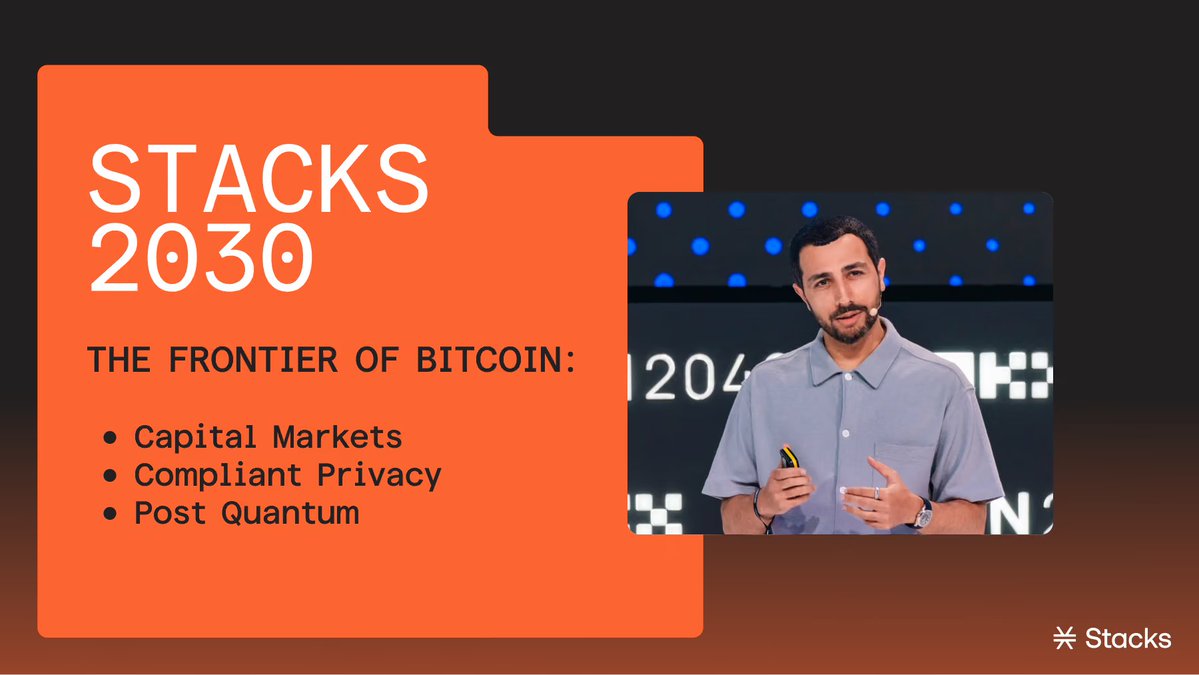
@muneeb at @token2049 on the two things that change that, and why the window is open right now.
The Satoshi Upgrades are the sequence of protocol upgrades that takes Stacks through 2030, across three frontiers:
- Bitcoin Capital Markets
- Privacy
- Post-quantum security
Bitcoin Staking was the first step.
Bitget is dropping solana:dog1viwbb2vWDpER5FrJ4YFG6gq6XuyFohUe9TXN65u support in <48 hours. Time to bring those puppies home.
Xverse has a full HQ inside DOG CITY, a 3D city built on real lunar terrain with 70,714 lots. Your Bitcoin history decides your address.
Walk in, explore what you can do on BTC, and keep your favourite Runes securely where nobody can delist them.
https://t.co/mSTQDKNfIu
PRIVACY ON STACKS UNLOCKED
A few months ago we started working on something @Stacks has never had, a native privacy layer. After a lot of research and a proof of concept, it's now live on mainnet as a beta. It's called 𝗧𝗲𝗿𝗹𝗼𝘀.
We started with 𝘇𝗸-𝗦𝗡𝗔𝗥𝗞𝘀. The circuits worked, but we kept running into the same problems. Clarity has no elliptic curve pairing operations, so the chain can't verify a SNARK itself, and the proof had to be checked off chain by something the contracts simply trusted. For a pool holding people's money, that wasn't acceptable. SNARKs also need a trusted setup, where a leaked secret means forged proofs, and pairings won't survive a quantum computer.
That pushed us to look for the most secure option that could live entirely on Stacks, and that's how we ended up with 𝗭𝗞-𝗦𝗧𝗔𝗥𝗞𝘀. A STARK only needs hashing and field arithmetic, so there's no trusted setup and its security rests on hash functions that hold up against quantum attacks. The open question was whether a full STARK verifier could even run inside Clarity. It can. We use the 𝗚𝗼𝗹𝗱𝗶𝗹𝗼𝗰𝗸𝘀 𝗳𝗶𝗲𝗹𝗱 so the math fits in Clarity's 128 bit integers, Keccak for the commitments, and FRI tuned to 102 bits of proven security. A private transaction uses under 5 percent of a Stacks block, and the proof is verified on Stacks in the same contract call that moves the funds. If the proof is wrong, the transaction fails. Nobody off chain gets a say.
Stacks Shield became Terlos, and Rust carries most of it. The prover is written in Rust and compiled to WebAssembly, so proofs are made in your own browser and your keys never leave your device. The circuits are in Rust too, and a Rust copy of the Clarity verifier generates part of the on chain code and the test vectors, so the prover and the contracts can't drift apart. The build is reproducible, and the app refuses any prover that doesn't match its published hash. Moving to Rust and STARKs took proving from around 6 minutes to under 6 seconds.
Terlos gives Stacks native shielded addresses and viewing keys. You can create as many addresses as you like and nobody can link them, and a viewing key lets a shop confirm it was paid without being able to touch the funds. You can send, split, merge and withdraw $STX, $sBTC and $USDCx privately, and relayers submit for you so your Stacks address never shows up.
The wallet is fully self custodial. It's created from 24 backup words on your own device and sealed with your password in your browser. There are no accounts and nothing to sign up for, and your keys and notes never touch our servers. Only a proof made with your keys can spend your funds, so nobody can move or freeze them, us included. Your words restore the wallet anywhere, and that also means they're the only way back in, so write them down and keep them safe.
Our first pool is called Zion. All three assets share one note tree, so everyone hides in the same crowd, and every new user makes it stronger for the rest.
Zion runs as a beta with deposit caps, daily withdrawal limits, a 3 of 5 multisig and a 48 hour timelock on risky changes. It hasn't been independently audited yet, so please start small.
The SDK is on npm under @terlos, and the docs and whitepaper are public.
𝗔𝗽𝗽: https://t.co/e2OgNkodag
Not only are ~735 BTC bonded in Bitcoin Staking on @Stacks, but
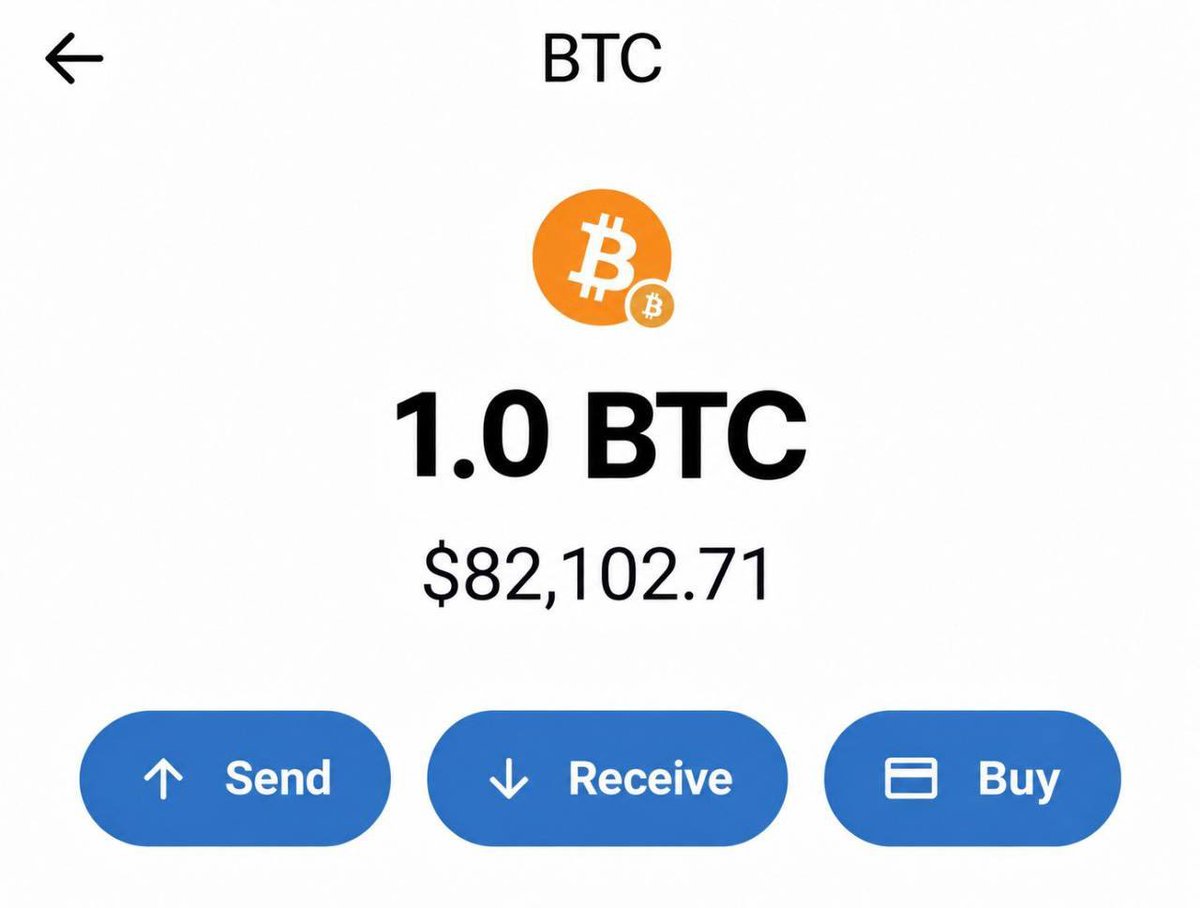
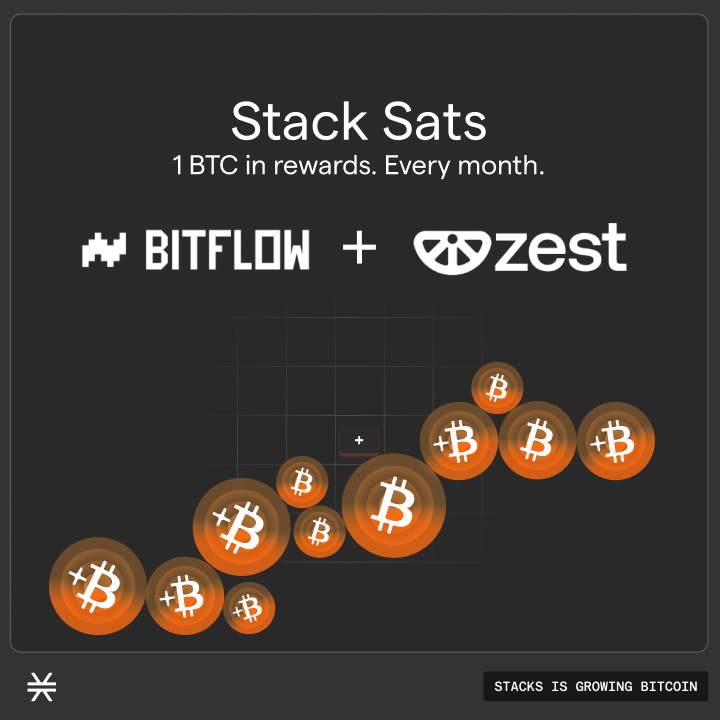
~1 BTC was earned in 6 weeks of Bitcoin Bond 1 and 2 since Sept. 10 on @Stacks
There is real BTC yield on BTC now
Two kinds of STX stackers exist.
One wants the BTC. Stack, receive BTC, keep it as BTC. That is most of us, and @Stacks now pays it straight to the wallet.
The other wants more STX. For years that meant a manual loop: receive BTC, swap it, restack, repeat every cycle.
@JuiceofBTC, a dapp built in the Stacks ecosystem, just automated the second kind. Deposit STX, the BTC rewards get swapped back into STX onchain and added to your stack every week. No one holds your funds, the contract does the work.
A nice touch: no fee on the first 2.1M STX, and you keep that rate as long as you stay.
New product, so size it like one. But for anyone who was doing the swap-and-restack loop by hand, this is the version you wanted.
Disclosure: I hold BTC and STX.
Zero Authority @zeroauthdao v1 started as a vision for what the future could be.
"Remember why you started" is a personal reminder for me to build a platform where.