@StoonBerries Will you please play Alabamas Song ‘Cheap Seats’ tonight in honour of Wiener Wednesday happening on a Monday. ‘We like our beer flat as can be,
We like our dogs with mustard and relish’🎶
🇮🇹 The speech that all of Italy heard. And that the world must hear.
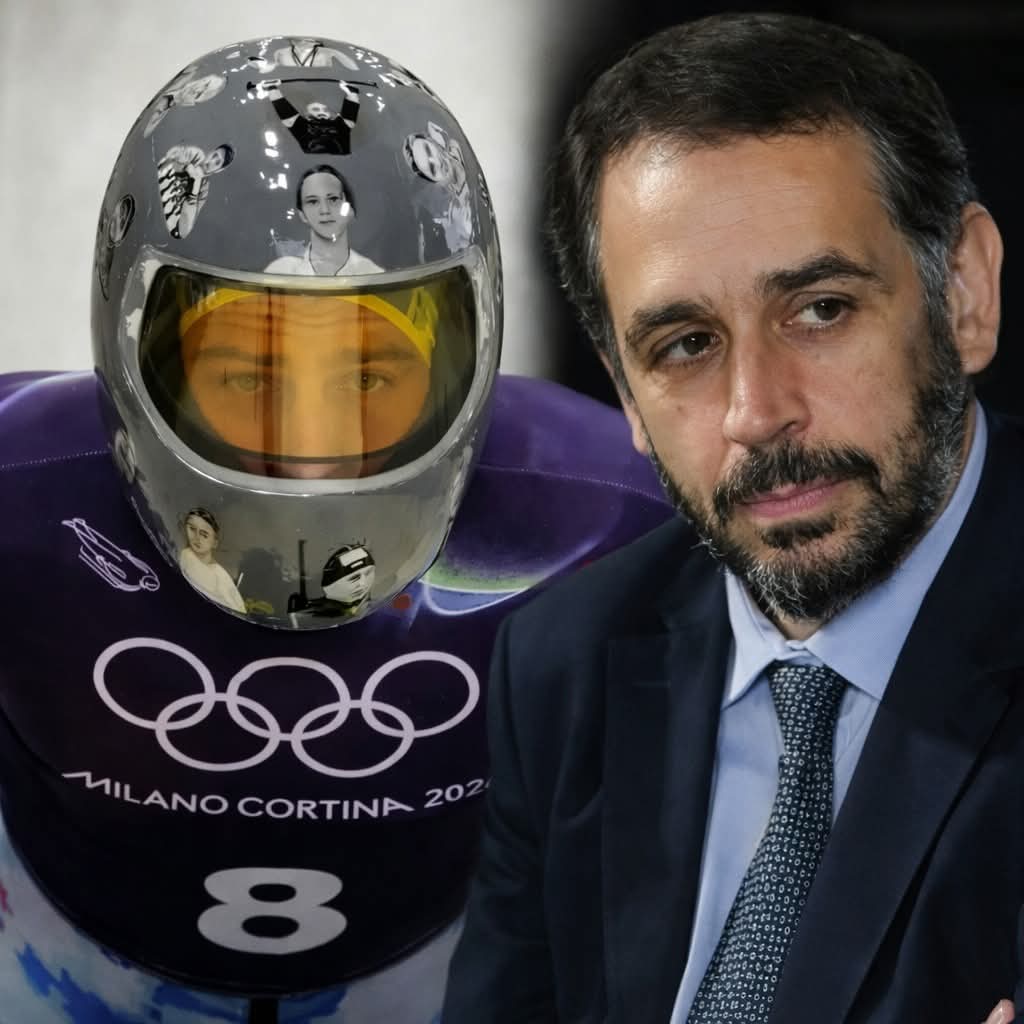
In a country that will host the Olympic Games, Italian Senator and Vice President of the Human Rights Commission Filippo Sensi took the floor and said what should have been said out loud long ago.
He called it a disgrace that the International Olympic Committee disqualified Ukrainian skeleton athlete Vladyslav Heraskevych.
Not for doping.
Not for violating fair play.
But for… memory.
For a helmet bearing the faces of Ukrainian athletes — his friends, colleagues, champions — killed by Russia.
The IOC stated that the helmet “did not comply with regulations.”
And then Sensi asked a question that brought silence to the chamber:
Does aggressive war comply with regulations?
Is there a separate technical protocol for it?
The correct angle of a missile strike?
The permissible size of a crater?
An athlete prepares for the Olympics for years.
A Ukrainian athlete trains between air raid sirens, in shelters, under news of the dead.
He overcomes fear, exhaustion, and loss.
And he steps to the start line not only for a medal — but for the right to exist.
And he is suspended… for remembering.
Because memory is the most dangerous substance. It is hard to add to a prohibited list. But apparently, someone would very much like to.
The senator named names. Just a few among more than 650 Ukrainian athletes killed by Russia:
▪️ Yevhenii Malyshev, 19, biathlete — killed in Kharkiv.
▪️ Mariia Lebid, 15 — missile strike in Dnipro.
▪️ Dmytro Sharpar, 25, figure skater — killed in Bakhmut.
▪️ Volodymyr Androsiuk, 22, track and field athlete — also Bakhmut.
▪️ Daria Kurdel, 20 — missile strike in Kharkiv.
▪️ Alina Perehutova, 14 — standing in line for water with her mother in Mariupol.
▪️ Maksym Halinichev, 22, boxer — killed defending Luhansk region.
▪️ Viktoriia Ivashko, 9, judoka — missile strike in Kyiv.
▪️ Kateryna Diachenko, 11, gymnast — airstrike on Mariupol.
▪️ Karina Bakur, 17, world kickboxing champion — shielded her father with her body.
These were the faces Heraskevych wanted to carry with him to the start line.
So that they would “compete” alongside him.
So that their dream would not die with them.
And for that, he was punished.
Because it turns out that the faces of murdered athletes violate regulations.
But their absence on the track does not.
In his speech, Sensi said the most important thing:
The Olympic Committee did not lose an athlete.
It lost its most valuable medal — its conscience.
Sport without memory is just a show.
Sport without humanity is just decoration.
Sport that fears truth is not about peace.
The Olympic movement was born from the ideals of honor, dignity, and unity.
Yet today Ukrainian athletes must prove not only their strength — but their right to remember their fallen.
And if memory becomes a violation of regulations — then the problem is not the helmet.
The world must hear this.
Because silence is also a position.
And indifference is also a choice.
Memory cannot be disqualified.
And conscience cannot be added to a prohibited list.
🇺🇦 We remember every one of them.
And we will not allow their names to be erased.
"Why does our top performer get the worst reviews?" the boss asked.
I was reviewing their annual performance data.
"Show me," I said.
She pulled up the ratings.
Diana: 2.8 out of 5.
Below average on "collaboration."
Low marks for "team player."
"What's her actual performance?" I asked.
"Exceeded every target.
Landed our biggest client.
Trained three new hires."
"So why the low scores?"
"Her peer reviews are dragging her down."
I scanned the comments.
"Too direct."
"Challenges ideas too much."
"Not supportive enough."
"Let me talk to Diana," I said.
"I used to give honest feedback," Diana told me.
"Said our pricing model was broken.
Got dinged for 'negativity.'"
"What happened with the pricing?"
"They finally fixed it six months later.
After we lost two major accounts."
"What else?"
"I questioned why we needed
eleven approvals for a simple contract change.
Manager said I wasn't being collaborative."
"Are you still giving feedback?"
"No. I learned my lesson.
Now I smile. Nod. Say everything's great.
My reviews are improving."
"But nothing's actually improving?"
"We're making the same mistakes.
Just with better vibes." She chuckled.
I went back to the boss.
"Your review system doesn't measure performance," I said.
"It measures compliance."
"That's not true."
"When was the last time someone
got promoted for challenging bad ideas?"
Silence.
"When did someone get rewarded for preventing a mistake?"
More silence.
"You've trained your best people to stay quiet.
And your mediocre people to stay nice."
A few months later, they redesigned the system.
Added a category: "Constructive Challenge."
Points for identifying problems early.
Rewards for preventing costly mistakes.
Diana got promoted.
"What changed?" I asked the boss.
"We stopped confusing agreement with alignment.
Stopped mistaking silence for harmony."
"And?"
"Turns out our 'difficult' people
were our most valuable.
They actually cared enough to speak up."
Here's the truth about performance reviews:
Most companies don't reward performance.
They reward performance theater.
The person who says the meeting was great
beats the person who says it wasted an hour.
The person who agrees with bad ideas
beats the person who prevents disasters.
You think you're measuring contribution.
You're measuring conformity.
And your best people?
They've already figured out the game.
They're just deciding whether to play it
or find somewhere that values truth over comfort.
The most underrated act of kindness is simply letting people be. Let them mispronounce a word, talk too much about a show they love, or get excited about something you don't quite understand. Everyone has something that lights them up, let them shine, even if it's not your thing.
My stepdad, Greg, never said 'I love you.' He was a hard man. Worked construction. Came home, ate, slept. He paid for my college. He paid for my car. But he never hugged me. I always thought he resented me. I wasn't his real son. Greg died of a heart attack last week. I was cleaning out his truck. In the glove box, I found a worn-out notebook. It was a diary. Entry 1: Met a woman with a boy today. The boy looks sad. I want to make him smile. Entry 50: The boy needs braces. Picking up extra shifts. Entry 200: He graduated today. I stayed in the back so I wouldn't embarrass him with my dirty work clothes. I've never been prouder. Entry 500: I wish I knew how to talk to him. I just hope he knows I’d die for him. I sat in the driver's seat of his dusty truck and cried until I couldn't breathe. He didn't say it. He did it. Every single day. Love isn't always words. Sometimes, it’s calloused hands and a tired back.
Anonymous