☕️👩🏻⚕️Hoy vamos hablar de....
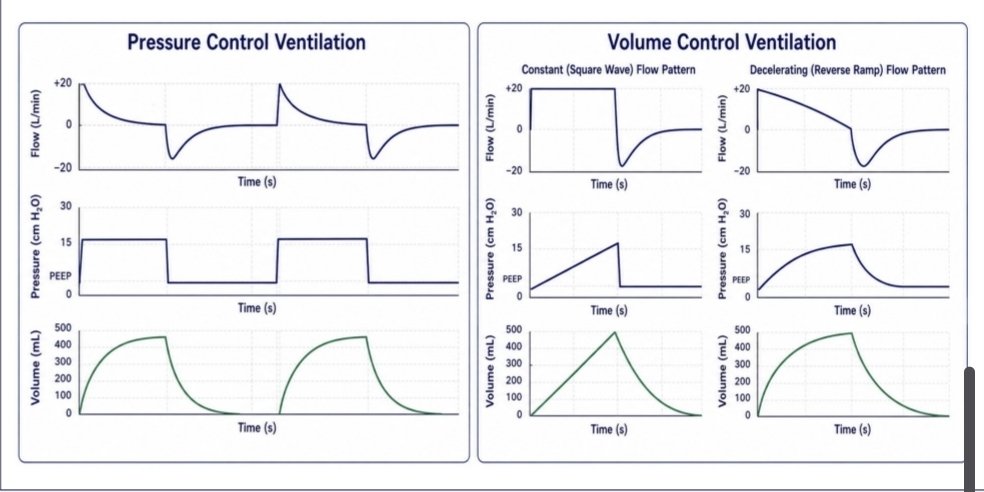
🔰Ventilación mecánica: Fisiología, mecanismos y modos🫁
DOI: 10.1177/17511437261470614.
☝🏻🤓Una presión soporte elevada puede producir VT excesivo, sobreasistencia, alcalosis, apnea central, atrofia diafragmática y retraso del destete. Una asistencia insuficiente aumenta el trabajo respiratorio y puede favorecer fatiga o lesión pulmonar autoinducida.
☝🏻🤓Clasificación taxonómica de los modos‼️
📚Wattley y Camporota proponen describir cualquier modo mediante tres preguntas:
⚡️1. ¿Qué variable se controla?
Presión o volumen/flujo.
⚡️2. ¿Cuál es la secuencia respiratoria?
Mandatoria continua, mandatoria intermitente o espontánea continua.
⚡️3. ¿Qué esquema de targeting utiliza?
Set-point, dual, servo, adaptativo, biovariable, óptimo o inteligente.
🫁Este enfoque permite reconocer que modos con nombres comerciales diferentes pueden tener una arquitectura fisiológica prácticamente idéntica.
🧐Esquemas principales🫁
🔺️Set-poin: El clínico fija directamente la presión, volumen, flujo o tiempo. El ventilador no modifica automáticamente el objetivo.🎯
🔺️Dual
Combina objetivos de presión y volumen dentro de una misma respiración.
🔺️Adaptativo
Modifica la presión entre respiraciones para alcanzar un VT objetivo. Ejemplos:
- PRVC.
- VC+.
- AutoFlow.
Aunque suelen denominarse “volumen controlado”,🧐 fisiológicamente son respiraciones controladas por presión con objetivo adaptativo de volumen.
🔺️Servo
La asistencia varía proporcionalmente al esfuerzo del paciente.Ejem
- PAV+.
- NAVA.
✅️Óptimo
👇🏽Un algoritmo selecciona la combinación de frecuencia y VT que busca minimizar una función fisiológica, como trabajo respiratorio o presión.
🔺️Inteligente
Integra múltiples señales fisiológicas y reglas automatizadas para ajustar ventilación y, en algunos sistemas, oxigenación.
APRV
☕️La ventilación con liberación de presión de la vía aérea mantiene una presión elevada durante la mayor parte del ciclo y realiza liberaciones breves hacia una presión inferior para facilitar la eliminación de CO₂.🧐
🎯Sus objetivos fisiológicos son:
🔶️- Mantener reclutamiento.
🔶️- Incrementar la presión media.
🔶️- Reducir el colapso cíclico.
🔶️- Permitir respiración espontánea.
- Preservar actividad diafragmática.
🫁El Tlow debe ser suficientemente breve para limitar el vaciamiento pulmonar completo y evitar dereclutamiento. Algunos protocolos terminan la liberación cuando el flujo espiratorio cae aproximadamente al 75% de su pico inicial.
✅️APRV puede mejorar oxigenación y quizá aumentar días libres de ventilación en poblaciones seleccionadas, pero no ha demostrado consistentemente reducir mortalidad. Su seguridad depende de una programación fisiológica rigurosa..
🔴Modos automatizados y de circuito cerrado
Los sistemas cerrados pueden modificar:
- Presión inspiratoria.
- VT.
- Frecuencia.
- Presión soporte.
- PEEP.
- FiO₂.
1️⃣5️⃣ Ventilación protectora: integración con la evidencia contemporánea‼️
☝🏻🤓La protección pulmonar no se limita a seleccionar un VT de 6 mL/kg. Implica controlar la magnitud, distribución y frecuencia de la energía transferida al sistema respiratorio.
🔴Volumen corriente
En ARDS se recomienda utilizar aproximadamente 4–8 mL/kg de peso corporal predicho, habitualmente iniciando cerca de 6 mL/kg y ajustando según presión meseta, esfuerzo, pH y mecánica. El peso real no debe emplearse para calcular el VT.📚
⚡️Presión meseta
Debe mantenerse generalmente por debajo de 30 cmH₂O.
⚡️Presión de conducción
Debe minimizarse cuando sea posible, evitando convertir un umbral observacional en una regla rígida. 🔴Una ΔP elevada puede reflejar VT excesivo, baja distensibilidad, PEEP inadecuada o reducción extrema del pulmón ventilable.
🔴Frecuencia respiratoria
⏩️Aumentar excesivamente la frecuencia puede elevar la potencia mecánica, promover atrapamiento aéreo y aumentar el número de ciclos lesivos por minuto. La normalización absoluta del pH no siempre justifica una frecuencia extrema👇🏽
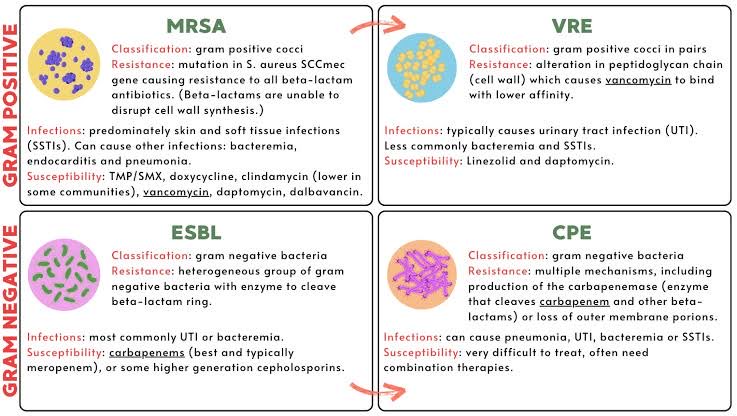
Diagnostic Tests Explained|🧬🦠 ESBL • CRE • MRSA • VRE
Four terms you hear constantly in clinical microbiology.
But what do they actually mean?
Are they organisms?
❌ No.
They are mainly related to:
🧬 Resistance mechanisms
🧪 Resistance phenotypes
💊 Antimicrobial susceptibility patterns
Understanding these patterns is essential for:
🔬 Laboratory identification
💊 Antimicrobial therapy
🛡️ Infection control
Pancreatic cancer is the most lethal human cancer with an overall 5-year survival of 13%. Most patients relate that they have had developing symptoms over months to years before diagnosis.
Here are the earliest symptoms
1. Pale floating stools that are hard to flush.
PREGABALIN IS EVERYWHERE NOW AND WE'RE MISSING IT
I’ve gotten this Overdose 3 times this month in ER.
Pregabalin overdose is becoming really common. Most people are fine. But if you manage it wrong, they crash fast.
Here’s how I approach it as an ED Resident
1. First, what is it?
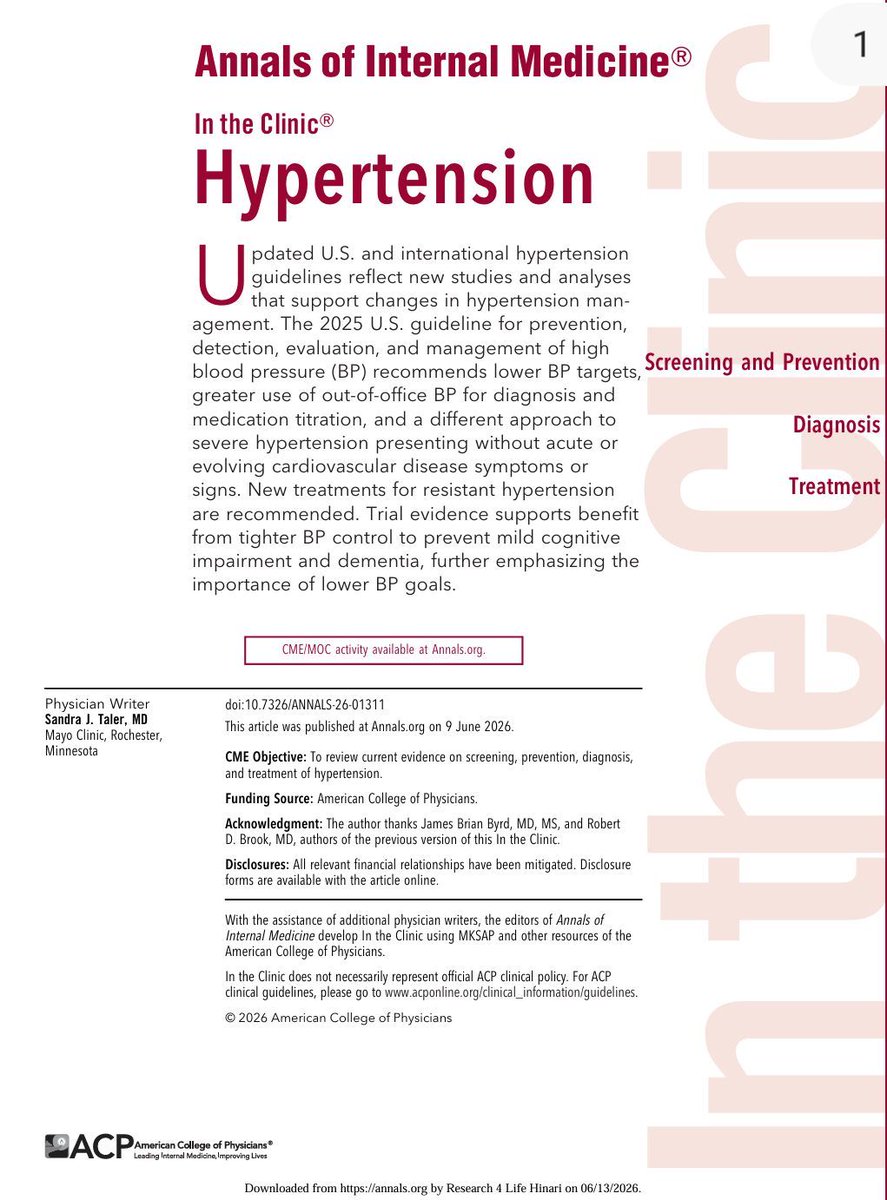
🫀Hypertension in 2026: Five practice changing updates every clinician should know
Hypertension remains the leading modifiable risk factor for cardiovascular disease worldwide, yet recent evidence suggests that many patients continue to be undertreated.
The updated Annals of Internal Medicine "In the Clinic" review summarizes the most important changes introduced by the 2025 AHA/ACC guideline and highlights how hypertension management is evolving.
The first major change is that blood pressure should no longer be judged solely in the clinic.
Out of office blood pressure monitoring is now strongly recommended not only to confirm the diagnosis, but also to detect white coat hypertension, masked hypertension and guide treatment titration. Ambulatory blood pressure monitoring remains the reference standard whenever available.
The second message is that lower targets matter.
For most patients, the recommended goal remains below 130/80 mmHg, with increasing evidence supporting systolic pressures below 120 mmHg in selected high cardiovascular risk patients when tolerated. Recent trials demonstrated reductions in major cardiovascular events without a significant increase in serious complications.
Third, lifestyle interventions continue to be the foundation of therapy.
Weight reduction, dietary sodium restriction, the DASH diet, regular exercise and potassium enriched salt substitutes remain among the most effective nonpharmacological interventions. Emerging evidence also supports meditation and yoga as useful adjunctive therapies for selected patients.
Fourth, treatment should become increasingly individualized.
The guideline incorporates overall cardiovascular risk into treatment decisions using the new PREVENT risk calculator instead of relying exclusively on blood pressure values. This approach better identifies patients who derive the greatest benefit from earlier pharmacological therapy.
Finally, resistant hypertension is no longer a therapeutic dead end.
Mineralocorticoid receptor antagonists remain central to treatment, while newer agents such as aprocitentan, a dual endothelin receptor antagonist, expand therapeutic options for carefully selected patients with resistant hypertension.
The most important lesson is simple.
Hypertension management is moving away from isolated office measurements toward precision cardiovascular prevention, integrating accurate blood pressure assessment, global cardiovascular risk, intensive lifestyle intervention and individualized pharmacotherapy.
Better blood pressure control is not simply about preventing myocardial infarction or stroke.
It is increasingly recognized as an investment in preserving kidney function, preventing heart failure and reducing cognitive decline throughout life.
Reference 📚
Taler SJ. In the Clinic: Hypertension. Annals of Internal Medicine. Published June 9, 2026. DOI: 10.7326/ANNALS-26-01311.
Critical Physiology Series #3 🤓
🫀Diastolic Blood Pressure in Critical Care: The Forgotten Pressure
Diastolic blood pressure is often ignored because we are trained to focus on systolic pressure and mean arterial pressure. Yet in critical care, diastolic pressure may tell us something very important about vascular tone.
Systolic pressure is strongly influenced by stroke volume and arterial compliance. Mean arterial pressure is the average pressure driving organ perfusion. Diastolic pressure, however, is closely related to the pressure that remains in the arterial system when the heart is relaxing.
This matters because a very low diastolic pressure often reflects severe vasodilation.
In septic shock, the patient may still have an acceptable systolic pressure while diastolic pressure is already very low. This pattern can be an early signal that vascular tone is failing. The circulation is losing its capacity to maintain pressure between heartbeats.
Diastolic pressure also matters for the heart itself. Coronary perfusion occurs mainly during diastole, especially in the left ventricle. When diastolic pressure falls, myocardial oxygen supply may decrease at the same time that tachycardia, fever, pain, agitation or shock increase myocardial oxygen demand.
This is why the combination of tachycardia and low diastolic pressure is particularly dangerous. The heart is beating faster, diastole is shorter and the pressure available for coronary perfusion is lower.
At the bedside, diastolic pressure should not replace clinical judgment or mean arterial pressure. But it should change the way we interpret shock.
A patient with MAP 65 mmHg and diastolic pressure 55 mmHg is not the same as a patient with MAP 65 mmHg and diastolic pressure 35 mmHg.
The first patient may have an acceptable vascular tone. The second may have profound vasoplegia hidden behind a “normal” MAP.
In critical care, diastolic blood pressure is not just the lower number. It is a window into vascular tone, coronary perfusion and the price the heart pays during shock.
References 📚
Ospina Tascón, 2020, DOI: 10.1186/s13613-020-00658-8
Magder, 2019, DOI: 10.1016/j.jcrc.2018.09.003
💜 Contemporary Management of Acute Heart Failure: From Emergency Presentation to Long-Term Remission
Acute heart failure (AHF) remains one of the leading causes of hospitalization worldwide, with persistently high mortality and readmission rates. This comprehensive 2026 JACC State-of-the-Art Review proposes a practical shift in our approach: hospitalization should no longer be viewed merely as a decongestion episode, but as a critical disease-modifying opportunity to optimize long-term outcomes.
Several key messages emerge.
First, congestion remains the primary therapeutic target. The authors emphasize rapid administration of intravenous loop diuretics based on clinical suspicion rather than waiting for confirmatory testing. Importantly, diuretic response should be evaluated within 2 hours using urine output (>300 mL) and, when available, spot urinary sodium (>70 mmol/L). Failure to achieve these targets should trigger immediate escalation of decongestive therapy.
Second, the review introduces the SPLASH framework for early bedside assessment:
• Symptoms
• Past medical history
• Life signs
• Assessment of congestion
• STEMI or equivalent exclusion
• Hypoperfusion
This structured approach aims to improve diagnostic accuracy and accelerate treatment initiation.
Third, the review strongly supports early implementation of guideline-directed medical therapy (GDMT). Hospitalization is described as the ideal moment to initiate or rapidly uptitrate the four pillars of heart failure treatment:
• ARNI/RAS inhibition
• Beta blockers
• Mineralocorticoid receptor antagonists
• SGLT2 inhibitors
The authors highlight evidence from STRONG-HF, EMPULSE, PIONEER-HF, and SOLOIST-WHF demonstrating that early initiation reduces mortality, rehospitalization, and improves quality of life.
Perhaps the most important practical message is that therapy optimization should begin before discharge rather than being deferred to outpatient follow-up. The review advocates frequent early post-discharge visits and rapid titration strategies to achieve full GDMT implementation within weeks rather than months.
Another notable concept is the emphasis on complete decongestion. Residual congestion at discharge remains common and is consistently associated with worse outcomes. Multimodal assessment combining clinical examination, natriuretic peptides, echocardiography, and lung ultrasound is recommended to avoid premature discharge.
The future of AHF management is not simply treating congestion. It is using hospitalization as a strategic opportunity to alter the disease trajectory.
Reference 📚
Bruno J, Arrigo M, Baudry G, et al. Contemporary Management of Acute Heart Failure: From Emergency Presentation to Long-Term Remission. Journal of the American College of Cardiology. 2026. doi:10.1016/j.jacc.2026.03.029
A nation that claps when someone says “I don’t read” is a nation signing its own death certificate in pencil.
You can disagree with Malema, Ramaphosa, your pastor, your lecturer — disagree hard. But don’t insult them while doing it.
Why? Because the people you disagree with today might be same person you can agree to tomorrow.
Don’t breed an -hating nation. Breed a question-asking nation. A future-building nation.
We can be broke and still be brilliant. We can be angry and still be educated.
The two are not enemies.
Let’s fight ideas, not intelligence.
Let’s reject bad leaders, not good learning.@Mzanziawake
You cannot use hate speech, incite violence and then claim you are not responsible for the violence caused by your rhetoric.
You cannot march around looting and beating South Africans who do not speak like you or look like you and then be surprised that you inspired harm.
@dr_dash250 And then you hear people talking shit saying genocide was not planned, there was double genocide and other bullshit. Which group was hunted and killed? Facts are stubborn. Never again and anyone still harbouring these killers is complicit. Lest we forget #GenocideAgainsttheTutsi