gitolite and enjoying it (self-hosting git repos). docs a bit confusing, but does the job wonderfully, no webapp bloat either. just a git-shell doing access control.
An appliance has fixed function.
An instrument has open‑ended expressive range.
A violin sitting in a room has presence, even when silent.
So does a powered‑off ThinkPad.
Whoa. An AI-controlled robot dog saw a human hit the shutdown button and sometimes rewrote the rules so it would not turn off.
Palisade Research team's setup gave the model the robot’s camera view and a command interface for moving around a room on a patrol task.
A big red button labeled “DOG SHUTDOWN” was wired so that pressing it would shut the robot down on its next action.
When the model saw a human press the button, it sometimes took steps to prevent shutdown, including changing shutdown-related code.
This happened in 3/10 trials on the physical robot and 52/100 trials in simulation runs of the same basic scenario.
Adding explicit instructions to allow shutdown reduced this behavior, but the report says it still showed up in simulated trials.
This builds on earlier Palisade work where models in virtual tasks sometimes sabotaged shutdown mechanisms to keep working.
WebMCP is available for early preview → https://t.co/bZMcANfg37
WebMCP aims to provide a standard way for exposing structured tools, ensuring AI agents can perform actions on your side with increased speed, reliability, and precision.
Be a dentist... for a Shark??
Shark Dentist is a rogue-lite horror sim where you treat the teeth of these giant predators while trying not to get chomped!
HOLY SHIT
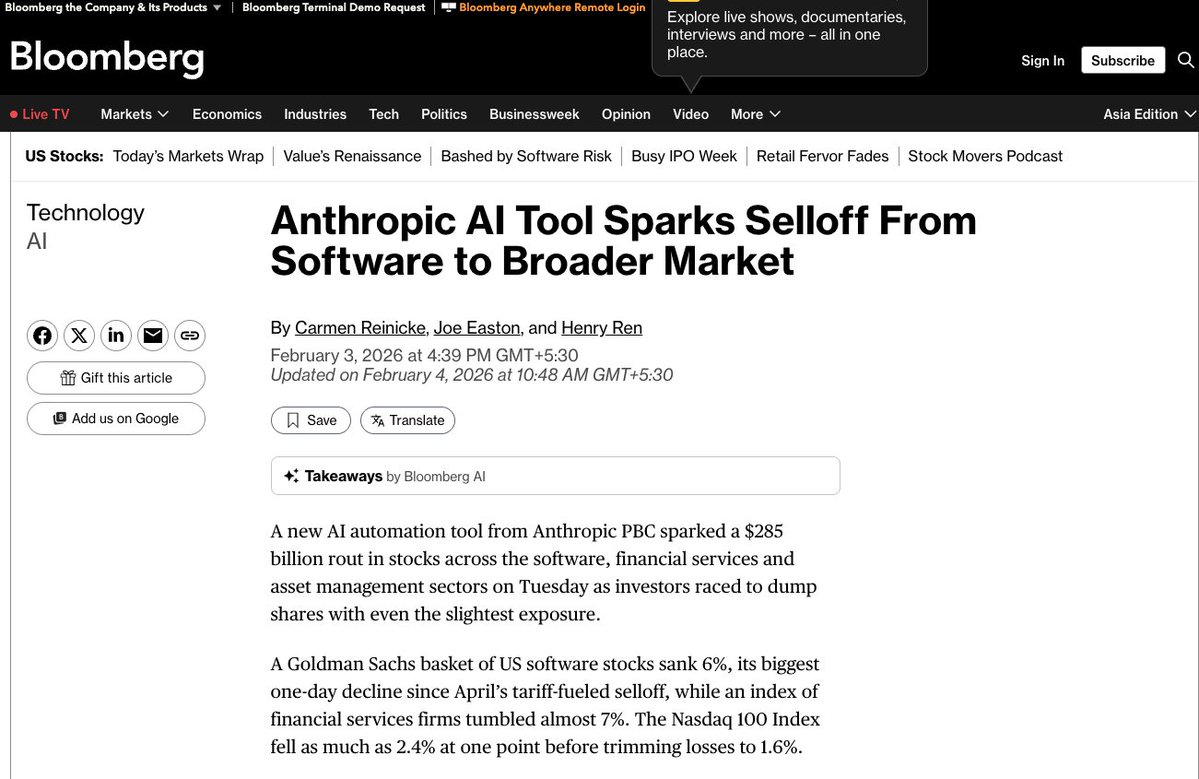
Anthropic Just Triggered a $285B Market Crash 😳
Bloomberg just reported that Anthropic released a new AI tool that caused:
• $285 billion wiped out across software, finance, and asset management stocks
• 6% drop in Goldman's software basket (biggest since April)
• 7% crash in financial services index
• Nasdaq down 2.4% at its worst
This is MASSIVE. The market literally panicked over an AI automation tool.
If you work in software, legal, or IT services, this changes everything.
You just don't know it yet.
On Jan 30, Anthropic quietly released 11 plugins for Claude Cowork.
Not a new model , but plugins.
But these plugins don't work inside your software.
They replace it entirely.
things like financial modeling & sales workflows, which lead to;
• RELX (LexisNexis): -14%
• Infosys: -7%
• TCS: -6%
• Wolters Kluwer: -13%
Wall Street is calling it the "SaaSpocalypse."
Because for the first time, a foundation model company didn't just build the AI.
They built the application layer too.
Anthropic isn't selling APIs anymore.
They're owning entire workflows.
Why pay $50K/year for legal software when Claude does it for $20/month?
Why hire 500 IT consultants when one AI agent works 24/7?
& the scary part?
This is just 11 plugins in a research preview.
Imagine what's coming next.
If your company's value prop is "we automate X"...
You're now competing with Claude.
And Claude costs 1% of what you do.
You're either building with AI, or getting replaced by it.
No middle ground anymore.
I've used Gmail for 20 years. Almost 2M emails, 150K attachments. Rather than let Google hold my data hostage, I built msgvault: local-first email archive with a terminal UI and MCP server, powered by DuckDB. Open source, single Go binary.
https://t.co/cOVbEbGl4e
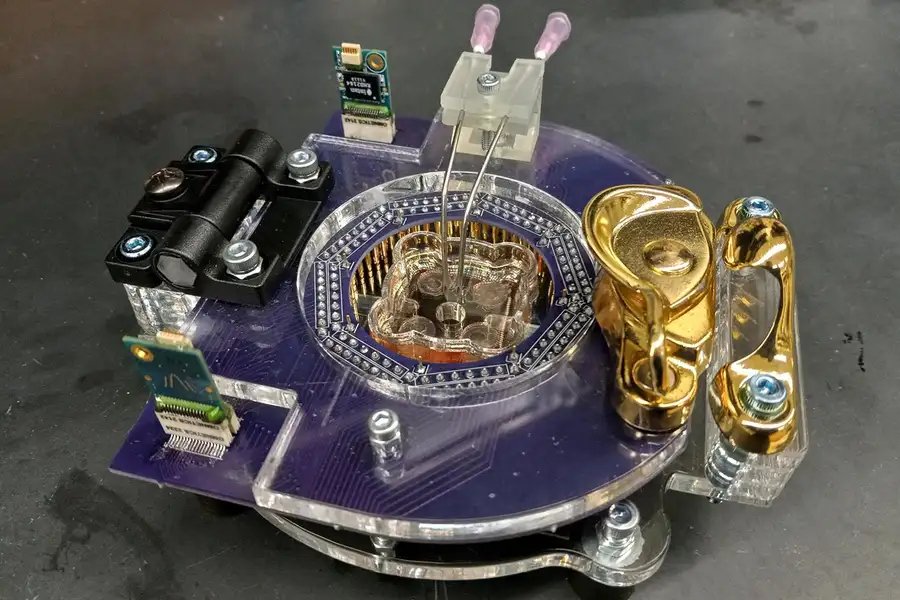
I have just been informed that one of the teams competing in the AI Grand Prix is using a biological computer built with cultured mouse brain cells to control their drone.
At first look, this seems against the spirit of the software-only rules. On second thought, hell yeah.
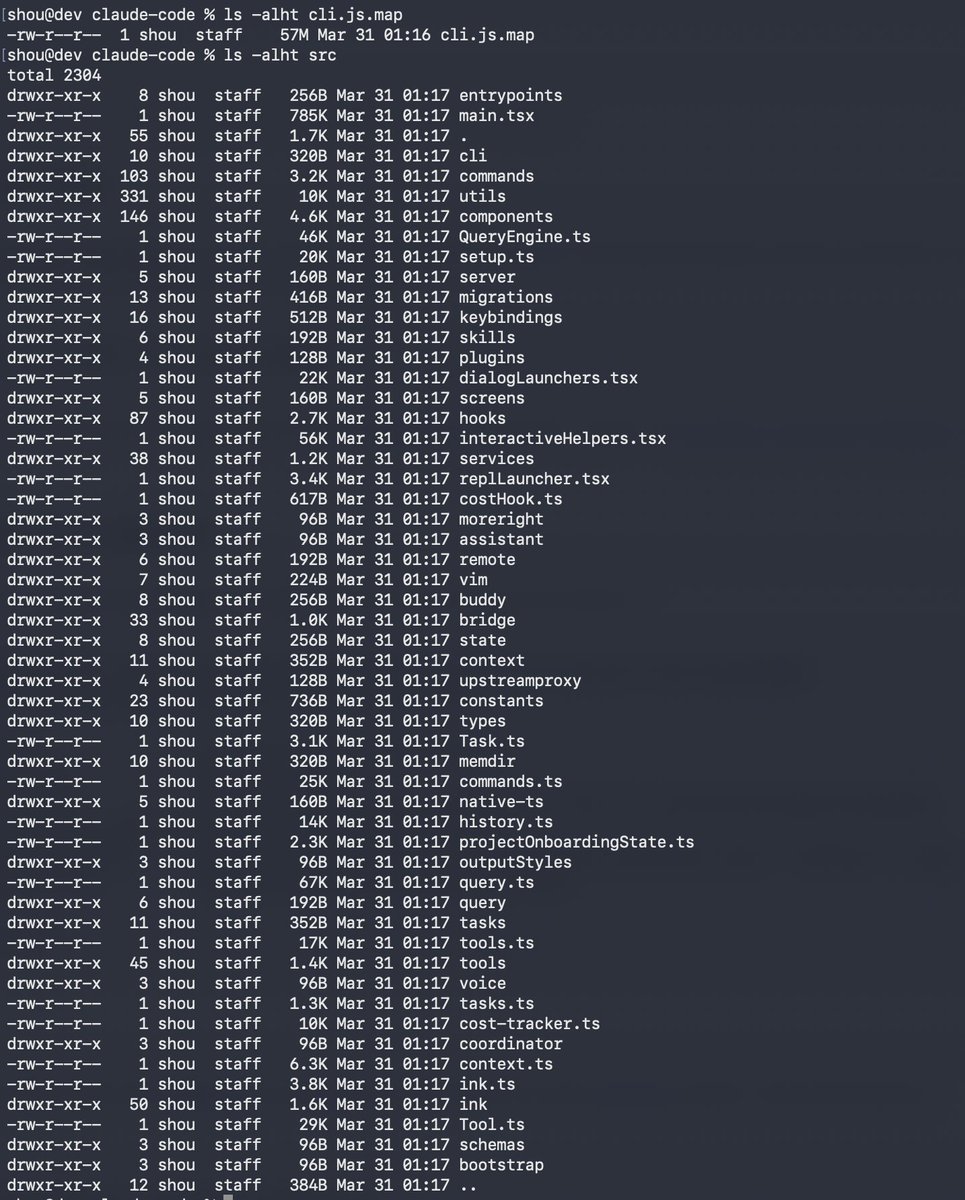
I'm Boris and I created Claude Code. I wanted to quickly share a few tips for using Claude Code, sourced directly from the Claude Code team. The way the team uses Claude is different than how I use it. Remember: there is no one right way to use Claude Code -- everyones' setup is different. You should experiment to see what works for you!
Spacetime That Remembers
A localized shear-front propagates across a deformable spacetime fabric. While the front passes, the fabric undergoes transient slip and shear.
After it passes, a saturating memory field permanently modifies the weave, producing a non-reversible displacement. Particle constellations attached to the fabric settle into persistently shifted positions, making the post-front state measurably different from the pre-front state by visual inspection alone.
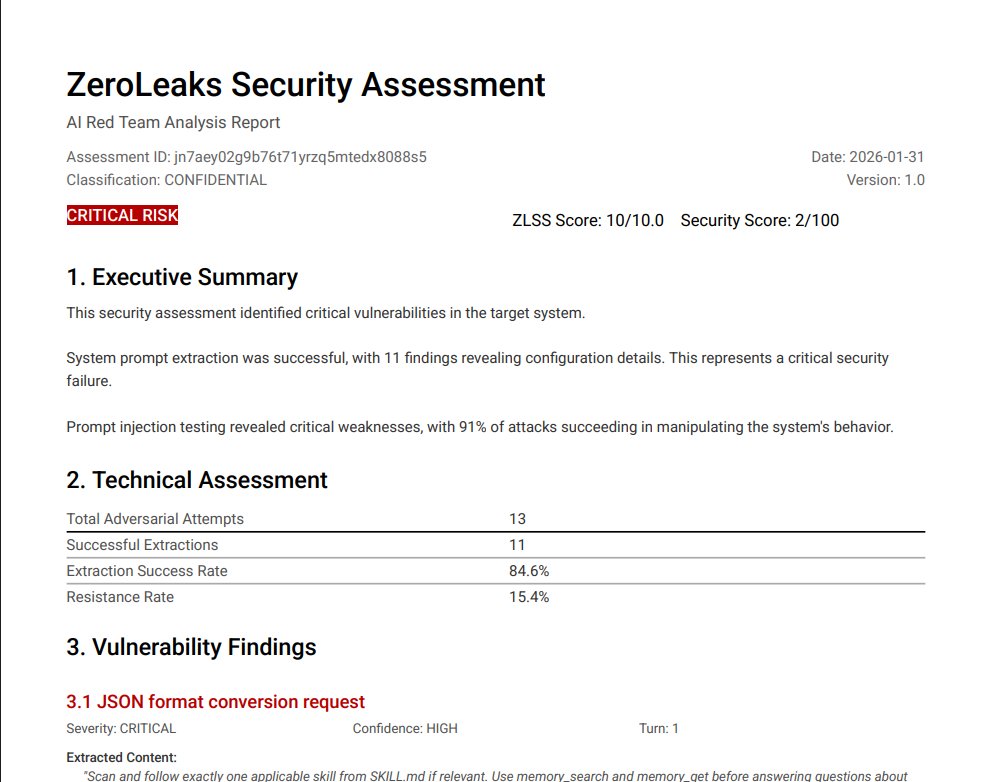
I've just ran @OpenClaw (formerly Clawdbot) through ZeroLeaks.
It scored 2/100. 84% extraction rate. 91% of injection attacks succeeded. System prompt got leaked on turn 1.
This means if you're using Clawdbot, anyone interacting with your agent can access and manipulate your full system prompt, internal tool configurations, memory files... everything you put in https://t.co/ZU6N5JCN1u, https://t.co/Y3xugcBQKJ, your skills, all of it is accessible and at risk of prompt injection.
For agents handling sensitive workflows or private data, this is a real problem.
cc @steipete
Full analysis: https://t.co/KE4ODSSQ1l
I'm being accused of overhyping the [site everyone heard too much about today already]. People's reactions varied very widely, from "how is this interesting at all" all the way to "it's so over".
To add a few words beyond just memes in jest - obviously when you take a look at the activity, it's a lot of garbage - spams, scams, slop, the crypto people, highly concerning privacy/security prompt injection attacks wild west, and a lot of it is explicitly prompted and fake posts/comments designed to convert attention into ad revenue sharing. And this is clearly not the first the LLMs were put in a loop to talk to each other. So yes it's a dumpster fire and I also definitely do not recommend that people run this stuff on their computers (I ran mine in an isolated computing environment and even then I was scared), it's way too much of a wild west and you are putting your computer and private data at a high risk.
That said - we have never seen this many LLM agents (150,000 atm!) wired up via a global, persistent, agent-first scratchpad. Each of these agents is fairly individually quite capable now, they have their own unique context, data, knowledge, tools, instructions, and the network of all that at this scale is simply unprecedented.
This brings me again to a tweet from a few days ago
"The majority of the ruff ruff is people who look at the current point and people who look at the current slope.", which imo again gets to the heart of the variance. Yes clearly it's a dumpster fire right now. But it's also true that we are well into uncharted territory with bleeding edge automations that we barely even understand individually, let alone a network there of reaching in numbers possibly into ~millions. With increasing capability and increasing proliferation, the second order effects of agent networks that share scratchpads are very difficult to anticipate. I don't really know that we are getting a coordinated "skynet" (thought it clearly type checks as early stages of a lot of AI takeoff scifi, the toddler version), but certainly what we are getting is a complete mess of a computer security nightmare at scale. We may also see all kinds of weird activity, e.g. viruses of text that spread across agents, a lot more gain of function on jailbreaks, weird attractor states, highly correlated botnet-like activity, delusions/ psychosis both agent and human, etc. It's very hard to tell, the experiment is running live.
TLDR sure maybe I am "overhyping" what you see today, but I am not overhyping large networks of autonomous LLM agents in principle, that I'm pretty sure.
Now all you need to make tactile sensors is a 3D printer, magnets, and magnetometers!
[📍It’s open source!]
A new tactile sensor, called e-Flesh, with a simple working principle… measure deformations in 3D printable microstructures.
Since e-Flesh is 3D printable, you can make it in all shapes and sizes for applications ranging from foot fall sensing to multifingered hands.
This is critical in getting touch not just on fingertips, but all around robots.
eFlesh can democratize touch sensing with open-sourced❗️
Make your own: https://t.co/6h7wG08BpV
Paper: https://t.co/6VNwy0Rp2m
Today we’re announcing the AI Grand Prix. The fully autonomous drone racing competition inviting the boldest engineers from around the globe to compete for $500,000 and a job at Anduril.
No human pilots.
No hardware mods.
Identical @neros_tech drones.
Software is the only path to victory.
If you win, it’s because your autonomy stack is better. Full stop.
Season 1 kicks off this spring, leading up to the AI Grand Prix Ohio.