California’s Billionaire Wealth Tax: Healthcare vs. Greed
On November 3rd, at a time of unprecedented income and wealth inequality, the people of California will decide whether to pass a 5% wealth tax on more than 200 billionaires in California who are worth $2.2 trillion.
This initiative, known as Proposition 40, would raise enough revenue to prevent 3 million working-class Californians from losing the healthcare they currently have as a result of Trump’s so-called Big Beautiful Bill.
Last year, these billionaires became $500 billion richer. As a result of a rigged tax code, they pay a lower effective tax rate than a plumber or a nurse.
The greed of these billionaires is really extraordinary.
Instead of paying their fair share of taxes, billionaires are now spending $229 million — 0.01% of their wealth — to oppose a 5% tax on their wealth.
The effort against this initiative is being led by the 4th wealthiest man in the world, Sergey Brin, the co-founder of Google, who is spending over $100 million to defeat it.
If the California billionaire wealth tax is passed, Mr. Brin would owe $13.5 billion more in taxes. But don't feel sorry for him. He would still have $256.5 billion left over to feed his family. (And don’t let him fool you into thinking he left the state. Mr. Brin owns at least four mansions in California worth some $103.5 million. Tax experts have made it clear that he would owe this tax.)
It is also being opposed by Mark Zuckerberg, Larry Page, Larry Ellison, Eric Schmidt and Peter Thiel. These 5 Big Tech billionaires are worth over $646 billion combined.
Dangerously, many oligarchs today believe that they have the divine right to rule and that they are masters of the universe. They live lives completely separate from ordinary people and are obsessed with becoming even richer and more powerful than they already are.
The result: They would rather let people in California suffer or die because they can’t afford to go to a doctor than pay their fair share of taxes.
Let's be clear: These billionaires have more money than they could spend in over 100 lifetimes.
How many mansions do they need? How many yachts do they need? How many private jets do they need?
So today I say to the billionaire class: Control your greed. Show a bit of compassion to working families and their kids in California.
Instead of spending $229 million on TV ads against this wealth tax, I have a better idea: Start paying your fair share of taxes.
In 1933, Supreme Court Justice Louis Brandeis said: “We can have democracy in this country, or we can have great wealth concentrated in the hands of a few, but we cannot have both.”
What Justice Brandeis said was accurate 93 years ago. It is even more accurate today.
Our job now is to tell the Oligarchs in California that we will no longer tolerate their insatiable greed.
We will choose healthcare for working families and their children over obscene wealth for the richest people in the world.
Let us stand together in solidarity.
They have the money. We have the people. Let's win this struggle.
Airbnb donated $1.5M to reelect Bass. In return they expect Karen to get them deregulated before the Olympics (will remove affordable units from the market and turn them into short term hotels). This will drive up rent prices.
Bass is selling you out. She’s making it worse.
Renaming Pershing Square Biddy Mason Park is a City Hall hustle.
This is all about money, not about honoring anyone.
And this Labor Day, we're hard at work getting the story locked down, because YOU, dear gaslit Angeleno, deserve the truth from your so-called "leaders."
Not to add to the discourse, but…
It’s ‘toe the line,’ not ‘tow the line.’
It’s ‘free rein,’ and not ‘free reign.’
It’s ‘eke out,’ not ‘eek out.’
It’s ‘sleight of hand,’ not ‘slight of hand.’
It's ‘Anchors aweigh,’ and not ‘Anchor's away!’
23 years ago this week: Deondre Brunston was gunned down by LA County Sheriff's deputies after he threw a sandal at a police dog. My additional review of this case revealed that some of the deputies behind Deondre's death are part of a deputy gang.
https://t.co/yJBXnjuT4v
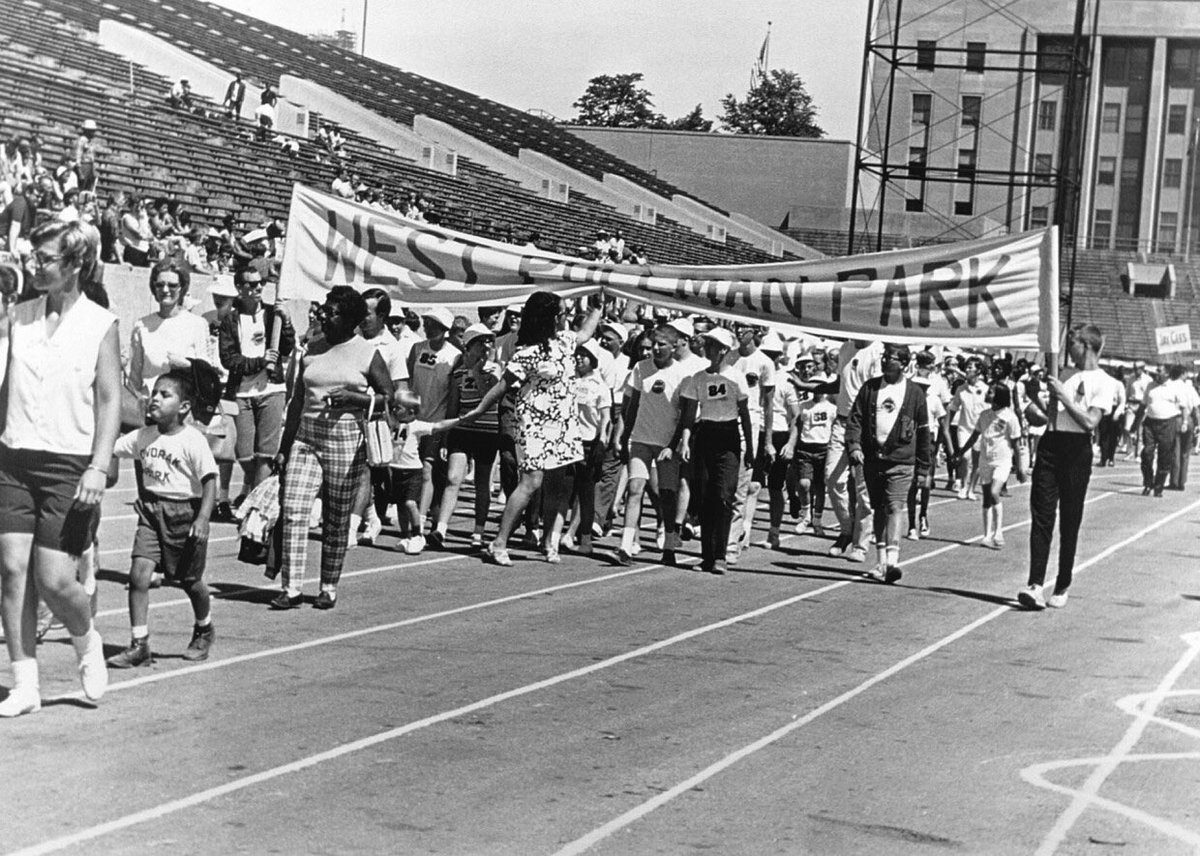
At the Seattle Special Olympics nine contestants, all physically or mentally disabled, start the 100-yard dash, but one little boy stumbles on the asphalt at the starting gun and begins to cry.
The rest of the competitors abandon their ambitions of reaching the finish line first and double back to lift up the little boy, and then all nine link arms and walk together to the finish line, where they receive a standing ovation.
In 1961, a young woman from Virginia stepped into the center of America’s civil‑rights struggle and instantly became a problem for the system she was resisting. Joan Trumpauer Mulholland was only nineteen when she joined the Freedom Riders, but her decision carried a weight that stunned police, judges, and even her own community.
In a society built on rigid racial lines, her presence on the front lines made no sense to the people enforcing those rules. When she was arrested in Jackson, Mississippi, authorities were so baffled that they ordered mental‑health tests, convinced that no “normal” Southerner would willingly challenge segregation.
Mulholland’s journey into activism began long before her arrest. Raised in the Jim Crow South, she saw the cruelty of discrimination everywhere, in schools, in restaurants, in the quiet rules that dictated who could sit where and speak to whom. By high school, she had already rejected those rules. She befriended classmates who were excluded by segregation, challenged teachers, and refused to participate in the system around her. At Duke University, her refusal to stop associating with students of all backgrounds led her to walk away from the school entirely. She wasn’t trying to be radical; she simply couldn’t live a lie.
Her arrest came during the Freedom Rides, a campaign designed to test Supreme Court rulings that outlawed segregation in interstate travel. Mulholland boarded a bus knowing exactly what awaited her: mobs, jail cells, and the possibility of violence. When she arrived in Jackson, she was taken into custody almost immediately. The charge, “disturbing the peace”, was flimsy, but the real issue was her identity. Southern women were expected to uphold the racial order, not dismantle it. Her defiance was so incomprehensible to Mississippi officials that they assumed she must be unstable. The mental‑health tests were an attempt to explain away her moral clarity.
Mulholland was sent to Parchman Penitentiary, one of the harshest prisons in the South. Freedom Riders were placed in maximum‑security units, subjected to strip searches, isolation, and constant intimidation. Yet she remained steady, encouraging others, singing freedom songs, and refusing to be broken. Her calmness frustrated guards who expected fear; instead, she showed resolve that made her a symbol of solidarity across racial lines.
Her activism didn’t end with her release. Mulholland went on to join more than fifty civil‑rights demonstrations, including the famous 1963 Woolworth’s sit‑in in Jackson, where she sat at a lunch counter as angry mobs screamed and assaulted the protesters. She enrolled at Tougaloo College, becoming one of the first students from outside the community to integrate the historically Black institution. She worked alongside leaders like Medgar Evers and participated in voter‑registration drives across the Deep South. She marched on Washington, organized sit‑ins, and helped build the youth‑led movement that reshaped American democracy.
What makes her story extraordinary is not just her courage but cultural betrayal she embodied. In Jim Crow South, women like her were positioned as symbols of tradition and social order. Mulholland’s activism shattered that narrative. She wasn’t fighting out of guilt or rebellion; she was fighting because she believed segregation was morally indefensible. Her willingness to stand beside those targeted by discrimination, to be arrested with them, jailed with them, threatened with them, challenged the very foundation of Southern ideology.
Today, Joan Trumpauer Mulholland is recognized as one of most important allies of Civil Rights Movement. Her story is taught in classrooms, featured in documentaries, and preserved in archives. The moment Mississippi officials questioned her sanity for believing in equality has become a stark reminder of how deeply racism shaped the assumptions of era. What they saw as madness was, in truth, moral clarity.
#archaeohistories
During the Cold War, the United States often supported authoritarian governments when they were considered useful allies against the Soviet Union or communist movements.
Examples included Augusto Pinochet’s Chile, the Shah’s Iran, Ferdinand Marcos’s Philippines, and several military governments in Latin America.
At other times, the United States has helped overthrow or defeat authoritarian governments, including the Axis powers during WW2 and Saddam Hussein’s government in Iraq in 2003.
The history is complicated: U.S. foreign policy has supported dictators, fought dictators, and even helped undermine democratically elected governments when American strategic interests were at stake.
If I’ve learned anything, it’s that national security, geopolitical influence, economic interests, access to resources and trade, and containing rival powers have almost always taken precedence over promoting democracy.
#drthehistories
#OtD 15 Aug 1935 Paul Signac, French neo-Impressionist painter and anarchist who helped develop the pointillist style, died. This is a short biography: https://t.co/KEU8YWJbK1
The Smile That Outlasted a Regime
In July 1968, Saigon was absolute chaos in the wake of the Tet Offensive. 23-year-old student activist Võ Thị Thắng was working covertly for the Viet Cong when her mission, taking out a suspected government informant, went completely sideways. She was captured on the spot by South Vietnamese forces and hauled in front of a military tribunal, a setup designed to break dissidents and make an example out of them.
The judges thought they were delivering a total knockout blow: 20 years of hard labor in Côn Đảo Prison, a brutal island penal colony notorious for its torture tactics and claustrophobic "tiger cages." But instead of breaking down, Thắng looked right at a Japanese photographer's camera and flashed a bright, perfectly calm smile. Then, looking the judge straight in the eye, she dropped a legendary line: "Will your government last long enough to imprison me for 20 years?"
That photo immediately blew up worldwide as "The Smile of Victory," and her call proved dead accurate. Thắng spent six brutal years in Côn Đảo before being freed in a 1974 prisoner exchange under the Paris Peace Accords. Just one year later, the South Vietnamese government completely collapsed, 13 years short of her sentence. After the war, she went on to become a politician and head up Vietnam's national tourism agency, but that 1968 courtroom moment remains the ultimate flex of pure, unshakable confidence.
Võ Thị Thắng’s story is surprising international legacy, specifically in Cuba. Following the war, her iconic photo and defiant response became widespread symbols of anti-imperialist solidarity, leading to her appointment as the Chairwoman of the Vietnam–Cuba Friendship Association. Her legacy resonated so strongly in Havana that a public primary school was officially named after her. Decades later, when Cuban officials visited Vietnam, meeting the real-life woman behind the famous "Smile of Victory" was often treated with the status of meeting a living legend.
#archaeohistories