🚨🇮🇱🇺🇸 ÚLTIMA HORA: NETANYAHU RESPONDE A OBAMA Y DEFIENDE EL DERECHO DE ISRAEL A EXISTIR.
Tras las acusaciones de Obama en Irlanda, Netanyahu fue contundente:
«Nuestra historia no es una empresa colonial. Nuestra tierra no es una tierra robada. Los judíos pertenecen a Judea».
Imagine the amount of division that is being caused by Islam in the United States when the Muslim population is at 1%. What do you think will happen when it is at 5%? 10%?
A Somali-born assistant superintendent in Portland, Maine public schools wants to rewrite the district’s animal policy because dog saliva is “impure” under Islamic ritual rules.
Abdullahi Ahmed told the policy committee that students and staff “should not be required to interact” with dogs, that class pets should be avoided, and that activities involving dogs (therapy animals, reading with puppies, etc.) should be opt-in rather than opt-out. He consulted imams, who opposed dogs as classroom pets, and made the comments while seated in front of an Iraqi flag.
Public schools exist to educate American kids under American norms, and not to codify one religion’s purity laws. Dogs are ordinary, beneficial animals in U.S. schools. Families who object already have the ability to opt out. Redesigning the activity for everyone else so no one has to encounter a dog is the opposite of equal treatment and a textbook example of non-assimilation.
This is the same incremental pattern seen elsewhere, in religious dietary rules, holiday expansions, and now animal contact. Service animals can stay protected. Ordinary classroom dogs and therapy visits should not be subordinated to foreign ritual standards.
Britain is £2.9 Trillion in debt.
£260M per day. £1.82 billion per week.
Interest payments on the debt are £120. Billion PER year alone.
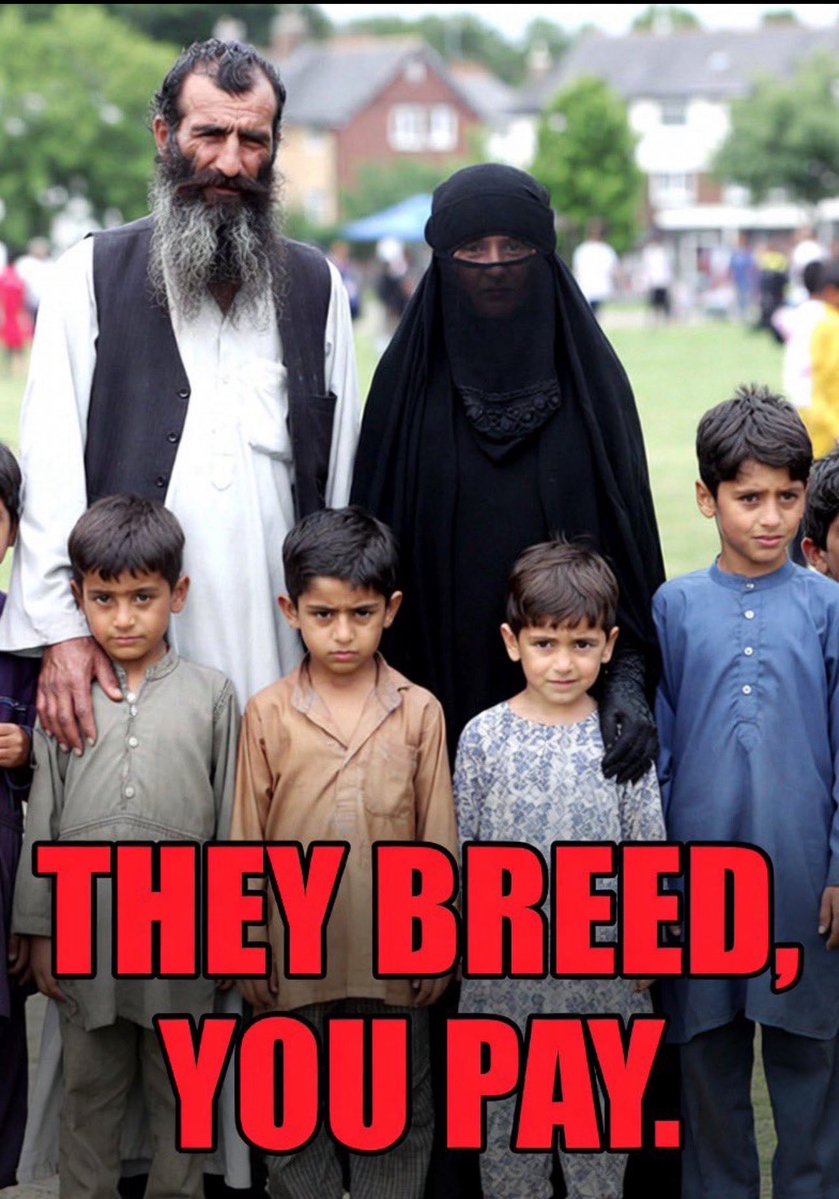
Muslims with 5-10 kids get benefits PER child. And some have 2-3 wives who claim.
63% of Muslim women DO NOT WORK.
40% of Muslim men DO NOT WORK.
They breed. You pay.
The only way to fix the debt crisis is to start deportations and strip them all of benefits.
Epic moment. France: 5 patriots vs 100 Antifa and immigrants who burn and destroy everything. They did not back down an inch —they fought like lions. Then the police intervene to defend them. This is France waking up. They are heroes.
⚠️ ADVERTENCIA: EJECUCIÓN IMPACTANTE Y HORROROSA DE UN HOMBRE CRISTIANO POR PARTE DE ISLAMISTAS EN NIGERIA ⚠️
Boko Haram es uno de los grupos terroristas islámicos yihadistas más notorios y violentos del mundo. Son responsables de la masacre de decenas de miles de personas inocentes —en su mayoría cristianos— en el norte de África, especialmente en Nigeria.
Han cometido innumerables atrocidades en varios países, incluyendo masacres de pueblos y comunidades enteras, además de decapitar con frecuencia a líderes y miembros de comunidades cristianas. Todo en nombre de Alá: "Bismilláh", como lo dicen ellos.
Este pobre hombre fue rodeado por varios terroristas, quienes lo colocaron en un hoyo cavado en la tierra y, acto seguido, lo decapitaron sin piedad. Apenas hay diferencia entre ellos y grupos como Hamás: poseen la misma brutalidad y la misma sed de sangre.
¿Quién está dispuesto a detenerlos de una vez por todas? Estos grupos nunca dejarán de asesinar a menos que sean erradicados por completo. Pero ¿quién tiene el valor de enfrentarlos? ¿Cuántas personas más deben morir antes de que alguien los detenga?
BREAKING 🚨 Australian patriots are hitting the streets, shouting “Fuck off, we’re full.”
This isn’t limited to Britain or Europe.
It’s a global phenomenon.
Everyone is reaching boiling point.
Undocumented migrants arriving in Northern France say they are excited to start their new lives in the UK.
Authorities say there are now over 4,000 waiting on better weather to cross.
La izquierda latinoamericana empezó a importar musulmanes a la región. Lula 🇧🇷 ya tiene su contingente de +200.000
La #izquierda tratara de traer la mayor cantidad de #musulmanes posibles, para romper el cristianismo como sucedió en #Europa.
Brasil será destruida en estos años .
#Israel no vendrá a salvarnos 👇🔥😬
BREAKING: Video has emerged of the massacre that occurred in Ethiopia.
Islamists stormed a Christian village, burned down two churches, and began slaughtering entire families.
Over 60 Christians were massacred.
Mayor Olivia Chow celebrated these Toronto Police officers — who praised October 7 for increasing converts to Islam.
Tomorrow Toronto votes for its next mayor. Looks like Olivia will win. Again.
Would you like her to be YOUR mayor?
ÚLTIMA HORA - Después de que se revelara que se abrieron 50 mezquitas en Dallas Fort Worth en los últimos 24 meses, una mujer descubrió que el mayor donante del gobernador de Texas, Greg Abbott, es un musulmán paquistaní que le ha dado más de 14 millones de dólares, incluidos 2 millones de dólares solo este año.
Women in hijab shouting in Arabic. Palestinian flags everywhere, also Lebanese. People with keffiyeh and signs in Arabic. They are shouting for Islamic intifada. This is not the Middle East. This is Germany. Europeans must wake up—now or never.