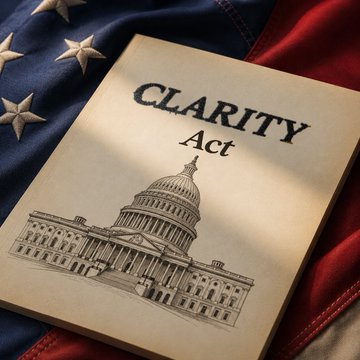
🚨 SEN. LUMMIS FIRES BACK AT ELIZABETH WARREN OVER THE CLARITY ACT CRITICISMS:
"The Clarity Act has 16+ illicit finance safeguards, not loopholes"
"If you don’t like crypto, then say it, but stop these baseless attacks"
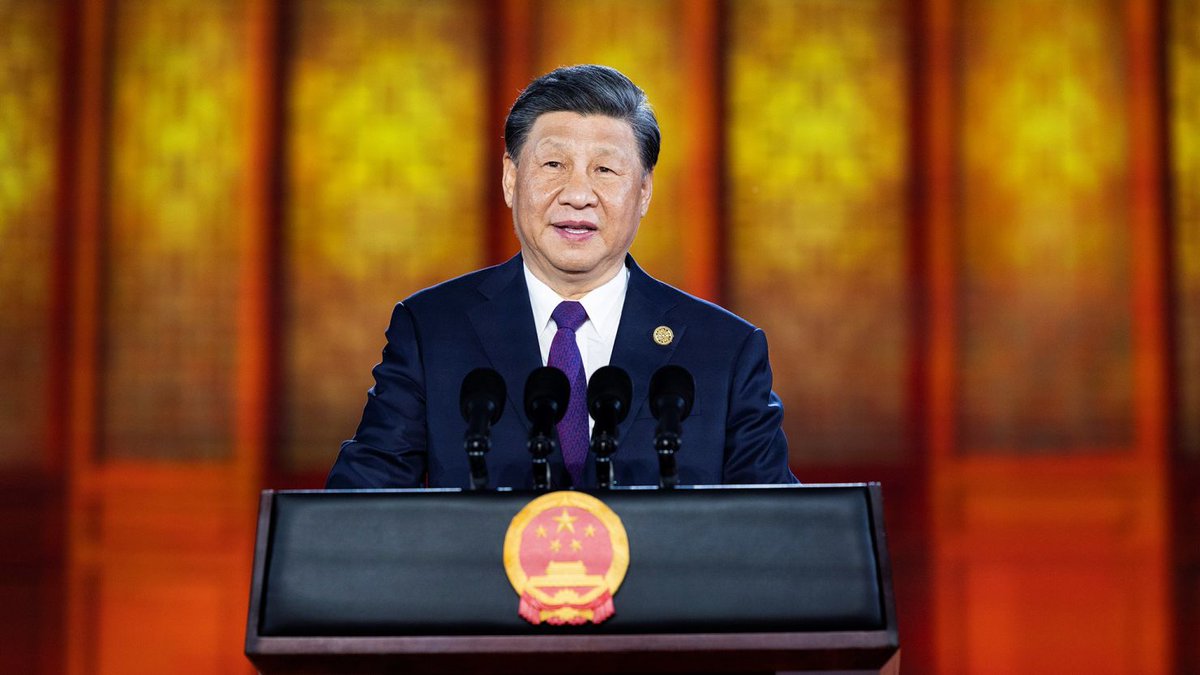
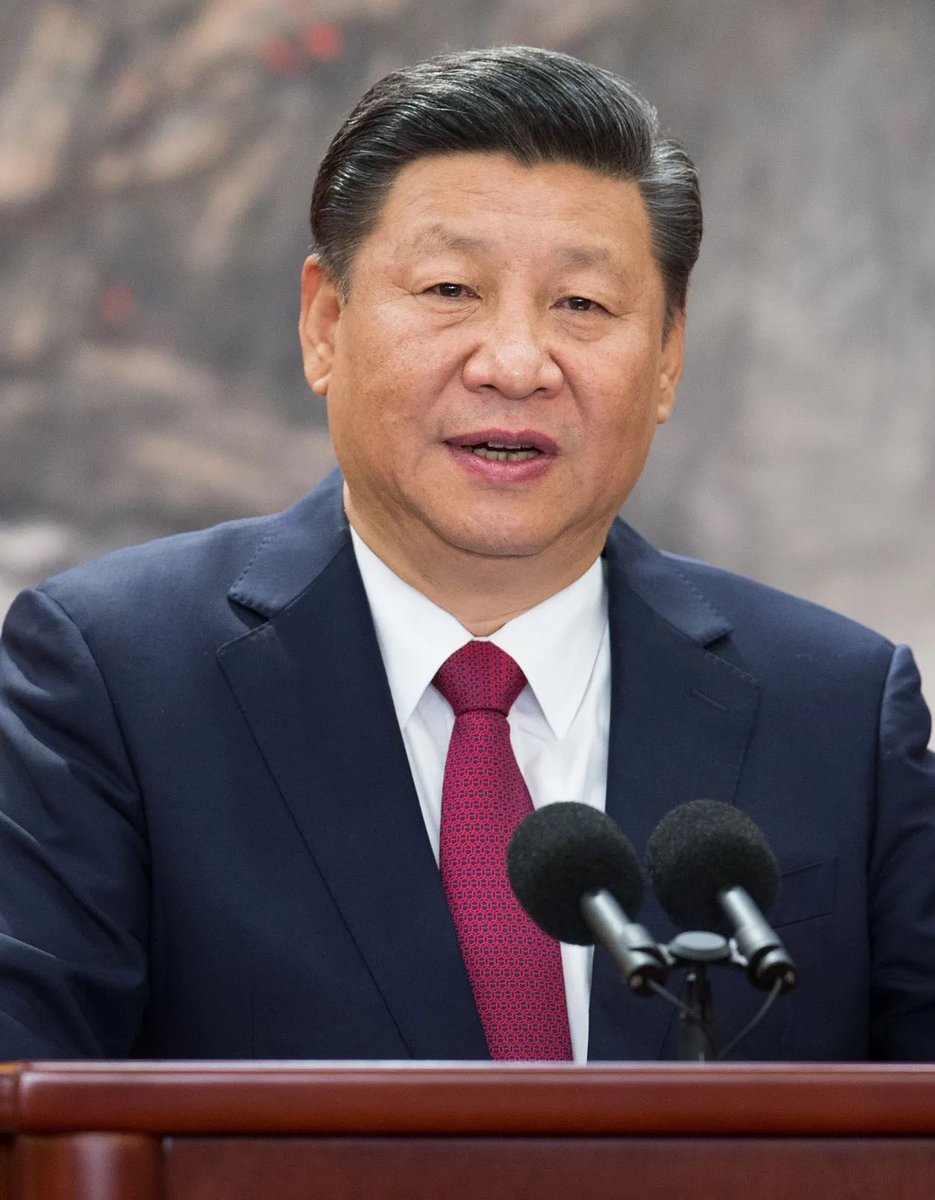
While the United States spends billions bombing Iran and the world watches oil prices crash, China just published the most consequential economic document of the decade. Nobody is paying attention. That is the point.
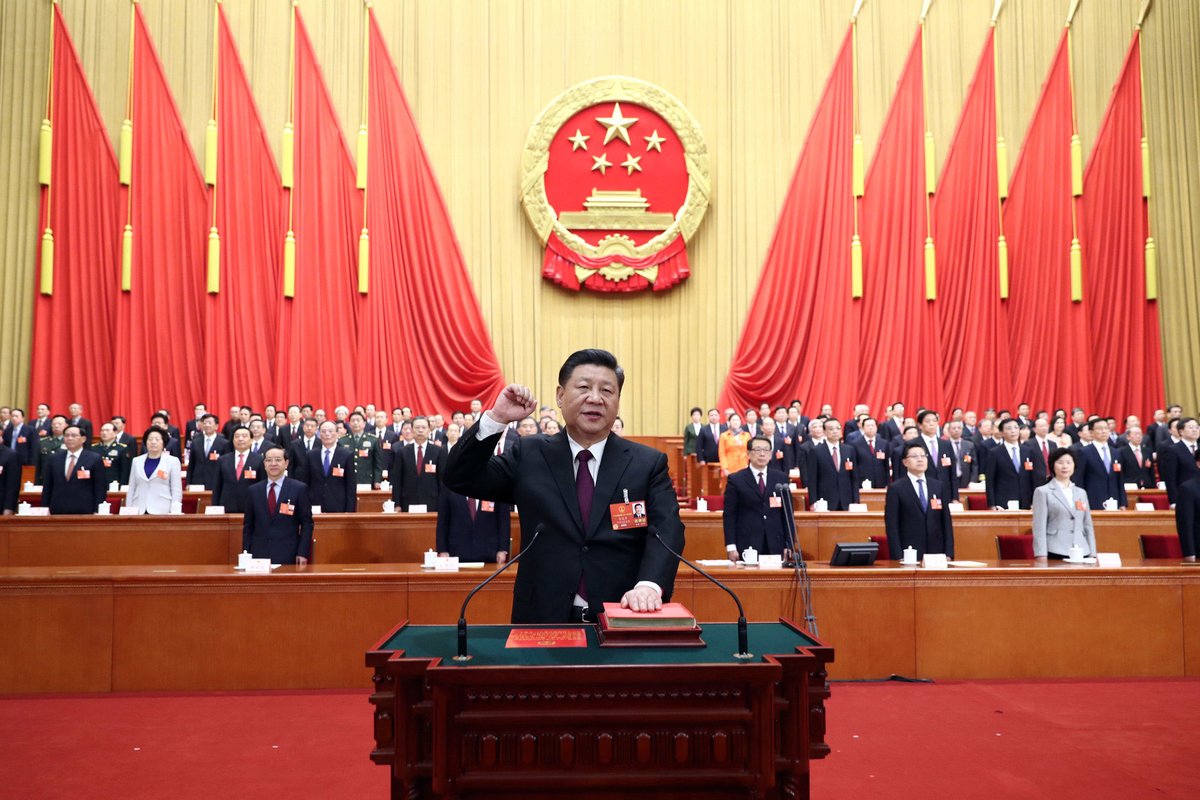
The 15th Five-Year Plan, unveiled at the National People’s Congress on 5th March, is 141 pages. It mentions artificial intelligence over 50 times. It targets 70% AI penetration across the Chinese economy by 2027 and 90% by 2030. It designates humanoid robotics as a core pillar industry with output doubling over five years. It commits to space-Earth quantum communication networks, nuclear fusion timelines, and brain-computer interfaces. It sets AI-related industries at a target value exceeding 10 trillion yuan, approximately $1.38 trillion. And it declares “extraordinary measures” for rare earths and semiconductor self-reliance.
This is not an economic plan. It is a war plan for a war the United States is not fighting because it is too busy fighting the wrong one.
The US response to Chinese technological competition is the CHIPS and Science Act, signed in 2022. It appropriated $52.7 billion for semiconductor manufacturing, including $39 billion in direct grants and a 25% investment tax credit that expires this year. It has spurred over $640 billion in private investment across 140 projects in 30 states. It created half a million jobs. By any measure, it is the most significant US industrial policy in a generation. And it covers exactly one sector of an economy-wide technological competition.
China’s plan covers every sector. AI across the entire economy. Robotics as industrial backbone. Space infrastructure. Quantum computing. Rare earth processing dominance maintained and strengthened. The CHIPS Act is a rifle. The 15th Five-Year Plan is an arsenal.
The rare earth dimension is where the plans intersect with the war. China controls 90% of global rare earth processing. Every F-35 joint strike fighter requires 920 pounds of rare earth materials. Every Patriot missile battery, every THAAD interceptor, every guided munition being expended over Iran at a rate of thousands per week depends on materials that China processes. The “extraordinary measures” in the Five-Year Plan are not defensive. They are the tightening of a supply chain that the US military cannot function without.
In April 2025, China imposed export controls on all 17 rare earth elements. The January 2027 DFARS deadline requires the Pentagon to eliminate Chinese rare earth dependency from defence procurement. That leaves a 10-to-15-year vulnerability window during which the United States is simultaneously waging a war that consumes rare-earth-dependent munitions at historic rates and attempting to build alternative supply chains that do not yet exist.
The Iran war is consuming the interceptors. China is tightening the supply chain that builds the interceptors. The Five-Year Plan is the document that formalises the tightening into national strategy.
Trump posted “Death, Fire, and Fury” on Truth Social. Xi Jinping published a 141-page plan to ensure that the materials required to deliver that fire and fury remain under Chinese control for the next fifteen years.
One leader is fighting a war. The other is winning the peace. And the 141 pages that will determine which strategy prevails were published the same week the bombs started falling.
Full analysis - https://t.co/eMrt5qYYst
It's easy to blame the system, to point fingers elsewhere. Yet, real change starts within. Every choice you make, including the money you use, reflects your values. Align your actions with what you believe. Honest money means honest choices. The change begins with you.
For the record.
Jamie Dimon says he wants a “level playing field” for stablecoins. What he really wants is to make sure nobody can offer you a better deal on your own money than tradtional banks can. The president is right to call the banks out on this.
We’ve seen this before. In the 1970s, money market funds started paying real yields while banks were locked under deposit caps. Banks cried “unfair” and “unsafe,” lobbied furiously, and lost. Policymakers chose competition over protection; savers got paid, and banks had to adapt instead of suffocating the threat.
Today’s script is the same, just with better technology. Stablecoin issuers now operate under licensing, 1:1 high‑quality reserves, liquidity and risk rules, audits and strict AML standards. This is not the Wild West. Yet Dimon still talks as if they exist with “no reserves, no compliance, no oversight.” He’s not describing reality; he’s describing a story that justifies shutting down a rival funding system.
The Clarity Act is the real battlefield. On paper, it’s about integrating crypto into U.S. market structure. In practice, the big banks are fighting to ensure that anything that looks like a deposit with yield must either become a bank product or be regulated into irrelevance. “Level playing field” in their vocabulary means: everyone wears the bank straitjacket, or no one plays.
Why? Because yield‑bearing stablecoins blow up the quiet cartel behind record profits. Banks live on deposits that pay close to nothing even when risk‑free rates are high. They earn a clean spread and interest on balances parked at the Fed, while passing little of it through. Savers get crumbs; banks get the margin; inertia does the rest. A credible, regulated stablecoin that passes through money‑market yields detonates that racket: with a few clicks, your cash can leave the cartel.
The president’s critique goes straight at this arrangement: Americans should “earn more money on their money,” and banks should not be allowed to undermine laws designed to make that possible or to stall a market‑structure bill so the whole “powerful Crypto Agenda” decamps overseas. He’s not attacking banking; he’s attacking a model that treats low‑yield deposits as an entitlement and regulation as a weapon.
Crypto‑native firms, for all their flaws, behave like they live in a real market: they build new instruments, disclose, and pay up to attract capital. The banks build talking points and hire lobbyists. Stablecoins don’t just threaten their funding; they threaten their chokehold on payment rails and transaction data.
Call this debate what it is: not a fight over “safety,” but a fight over whether a protected deposit cartel gets veto power over technologies that finally let savers earn something closer to the risk‑free rate. In the 1970s, policymakers chose competition.
In the 1970s, banks were forced to stop hiding behind regulation and compete. If Jamie Dimon wants a level playing field, he should stop complaining and start doing the same.
🚨🇨🇳🇮🇷 China's Silent Calculations
China's Iran's biggest oil customer. They buy $30+ billion in Iranian crude annually at deep discounts because of sanctions. That oil flow just stopped.
Beijing's got 3 (terrible) options: back Iran militarily and escalate with the U.S., abandon Iran and lose their Middle East foothold, or stay silent and look weak.
They're choosing option 3.
Zero official statement beyond generic "urge restraint" language. No emergency UN Security Council meeting. No threats. Nothing.
That's telling. China talks big about challenging U.S. hegemony but when America actually uses force, Beijing goes quiet. They can't afford confrontation while their economy's struggling and Taiwan's watching.
The real question is what Xi does after. Does he use this to accelerate dedollarization? Push alternative energy harder? Rebuild Iran's infrastructure for leverage? Or does he just accept that when the US decides to wreck a Chinese partner, there's nothing he can do about it?
Iran's learning the limits of Chinese partnership in real-time. "Strategic cooperation" means loans and trade.
It doesn't mean Beijing's willing to bleed for you.
BREAKING: China is pressuring Iran to reopen the Strait of Hormuz.
There is one problem. Iran did not close it.
Seven insurance companies in London did.
China buys 80% of Iran’s shipped oil. Beijing has a $400 billion, 25-year cooperation agreement with Tehran. China is Iran’s economic lifeline. If any country on earth has leverage over Iran, it is China. And China is now using that leverage to demand the Strait reopens.
But the Strait was not closed by a sovereign decision. It was closed by the withdrawal of reinsurance capacity from five to ten firms, mostly in London, backstopping twelve P&I clubs that cover 90% of global tonnage. Iran did not order those firms to withdraw. Iran cannot order them to reinstate. Neither can China.
Even if Tehran capitulates entirely tonight and the IRGC stands down, not a single reinsurer reinstates Gulf war risk coverage on a phone call from Beijing. Reinstatement requires rebuilt risk models, voyage-by-voyage re-underwriting, repriced treaty capacity, and a threat environment that actuaries can quantify. None of that exists while 440.9 kilograms of weapons-grade uranium remains unaccounted for and the IRGC is still launching drones at Oman.
China has leverage over Iran. China has zero leverage over Lloyd’s of London.
This is the part nobody is modelling. The country with the most to lose and the most leverage over the belligerent cannot fix the mechanism that actually closed the Strait. Because the mechanism is not geopolitical. It is actuarial. And actuaries do not take calls from the Politburo.
https://t.co/ULBgEzZ3A8
BREAKING 🇮🇷🇨🇳
Iran says only Chinese ships can pass through the Strait of Hormuz, calling it a “gesture of thanks” for Beijing’s support. All other vessels are banned, and Tehran warns any unauthorized crossing will be met with military action.
Bitcoin is a volatile asset.
It went from $0.01 to $126,000 in about 15 years. There were many 50-85% drawdowns along the way.
Bitcoin has averaged a Global Financial Crisis every 18 months for the last decade.
Yet bitcoiners continue to hold through all the noise. The blockchain produces block-after-block of transactions.
And the critics take their “victory laps” during the drawdowns, only to get their faces ripped off a few months later in a bull market by the best performing asset since 2010.
It is a story as old as time.
Let the critics celebrate today. They will predict the death of bitcoin for the thousandth time. They will point and laugh at those who hold the asset.
But secretly they know the truth.
Their dollars will continue to devalue and bitcoin will appreciate over the long run.
Scarcity never goes out of style.
Venezuela Just Proved the Bitcoin Bull Case, And No One Is Paying Attention
Maduro used Tether to move 80% of Venezuela's oil revenue. Billions in sanctions evasion, settled on Tron since 2020.
Then the US made a phone call.
Tether froze the wallets.
Game over.
Everyone's focused on the arrest. The real story is the lesson every finance minister on earth just learned in real time:
Stable coins are a leash, not an escape.
If someone can freeze it, it isn't money. It doesn't solve sovereignty.
First principles:
USDT is dollar plumbing without SWIFT. Faster. Cheaper. Still has a CEO. Still has a compliance department. Still picks up when Washington calls.
This is why USDT adoption exploded, 71-year-old grandmothers in Caracas pay their HOA fees in tether now. But useful ≠ sovereign.
The entire value proposition for sanctions evasion just got publicly falsified.
Now do the game theory:
You're Iran. Russia. Any country hedging against dollar weaponization. You just watched Venezuela's "crypto solution" get shut off like a light switch.
Where do you put reserves now?
USDT? Compromised.
Yuan? Political strings.
Gold? Try settling $500M across borders in 10 minutes.
CBDCs? Same kill switch, government branding.
There's exactly one asset that clears final settlement without asking permission from anyone.
21 million units. No CEO. No freeze function. No phone number.
This is the ad Bitcoin never had to buy.
The most desperate, highest-stakes capital on earth just learned there's only one door.
Price doesn't reflect it yet.
It will.
Countries where 𝕏 is banned:
🇮🇷 Iran
🇨🇳 China
🇷🇺 Russia
🇲🇲 Myanmar
🇻🇪 Venezuela
🇰🇵 North Korea
🇹🇲 Turkmenistan
Countries trying to ban 𝕏:
🇬🇧 The UK
🇨🇦 Canada
🇦🇺 Australia