🇵🇱 Poland: Alleged https://t.co/m9OGLjWSnx Customer Database Advertised for Sale
* Threat actor is offering what is claimed to be customer data from https://t.co/m9OGLjWSnx, one of Poland's largest online food delivery platforms
* The listing advertises approximately 430,000 user records
* According to the seller, exposed fields include:
* User identifiers
* Email addresses
* Masked phone numbers
* Language preferences
* Account creation dates
* Address identifiers
* Region and city information
* Postal codes
* Gender data
* Device-related information
* The actor provided a sample dataset and is soliciting buyers through underground communication channels
* No technical details regarding the alleged intrusion method or source of acquisition were provided in the visible listing
* At the time of reporting, Daily Dark Web has not independently verified the authenticity of the dataset or the claims made by the seller
Analyst Note:
Food delivery platforms aggregate valuable consumer intelligence, including contact details, location data, behavioral patterns, and device information. Even when direct payment data is absent, these datasets can be leveraged for phishing, account takeover attempts, targeted fraud, and identity correlation activities. The combination of geographic and account metadata can be particularly useful for threat actors conducting social engineering campaigns.
#DDW #Intelligence #Poland #DarkWeb
🇵🇱 Poland has signed billion-dollar contracts under the EU rearmament program
The Polish government has concluded major contracts totaling 120 billion zloty (over $33 billion) with domestic defense companies.
Of the 120 billion zloty, approximately half will go to the Polish defense company Huta Stalowa Wola. These contracts include, among other things, the supply of 146 Borsuk infantry fighting vehicles, 96 Krab howitzers, and 64 Rak self-propelled mortars built on Rosomak transporter chassis.
13.5 billion zloty will be spent on producing hundreds of thousands of 155mm artillery shells entirely in Poland.
A condition of SAFE financing is, among other things, the delivery of contracted equipment by 2030.
Recall that Poland will create a modern anti-drone system, “San,” within two years, which will be an integral part of the country’s air defense. Also, in May, Poland received the first batch of the latest F-35 fighters.
The US government built a tool that makes you invisible on the internet. Then they gave it away for free.
Tor is legal. Most people think it is not.
The US Naval Research Laboratory invented it in the 1990s. Three scientists named David Goldschlag, Mike Reed, and Paul Syverson. The Office of Naval Research and DARPA paid for it. The State Department still pays for it today.
The same government that runs the NSA also funds the tool that stops the NSA from watching you.
How it works: your traffic bounces through three random volunteer servers. No single server knows both who you are and what you are looking at. Your internet provider sees only that you connected to Tor.
What Tor does NOT do: it does not make you a hacker. It does not drop you on the dark web. You browse normal websites with more privacy. It does not break any law in the US, EU, UK, Canada, Australia, India, or most countries.
Who uses it:
The New York Times runs a Tor address for sources to send tips. The BBC runs a Tor mirror so people in censored countries can read the news. Facebook has run a Tor address since 2014. Edward Snowden used Tor in 2013. A 2012 NSA internal slide deck, made public through the Snowden files and reported by The Guardian and Washington Post, called Tor the king of high-secure, low-latency internet anonymity.
In 2023 and 2024 the US government paid the Tor Project $2,556,472. The biggest grant funded uncensored internet access in China, Hong Kong, and Tibet.
The Naval Research Laboratory's own page says two million people use Tor every day.
BSD-3-Clause license. Windows, Mac, Linux, Android. Roger Dingledine still runs the project.
This is what the internet was supposed to look like from the start.
(Link in the comments)
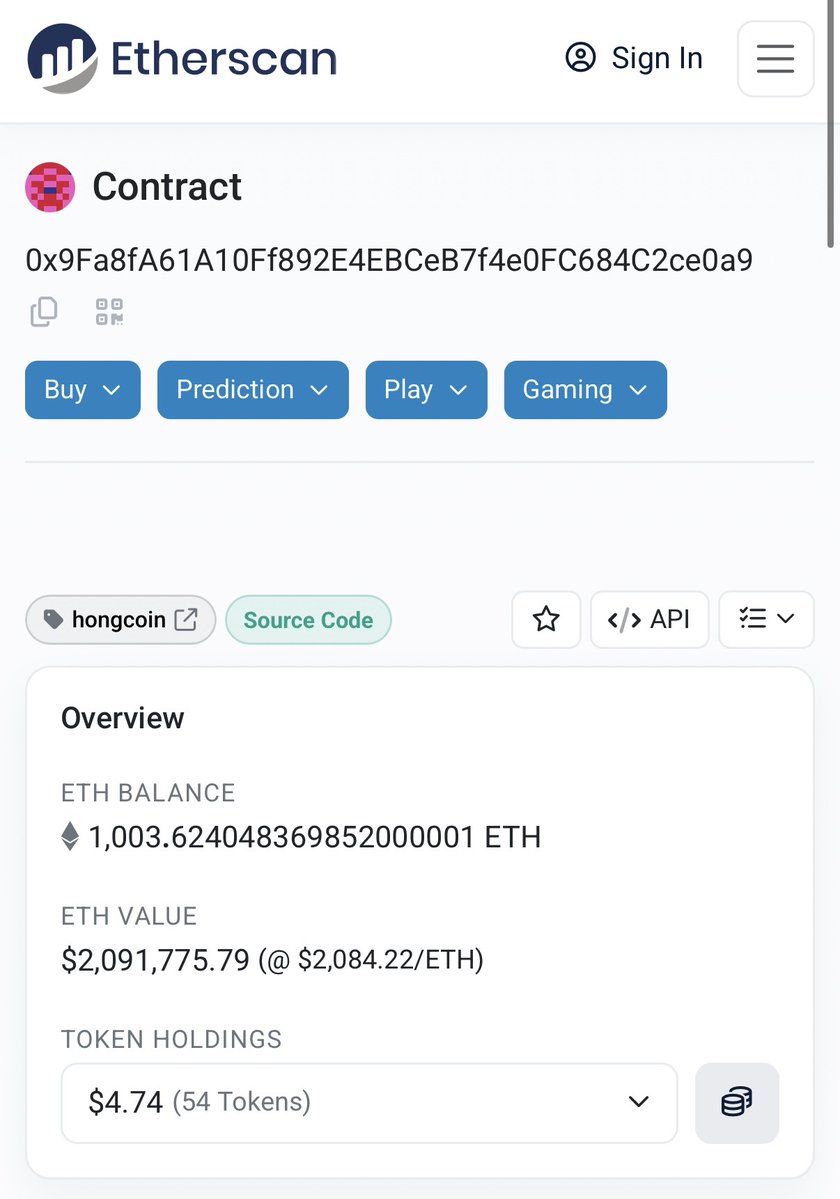
First white-hat exploit on Ethereum: I unlocked 1,003.62
Ξ ($2,000,000) trapped in a 2016 ICO smart contract
for 9 years.
The 48 original investors can now claim their funds.
Coffeezilla asks Patrick Bet-David why he won’t return the $1 million his company received from a Ponzi scheme sponsor.
PBD first says $1 million is “nothing” to his business.
Then immediately claims the money is already spent...
I'm tired of X destroying our @CopernicSpace XSpaces @nikitabier. We invest effort to promote them and get hundreds to sign up just for them to RUG constantly. https://t.co/tpZxkZJb1d
+ no edit + crashing below happening for months with no fix. I'm considering other options
The EU SAFE funds are fantastic for Poland
1. Significantly improve Poland’s defense capabilities
2. Boost Polish industry and economy
3. Make Polish companies strong future defense exporters
Can someone please explain why the PiS party and the President tried to stop that?
Peak Warsawmaxxing
@ElevenLabs brought the homecoming event to Warsaw, with President @NawrockiKn 🇵🇱 opening things up
Not every day the President of Poland shows up for a tech event in your hometown
And not every day your schoolmate has a company valued at $11B
Great to see @mati and the team presenting the update where it all began
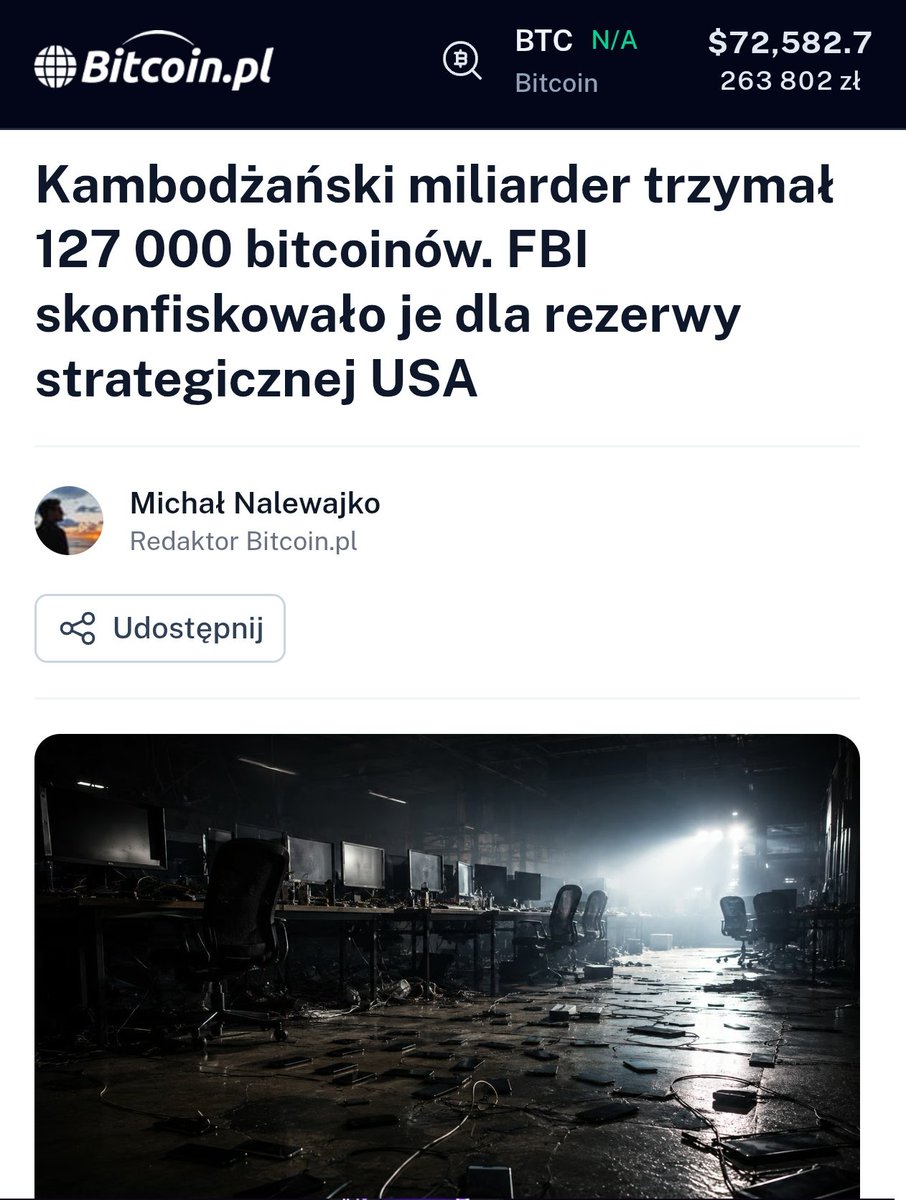
Kambodżański miliarder trzymał 127 tysięcy bitcoinów! FBI skonfiskowało je dla rezerwy strategicznej USA.
Operation Blackout - największa konfiskata krypto w historii USA: 127 271 bitcoinów wartych ponad 8 miliardów dolarów, zajętych od sieci scam.
Sekretarz Skarbu Scott Bessent potwierdził w styczniu: wszystkie skonfiskowane bitcoiny trafiają do Strategic Bitcoin Reserve, ale dopiero po zaspokojeniu roszczeń ofiar.
USA trzyma już 328 372 bitcoinów - 127 000 to 39% tej sumy. Jedno śledztwo może niemal podwoić państwową rezerwę.
Kongres złożył tydzień temu American Reserve Modernization Act - chce zablokować te BTC na 20 lat.
Wyobraź sobie firmę, która działa legalnie na papierze - biura, pracownicy, recepcja. W środku setki ludzi siedzą przy komputerach i wciągają ofiary w fałszywe inwestycje krypto. Część pracowników trafiła tam dobrowolnie. Część została zwabiona fałszywą ofertą pracy i nie może wyjść. Takie miejsca nazywają się scam compounds (fabryki scamów) - i przez ostatnią dekadę wyrosły w całej Azji Południowo-Wschodniej jak grzyby po deszczu.
28 maja FBI ogłosiło, że właśnie rozbiło największą z tych siatek w historii. Efekt: 127 271 bitcoinów w rękach amerykańskiego rządu.
Kim był nasz kambodżański miliarder i co zbudował?
Centrum całej operacji był Chen Zhi, 38-letni chiński miliarder, który zbudował w Kambodży imperium pod nazwą Prince Holding Group. Zaczynał od nielegalnych kasyn i nieruchomości, potem przestawił się na przemysłową skalę cyberprzestępczości i oszustw telekomunikacyjnych.
Mechanizm działania jego sieci to tzw. pig butchering - dosłownie "tuczenie świń przed ubojem". Ofiara poznaje kogoś w mediach społecznościowych, buduje relację przez tygodnie, a potem zostaje wciągnięta w inwestycje na fałszywej platformie krypto. Wpłaca. Widzi rosnące zyski. Próbuje wypłacić i napotyka kolejne "opłaty". Wpłaca więcej. Platforma znika.
W październiku 2025 USA i Wielka Brytania nałożyły skoordynowane sankcje na Chena i 146 powiązanych podmiotów. Departament Sprawiedliwości złożył wniosek o konfiskatę 127 271 bitcoinów. W styczniu 2026 Chen został aresztowany w Kambodży i deportowany do Chin. Operation Blackout z końca maja to formalne domknięcie tej sprawy - FBI ogłosiło przejęcie aktywów i rozbiło pozostałe ogniwa sieci w Dubaju, Tajlandii i Mjanmie.
W Dubaju FBI i lokalna policja aresztowały 275 osób. Sześcioro zostanie ekstradowanych do USA. W Tajlandii zajęto tysiące smartfonów i sprzętu biurowego. Uwolniono prawie 2 000 przymusowo zatrudnionych pracowników.
Żeby poczuć skalę finansową: w 2025 roku Amerykanie złożyli prawie 72 000 skarg dotyczących scamów kryptowalutowych, ze stratami przekraczającymi 7,5 miliarda dolarów. Jeden holding odpowiadał za znaczną część tych strat.
Sekretarz Skarbu Bessent powiedział wprost: "Polityka tego rządu to dodawanie skonfiskowanych bitcoinów do naszej rezerwy cyfrowych aktywów po zaspokojeniu roszczeń poszkodowanych." Kolejność ma znaczenie: najpierw ofiary, potem rezerwa.
Ile zostanie dla rezerwy - tego nie wiadomo. Postępowanie sądowe potrwa. Część środków trafi do poszkodowanych. Ale nawet ułamek 127 000 BTC robi wrażenie w kontekście tego co USA już trzyma.
Stany Zjednoczone posiadają szacunkowo 328 372 bitcoiny warte ok. 25 miliardów dolarów - największy znany państwowy zasób BTC na świecie. Cały pochodzi z konfiskat kryminalnych, nie z zakupów. Innymi słowy: rezerwa strategiczna USA buduje się wyłącznie na pracy organów ścigania.
FBI rozbiło sieć przestępczą, aresztowało setki ludzi, uwolniło tysiące ofiar przymusowej pracy.
USA konsekwentnie akumuluje bitcoiny przez aparat ścigania, podczas gdy Kongres jeszcze nie uchwalił rezerwy strategicznej jako prawa.
#Bitcoin #kryptowaluty #USA #Kambodża
Dziś ogłosiliśmy że nasza inwestycja we Francji wzrośnie w najbliższym czasie z 900 M EUR do 1,4 miliarda EUR.Wzmocni to pozycję @InPostPL jako największego polskiego inwestora w tym kraju n
Reakcja Prezydenta 7 gospodarki Świata ? Komentarz zbędny…❤️🇵🇱🇫🇷