Security Stance
This year's wave of DeFi exploits has repriced security, where Lido has been putting in the work for years.
• Zero staking user funds lost in protocol history.
• 100+ audits: one of the most audited protocols in DeFi.
• Seven layers of defence for safety of users.
Ethereum is about to fundamentally change how blocks are executed. With the upcoming Glamsterdam hardfork, it's shipping EIP-7928: Block-level Access Lists, a proposal that brings parallelization to the EVM.
Here's a short explainer of what it is, how it works, and why it's a big deal for scaling.
Let's start from the top. Alongside EIP-7732 (ePBS), EIP-7928 is the execution-layer (EL) headliner for Glamsterdam. Like ePBS, the main focus has been scaling Ethereum, though both proposals come with a bunch of other, equally important properties on the side e.g. removing trust requirements from the PBS pipeline or improving sync.
EIP-7928 adds a Block Access List (BAL) to every Ethereum block. A BAL is a list of accounts and storage slots that the block touches, but that's not all: it also contains post-transaction state diffs (this part is critical!).
Post-transaction state diffs tell you what the state looks like after each transaction. Quick example: user A swaps 1 ETH for DAI on DEX B. The BAL tells you that user A's ETH balance decreased by 1 ETH + tx fees and their nonce went up by 1; that DEX B's ETH balance went up by 1 ETH; and that inside the DAI contract, user A's DAI balance increased while DEX B's decreased.
In other words, all of that info becomes statically available, something that previously required tracing the transaction.
Client software (Geth, Nethermind, Besu, Erigon, Reth, Ethrex, Nimbus) can use this to do a few very powerful things:
1. Parallelize transaction execution. Knowing the post-state of each tx resolves the dependencies between them. No transaction has to wait on the previous one anymore, so execution can be perfectly parallelized. Instead of large parts of block validation sitting idle waiting on sequential execution, clients can finally make much better use of modern hardware.
2. Batch prefetch. One of the most cumbersome jobs for a node has been fetching the state needed for execution from disk. Because state locations (e.g. the exact storage slot in the DAI contract where user A's balance lives) are only discovered along the way, while executing, state-fetching has been a real drag on scaling: it blocks execution, takes time, and eventually slows everything down. With BALs, everything a node needs for execution is known upfront and can be loaded into cache in one go, in parallel. This speeds things up even further.
3. Parallelize post-state root calculation. Another expensive task is walking the updated state tree to compute the post-state root, which is needed so that everyone agrees on what's on disk after executing the block. With the post-tx state already in the BAL, nodes can do this in parallel while executing. A heavy task that used to wait until all transactions had finished can now run alongside prefetching and execution.
4. Snap sync (v2). An often overlooked, less sexy aspect of blockchains is syncing. Nodes need to catch up with the chain, and they need to catch up faster than the chain progresses. Today, most nodes do snap sync: downloading blocks, headers, and state in parallel while chasing the tip, and then "healing" the database once they're close to the head. Healing means asking peers for trie nodes, receiving them, validating them, and updating the local DB. It's iterative, networking-heavy, can take a while, and especially higher throughput pushes that phase to its limits. BALs help here too: with snap v2, nodes can catch up to the tip and skip the healing phase entirely. Syncing at higher throughput becomes more robust and reliable.
So, to summarize, a BAL contains two things:
-> The state locations the block accesses
-> The state changes after each tx (incl. the new values)
We're already seeing big performance gains today: on 6-core machines, EL clients validate blocks up to 5x faster, making block gas limits of 300M a very realistic outcome. ePBS will add to that by decoupling the block from the payload, giving validators 2-4x more time for execution.
To not overshoot (security stays priority #1), the fork will likely ship with a 200M gas limit, but we shouldn't be stuck there for long before pushing to 300M and beyond. That's a 10x in scaling since we started taking the topic seriously, without touching hardware requirements.
None of this would have happened without people going all-in, heads down, shipping: so many hours spent in calls debating the right design, so many iterations refining the specs, and tons of test cases written (and still being worked on). The road from whiteboard to production-ready code has been a journey, and we're not at the finish line yet, but from what I can tell, things look super bullish for Ethereum.
Glamsterdam will be a fork that shows what's possible when a distributed, decentralized community works on a shared goal, laser-focused on providing enough block space to onboard the next wave of users.
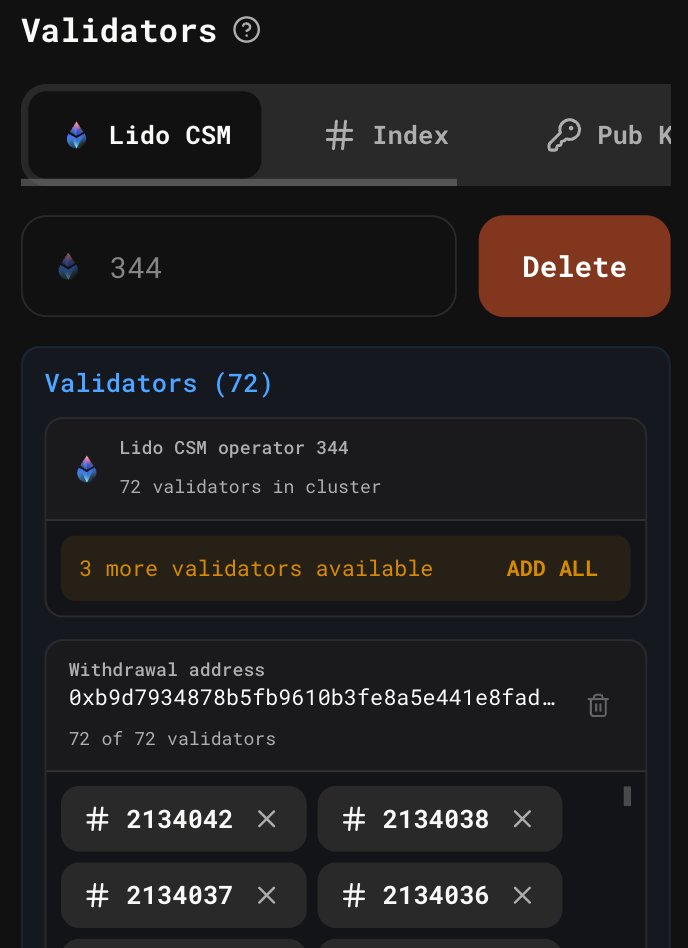
@LidoFinance CSM operators, this one is for you 👀.
NodeSentinel V2 is live, a cleaner and more powerful way to monitor your validators.
#Ethereum#Staking#Validators
Last week, Ethereum core contributors gathered in Svalbard for the Soldøgn interop: a week long event focused on hardening Glamsterdam implementations to scale Ethereum securely ☀️
Read the full recap, including their candidate post-fork gas limit, below:
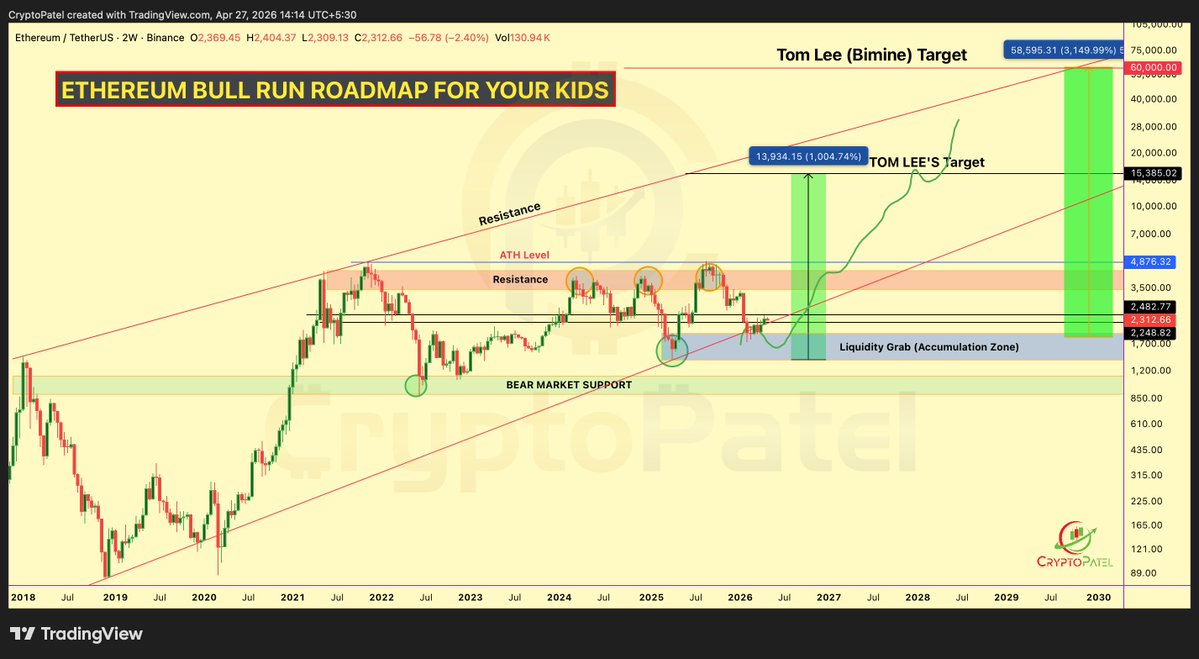
$ETH From $2,000 to $60,000?
The @fundstrat x @BitMNR Roadmap Might Be the Generational Play Nobody Is Pricing In.
Tom Lee's Long-Term ETH Target Points to a 3,000% Move - Huge Setup for Patient Holders.
NFA & DYOR
A proposal for Lido DAO to contribute to @aave’s coordinated rsETH relief effort has landed on the Research Forum following this week’s Kelp's rsETH LayerZero bridge exploit.
The proposal authorizes a one-time, capped contribution of up to 2,500 stETH to a dedicated relief vehicle, solely as part of a fully funded recovery package. The proposal is designed to reduce broader ecosystem spillover and support an orderly resolution for affected users.
DeFi United. Read more below:
https://t.co/6RsmdW2R6t
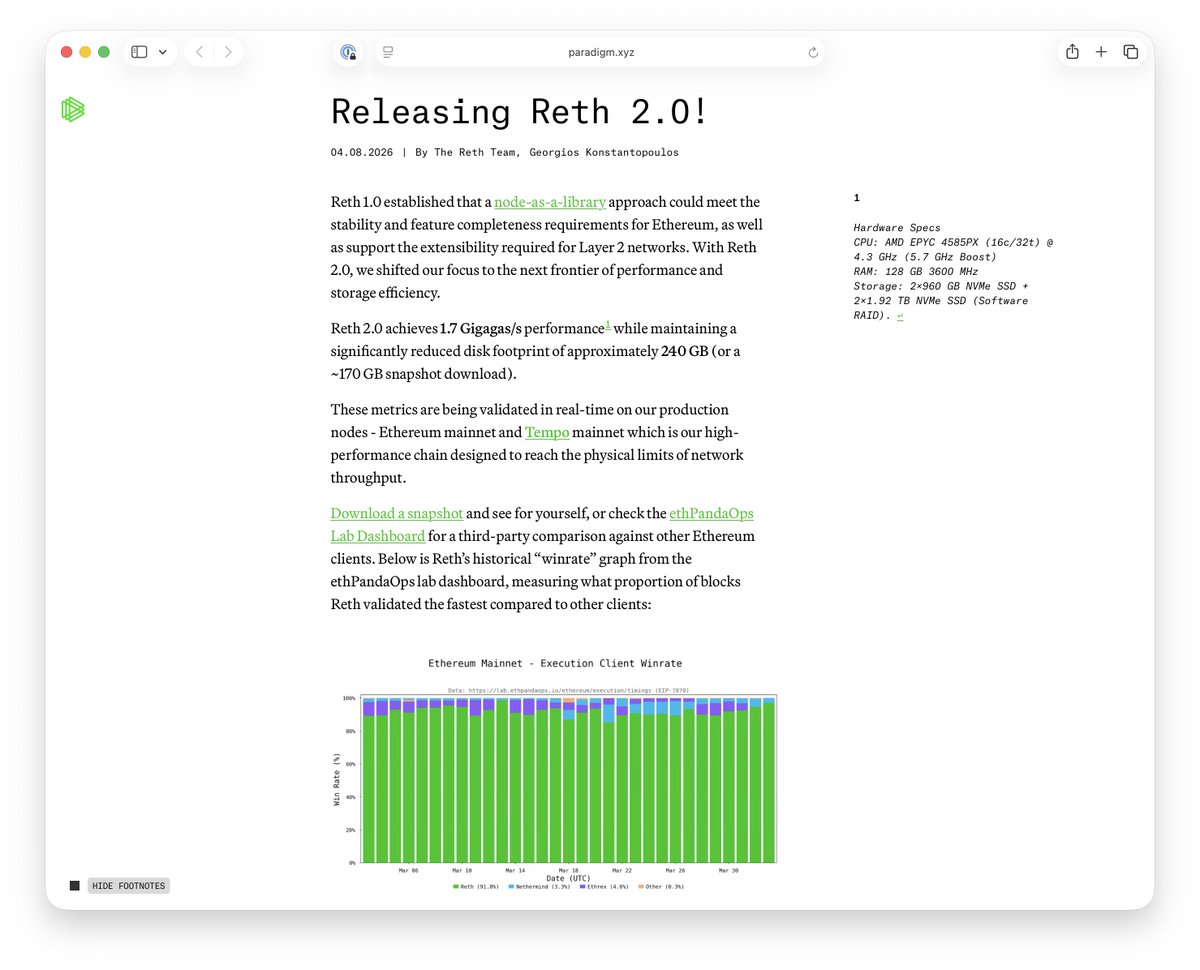
RELEASING RETH 2.0!
Reth is now faster, smaller, and ready for the future of crypto infrastructure.
Gigagas per second has not just been achieved, it's been blown out of the water.
We've put in a ton of work in this, and we're incredibly proud to be sharing this with everyone.
Great news for @LidoFinance CSM Operators - @NodeSentnl now features native support for CSM Nodes!
Keep track of your validator's performance, get alerts, and much more. Link to the bot 👇
Lighthouse v8.1.1 (Scary Terry) is out!
This is a mandatory upgrade for all users on prior versions due to a security fix. Please upgrade ASAP. Further details to follow.
Also fixes VC head monitor timeouts, DataColumnsByRange duplicate bug, and a slow memory leak.
https://t.co/oXesKeyjwI
What if your 0x02 @ethereum validators can have a custom rewards sweep threshold and get rewards transferred to their withdrawal credentials before hitting a staggering 2048 ETH?
Introducing EIP-8148: Custom sweep threshold for validators
👇
🚨 WARNING (AGAIN)
DPRK threat actors are still rekting way too many of you via their fake Zoom / fake Teams meets.
They're taking over your Telegrams -> using them to rekt all your friends.
They've stolen over $300m via this method already.
Read this. Stop the cycle. 🙏
53 banking associations just wrote themselves a $6.6 trillion protection bill.
They called it the CLARITY Act.
Here is what they do not want you to understand.
Banks pay depositors 0.1% interest. Stablecoin issuers hold Treasury bills earning 4.5%. If stablecoins could pass that yield to users, banks lose the deposit war. They cannot compete. The math is fatal.
So they made competition illegal.
The Kansas City Fed calculated what happens if stablecoins pay competitive rates. Banks lose 25.9% of deposits. $1.5 trillion in lending capacity vanishes. The entire community banking model collapses.
Their solution was not innovation. Their solution was legislation.
The CLARITY Act everyone is celebrating contains Section 404 prohibiting yield payments through any mechanism. Not just from issuers. From exchanges. From affiliates. From partners. Every single pathway to competitive returns, closed by statute.
Brian Armstrong reviewed the 278-page draft for 48 hours. He withdrew Coinbase support at 11pm. The markup was postponed by morning. He saw what Wall Street analysts missed entirely.
This is not crypto regulation.
This is Dodd-Frank for digital assets. Incumbents writing rules that crush competitors. Regulatory capture so brazen they published the lobbying letters on their own websites.
The American Bankers Association. 52 state banking associations. The Community Bankers Council. All coordinating to eliminate an industry they cannot beat in open markets.
Meanwhile China made e-CNY interest-bearing on December 29.
America is banning stablecoin yield while Beijing is paying it.
The crypto industry spent years begging for regulatory clarity.
They got it.
Clarity that $6.6 trillion in deposits will be protected at any cost. Clarity that banks write the rules. Clarity that if you cannot win in markets, you win in Congress.
This is the largest regulatory capture event in American financial history.
And it is being sold as innovation policy.
BPO2 landed last week. It bumped the max blobs per block to 21. We've been going through the data.
Initial analysis doesn't look good! Have a look at this scary chart. But there might be more to this story..
Link below!
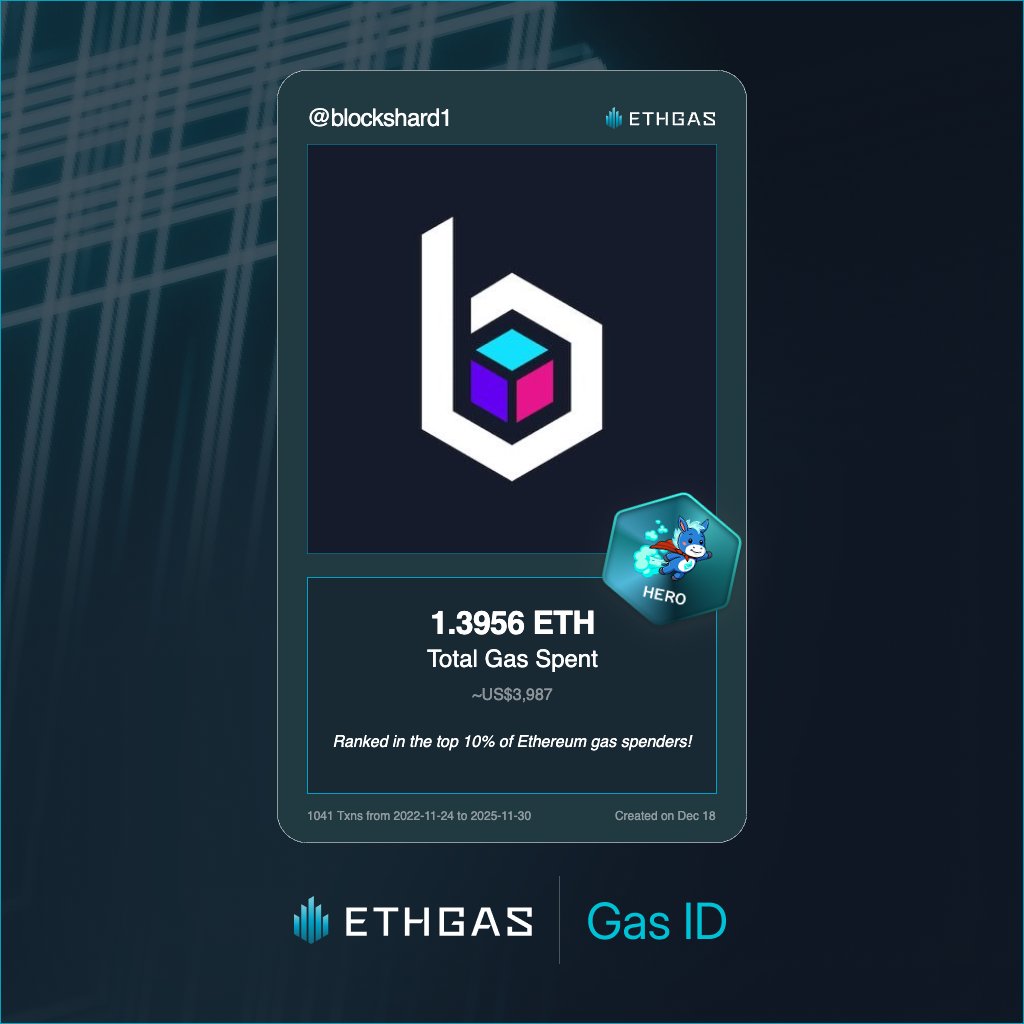
Discovered my Gas ID via ETHGas - turning my gas spend into rewards 🫘
As a Hero Jack, I've spent 1.3956 ETH on gas but earned 1000 Beans back.
Get your Gas ID and Beans here: https://t.co/sWKDCKYTnU