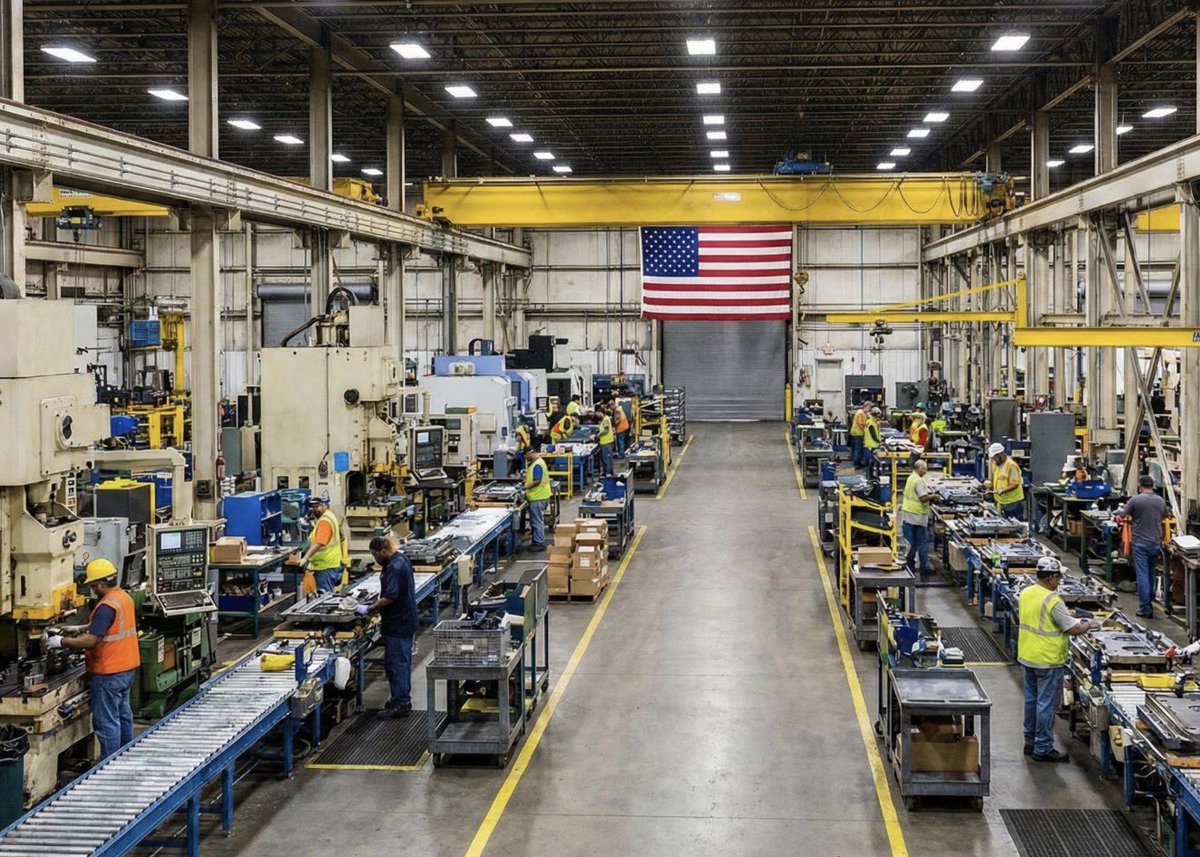
GM.
Another Fraud Friday 🔎
Another NVIDIA-related trade story this week. This time, the issue is traceability.
A timeline worth watching:
• 2025: U.S. authorities reportedly embed covert trackers in selected AI server shipments to investigate suspected diversion to China.
• Nov. 6, 2026: Bloomberg reports NVIDIA is expanding location-monitoring requirements for Southeast Asian customers seeking Cloud Partner status.
Read: https://t.co/VBotVszz7l
• Nov. 11: Reports emerge of proposed U.S. controls addressing overseas data centers and remote access to restricted AI chips.
• Nov. 12: Reuters reports Chinese AI companies are seeking overseas NVIDIA computing capacity ahead of possible tighter restrictions.
The common thread? Knowing where a product was shipped doesn’t necessarily establish where it went, who controls it, or who ultimately uses it.
This is the traceability challenge facing global commerce: connecting documentation, physical assets, custody, movement and end users through verifiable records.
A shipping manifest is a starting point, not proof of the entire journey.
GM
International trade relies on documentation that businesses, insurers and regulators can trust.
The latest OFAC sanctions action involving false vessel flags and certifications is a reminder that trade fraud extends well beyond the physical movement of goods.
Reliable conformity assessment and verifiable trade documentation are essential to building confidence across global commerce.
Steptoe’s Weekly Sanctions Update: @SteptoeLLP
https://t.co/e2oVNC5RFk
GM
It’s Manufacturing Monday 🏭
The AI boom is creating an unexpected manufacturing bottleneck: power generation equipment.
Global orders for gas turbines have exceeded 100 GW, while annual manufacturing capacity is estimated at just 60–70 GW.
In the U.S., delivery times are averaging approximately six years.
Developers are turning to refurbished turbines, used equipment and even retired jet engines to meet demand.
Technology can scale quickly. Industrial capacity cannot.
https://t.co/2HbqbdIq9G
GM 🇪🇺 🚛
A major freight fraud investigation in Europe exposes a vulnerability in global trade that often goes overlooked.
Authorities uncovered a criminal network allegedly responsible for stealing approximately 70 shipments by impersonating legitimate transportation companies and using forged identification and shipping documents.
It’s a reminder that cargo security begins long before goods reach their destination.
Independent verification of business credentials, transportation records and commercial documentation can help identify fraudulent actors before goods change hands.
This is where conformity assessment becomes important: establishing whether organizations, processes and documentation meet defined requirements through objective evaluation.
Digitizing documents is one thing. Establishing confidence in the information behind them is another.
Global trade needs both.
🔗 https://t.co/K329X6W7Kb
GM 🇳🇬
This story out of Nigeria is another indication that digital transformation in global trade is moving from ambition to implementation.
The country’s National Single Window has processed 169,211 trade documents since launching in March, bringing government agencies and trade participants into a more connected digital environment.
That’s meaningful progress.
But as trade documentation moves online, the next challenge is ensuring those records are independently verifiable, tamper-evident and trusted across borders.
Digitizing trade is step one. Establishing trust is step two.
Source: https://t.co/l8TuG6etng
GM 🇺🇸
A few interesting signals from the latest U.S. manufacturing data. (Released today)
October’s ISM Manufacturing PMI reached 55.5, marking 10 consecutive months of expansion.
But look beyond the headline:
🏭 Production hit its highest reading since November 2021.
📦 New orders and exports are growing.
🤖 Investment in AI is helping drive demand for manufactured goods.
🚚 Supplier deliveries are slowing as demand puts pressure on supply chains.
📈 Input-price pressures eased slightly, but remain elevated.
One takeaway: America’s manufacturing expansion is creating opportunities, but also putting renewed demands on the industrial supply chain.
More production requires more than factory capacity. It requires reliable suppliers, traceable materials, and confidence in the processes behind what gets made.
The next chapter of American manufacturing will be about more than making things. It will be about knowing what we’re making, where it came from, and whether it meets the standards it claims.
Source: ISM, October 2026 Manufacturing Report.
🎃 Happy Halloween!
Americans are expected to spend $13.5 BILLION on Halloween this year.
🍬 $4.1B on candy
👻 $4.4B on costumes
🎃 $4.3B on decorations
🐶 $920M on PET costumes!
But here’s the spooky supply chain twist:
Halloween merchandise can arrive at U.S. ports months before October.
Some candy manufacturers plan production 18–24 months in advance.
One night of trick-or-treating. Years of planning, manufacturing, shipping, and global trade.
The real Halloween magic happens long before October 31.
Source: NRF / Thomasnet
GM 🔎
Another Fraud Friday is here….
The cargo is legitimate.
The freight forwarder? Maybe not.
The Federal Maritime Commission is warning about operators using stolen U.S. freight-forwarder identities and license numbers to facilitate international shipments.
The concerning part? The goods themselves may be entirely legitimate.
It’s a reminder that supply chain fraud doesn’t always involve counterfeit products or falsified cargo documents. Sometimes, it’s the identity and authority of the organization handling the shipment.
Traceability helps establish where goods have been. Authentication helps establish who we’re actually dealing with.
Trust in global trade requires both.
🔗 https://t.co/448LJ6iLdM
GM ☕️
Manufacturing Monday 🇺🇸🏭
American manufacturing is gaining momentum.
New October data shows manufacturing hiring accelerating, stronger demand, and growing order backlogs.
But there’s a challenge: supplier delivery performance has deteriorated to its weakest level in more than four years.
Expanding domestic manufacturing capacity is important. Building resilient, transparent, and verifiable supply chains around it is just as critical.
🔗 https://t.co/w7Z8Ndiniu
GM 🐟
Yesterday, we highlighted the America First Seafood Strategy.
This investigation shows why stronger seafood supply chains need deeper visibility.
Reporting by Ian Urbina and The Outlaw Ocean Project examines forced labor, pollution, and illegal fishing linked to the fishmeal used to feed farmed seafood.
The sourcing questions start long before the farm:
Where did the feed come from?
Who supplied it?
What evidence supports those claims?
We believe origin records, test results, and certifications should be verifiable and connected across each handoff.
Protecting responsible producers starts with making their evidence easier to check.
https://t.co/XzZeoFw8Vz
GM 🌊🇺🇸
The White House announced its America First Seafood Strategy, emphasizing domestic production, import compliance, and combating seafood fraud.
A particularly important development: stronger emphasis on substantiating seafood origin claims.
As global supply chains grow more complex, verifiable documentation and traceability become essential to protecting producers, consumers, and fair trade.
https://t.co/7p32IOPyZG
GM ☕️
It’s another Fraud Friday:
Nearly $1 million in Pokémon and sports cards stolen from a FedEx truck in California.
But the bigger story is supply chain liability.
Who had custody? When did responsibility transfer? Who bears the loss? And what evidence exists when insurers, carriers, and customers disagree?
PSA has reportedly deactivated the stolen cards’ certificates and alerted marketplaces.
That’s an important distinction: authenticating an asset is only part of the equation. Establishing a verifiable chain of custody matters just as much.
Cargo theft isn’t just a security problem. It’s a trust, accountability, and liability problem.
And it extends far beyond trading cards.
https://t.co/oIquzzMlHf
GM 🔐
This week, a security incident involving India’s eMudhra exposed a surprising weakness in one of the internet’s most important trust systems.
To understand why it matters, let’s look at how that system works.
Every time you visit a secure website (HTTPS), your browser checks a digital certificate to help verify that you’re connecting to the intended website.
Those certificates are issued by organizations called Certificate Authorities (CAs).
They’re part of a global system called Public Key Infrastructure (PKI), which relies on a chain of trust:
• Root authorities trusted by browsers and operating systems
• Intermediate authorities authorized to issue certificates
• Individual certificates identifying websites
So what happened?
Researchers discovered that eight eMudhra intermediate certificates had private keys so weak they could effectively be guessed.
These keys were supposed to be generated using cryptographically secure randomness. Instead, their values ranged from just 4 to 237.
Why is that a problem?
An attacker with one of these private keys could potentially forge certificates that appear legitimate, undermining the system browsers use to authenticate websites.
Google and Mozilla moved to block the affected certificates.
There’s no confirmed evidence that these keys were maliciously exploited, but the incident illustrates something important:
The internet doesn’t just run on encryption. It relies on an entire ecosystem of delegated trust, secure processes, and independent verification.
And most of us interact with that infrastructure every single day without realizing it.
gM 🐉
I had a plan.
Then I made a Nork.
That was 710 Norks ago.
Introducing NORKS.
710 individually created characters. One species. Absolutely no quality control over their personalities.
Welcome to the species.
GM ☕️
Manufacturing Monday 🇺🇸
Some encouraging news for American manufacturing this week:
🏭 $21B in semiconductor investment in NY
🚢 $3B shipyard investment in TX
🚜 $1B equipment manufacturing expansion in NC
⚙️ $700M new steel mill in CA
More domestic capacity. More resilient supply chains. More opportunities for American manufacturing.
Source: IMTS
GM ☕️
A product can be authentic and still be compromised.
Recent reports of tampered Ledger devices sold through a third-party reseller highlight a broader supply-chain challenge.
Even genuine products can be vulnerable after leaving the manufacturer.
Who handled them?
What changed?
What was verified?
This is why genealogical traceability matters.
The supply chain has a memory problem.
https://t.co/aZT6KbDbFy
GM ☀️
There are fewer than 1,000 Very Large Crude Carriers (VLCCs) worldwide, each capable of transporting roughly 2 million barrels of crude oil.
With shipping costs surging and security threats disrupting the Strait of Hormuz, smaller shuttle tankers are moving oil through high-risk waters before transferring it to VLCCs offshore.
Think about what that means for the documentation.
A shipment can change vessels, operators, and custody before ever reaching its destination.
Bills of lading. Certificates of origin. Inspection records. Quantity and quality attestations.
Every handoff introduces another point where information must remain consistent, authentic, and verifiable.
The cargo may change hands. Trust in its documentation shouldn’t have to start over.
This is why standards-based, interoperable verification infrastructure matters to global trade.
GM ☕️
Fascinating research from @NIST
By analyzing 4,563 drug samples across 17 states, researchers are identifying chemical fingerprints, tracking changes in composition, and studying how dangerous fentanyl adulterants emerge across geographic regions.
Using mass spectrometry, compounds can be identified in seconds.
This is an extraordinary example of how analytical science, traceability, and timely data can help reveal patterns that would otherwise remain invisible.
The implications extend well beyond illicit drugs, from public health to supply chain intelligence.
Research: https://t.co/4qO5WMMCrs
GM ☕️
Manufacturing Monday 🏭
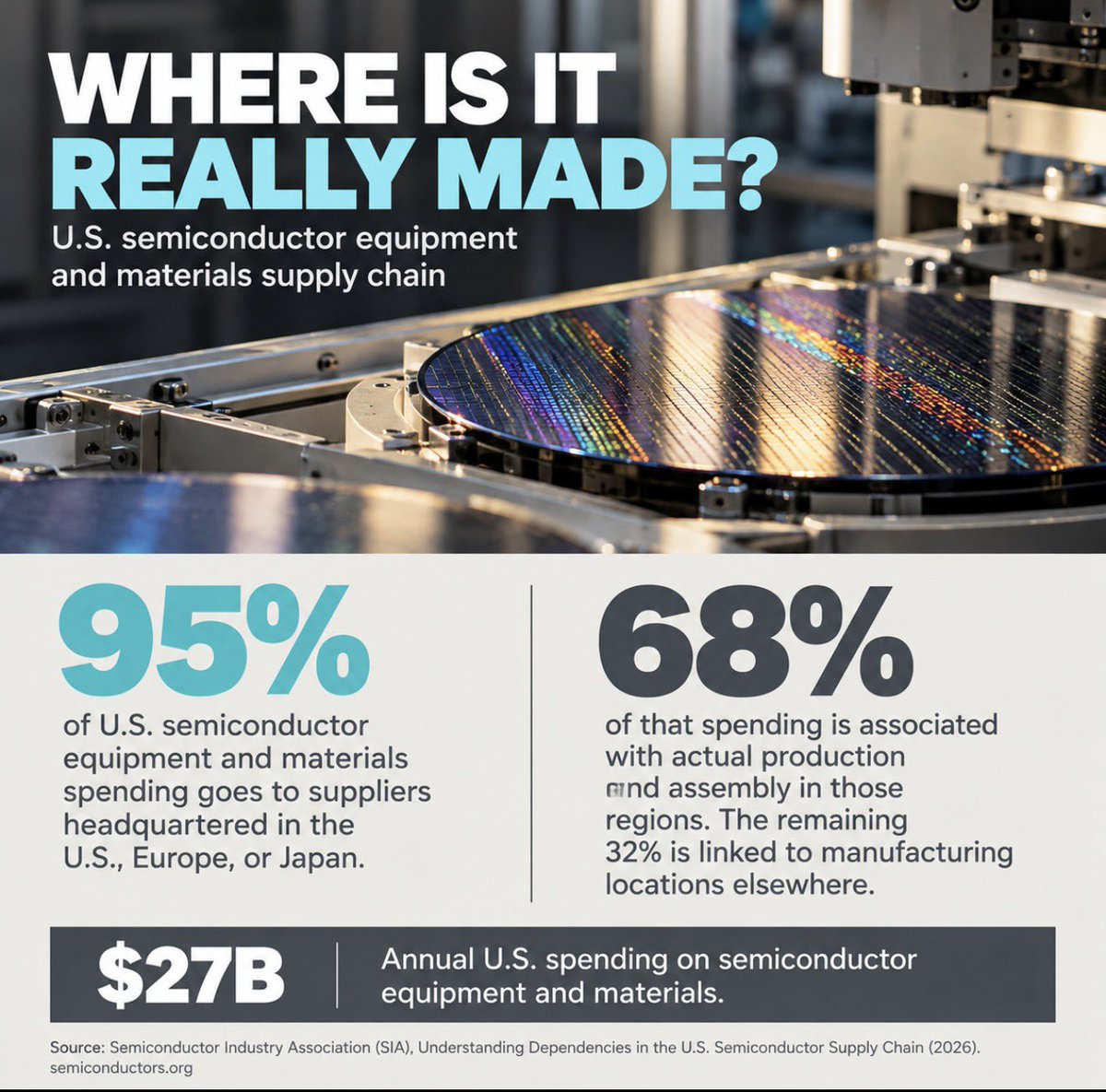
95% of U.S. semiconductor equipment and materials spending goes to suppliers headquartered in the U.S., Europe, or Japan.
Yet only 68% is tied to production in those regions.
That 27-point gap highlights a critical challenge: knowing who supplies a product isn’t the same as knowing where it was made.
As semiconductor supply chains grow more complex, traceability, provenance, and verifiable documentation become increasingly important.
Source: @SIAAmerica