What did #Illini HC Brad Underwood learn about his team in the loss to Texas Tech?
"We're definitely good enough..."
"We rallied. We showed up. We competed. We made plays. We didn't panic in the second half."
"We have to understand what winning looks like. Winning is not scoring. We'll always score points... Winning is rebounding, taking care of the ball, making free throws and loose balls."
(Question from @JWerner247)
Young Hoopers TAKE NOTES
“Playing hard is a strength. Playing hard is a skill. A lot of people think skill is dunking. Or passing and shooting. No, playing hard is a skill.”
I would argue that playing hard might be the most important skill 🗣️
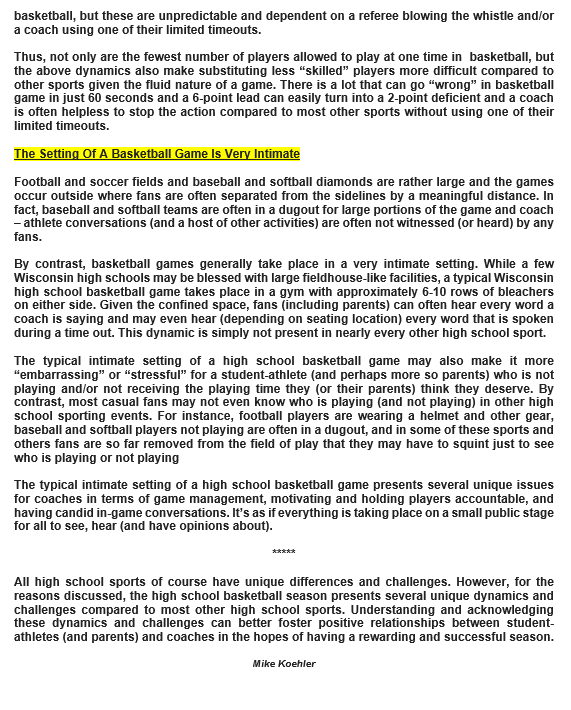
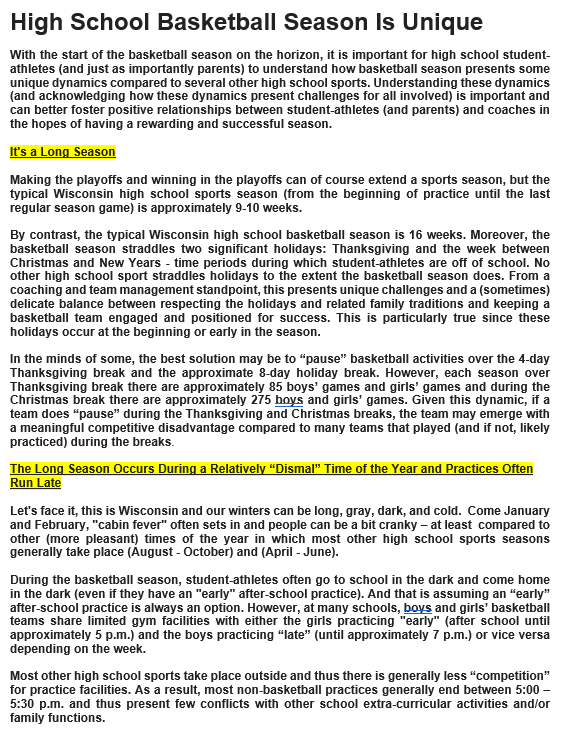
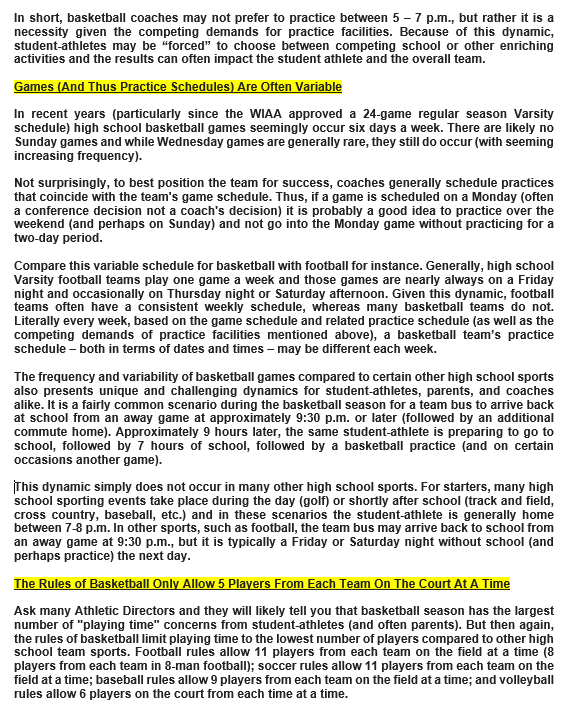
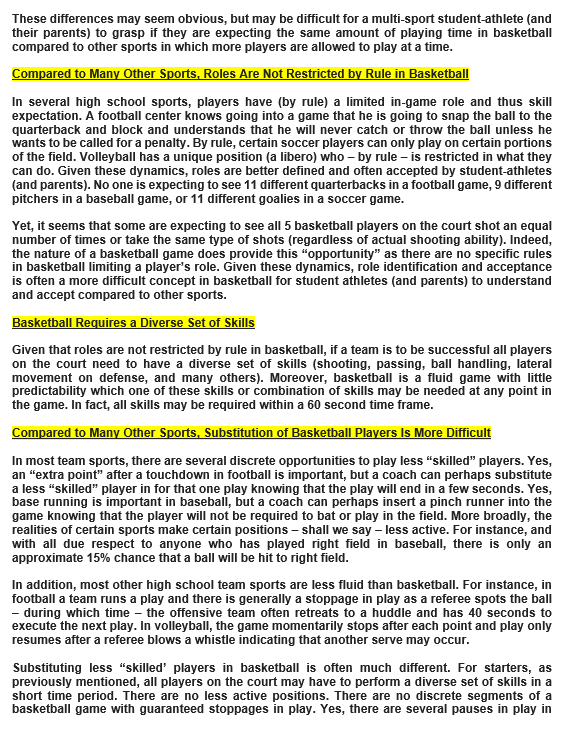
With the start of the basketball season on the horizon, it is important for high school student-athletes (and just as importantly parents) to understand how basketball season presents some unique dynamics compared to several other high school sports. Understanding these dynamics (and acknowledging how these dynamics present challenges for all involved) is important and can better foster positive relationships between student-athletes (and parents) and coaches in the hopes of having a rewarding and successful season.
@WisBBYearbook@JordanLoppnow@ColtonWilson23@hshoops25@Uorangemen2@BrettPickartsWI@WisBCA
Bluejacket Boys Basketball Captains Practice
Captains Practice
November 3 3:30-5:30
November 5 3:30-5:30
November 10 3:30-5:30
November 12 3:30-5:30
November 17 6:00-7:30
November 19 6:00-7:30
After having the most efficient offense in the history of college basketball, @IlliniMBB decided to do something entirely different. A behind-the-scenes look at the makeover: https://t.co/3lYUNe86AT
New York Knicks head coach Mike Brown delivers a powerful message to his players at practice…
He pulls his starting five aside, looks at the remaining players and tells them:
“Everybody else in this gym, you’re fighting — either to make the team or for minutes.”
I love this! Because it speaks to something I believe is fundamental to high performance sport… the intentionality of practice.
Practice isn’t simply a place to improve technical and tactical capabilities. It’s an opportunity to compete. To demonstrate who you are. To build the habits, behaviours, and mindset that serve you when the pressure is on.
And that requires intention. Deliberate, purposeful, relentless intention.
In my new book, Compete, I introduce the reader three psychological skills that underpin outstanding performance: Attention, Intensity, and Intent.
Attention: What are you focusing on during practice? Before each drill, identify the information you need to pick up. The positioning of a defender, the movement of a teammate, the space opening up. Stay connected to these cues, make decisions based on what you see and refocus quickly when distracted. Don’t just go through the motions. Be mentally present.
Intensity: Are you practising with the physical and mental intensity the situation demands? Sprint into position. Communicate with purpose. Compete for loose balls. React quickly when possession changes. Maintain your standards when fatigue sets in. And remember, intensity isn’t always about going flat out. It’s about bringing the right energy to each moment.
Intent: What are you trying to achieve today? Set a clear objective before practice. Perhaps it’s attacking space aggressively, making quicker decisions or responding positively after mistakes. Commit to demonstrating that behaviour throughout the session. Afterwards, reflect on whether your actions matched your intentions.
Because here’s the thing…
You don’t suddenly become an outstanding competitor when the game begins. You build the behaviours of an outstanding competitor in practice.
You build them when you’re tired. When you’re frustrated. When you’ve made a mistake. When you’re not getting the minutes you want. When nobody seems to be watching.
And this is where Brown’s message becomes so powerful.
He’s reminding his players that practice matters. That every possession is an opportunity to demonstrate something. That competition isn’t reserved for game day.
Of course, effective practice needs more than effort. It needs quality, feedback, reflection, and the freedom to experiment and make mistakes. But combine these ingredients with a High Performance Mindset and practice becomes an extraordinarily powerful environment for development.
My message to athletes is simple…
Don’t just turn up to practice. Compete with purpose. Train your mindset as deliberately as you train your game.
Because how you compete in practice helps shape how you compete when it matters most.
🗣”HOW TO COMMUNICATE CONSTANTLY ON DEFENSE”
1️⃣Repeatedly say you have the ball.
2️⃣Frequently say your Positioning off the ball.
3️⃣Intimidate & annoy the offense with your Voice.
4️⃣ Communicate a lot in Transition.
5️⃣ Talk on ALL Screens Early, Often & Loud
Geno Auriemma shares how he explains success to his players and why showing up isn't enough.
"If you go to class and you do average work, you're gonna get a C. That's why it's called average."
"If you want a B, you have to do more work. If you want an A, you have to do even more work and you have to give up stuff."
You get what you earn in life.
"You have to sacrifice. Maybe you can't do all the things that everybody else does."
It means if you want more then you have to be willing to do more.
"If you're just happy getting Bs all your life, there's nothing wrong with that either. But you're never gonna get the satisfaction of what it feels like to get an A."
Then he connected it to basketball:
"If you just wanna be average, then you do average work. If you wanna be a little bit above average then you do a little more work."
"If you wanna get As in basketball, then you gotta do stuff that other people aren't willing to do - especially if you have the talent like we do. We have talent."
It means bring a mindset of excellence to everything that you do. Excellence isn't the goal - it's the standard you set.
Then he called out the entitlement problem:
"Some of these younger guys coming out of high school, man, they wanna show up and go, 'I'm here. Where's my 3.7?'"
"Like my father used to say, 'I got your 3.7 right here.'"
Showing up doesn't earn you anything. Doing the work does.
You get the grade you earn - in school, in basketball, and in life.
It's easy to be average...successful people look to compete in everything they do.
(🎥UCTV Sports )
🗣️ Kon Knueppel: "What do good Christian dudes do? They work hard. They have fun. They know when to balance both of them. Be good to others."
He spent some time at home this offseason hooping with his brothers. One said Kon also went to Phoenix to work out with Devin Booker. 👀
Titles can identify captains. But they can’t create leaders.
I love this from Marcus Freeman:
“We have a whole bunch of guys who are going to choose to lead. They don’t need a title to lead.”
That’s what great teams need.
Not 2 or 3 captains doing all the leading.
A locker room full of people willing to speak up.
Hold the standard.
Bring energy.
Help a teammate.
Do the right thing when nobody is watching.
Too many players wait for permission to lead.
They think they need a “C” on their jersey, need to be a senior, or need the coach to name them something.
You don’t.
Leadership isn’t a position you’re given.
It’s a choice you make.
Every single day. 👇
One of the best things you can teach a young player:
You don't need to score to play well.
Defend.
Rebound.
Sprint.
Communicate.
Cut.
Screen.
Make the extra pass.
There are a lot of ways to impact winning.
Ben McCollum shares what it feels like to be around first-place people and a first-place culture.
"I went to Northwest Missouri State, and my first practice with Steve Tapmeyer - best coach I've ever been around - I sat there and I'm like, 'This is what first place feels like. This is what a first-place culture feels like. This is what first-place people feel like.'"
That was the wake-up call. He realized what first-place people have:
"They've got an extreme work ethic. They've got an edge to 'em that other people don't - a competitive spirit."
Then he quoted John Thompson:
"You can tame a fool a lot quicker than you can resurrect a corpse...We want guys with a little edge to 'em."
You can coach skills, but you can't coach competitive spirit. You don't want to consistently coach their effort and attitude.
The last thing they look for: Energy givers.
"Over the years, we found that guys that are moody don't make it in our program."
"If you're moody, if you have low energy, if you suck the life out of the building - you don't make it."
Talent isn't enough. Your energy matters. Your attitude matters.
Successful people have a competitive edge, they bring energy, and they look to consistently get better.
They raise the standard through what they do.
(🎥 Watts Happening Podcast)
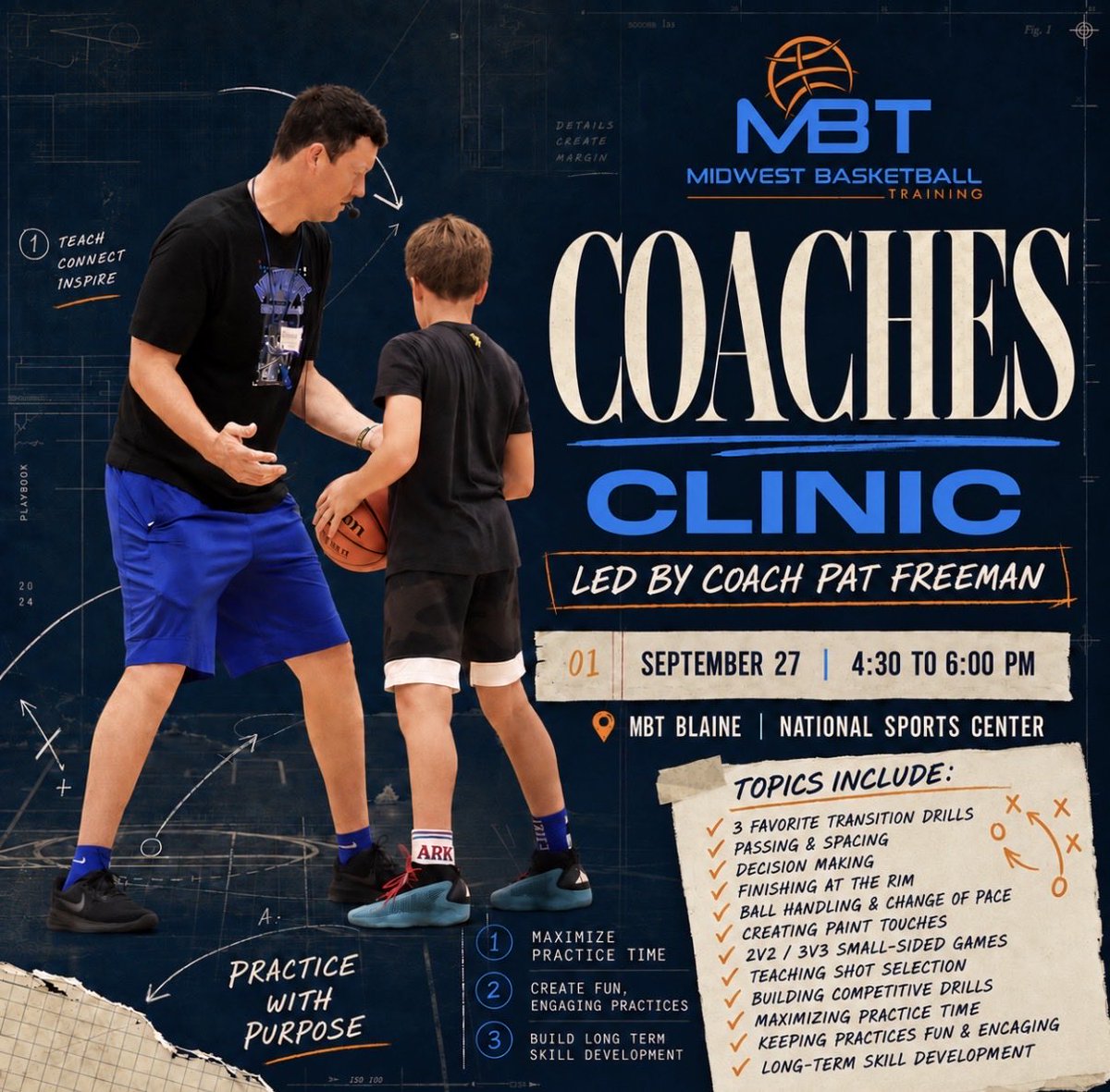
🏀 COACHES — THIS ONE’S FOR YOU!
We’re giving away 10 FREE spots to our upcoming Coaches Clinic with Coach Pat to coaches who want to learn, grow, and better serve their players.
Come learn practical drills, teaching points, and concepts you can take straight back to your team.
Only 10 free spots available!
📆 This Sunday: 4:30-6pm
📍National Soorts Center - MBT Blaine
Sign up here ⬇️
https://t.co/BloJzzgGpZ