正向: indoor portrait, vertical, a young East Asian woman standing against large grey stone-look bathroom tiles, looking up and to her left, long straight black hair, fair skin, glossy pink lips, light makeup, topless, covering her breasts with her left hand, right arm hanging at her side, long bright pink nails with small nail art, wearing black thong panties with a wide black waistband printed with white text "VICTORIA'S SECRET", slim waist, large breasts, warm indoor lighting, soft shadows on the wall, photorealistic, smartphone photo。 负向: child, teen, underage, extra fingers, deformed hands, extra limbs, watermark, text overlay, logo on wall, clothes covering chest, outdoor, beach, harsh sunlight 。
On Sep 2, NASA reported a 10-sided atmospheric wave around Saturn's south pole, confirmed by Hubble. It spans several layers within a jet stream and appears to be evolving, unlike the long-lived northern hexagon. https://t.co/Poa4hdVmmz
Austria’s largest glacier is hanging on through a single narrow icefall. NASA’s Landsat comparison shows Pasterze’s last upper-to-lower ice link shrank from nearly 900 m wide in 1998 to 120 m in 2025. Once it breaks, the lower glacier will lose its main ice supply.
Snow nearly reached the Pacific across one of Earth’s driest deserts. NASA satellite images show August storms blanketing the Atacama after a huge cutoff-low system pulled in coastal moisture. In Taltal, three days of rain totaled about 10× the annual average.
MIT’s new “bifur-circuits” are 3D-printed blocks that keep electrical connections working while they’re bent, twisted, stretched, or compressed. Add one more block and the number of stable shapes grows fast. In tests, the circuits kept working after 10,000 compression cycles.
Your cells keep tiny “iron lockers.” MIT researchers found that polyamines bind reactive iron and hold it in a safer state; when polyamine levels dropped, reactive iron rose. A molecule best known for helping RNA may also be a hidden defense against iron overload.
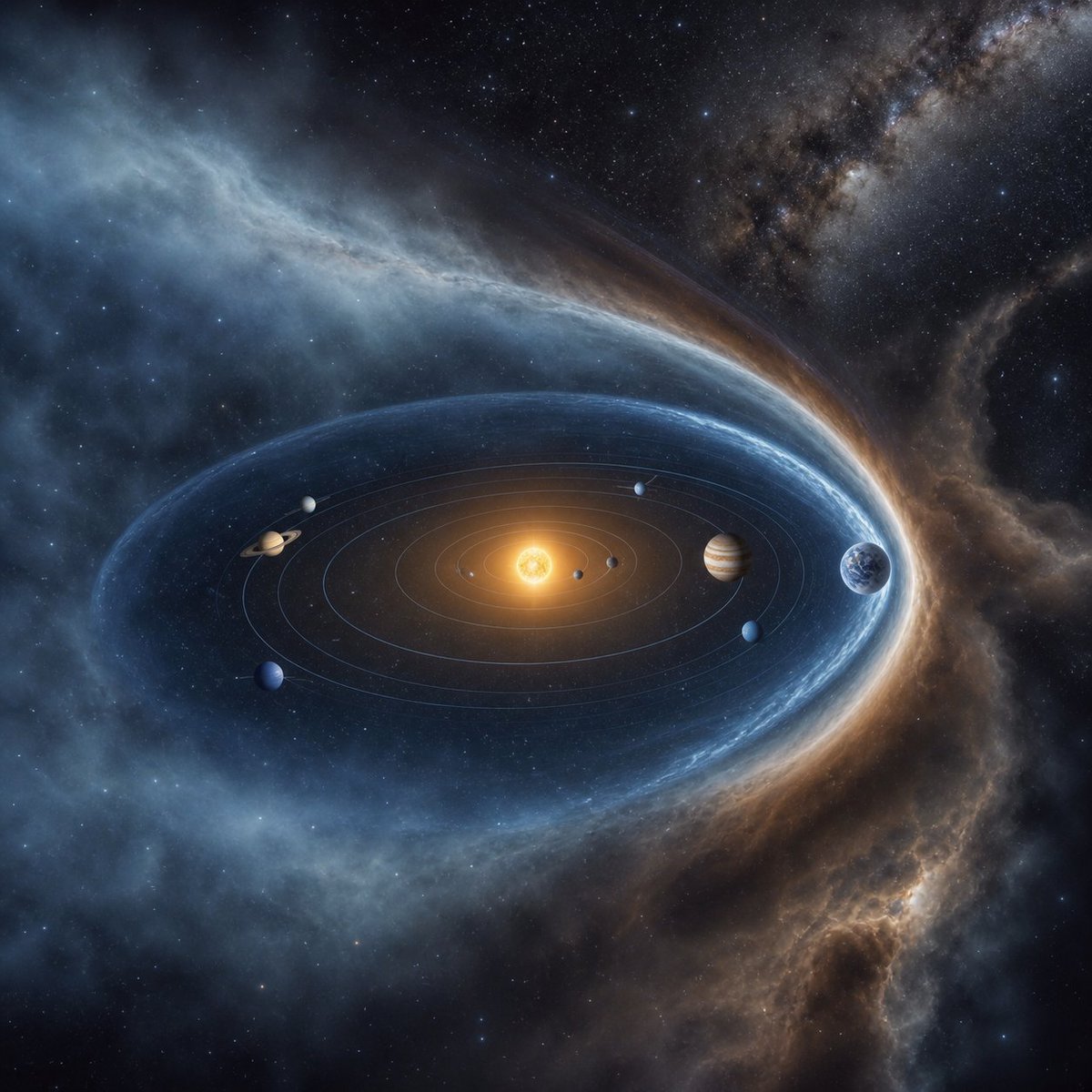
Our solar system has its own protective bubble: the heliosphere. NASA-backed modeling suggests dense interstellar clouds may have squeezed it inside Earth’s orbit several times, exposing our atmosphere to a very different space environment—and possibly nudging ancient climate.








![cnfinancewatch's tweet photo. 世界十大经典量化交易系统深度解析
风险提示:以下仅为策略原理科普,不构成任何投资建议,历史回测收益不代表未来行情表现。
1、海龟交易系统(Turtle Trading)
策略内核:中长期趋势跟踪,突破开仓
入场:价格突破过去20日最高价做多;跌破过去20日最低价做空。
出场:价格回落跌破10日最高价平仓多单;回升突破10日最低价平空单。
仓位公式:Unit=\frac{1\% \times Capital}{N \times PointValue}
N‑ATR20,用20日平均真实波幅控制单次风险,海龟是现代趋势交易的开山鼻祖,��合期货大类资产。
2、跳空交易系统(Gap Trading)
内核:隔夜跳空缺口回归交易
做多入场:开盘向下跳空 Low < Low_{prev}‑k\times ATR
出场:价格回补缺口Price≥High_{prev};止损缺口下方ATR倍数。
做空入场:开盘向上跳空 High>High_{prev}+k\times ATR
出场:缺口回补 Price ≤ Low_{prev};多用于美股、股指期货日内缺口套利。
3、海豚交易系统(Dolphin Trading)
内核:短期动量+ATR动态止损,5‑30分钟短线趋势
做多入场:EMA5>EMA20 且收盘价向上突破前2根K线高点
出场:多单止损位 = EntryPrice − 2×ATR(14);止盈盈亏比≥2:1
属于偏灵敏的短线趋势系统,震荡行情容易产生频繁假信号。
4、马丁格尔交易系统(Martingale Strategy)
内核:亏损后加倍加仓,押注行情终将回调
加仓公式:Position_{n}=2\times Position_{n‑1}
出场:盈利一笔后全部仓位一次性平仓。
⚠️高风险策略,单边趋势行情会出现毁灭性爆仓,实战极不推荐裸用马丁。
5、R‑Breaker R突破交易系统
经典日内反转‑突破双模式系统
做多突破入场:Price≥Pivot+0.35\times (High‑Low)
做多反转入场:下探S2支撑后回升;
出场:收盘平仓或者触及反向阻力位;
是全球期货高频日内标杆系统,兼顾趋势突破与反转。
6、双重推力系统(Dual Thrust)
日内趋势标杆,国内CTA圈普及率极高
Range = Max(High[1]‑Low[1],High[2]‑Low[2])
做多入场:Open+0.5×Range
做空入场:Open‑0.5×Range
出场:当日收盘全部平仓,纯日内不留隔夜仓,参数简单易回测。
7、菲阿里四价日内系统(Fairy Four Price)
四价:昨日高点、昨日低点、昨日收盘、今日开盘
做多入场:现价>昨日最高价;做空入场:现价<昨日最低价
出场:止损:开仓价‑ATR;收盘���制平仓;纯日内趋势,规则极简。
8、Oliver‑Kell EMA动量趋势系统
双均线趋势跟踪
做多入场:EMA(5)>EMA(20),且上一周期EMA5在EMA20下方(金叉)
做空入场:EMA(5)<EMA(20)(死叉)
出场:均线反向交叉平仓;依靠均线过滤震荡,抓中长期波段行情。
9、自动扶梯系统(Escalator Trading)
移动止盈趋势跟踪,阶梯式上浮止损
做多入场:突破N日新高;
动态出场止损线 = HighestHigh(n) − Multiplier × ATR;
价格不断新高,止损不断上移,锁住浮盈,让利润奔跑,典型的趋势加仓拿长线策略。
10、Checkmate 将死趋势跟踪系统
本次视频主讲品种,属于大周期高级趋势跟踪
核心:大周期ATR过滤,规避震荡,只抓大行情
做多入场:Close > Highest(High,40) && ATR(20) > ATR(60)1.1
做空入场:Close < Lowest(Low,40) && ATR(20) > ATR(60)1.1
出场止损:StopLoss = EntryPrice − 2.5*ATR(20);
趋势结束反向信号平仓。
将死系统用波动率阈���先筛掉震荡市,只在市场波动率放大、趋势启动之后进场,大幅降低假突破,牺牲小部分早期入场机会换取更高胜率。
综述
纵观十套经典系统,可分为两大派系。一类以海龟、扶梯、将死系统为代表的长周期趋势跟踪派,核心逻辑截断亏损、让利润奔跑,依靠少数大趋势行情覆盖多次小止损亏损;另一类以双重推力、菲阿里四价、R‑Breaker为代表的日内短线系统,不留隔夜风险,依靠高频、高胜率累积收益。马丁格尔是唯一反趋势加仓策略,风险属性与其余9套趋势系统完全相反。交易者可根据自己资金体量、可持仓周期,挑选适配自己性格的系统回测优化。](https://pbs.twimg.com/media/HQlGRZJaYAA-jhz.jpg)