يسرني الإعلان عن نتيجة بيق واي للأخ محمد السائر بابكر من منطقة النيل الأبيض في السودان ، و الفاحص من فرع الداودية من قبيلة المسلمية ذات الموروث البكري التيمي القرشي ، و ظهرت ال��تيجة على الفرع FT371796 المتفرع من ZS5010 في fgc1 ، نشكر للفاحص دعمه لنتائج المسلمية و نتائج قريش و نتائج fgc1 في السلالة J1
همسة بسيطة في بعض الآذان، عبارة عن اقتباس صغير من احدى الدراسات مترجمة من احدى الدراسات ووجب ان اذكر أنا هذا ليس طرح شخصي بل """اقتباس"""🙂
دراسة Chiaroni et al. (2010):
J1e lineages might have been involved in episodes of the expansion of pastoralists into arid habitats coinciding with the spread of Arabic and other Semitic-speaking populations
الترجمة
قد تكون سلالات J1e (المعروفة اليوم ضمن J1-P58) قد شاركت في موجات توسع الرعاة نحو البيئات الجافة، بالتزامن مع انتشار السكان الناطقين بالعربية وغيرهم من الناطقين باللغات السامية
الدراسة ذكرت ايضا
Previous studies of J1-M267 have found it to occur at high frequencies among the Arabic-speaking populations of the Middle East
الترجمة
وجدت الدراسات السابقة أن J1-M267 يظهر بترددات مرتفعة بين السكان الناطقين بالعربية في الشرق الأوسط
بمعنى أن الدراسة تربط بعض فروع J1-P58 مباشرة بتوسعات سكانية تزامنت مع انتشار العربية واللغات السامية، و تؤكد ارتفاع انتشار السلالة بين الشعوب العربية والناطقة بالعربية.
الدراسة ربطت بعض فروع J1-P58 بتوسعات تزامنت مع انتشار العربية، وأثبتت ارتفاع ترددها بين الناطقين بالعربية
المصدر:
Chiaroni et al. The emergence of Y-chromosome haplogroup J1e among Arabic-speaking populations (2010)
https://t.co/INOAYsStRU
Kvali Timelapse of haplogroup E
Few lineages capture the full sweep of human history quite like Haplogroup E. Born deep in East Africa over 65,000 years ago, E-M96 represents one of the earliest major branches to split from humanity’s Y-chromosome root. From that single origin, it grew into one of the most widespread and consequential paternal lines on Earth—dominating much of Africa, spilling into the Middle East, and leaving a deep imprint on Europe.
Its two great subclades tell parallel epics. E1b1a became the defining lineage of the Bantu expansion, carried across sub-Saharan Africa by the largest demographic movement in the continent’s recent history. Meanwhile, E1b1b flowed north and east out of Africa in multiple waves—some tied to the spread of Afroasiatic languages, others to early farming dispersals into the Levant, the Mediterranean, and the Balkans. The subclade E-V13, for example, was a minor Neolithic lineage that exploded during the Bronze Age, becoming a major component of ancient Greek, Illyrian, and Thracian populations. Its modern distribution still echoes those ancient migrations.
It’s a haplogroup of pharaohs and farmers, nomads and empire-builders. Ramesses III carried a subclade of E1b1a. Some analyses point to an E1b1b lineage for Albert Einstein. Whether or not those specific assignments stand, the broader truth holds: Haplogroup E is a living record of our shared deep history—an ancient African root whose branches now span continents.
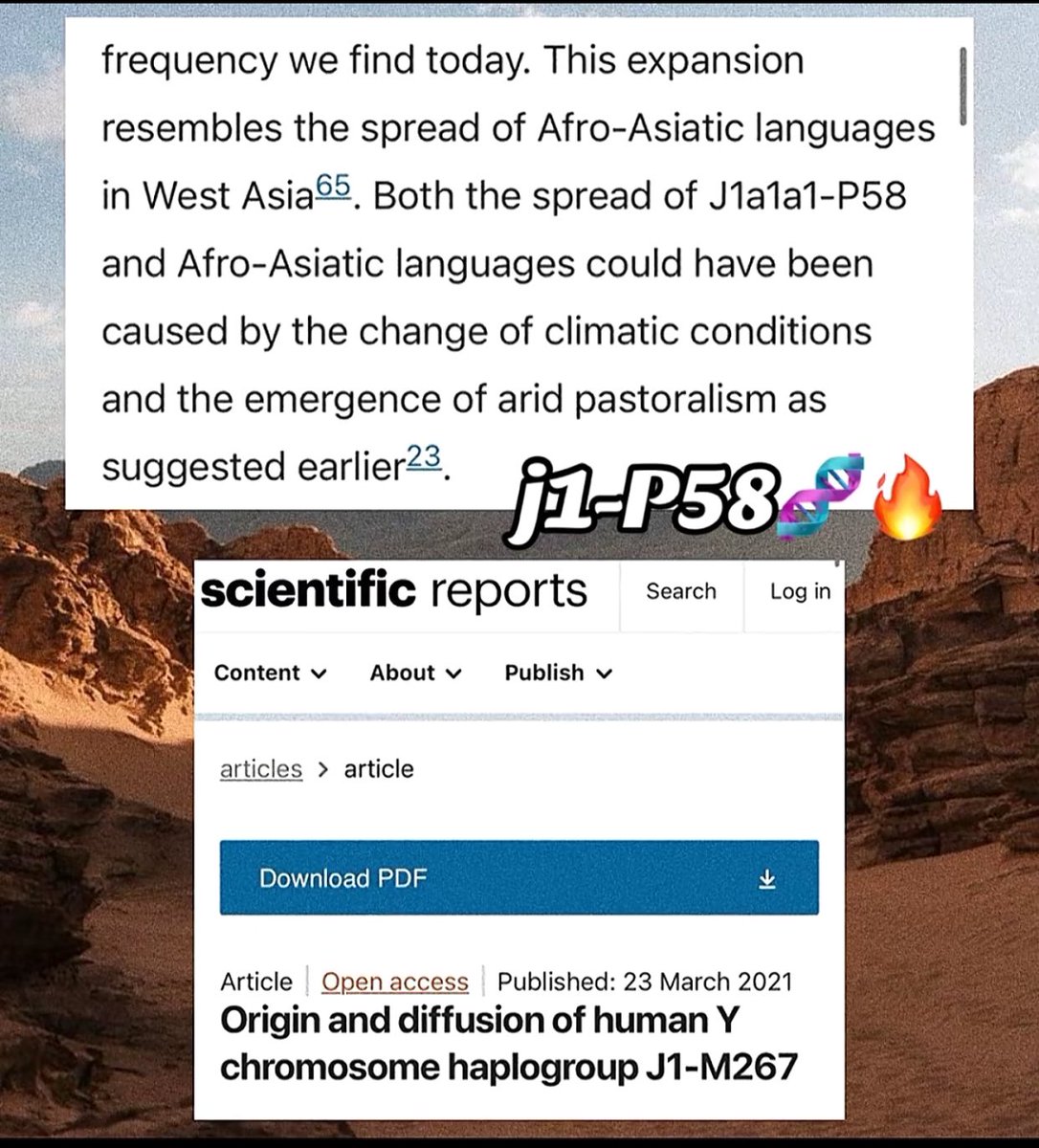
@Y_Alalie دراسة 2021📚: 👇🏽👇🏽👇🏽
"Origin and diffusion of human Y
chromosome haplogroup J1-M267"
(“يشبه هذا التوسع انتشار اللغات الأفروآسيوية في غرب آسيا. وقد يكون كل من انتشار J1a1a1-P58 واللغات الأفروآسيوية ناتجًا عن تغير الظروف المناخية وظهور الرعي الجاف كما أشير إليه سابقًا.”)
@BmacIvc Also, Upper Mesopotamia (not lower) was established by migrants from Zagros (not CHG), both genetic and archaeological data supports that. These Upper Mesopotamias then mix with CHG to form Shomu-Shulaveri, Nalchik, Khvalynsk, which ultimately forms Yamnaya in Steppes
New Özdemir 2026 Katanda-type Altay Shaz Türkic males mostly carry J2a-PH1795 (aka PH358). a legacy of Bulan-Koby Scythians.
New Akbari 2026 Sivashovka-type burials (Avar Period central Europe Onoghurs) mostly carry N1a-M2019 (now on ftDNA), a Slab-Grave legacy.