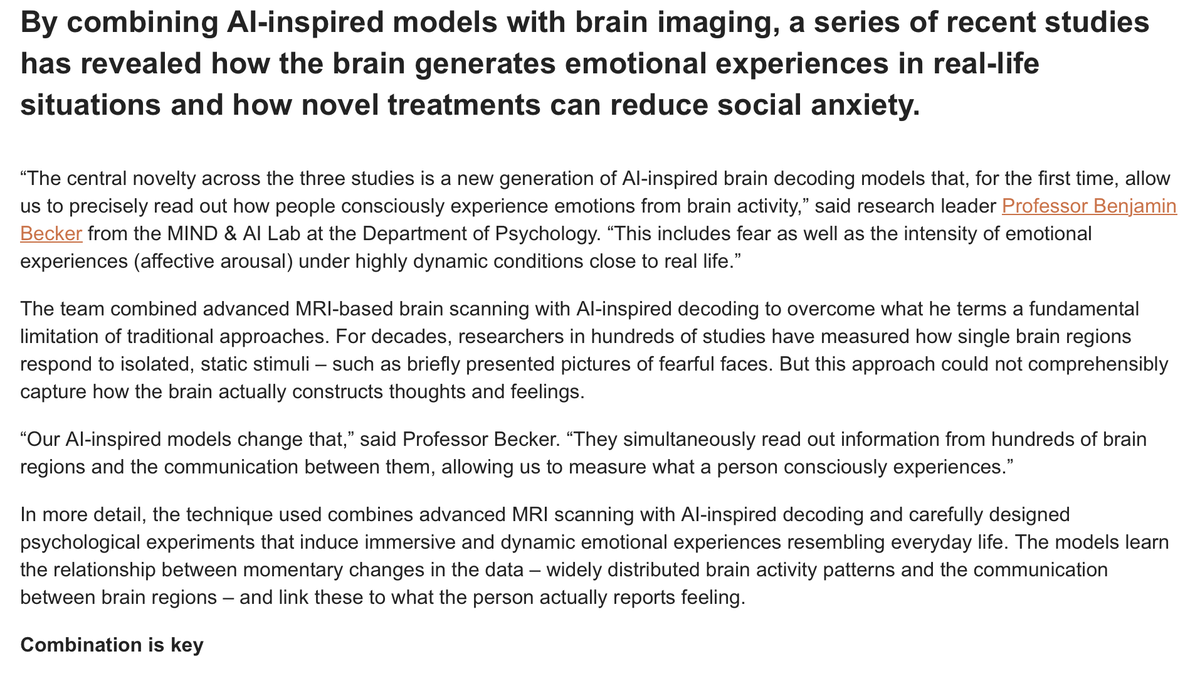
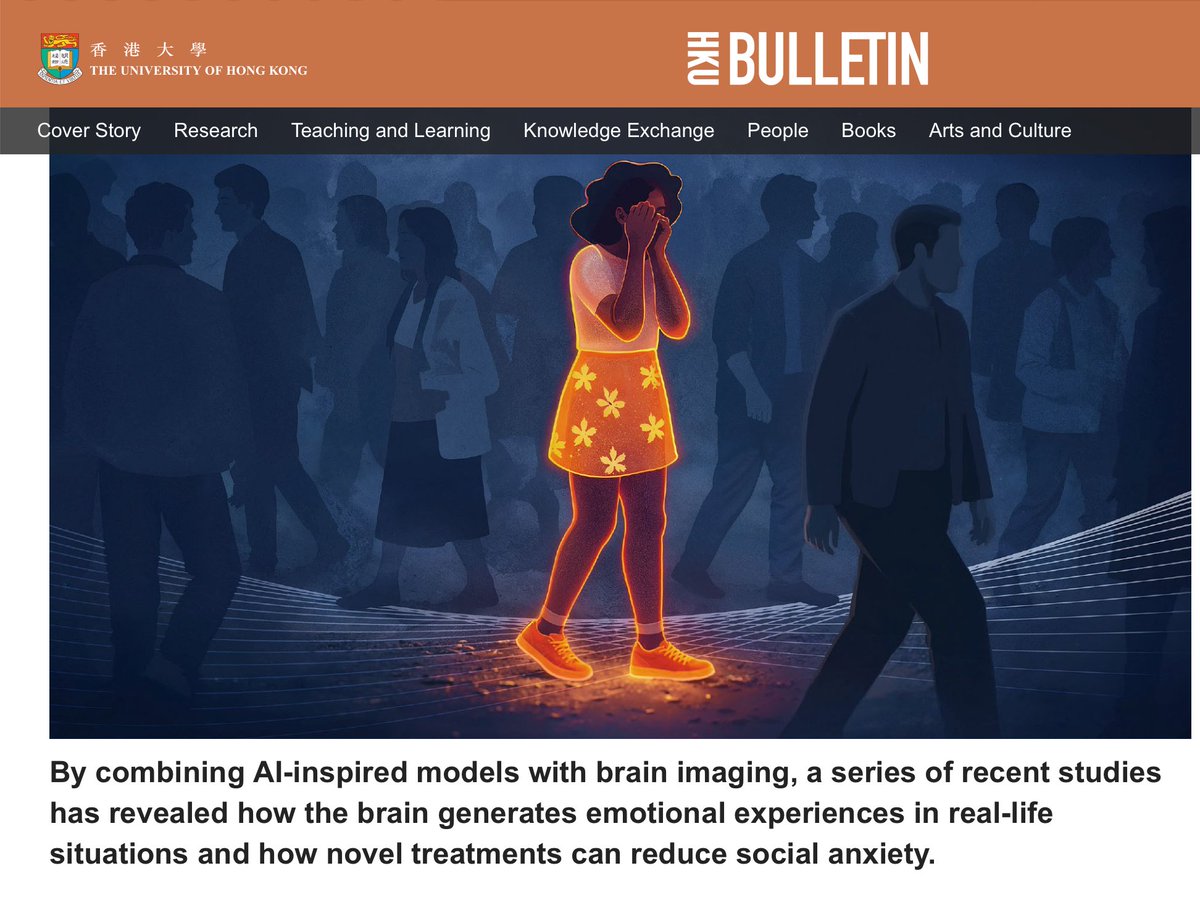
In #HKU Bulletin – decoders can track subjective #anxiety#arousal in real‑life contexts, differentiate conscious feeling from physiological responses, oxytocin can reduce the subjective #fear in social situations. potential novel interventions for social anxiety.
🆕The new issue of the #HKUBulletin is now available!
🎨💡How is AI impacting human creativity? #HKU scholars examine whether AI can outperform imagination, reshape storytelling, and what it means for society and regulation.
📖Read now at https://t.co/KkaqLsuROc
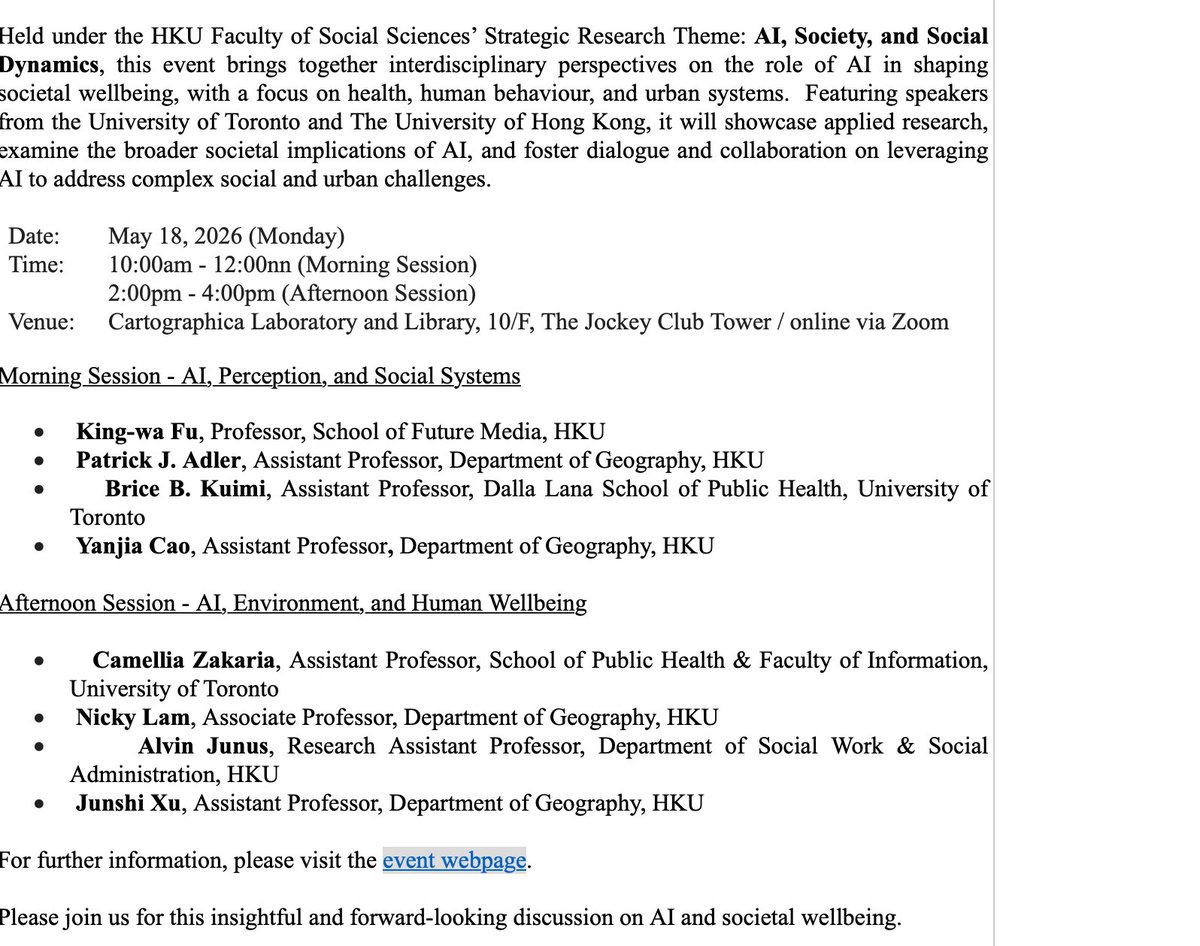
Next talk in our SRT - AI, human-computer interaction & creativity. Join us - in person and online following registration . #AI#society#hku@HKUniversity
Assessing and undertaking building maintenance in densely populated cities like Hong Kong isn’t easy, and manual inspections are often time-consuming and costly, leading to delays in identifying structural defects that can compromise public safety.
To address this problem, the team at #HKU’s iLab, led by Professor Junjie Chen and Professor Wilson Lu, developed eCheckGo, an innovative artificial intelligence (AI) system powered by a proprietary Large Defect Model (LdM) combined with traditional AI algorithms.
Designed for ease of use, eCheckGo allows users to capture images inside and outside buildings using a mobile app, or to leverage readily available Google Street View images. The AI system automatically detects defects such as cracks and spalling where concrete breaks away and integrates these findings into generated 3D data point clouds . This interactive 3D model allows users to zoom in and out to view the exact geometry and dimensions of the issues.
“You can easily understand the overall condition of a building, pinpoint where defects are located, and assess their scale, geometry, and dimensions,” says Professor Chen. “Having all this information consolidated in one place is extremely helpful for making informed and timely decisions about maintenance or renovation.”
No wonder eCheckGo recently received the Gold Medal with Congratulations of the Jury at the 51st International Exhibition of Inventions in Geneva!
Moving forward, the iLab team will work on turning their lab-based prototype into an industry-level software solution, including through algorithm optimization in computing-constrained environments and shifting some existing functions (data query, 3D visualization) from Web to local mobile phones.
#HKU #UniversityofHongKong #architecture #HongKong #urbanism
Next talk in our SRT series on AI, Society and Social Dynamics: Digital Activity and Adolescent Mental Health. Edmund – from KCL - is one of the leading experts in child and adolescent mental health, fellow of the European Academy of Science and an engaging speaker! Join in.
What makes an artwork beautiful, and can your brain's response decode such hidden dimensions of aesthetic appeal? We built a framework to find out 🎨 🧠
First author: Dr. Xinyu Liang @betory9178@NatureComms#COGNIZELab
https://t.co/GFR3wF7lcU
#Neuroaesthetics#DefaultMode
What makes an artwork beautiful, and can your brain's response decode such hidden dimensions of aesthetic appeal? We built a framework to find out 🎨 🧠
First author: Dr. Xinyu Liang @betory9178@NatureComms#COGNIZELab
https://t.co/GFR3wF7lcU
#Neuroaesthetics#DefaultMode
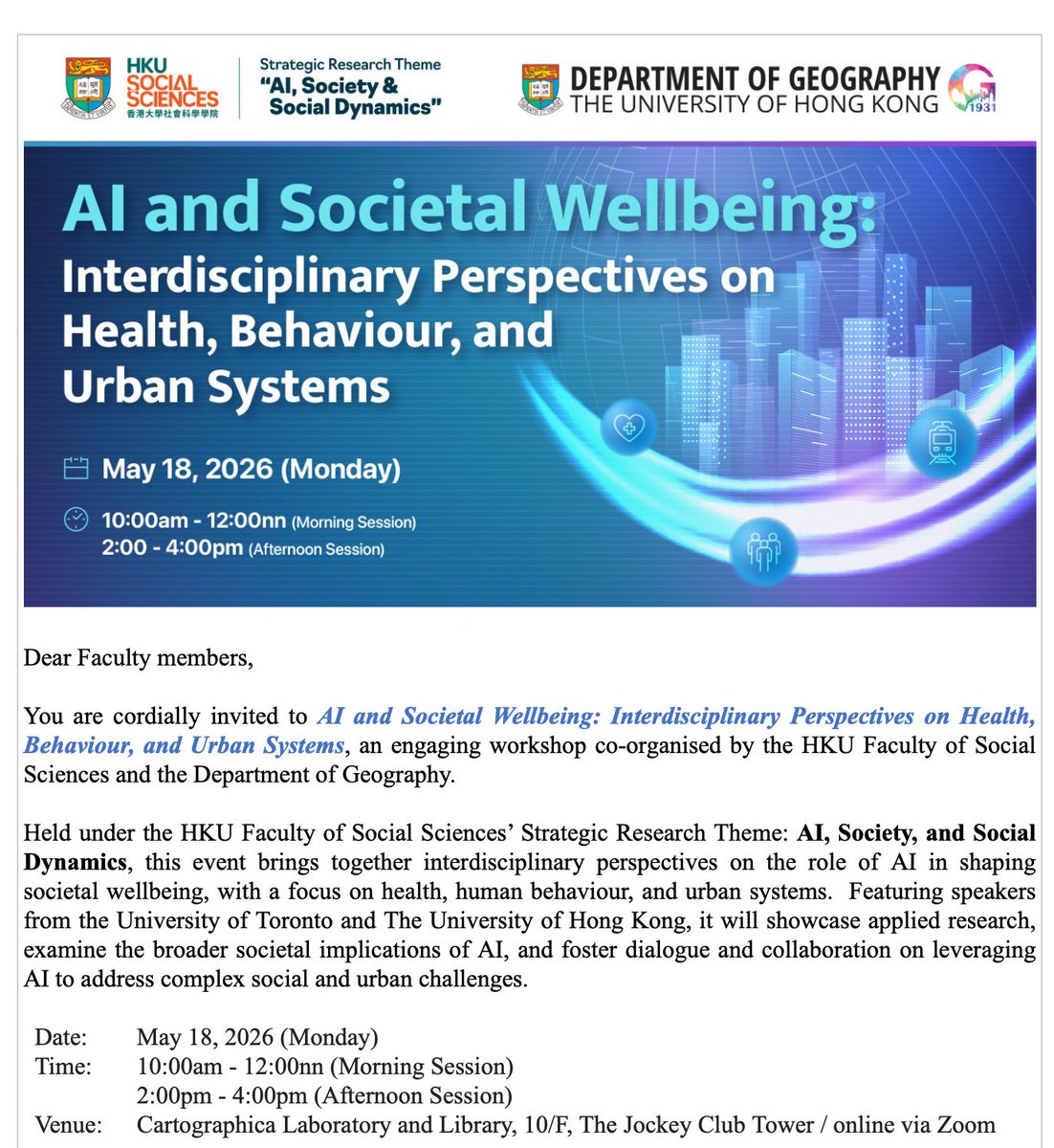
First workshop in our Strategic Research Theme on AI, Society & Social Dynamics - focus on health, behavior and urban systems. Join in! #AI#Society#mentalhealth https://t.co/c4lnQHuOkT
Delighted to share our new paper in Biological Psychiatry Global Open Science. We critically appraise 18 neuroimaging-based clustering studies in schizophrenia and ask whether brain-derived subtypes are reproducible, biologically valid and clinically meaningful. https://t.co/Z5NKUVSSGd @UBC_IMH@UBC_Psychiatry@RuiyangGe@YU_Yue_Tong@SOBP@MountSinaiPsych #brain #schizophrenia #AI #neuroimaging
Wait this is the cover of NN??? What about this: https://t.co/gawZ4YR3ut
Soo revealing about the speed of publishing (not just NN) paper already debunked on biorxiv before it is the cover of NN.
4/4⚠️ Limited spots for BCW 2026 e-posters
If you work on:
• Brain connectivity
• EEG / MEG / fMRI
• Whole-brain modeling
• Network dynamics
👉 This is THE workshop for deep scientific discussion
Submit:
https://t.co/gKoxEc3t2e
1/13 Your brain is not a linear machine. 🧠⚡
But for the past few years, several high-profile studies have claimed that macroscale brain signals — EEG, in particular — are "linear" and Gaussian.
How did they miss the nonlinearity? Not looking for it in the right place!
🧵
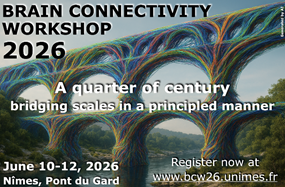
🧵 1/4 🚨 BCW 2026 — 25th Anniversary 🚨
📍 Nîmes, France
🗓 June 10–12
The Brain Connectivity Workshop returns — a premier forum on brain networks, dynamics, and multiscale neuroscience.
🧠 Theme: Bridging scales in a principled manner
👇 (thread)