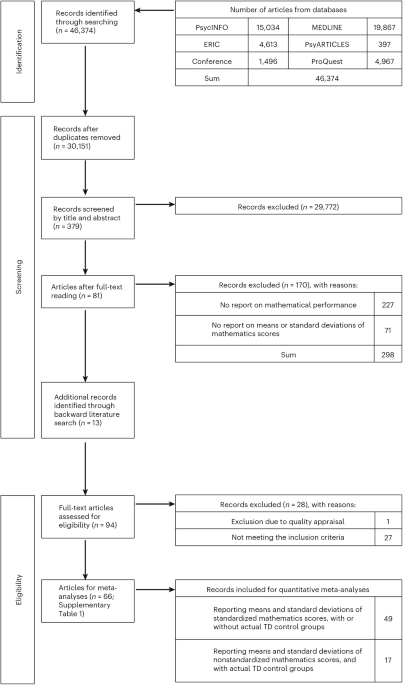
A systematic review and meta-analysis of the proficiency and variability of mathematical ability in populations with autism spectrum disorder https://t.co/NdYveKAN6m
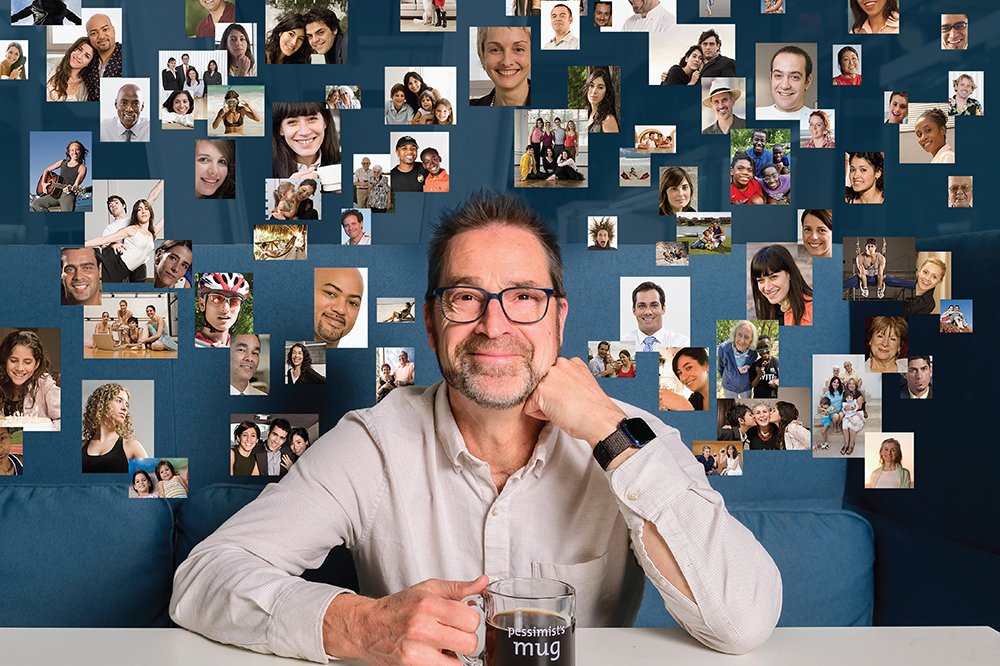
We proudly announce that the Center for Advanced Study (CAS) has appointed Brent Roberts to its permanent faculty.
Your groundbreaking work and dedication are genuinely inspiring. Well deserved!
https://t.co/cqhfgIE4Xl
Qualitative work is hard - but important to better understand complex phenomena like faking in questionnaires. A big thanks to Jessica Röhner and Astrid Schütz for taking me along on this quest. See our faking model in this paper: https://t.co/yQMkKe2Z5P
My lab is hiring a research assistant to help with data collection, analysis, and dissemination of several NIH Grant and Foundation funded research projects. We focus on the neurodevelopment of externalizing behaviors (bullying, aggression, impulsivity) in youth populations.
In a study using individual-level data from 7 countries, Kefeng Li et al. find evidence that unmarried status is associated with a 79% higher risk of depressive symptoms.
https://t.co/6NujkC15Pi
How effective is human-AI collaboration?
A meta-analysis of 106 studies just published in @NaturHumBehav reports an interesting result:
On average, there was no synergy: Human–AI combinations did not perform better than both humans and AI.
In particular, when the AI alone outperformed the human alone, the human–AI combination led to performance losses, likely because humans were unable to integrate the suggestions provided by the AI.
Conversely, when the human outperformed the AI alone, there was some synergy and human–AI combination led to performance gains, likely because this time humans were better at integrating the AI suggestions.
Paper: https://t.co/udLc68lS4F
Come work with me, @TheYiFeng, @CraigEnders, Han Du and the rest of the amazing psych departments at UCLA! You could be the next page in our great history of measurement!
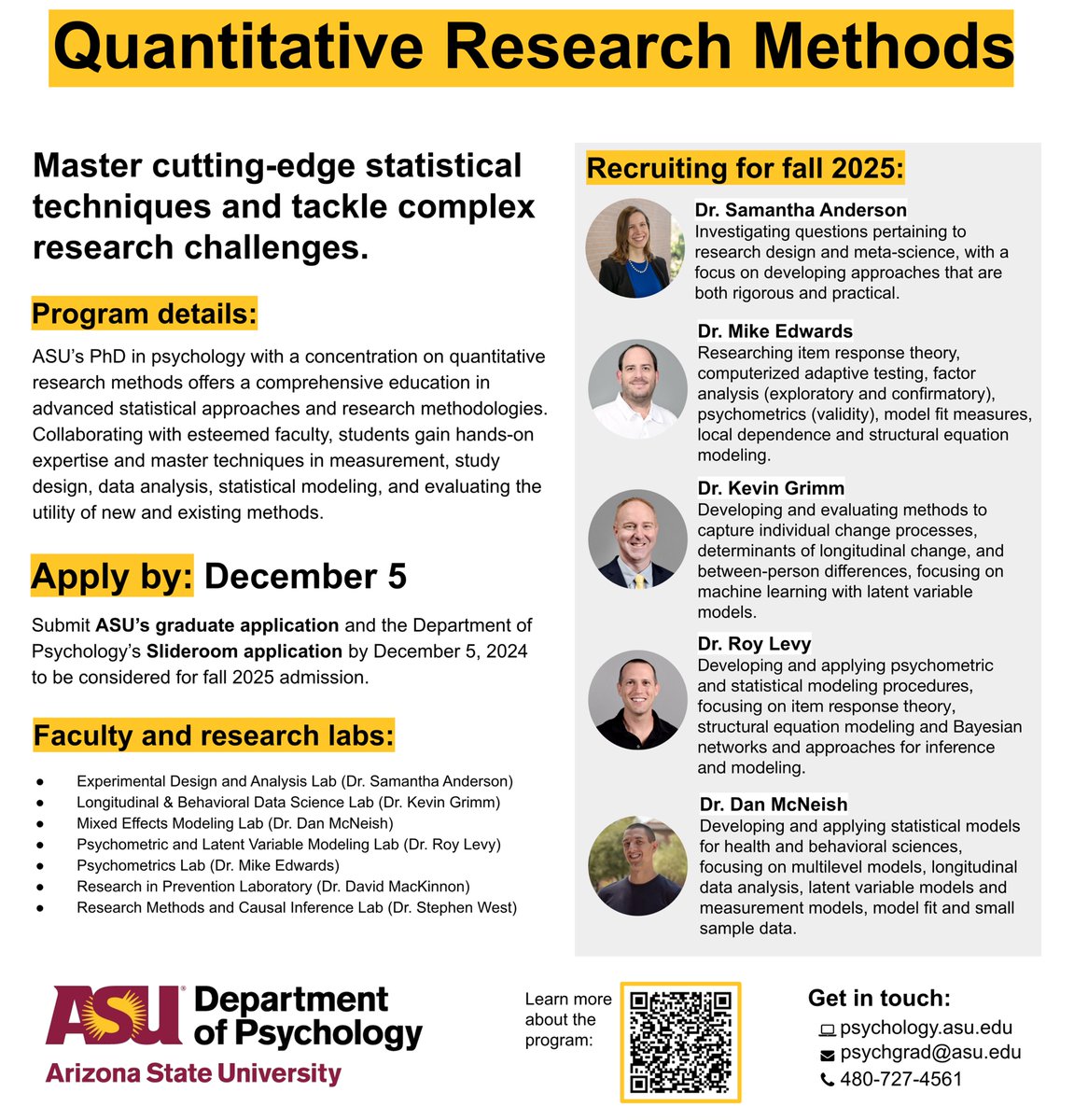
For anyone who might be interested in applying to PhD programs in quant methods this year, nearly all of the faculty in the Arizona State quant psyc program will be reviewing applications!
More info on the program:
https://t.co/laJNU6yWdO
I gave a presentation yesterday on using #structuralequationmodel SEM-based #metaanalysis to fit various models, including random-effects, multiplicative error, hybrid, location-scale, nonlinear, multivariate, and more.
YouTube: https://t.co/904H3cArQ4
https://t.co/3KOjyp1tF3
Little is known, although much is theorized, about the long-run benefits of boosting children's social-emotional skills.
Across 450 post-test & follow-up impacts from 86 RCTs, we found similar fadeout rates for intervention impacts on social-emotional & cognitive skills.
1/11
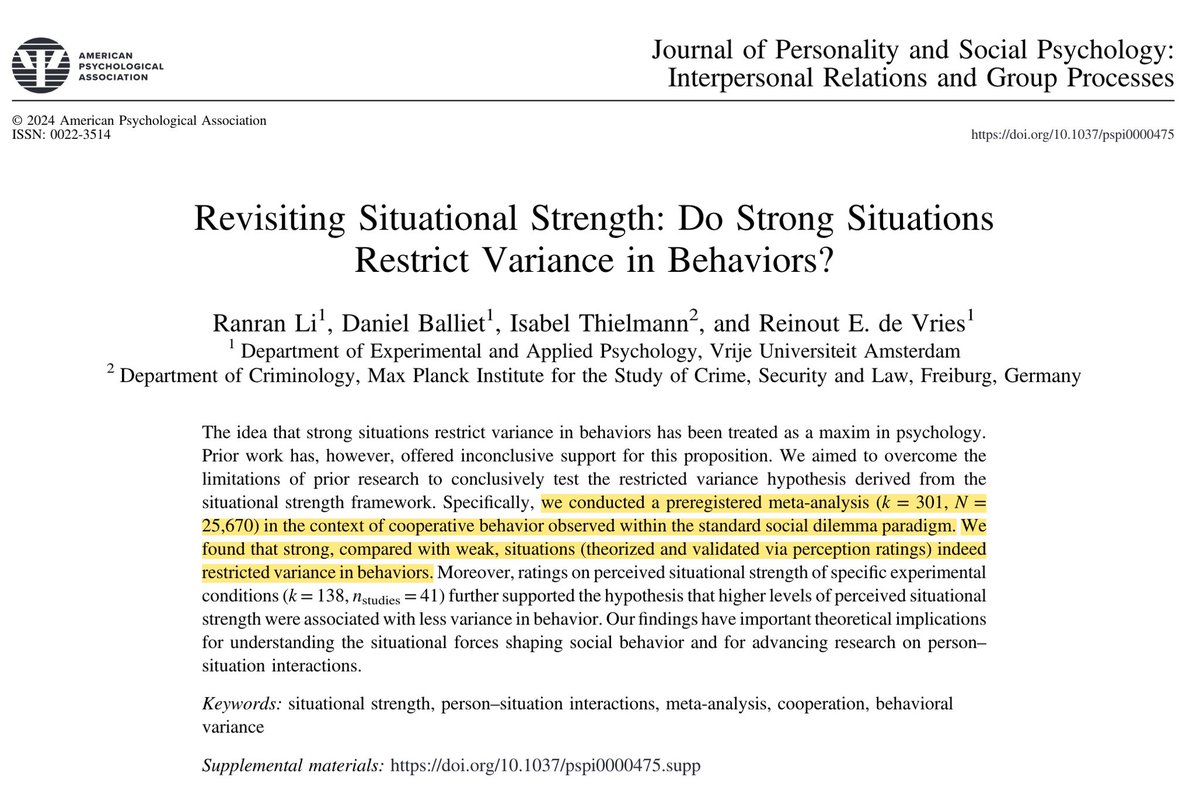
Very honored to share that our paper on how (and why) strong situations impact behavioral variance is finally out at *JPSP*! 🌷☺️ @IsabelThielmann@reinoutedevries, @danielballiet
Check it out ➡️ https://t.co/oRXCjhPwRV
bias taxonomy: many human biases can be summed up as a few basic biases/beliefs, with confirmation bias [peoples’ tendency to process information in a way that is consistent with their prior beliefs] amplifying/combining with all of them https://t.co/q8uDgKjW8X h/t @SteveStuWill
Be aware if you plan to derive anything about human behaviors with "LLM participants." In this 100-page paper, we show how current LLM-generated psychometrics responses cannot capture nuances where human individuality resides and how to evaluate it properly. #AI4SocialScience






![PsychoSchmitt's tweet photo. bias taxonomy: many human biases can be summed up as a few basic biases/beliefs, with confirmation bias [peoples’ tendency to process information in a way that is consistent with their prior beliefs] amplifying/combining with all of them https://t.co/q8uDgKjW8X h/t @SteveStuWill https://t.co/QNKGZD7sNv](https://pbs.twimg.com/media/GZYBqbaWwAA4Ro9.jpg)





