Happiness is the FINAL recognition your consciousness can have that joy CAN ONLY ARISE when we accept what "occurs seemingly by chance, entirely independent of our will".
You can ONLY BE HAPPY when you give TOTAL consent to whatever actually ends up happening in your life
This is TRUE HAPPINESS. Not when you get x job, x money, x amount of houses, lovers etc.
The Path Was Made by Walking Through It All 🔥
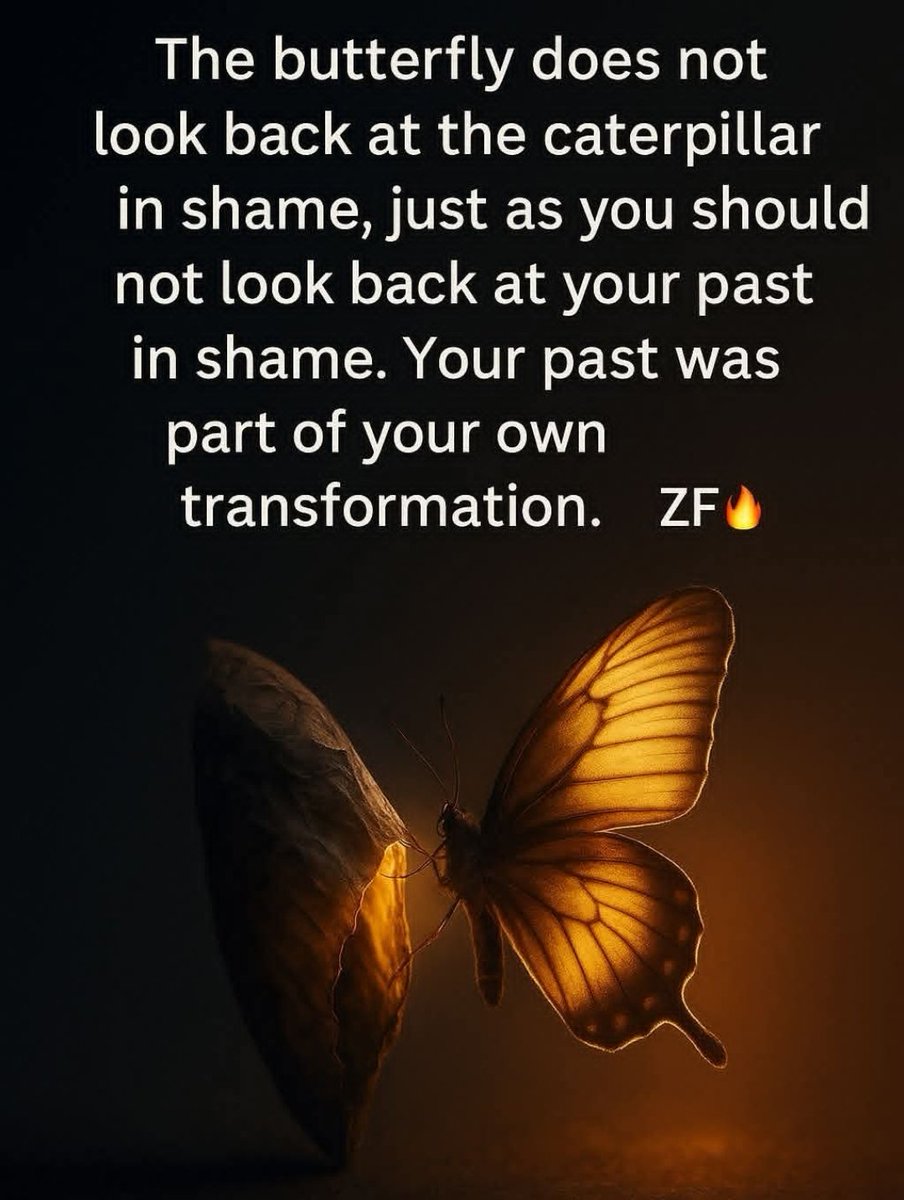
Every single thing I’ve been through... the pain, the mistakes, the regrets, the lessons... they’ve all been part of what built me.
I used to look back at certain chapters of my life with shame, wishing I could’ve done things differently. But now I see it clearly... if I were to remove even one of those experiences, my foundation wouldn’t be as strong as it is today.
I needed every version of myself to become who I am now. Every breakdown shaped me. Every failure carved out depth. Every betrayal sharpened my clarity. It wasn’t always pretty, but it was real. And now, when I stand, I stand on something solid... not because life went smoothly, but because I kept showing up for it.
So no, I don’t resent the past anymore. It was never meant to define me... only refine me. I didn’t fall off my path... the path was made by walking through it all.
ZF 🔥
Everyone seeks escape.
Some choose alcohol, drugs, food, gambling or endless entertainment.
Others choose work, scrolling, shopping, or constant busyness.
The method changes.
The reason often doesn't.
Most people aren't chasing pleasure. They are trying to escape discomfort.
Choose escapes that restore you, not ones that slowly destroy you.
What is your escape zone ?
#psychology
a monk on how to quiet a mind that won't stop thinking:
1. People always tell me the same thing. i can't meditate, my mind never stops. thinking about everything, thinking about nothing, just thinking. they're convinced this is the one thing standing in their way.
2. but the truth is the opposite. stopping your thoughts is easy. you already do it, all the time, without even noticing.
3. here's how i prove it on every retreat. while i'm speaking, don't just listen to my words. listen to what they do inside your head. notice the gaps between my words. in those spaces, nothing was happening. you were silent. wide awake, aware, but not a single thought.
4. that's it. that's what stopping thinking feels like. hearing the birds, hearing the room, with no voice running in your head. you weren't trying. you were already there. now you know it's possible.
5. so the real question isn't can you stop. it's why do you keep destroying that silence the second you find it. and if you're honest, you already know the answer. 99% of your thoughts are total rubbish.
There is waking and sleeping and waking again, but they do not happen to me. They just happen. To me, nothing ever happens. There is something changeless, motionless, immovable, rock-like, unassailable; a solid mass of pure being-consciousness-bliss. I am never out of it. Nothing can take me out of it, no torture, no calamity. There is peace - deep, immense, unshakeable
~Nisargadatta.
A nervous system raised on chaos often mistakes peace for boredom.
If you grew up around unpredictability, your brain and body adapted.
They learned to expect emotional highs and lows.
So when life becomes calm, it feels different.
You overthink. You doubt. You create conflict. You look for what is wrong.
Healing isn't just changing your thoughts.
It is teaching your body that calm is safe. That consistency isn't suspicious. That peace isn't emptiness.
At first, a regulated life may feel boring.
Stay with it.
Your nervous system can learn a new normal.
#psychology
Silence feels uncomfortable because silence has become unfamiliar. Just 30 seconds of silence and you panic. Reach for your phone. You want to escape because silence is a mirror. It asks you to face yourself. The thoughts you've been avoiding. The emotions you've been suppressing. The actions you've been delaying. So you keep filling every empty moment with noise. Scroll. Watch. Listen. Repeat. Numbing yourself until you forget what our own mind even sounds like. But remember, everything you are looking for is on the other side of thirty seconds of stillness. Sit with it... Just to remember what you sound like. You have been trying to find yourself in the noise for a long time. You are not there. You never were.
REAL INDIVIDUATION ISN'T BECOMING UNTOUCHABLY DEEP
Carl Jung once suggested that the most dangerous shadow doesn't hide in your wounds, it hides in your need to be extraordinary.
And honestly? Nobody warns you about this one.
You find Jung, or depth psychology, or shadow work, and for the first time, everything clicks.
Finally, someone explains why you've always felt different. Why you see through things others don't. Why small talk makes your soul itch. You dive in. You learn the language. You start seeing projections everywhere, noticing your patterns, decoding your dreams. It feels like waking up.
But here's where it gets sneaky.
Slowly, without realizing, you start using all that depth as a way to separate yourself. Not consciously. Not with bad intentions. But you begin feeling like you're living on a different level than most people.
Conversations feel exhausting because nobody wants to go deep. You start withdrawing. Not because you're depressed, but because you've quietly decided that ordinary life is beneath you.
And the shadow? It doesn't fight you openly anymore. It just changes costumes. Now it looks like wisdom. It looks like being too aware" for surface-level things. It looks like that subtle inner voice that says, "They wouldn't understand. They haven't done the work."
You become the observer. Always analyzing. Always a little removed. And deep down, loneliness starts growing, but you call it discernment so it doesn't sting as much.
This is the inflation Jung warned about. The spiritual ego. The persona of the awakened one. And it's terrifying how invisible it is from the inside. Because from the outside, you look calm, evolved, unbothered. From the inside, you're slowly suffocating under the pressure of always having to be the most conscious person in the room.
Real individuation isn't becoming untouchably deep. It's becoming fully human. And being human means you still like dumb jokes sometimes. You still get petty. You still crave connection that doesn't require a psychological breakdown afterward. It means you can sit with someone and say nothing profound, and that be enough.
The collapse, when it comes, doesn't feel like a breakthrough. It feels like exhaustion. One day you just can't analyze anymore.
Can't spiritualize anymore. Can't perform depth anymore. And in that quiet defeat, the real you, the one who existed before all the concepts, starts breathing again.
The one who doesn't need to be extraordinary. The one who just wants to be present. Messy, unresolved, and somehow more alive than all that curated wisdom ever made you feel.
Maybe the final stage isn't becoming the most evolved person in the room. Maybe it's finally being okay with being ordinary, not because you gave up, but because you stopped using growth as an escape from belonging to the world.
✨🙌🏾💫
Most people will live and die without ever performing a single truly free action.
Not because they're weak.
Not because they're evil.
But because they're asleep.
Dr Steiner said the greatest poverty of modern humanity is not material poverty; it is unconsciousness.
We walk.
We speak.
We eat.
We react.
Yet most of what we call "our life" is automatic.
Habit thinks.
Impulse acts.
Conditioning speaks.
And the true Self remains hidden behind it all.
Steiner taught that real development doesn't begin with visions or mystical experiences.
It begins with something far more difficult:
Becoming conscious.
For one hour.
One hour in which you refuse to drift.
One hour in which you actually observe yourself.
You notice your hand reaching for the phone.
You notice the impulse before you open an app.
You notice irritation forming before it becomes speech.
You notice the subtle movements of thought, feeling, and desire.
And then something extraordinary happens:
You are no longer inside the impulse.
You are watching it.
This is the first crack in the prison wall.
For the first time, the observer stands apart from the mechanism.
Steiner describes this as the Ego separating from the habitual life of the soul.
You are no longer merely being lived by the world.
You begin to live from yourself.
This is the birth of freedom.
Inner freedom.
The freedom to choose instead of react.
To act instead of being driven.
To become conscious where you were once automatic.
Then the work deepens.
You sit differently.
You eat differently.
You listen with full attention.
You refuse the usual emotional reflex.
Each interruption is small —
but each one weakens the chains of unconsciousness.
The etheric body is the great keeper of habit.
Every conscious break with habit is an act of education.
You are teaching your life-forces to obey the Self rather than the momentum of the world.
At first this feels uncomfortable.
Clumsy.
Scattered.
Exposed.
Why?
Because the parts of you that lived in darkness are suddenly illuminated.
You begin to see:
Your patterns.
Your triggers.
Your tone of voice.
Your unconscious manipulations.
And you realize something shocking:
Much of what you called "yourself" was simply conditioning.
The world had been living inside you.
This hurts,
but it is also liberation.
Because what is seen can be transformed.
And then, slowly, another force appears.
Steiner called it the moral intuition of the Ego.
Not morality from guilt or approval —
but an inner impulse toward truth, clarity, responsibility, and genuine goodness.
You begin wanting to speak more truthfully.
Act more consciously.
Meet others more fully.
Shape your life deliberately.
Not because you "should".
Because something higher in you is awakening.
This awakening is subtle,
but it changes everything.
Because the more conscious you become, the more free you become.
And the more free you become, the more your life finally belongs to you.
Steiner's central insight:
Freedom is born from consciousness.
Unfreedom is born from unconsciousness.
Every moment of wakefulness reclaims a piece of your destiny.
Every act of attention weakens the tyranny of habit.
Every return to awareness strengthens the reality of your true Self.
Over time, the world that once felt like a prison becomes the field in which your free individuality is born.
I could never quite grasp why emotional intelligence was considered such a powerful form of human potential.
The explanations never seemed to go far enough.
We are taught that emotions are things to manage, regulate, express, or understand. Useful skills, certainly. But what if emotions are more than that?
Over time, I began to think of the body and mind less as machines and more as instruments that can be tuned.
Most of us are tuned primarily to the material world. Our senses gather information from our environment. Our minds build predictive models from memory, learning, and experience.
Yet through sustained attention to consciousness itself, another layer of experience gradually revealed itself.
Not somewhere else.
Not separate from this world.
But intertwined with it.
A deeper layer of embodiment. A living architecture of sensation and movement that ordinarily remains beneath conscious awareness.
Many traditions have described aspects of this domain through concepts such as prana, qi, pneuma, or the subtle body.
There was a time when I would have dismissed such claims myself—not because I had investigated them and found them wanting, but because they lay outside the boundaries of my experience.
The mind relies on evidence. This is reasonable.
But evidence does not always arrive through instruments and measurements. Sometimes it arrives through careful observation of experience itself.
My invitation is not to believe me.
It is to look closely enough that you can decide for yourself.
What I discovered was that emotions appear to function almost like keys.
Love opens.
Surrender softens.
Gratitude expands.
Devotion unifies.
Fear contracts.
Resentment hardens.
From this perspective, emotional intelligence becomes something far greater than emotional management.
It becomes the art of navigating consciousness itself.
Perhaps emotions are not simply things we experience.
Perhaps they are doors.
And behind those doors may be capacities, insights, and possibilities that have been waiting within us all along.
—-
The artwork is created by London-based Bulgarian artist Simona Ruscheva ✨✨
WHO ARE WE TO KILL WHAT WAS GIVEN TO US AT BIRTH?
One of the most common ideas in spirituality is that a person must conquer a part of themselves.
Some say we must conquer the ego.
Others say we must conquer fear.
Others say we must conquer desire.
For years I listened to such ideas.
And for years I kept returning to one simple question:
Who am I to declare war on something I did not create?
I did not create my fear.
I did not create my need for security.
I did not create my desire to be accepted.
I did not create my ego.
All of it was already there.
I came into this world and found it waiting for me.
So how can I claim to know what should be destroyed and what should be preserved?
My own experience led me in a very different direction.
The more I tried to get rid of certain parts of myself, the stronger they seemed to become.
The more I fought with myself, the bigger the battle became.
Then, slowly, I began to observe.
Without judgment.
Without fixing.
Without trying to defeat anything.
And I noticed something interesting.
What is clearly seen gradually loses its power to operate from the shadows.
Not because it has been killed.
Not because it has been conquered.
But because it has become visible.
Perhaps freedom does not come from defeating a part of ourselves.
Perhaps it comes from no longer being at war with ourselves.
Perhaps the ego is not the enemy.
Perhaps fear is not the enemy either.
Perhaps the real enemies exist only in the stories we tell about them.
After forty years of introspection, I still cannot say with certainty who I am.
But I feel less and less need to kill any part of myself.
Because I keep returning to the same question:
Who are we to kill what was given to us at birth?
The greatest change did not happen when I found answers.
It happened when I stopped running from the questions.
I realized that I do not need to know who I am in order to live.
It is enough to be present while life unfolds.
~ Momir Marceta
✨🙌🏾💫
A rubber band rarely returns to its original shape after being stretched too far.
Life is often the same.
Health, relationships, trust, finances, and peace of mind take time to recover and many a times the recovery is only partial.
Repair is possible, though not in all situations.
Prevention is always better.
#wisdom
All of us are in some way trying to achieve the impossible - Wishing for a different personality, in the same person.
Complete waste of time and energy.