THIS IS BIG: JUDGE ANA REYES REFUSES TO STEP ASIDE DESPITE TRUMP’S ATTACKS AND DEATH THREATS OVER HIS GOLF COURSE PROJECT
Trump called U.S. District Judge Ana Reyes a “crazed lunatic.” Hours later, Reyes revealed in court that her office had been receiving death threats connected to the dispute over Trump’s golf course project. Despite the pressure, she refused to recuse herself.
Trump: "We've given more money to Ukraine than almost anybody over the years, hundreds of billions of dollars. We've got nothing back other than high diesel. American taxpayers are tired of it."
The US hasn't provided aid to Ukraine since Trump took office. Instead, they SELL military equipment to NATO allies, who then transfer it to Ukraine.
And by the way, the US is currently withholding lifesaving air defense missiles that our allies have already paid for!
🚨 Un rappel venu d’Ukraine (Exilenova+) qu’il est important de partager : les faits, les images et la mémoire de ceux qui ont défendu Kyiv valent mieux que les récits réécrits après coup : 👇
"Ces derniers temps, le président des États-Unis répète presque quotidiennement une même affirmation, qui, selon lui, explique principalement pourquoi les Russes n’ont pas pris Kyiv en trois jours.
On raconte que Donald Trump reçoit des informations et des rapports sur de petites feuilles accompagnées de dessins, afin que le président de la plus puissante nation du monde puisse se mettre plus rapidement au courant de la situation.
Nous espérons que cette publication parviendra au moins à un représentant des autorités américaines capable d’imprimer et de montrer des photographies des colonnes russes détruites par les défenseurs ukrainiens.
Notamment grâce aux Javelin, que le peuple américain , et nous lui en sommes sincèrement reconnaissants, a livrés à l’Ukraine peu avant l’invasion russe à grande échelle, contrairement à Trump.
L’une des armées les plus « puissantes » du monde, celle d’une puissance nucléaire, a été stoppée par un défenseur ukrainien qui ne disposait, dans son arsenal, que de vieux équipements soviétiques, d’un lot de Javelin et de quelques Bayraktar.
Alors que presque tous les « partenaires » occidentaux misaient sur la chute de Kyiv en quelques dizaines d’heures à peine, les défenseurs ukrainiens, accomplissant l’impossible, incendiaient les colonnes russes et tuaient les occupants.
L’Ukraine a résisté. Et elle résiste encore aujourd’hui.
Et aucun partisan de Poutine de passage, qu’il soit président des États-Unis ou qui que ce soit d’autre, ne pourra réécrire l’histoire au profit de la Russie.
La vérité est de notre côté.
Merci de partager ces documents. C’est important."
Ce message vient de
https://t.co/zWRN0iSAJh
🧵 1/3
BREAKING: LOL! Abdul El-Sayed hilariously trolls JD Vance by saying that Ohio State owes him a "refund" after he made truly idiotic remarks about the Democratic Senate candidate.
At this point, Vance should just throw in the towel...
“First of all, Ohio State owes that boy a refund, because he clearly didn’t get anything from his education there," El-Sayed told CNN, and he was just getting warmed up.
He was responding to comments made by Vance about the disastrous, failed, gas-price-skyrocketing Iran War. El-Sayed has repeatedly invoked the historic sports rivalry between the University of Michigan and Ohio State University during the campaign, reminding voters that he's a native son of Michigan while Vance is an interloper.
"I see what Abdul El-Sayed says about the war in Iran," said Vance. "I see him criticizing decisions that the President has made. The military has made. But fundamentally, we are where we are. And you have to, in my view, I'd like to know what is Abdul El-Sayed solution for the problem that we have right now? It's easy to criticize something that happened seven months ago."
This is the kind of simplistic, cynical, and deeply stupid foreign policy that we have come to expect from this Vice President, who has decided to cosign one Trumpian disaster after another. He chose to totally reject sanity in favor of pandering to the MAGA base.
“And, the thing we should not have done is started the war in the first place," said El-Sayed. "In fact, we were in a state of peace with the potential for nuclear proliferation to be contained under the JCPOA under President Obama."
It really is that simple! The "problem" that Vance is referring to was caused by this administration. Americans don't care that it started seven months ago, we're dealing with the fallout now. More importantly, this crisis wasn't inevitable. It's not something that just fell out of the sky into Trump's lap. Iran did not pose an immediate threat to the United States. Under Ayatollah Khamenei, who Trump murdered at the beginning of the war, they had a religious ban on nuclear weapons. Our own intelligence agencies concluded that they were not pursuing them.
The truth is that this war was never about nukes. Trump launched this child-murdering conflict because Benjamin Netanyahu convinced him that he could achieve a quick, splashy victory and rake in good PR. Meanwhile, Israel wants to reduce Iran to a rubble-strewn failed state so that it has one fewer regional adversary to contest their brutal territorial expansion into Gaza, Lebanon, and beyond. This war is in service to Israeli imperialism and the Iranian and American people are paying the price.
The infuriating thing about Vance's comments is that he knows better. He reportedly opposed this war behind the scenes before it began, but once it kicked off he fell into line like a good little coward. Because ultimately, Vance doesn't care about what's good for America. He cares about getting into the White House so he can serve the corporate interests of Silicon Valley neo-fascist vampires like Peter Thiel who astroturfed his entire political career.
We hope that Vance keeps attacking El-Sayed, because it gives our candidate a chance to respond, driving the news cycle, and every time he comes out on top!
Please ❤️ and share if you hope that El-Sayed runs for even higher office one day!
This is how you buy a presidential pardon without anyone ever writing the word "bribe"...
Julio Herrera Velutini, a Venezuelan-Italian billionaire banker, was charged in 2022 over a $300,000 scheme to get Puerto Rico's governor to remove the regulator scrutinising his banks.
In August 2025 he walked away with a plea to a single misdemeanour, a deal the judge himself called "a slap on the wrist".
Then came the pardon. This is the sequence the @nytimes article laid out, and every step of it is "legal" on its own.
Late October 2025, the Herrera family sets up a Florida company, Concord Partners.
Days later, they hire Iraqi-American @AlinaHabba as its general counsel. $10 million a year for four years, plus bonuses. More than $50 million in total.
At the time, Habba was a senior adviser to Attorney General Pam Bondi at the Justice Department, overseeing US attorneys, and one of Trump's own personal lawyers.
She starts on 1 January 2026. Weeks later, Trump grants Herrera a FULL and unconditional pardon. The governor he was accused of bribing, Wanda Vázquez, is pardoned too.
Then the money alongside it. Herrera's daughter, Isabela, a US citizen, gave $3.5 million to the pro-Trump super PAC MAGA Inc., $2.5 million in December 2024 and $1 million in July 2025. The Campaign Legal Center has asked the FEC to investigate those as straw donations.
Money into the PAC. A $50 million job handed to a serving DOJ adviser who is also the president's personal lawyer. A pardon weeks after she starts.
Habba denies any role in the pardon and calls the suggestion false. Maybe. But you do not need a signed confession when the timeline is this circumstantial.
This is the modern mechanism. Nobody hands over a briefcase rather you just hire the right person at the right price, you fund the right PAC through the right relative, and the outcome desired is the desire that gets delivered, with every single transaction technically lawful.
That is what a captured justice system looks like from the outside.
Full story on New York Times...
𝗦𝗜𝗚𝗡𝗔𝗟, 𝗡𝗢𝗧 𝗡𝗢𝗜𝗦𝗘!!
The day after her caesarean she felt short of breath, found a nurse, and told her exactly what was wrong with her and exactly which scan she needed.
The nurse said she was confused from the pain medication.
Serena Williams has a history of blood clots. She was right.
September 2017. She had just had her daughter Olympia by emergency caesarean.
She has had pulmonary embolisms before. She knows the feeling. She knows the drug she needs, and she knows the scan that finds it.
So when she became short of breath, she got herself out to the nursing station and asked for a CT scan of her lungs and a heparin drip. By name.
She was told she was probably confused from her medication. A doctor ordered an ultrasound of her legs instead.
The ultrasound found nothing, because the clots were not in her legs.
She kept insisting. Eventually they ran the CT. It found several blood clots in her lungs. She was put on the drip — the one she had asked for — and spent the next six weeks in bed, with further complications including her caesarean wound reopening.
She has said plainly that she believes she would not be here if she had not pushed.
Now put this next to a statistic, which is the only time this week we are going to use one.
In the United States, Black women die of pregnancy-related causes at roughly three times the rate of white women. The gap does not close when you adjust for income or education. It does not close at the top.
Serena Williams is one of the most famous athletes who has ever lived, with money, access, a medical team, and her own detailed knowledge of her own condition.
She had to argue with a nurse to get a scan she already knew she needed.
If that is the floor at the very top, ask what the floor looks like in a county hospital at three in the morning.
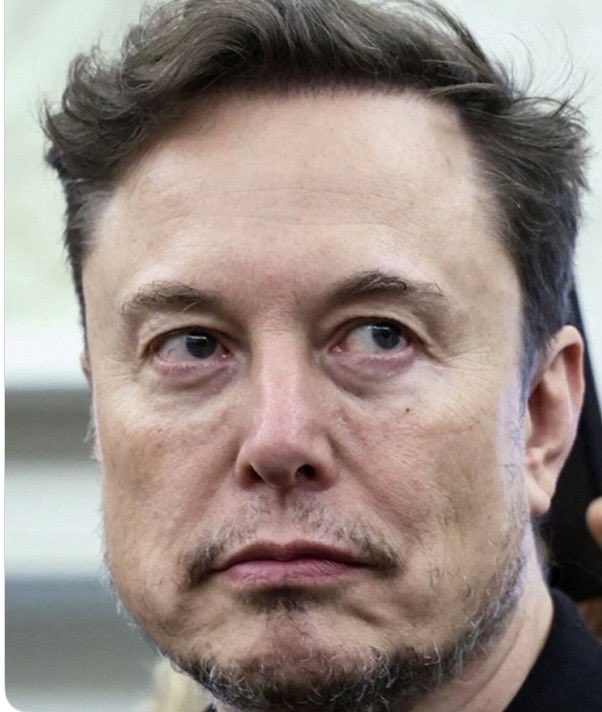
Time to seriously talk about Elon’s deportation.
Elon’s brother on video said, they both were illegals. Elon was on a student visa, but didn’t go to college. Stanford, his acceptance university, doesn’t have any records of his enrollment. In those situations when a student visa is not followed, the individual gets deported. But not Elon. He illegally worked, overstayed his student visa, and broke American laws, until the startup company gave him some kinda work permit. If he was truthful in his naturalization application that he overstayed his student visa, and broke the immigration laws, he’d never would have been granted naturalization citizenship. His naturalization application must be pulled out, and the information there must be examined to see if Elon whether withheld crucial visa status information, or he lied. Either way, those are deportable offenses.
🚨HOLY SHIT: Lawrence O’Donnell just EVISCERATED mentally “lost” Donald Trump in the BEST way possible:
“Instead of campaigning on the senator's record, Donald Trump concentrated on the senator's ass.
And in the week since then, apparently Donald Trump has not been able to stop thinking about that man's ass.
Donald Trump found himself obsessing over more body parts:
"I looked at his shoulders. I looked at his feet. I looked at his hand. I looked at his jawline, studying. He's got a jawline. But then I patted him on the shoulder, and it was like a piece of steel.
I sort of ... I'm still recovering."
He's not recovering. The parts of Donald Trump's mind that he appears to have lost are not coming back. They're never coming back.
The fact that Donald Trump was in Kentucky Saturday obsessing over a man's ass he saw in Ohio a week ago, that wasn't even in Kentucky Saturday, is very bad news for Republicans because Republicans don't normally need presidential help to win elections in Kentucky.
And the coverage Donald Trump got by campaigning in Kentucky was this headline in The New York Times, "In Campaign's Final Stretch, Trump Can't Stop Praising Men's Bodies."
Pete Hegseth just gutted the system troops use to report wrongdoing. The military’s Inspector General is how a service member safely reports fraud, abuse, a dangerous commander, or a sexual assault, often anonymously, without fear of retaliation. Hegseth’s overhaul strips that anonymity, lets “non-credible” complaints get tossed, and flags anyone who files too often. He calls the old system “weaponized," yet offered no evidence.
A junior enlisted troop who sees something wrong just lost their safest way to say so. That doesn't protect the force. It protects the people at the top. https://t.co/emuoZZJhD4
Just a few hours ago, President Trump said in the Oval Office that I should be tried in court because I dared to talk about the corruption coming out of the White House.
If I've learned one thing from this past year, it's that you have to push back. I'm not going to be intimidated out of standing up for the rule of law and the country that has given me everything.
Allen Bailey grew up on an island in Georgia you can only get to by boat.
There is no school on it. He did not play organized football until the seventh grade.
So the head coach at Miami got on the ferry and went to find him.
Here is the whole thing.
Sapelo Island sits off McIntosh County, Georgia. The community there is called Hog Hammock, and the people in it are Gullah Geechee, descended from the people who were enslaved on that island.
Here is how he puts it.
"We're all descendants of slaves there."
A sign on the island listed the population at 70. He said the real number was 55, and only when he was home.
He was the 55th.
Getting to high school meant a van to the dock, a ferry to the mainland, and then a bus to McIntosh County Academy in Darien.
In middle school he would leave practice early to catch the last ferry at 5:30. Twice it had already pulled out and had to turn around and come back for him.
By high school he moved in with a teammate's family on the mainland during the week.
He had never played real football until seventh grade. Before that it was the island, with his brothers and sisters and cousins. He is the second youngest of seven.
As a junior he had 138 tackles, and he played fullback too, 323 yards and four touchdowns.
Then a back injury ended his senior season early and took his film with it.
Miami came anyway. Randy Shannon, the head coach, rode out to Hog Hammock himself.
Bailey ruled out Alabama. He had been told who their incoming coach was going to be.
"Who's Nick Saban?"
Dave Hyde at the Sun Sentinel went out to the island in 2010 and got all of that firsthand.
Here is what his mother Mary, who cooks at the hotel on Sapelo, said back then.
"If he makes it in football, he'd be the first person born and raised on this island to make it that far."
He made it. Third round, 86th overall, 2011. Ten years, 133 games, 22 sacks. In 2018 he recovered four fumbles, more than anyone else in the NFL that season.
And then he went back.
The Allen Bailey Foundation runs free football camps at McIntosh County Academy, the school he took the ferry to. By 2015 he was already on his second one, and Lamar Miller, Olivier Vernon and Allen Hurns came out to help him run it. It also puts money behind two scholarships, across McIntosh and Glynn and Camden counties.
Now the honest part. He was never a star. Twenty two sacks over ten seasons is a good professional career and not a famous one, and most people reading this did not know his name.
That is sort of the point.
Fifty five people when he is home. No school. A boat or nothing.
A college head coach got on that boat to go find him, and when the football was over he got back on it.
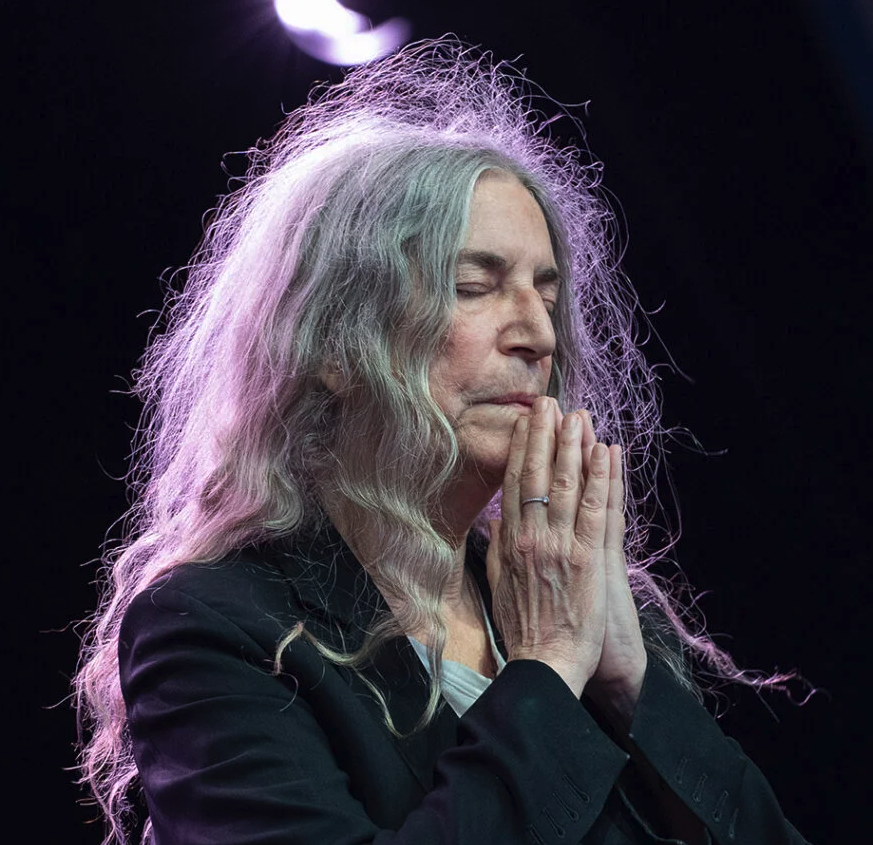
Hoy, en Oviedo, una mujer de 79 años que lleva medio siglo cantando contra el poder se ha sentado ante la prensa española y ha dicho, sin rodeos, lo que muchos artistas estadounidenses no se atreven a decir en voz alta sobre el gobierno de su propio país.
Se llama Patti Smith, la llamaron la madrina del punk cuando publicó Horses en 1975, y este viernes 23 de octubre recogerá en el Teatro Campoamor el Premio Princesa de Asturias de las Artes ante los Reyes. Lo normal habría sido hablar de premios, de canciones y de recuerdos, pero ella decidió hablar de su país.
“No tengo nada bueno que decir. Normalmente uno, aunque hay algo malo, siempre tiene algo bueno que decir, pero no en este caso. Yo no soy ni conservadora ni demócrata, me considero una persona global, pero realmente debo decir que me siento avergonzada de la administración actual, del gobierno actual”, afirmó ante los periodistas.
No pronunció el nombre de Donald Trump, pero tampoco le hizo falta. Con las elecciones de mitad de mandato a la vuelta de la esquina, pidió a la gente que se levante, se una y vote, porque para ella los artistas ya no bastan solos y hacen falta grandes números de personas que quieran hacer el bien, en Estados Unidos y en todo el mundo.
Lo que hace especial a Patti Smith es que su rebeldía nunca ha sido una pose. Se crió como testigo de Jehová, abandonó la religión de adolescente cuando decidió ser artista y años después volvió a rezar a su manera, con su propio sistema, convencida de que Jesús fue un hombre que hizo una revolución basada en el amor.
También es una mujer que lo ha perdido casi todo y ha seguido en pie. En 1989 murió su gran amigo y compañero de juventud Robert Mapplethorpe, y en 1994 enterró a su marido, el guitarrista Fred “Sonic” Smith. Convirtió ese dolor en libros como Éramos unos niños, que ganó el National Book Award en 2010.
Y luego está su relación con España, que viene de mucho antes de cualquier premio. Hoy contó que de niña vio por primera vez un cuadro de Picasso y en ese instante supo cuál sería su vida: “De hecho, cuando yo tenía 12 años y por primera vez vi una obra de Picasso, supe desde ese momento que quería ser artista. Siempre que voy a Madrid, siempre voy a visitar el Guernica”.
Habló de Lorca, de Cervantes, de Bolaño y del cine español con la devoción de quien ha pasado la vida estudiándolos. Y recordó, emocionada, que este 20 de octubre se cumplen 50 años de su primer concierto en España, cuando era una joven que quería comerse el mundo y todavía estaba aprendiendo.
Medio siglo después vuelve convertida en leyenda, y en vez de aprovechar la alfombra roja para quedar bien con todos, la ha usado para decir lo que piensa, aunque le cueste aplausos en su propio país.
Tiene casi 80 años y sigue creyendo que la gente tiene más poder del que imagina. ¿Creéis que los artistas deben mojarse en política cuando reciben un premio, o deberían limitarse a su arte?
MAGA Mama lista para llamar a ICE—al chico hispano por tener una novia blanca.
Ella llama "prostituta" a una chica de 16 años por tener un novio "mexicano".
Luego se baja del auto y les rocía gas pimienta—a ellos, incluyendo a su hermana de 8 años.
Tenía una placa de matrícula de "Trump Nation" según su madre, quien estaba grabando.
La madre dice que un oficial de policía se detuvo para ayudar—pero estaba del lado de la mujer que les gritaba insultos racistas.
El oficial dijo que la mujer estaba pasando por "problemas personales" y que le "den un respiro".
El incidente ocurrió en el suburbio de St. Charles de Chicago, Illinois.
Jodie Allton no tiene una cuenta en esta plataforma—así que publico aquí el primer video completo y con crédito para ayudar a crear conciencia.
Mississippi Attorney General Lynn Fitch said today that a police officer’s use of force in shooting a 1 year old baby in the head “was legally justified..” and declined to bring criminal charges. All over some diapers that weren’t even stolen; his mom had the receipt.
But even if the diapers were stolen, it’s not worth a life.
Sounds about white to me.
Dearest Florida friends
Sharing what JUST HAPPENED
I stopped by my early voting location in a very red part of Sarasota County today, just to get a feel for things/get some reconnaissance before my volunteer shifts later this week.
I left feeling more encouraged than I have in quite some time. It was a completely different experience from 2024
Across the driveway, Republicans had two canopies and ~ eight volunteers. We had one small canopy and two volunteers.
But here’s what caught my attention.
In less than an hour, at least a dozen people approached our table simply to thank us for being there, offer encouragement, to give us “fingers crossed” or a “flexed muscle sign” or share their thoughts about what’s happening in our country.
Several had just voted. Others were bringing in their completed mail ballots. There were A-LOT of people with their mail in ballot already
I watched some voters turn down Republican campaign literature and walk over to talk with us instead.
One woman was particularly irritated after being approached twice by the same volunteer and snapped “you should remember who’s face you shoved your papers in”
One conversation I’ll remember was with a Navy veteran who had served aboard the USS John C. Calhoun. He spoke passionately about military standards, accountability, and his concerns about what’s happening within today’s military leadership and the general direction of the country ( he was a transplant from Atlanta .. LOVES OSSOFF!).
Others came out of the polling place and deliberately veered to our tent to avoid going by the R tent
There were other conversations, too. Unsolicited, thoughtful, and heartfelt.
Whenever I do volunteer, I make it a point to thank people for voting . Bc it’s important . No matter who you vote for , you MUST vote as my Albanian /Greek dad drilled into me .. “ otherwise honey, what happened in my country will happen here”
Now, I’m not going to pretend that one hour at one polling location tells us how an election will turn out. It doesn’t.
But I’ve lived in Sarasota County long enough to recognize when something **feels different.
What struck me wasn’t the number of volunteers or the size of the tents. It was the number of people who made a point of coming over to talk to us and their palpable enthusiasm
People were engaged. They were grateful. And they wanted us to know it.
I went there expecting to observe.
I came home with a little more hope.🇺🇸
And in this very red corner of Florida, I’ll take that.
100 years ago, thirteen black men put together their savings and founded Safe Bus Company, making it the largest black owned bus company at that time.
It was formed in Winston-Salem to serve the black neighborhoods due to segregation and operated till 1972.
Thirteen Black men pooled their life savings to purchase $100,000 in stock, forming Safe Bus Co., Inc. on May 26, 1926. The company quickly grew into the largest African American–owned bus company in the nation.
Safe Bus expanded rapidly and was once described as the largest Black-owned transportation company in the world. By 1955, the company grossed $825,000. At its peak, it carried approximately 15,000 passengers per day, earned $18,000 weekly, and employed 75 people.
Early fares began at five cents and increased as the company expanded. The fleet grew from 35 to 42 buses, serving roughly 20 percent of the city. Black bus drivers earned between $1.60 and $2.50 per hour—wages that exceeded those of many schoolteachers at the time.
By 1968, Safe Bus provided transportation across the entire city. However, following integration, the company experienced a sharp decline in ridership. Changing social attitudes and increased competition led to significant financial losses.
In 1972, stockholders voted to sell Safe Bus to the city. The Winston-Salem Transit Authority then assumed responsibility for public transportation, marking the end of one of the most successful Black-owned transit companies in American history.