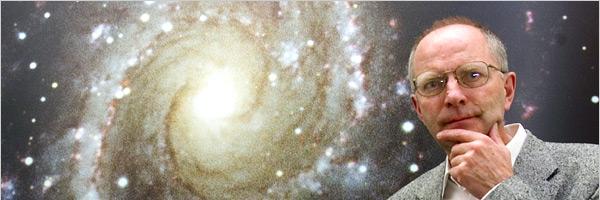
It's 2 o'clock in the morning. We have all been eating & drinking since 6 & X is still talking about galaxies. Do you think that is normal? - Bohdan Paczyński
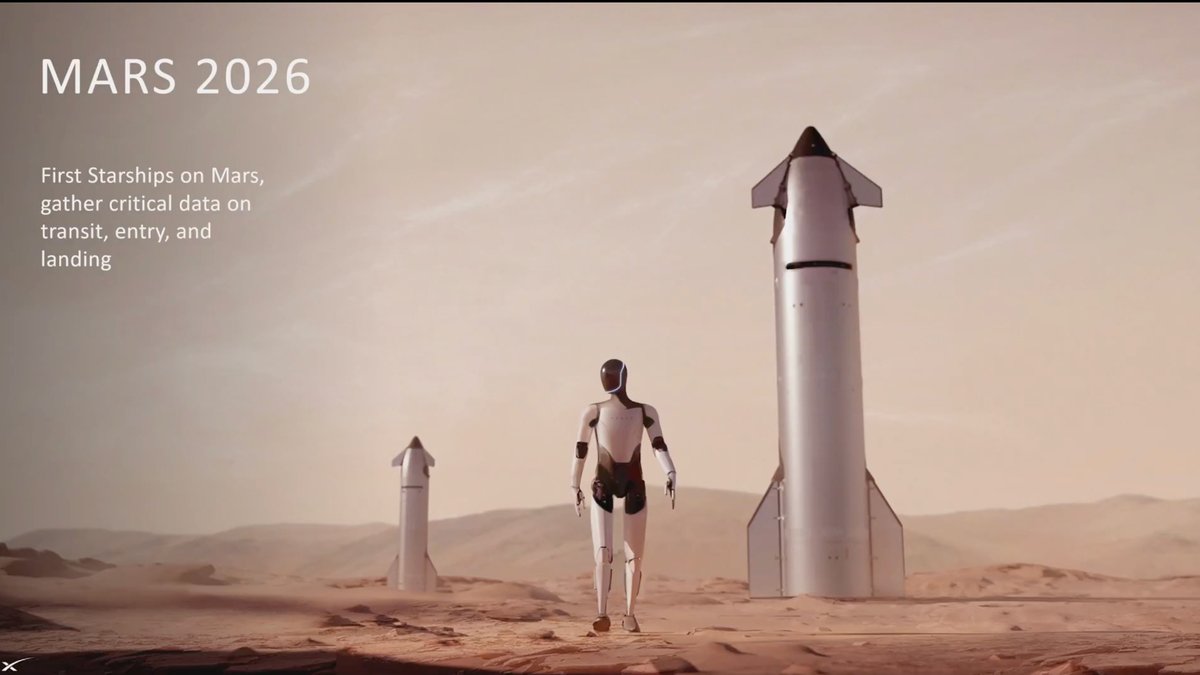
All Starships to Mars are expendable and only crew will return.
If you had a 150 tons of stuff to move to Mars and you start looking around for a launch vehicle to get it there which one do you choose? The new one coming out of that factory a few miles down the road or the one that’s 100 million miles away on another planet?
I’m my mind it’s going to be cheaper to use the local one.
It’s like the Asia shipping container problem, cheaper to build a new one than ship them back for reuse.
Imagine how much launching infrastructure you would need on Mars to send back every starship! You just need enough to send crews home.
A Starship on Mars needs to refuel itself with 6 tons a day of propellant to depart 1 year after landing.
But, the 180-247 ton mass of ISRU and power equipment needed would exceed its payload capacity:
https://t.co/zyRctsrHXi
Assumption is ~26 W/kg for both ISRU and power.
Finding asteroids before they find us.
Meet NASA scientists working to track and monitor near-Earth asteroids, and protect our planet from potential impacts. Our newest film, "Planetary Defenders," debuts on NASA+, YouTube, and X on Wednesday, April 16.
The American Astronomical Society is gravely concerned by the deep cuts to NASA science funding reported to be in the draft President’s Budget Request for Fiscal Year 2026. Read more here: https://t.co/hU8iuzne3D and take action now: https://t.co/LEiFKh1tAn
Scientists believe clumps of dark matter are often the culprits, and the warps or holes in the streams help them figure out *how* dark matter clumps up—but the clues are still incomplete.
Luckily, Rubin Observatory is on the case! 🔎
It's #FeatureFriday! Meet Nora Shipp, stellar streams extraordinaire ✨
Stellar streams are the torn-apart remnants of small galaxies or star clusters around the Milky Way—they hold clues about its history, and the dark matter that surrounds it.
https://t.co/JJvDIKNxJA
Time for a reintroduction!
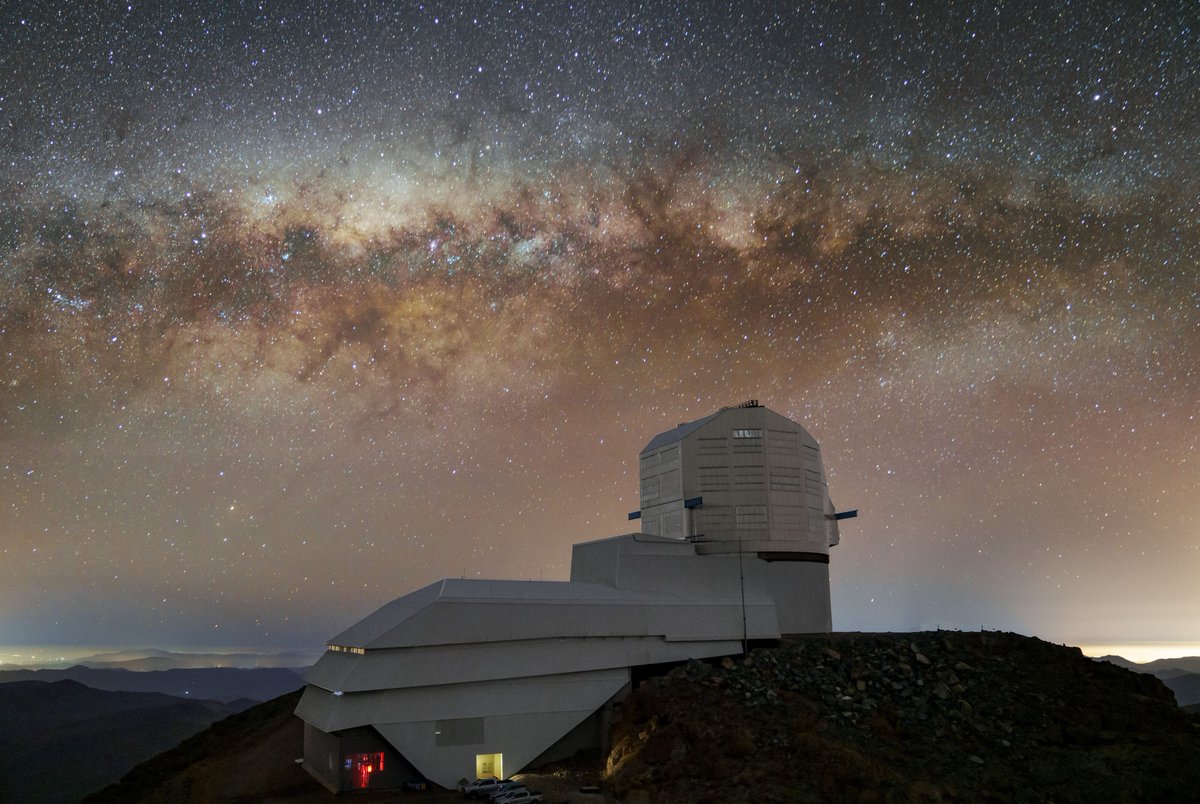
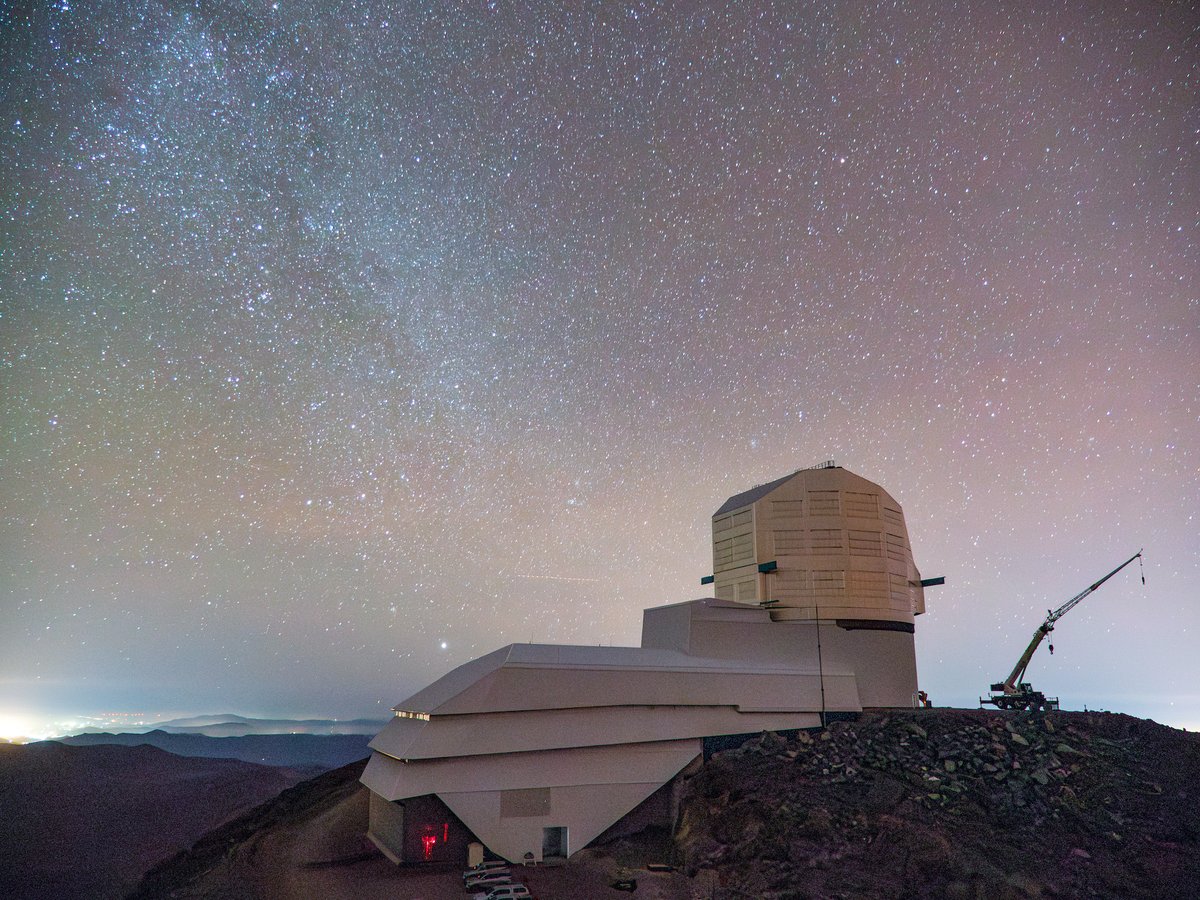
Vera C. Rubin Observatory is a new facility being built on Cerro Pachón in Chile (you might know us by our former name: LSST). When complete, Rubin will image the sky every 3-4 nights for 10 years, using an 8.4m telescope & 3200 MP car-sized camera! 🧵
Kanzi the bonobo lives in America and has learnt how to build a fire, light it using matches and toast marshmallows on it. It shows just how like us some primates really are
[📹 BBC One]
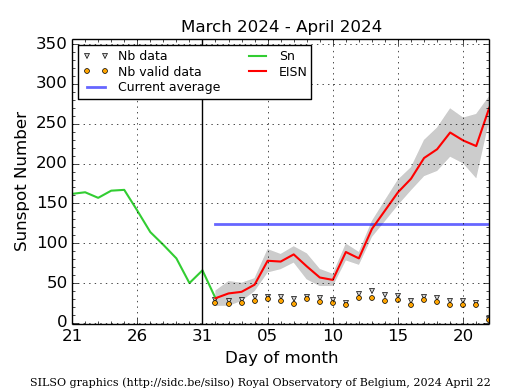
HIGHEST SUNSPOT NUMBER IN 20 YEARS: The current daily sunspot number (270), a measure of solar activity, has reached its highest number since August 2002 (281). That was the peak of Solar Cycle 23. So much for those claiming we are in a Grand Solar Minimum!
Gaia is showing again its extraordinary scientific performance in areas well beyond its main goal of studying the structure and evolution of the Milky Way.
👏The team counts with the participation of numerous #ICCUB-@IEEC_space members, which have contributed to the publication of the results today in the @aandaJournal 📜
😍Congratulations to all!🎉
🔵#News | The @ESAGaia mission has detected the most massive #BlackHole of stellar origin in our galaxy!⚫️
🌌This type of Black Hole has been observed before in distant galaxies via #GW, but this is the first time it is found in the Milky Way✨
🔗https://t.co/h90sWPL5jQ