How do we automate business analytics with Claude?
New blog post covering our best practices for skills, data foundations, and evaluations when building agents to perform data analysis:
https://t.co/mfEJMAQFBU
GPT Image 2 on Chatgpt
Prompt: Turn this photo into a Vogue-style fashion illustration, preserving the subject's identity, facial features, and likeness. Minimalist hand-drawn sketch with elegant elongated proportions, bold black ink contours, loose confident linework, flat marker colors, and subtle blush accents. Stylized eyes, graphic lips, expressive ink hair, and simplified geometric clothing shapes. Clean white background, scanned paper texture, modern luxury editorial fashion illustration. Do not add any text.
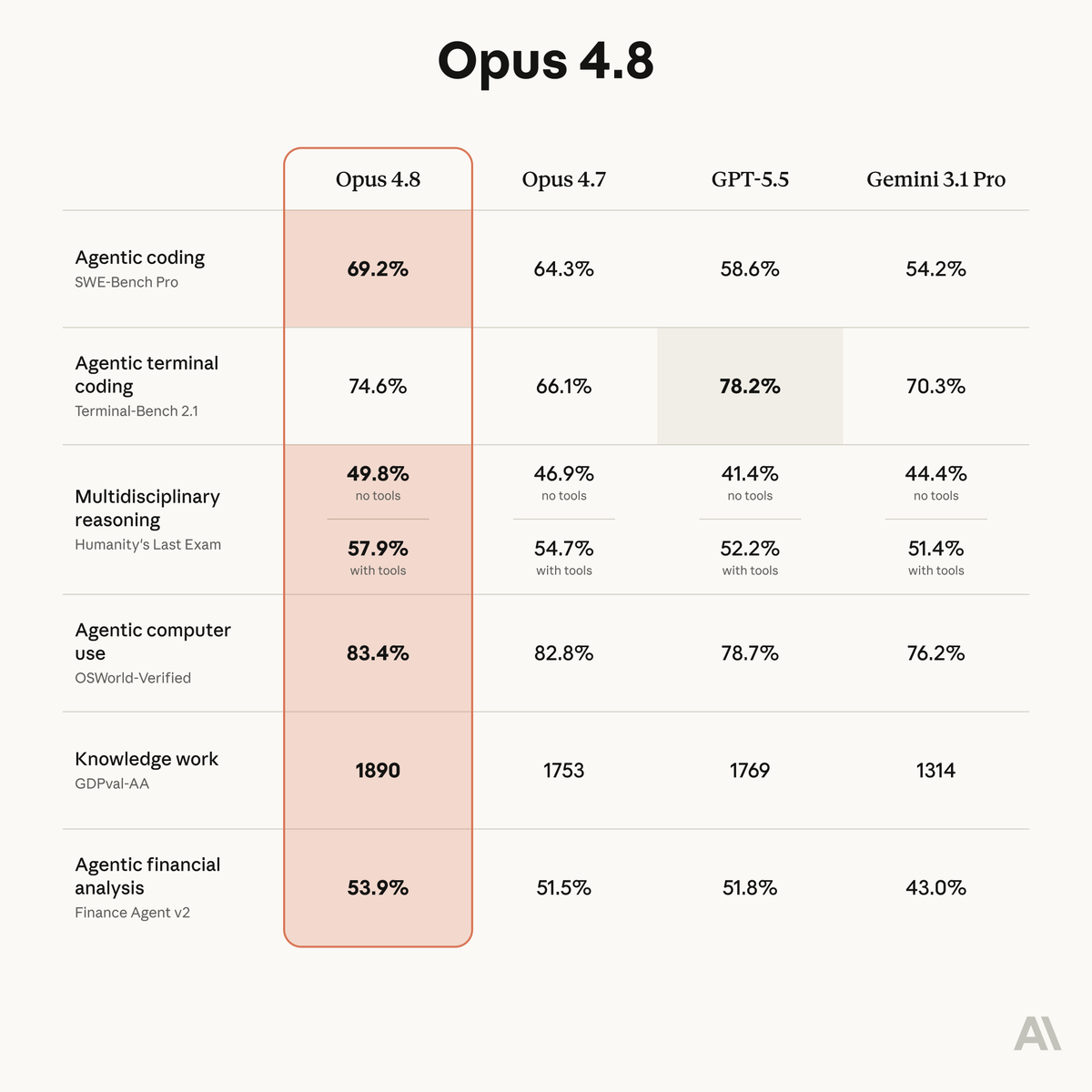
Introducing Claude Opus 4.8: it builds on Opus 4.7 with sharper judgment, more honesty about its own progress, and the ability to work independently for longer than its predecessors.
Available today at the same price.
My favorite way of interacting with Claude Code is to have it generate static HTML files as outputs (reports, explorations, code structure, mockups etc.)
I wanted to iterate on the file by commenting in browser and having Claude update the output live.
So, I built this Claude Skill👇
How it works:
- Install Claude Code skill (ask it to clone repo)
- Build an HTML page for anything (e.g. research coding agents and generate HTML report)
- Ask it to make the page interactive
That's it. CC will launch a localhost server and allow you to then leave comments on the page itself and once it updates, will give you a tour of changes.
It's like Google Docs kind of comments/iteration but for HTML pages.
Grok foundation model V9-Medium (1.5T) has finished training. Evals look good. A lot of Cursor data was added in supplementary training and there is more to come.
Fine-tuning is underway and reinforcement learning begins in a few days. 2 to 3 weeks to public release.
This will be a major improvement over the 0.5T v8-small that currently serves all Grok production traffic, especially for difficult coding tasks.
물리적인 것이, 다시 권력이 되는 시대
LME 알루미늄은 톤당 3,768달러. 연초 대비 26% 올랐고, 작년 대비로는 40% 폭등했다. 단순한 인플레이션이 아니다. 구조적 신호다.
지난 20년간 우리가 믿어온 공식이 있다.
"정보가 권력이다." "소프트웨어가 세상을 먹는다." "데이터가 새로운 석유다."
이 문장들이 지금 흔들리고 있다.
AI 시대에 점점 선명해지는 사실 하나. 세상의 모든 가치가 두 갈래로 갈라지고 있다는 것.
한쪽은 한계비용이 0에 수렴한다. 지능, 코드, 콘텐츠, 디자인, 번역, 분석. 무한히 복제된다. 글 한 편 쓰는 비용, 그림 한 장 그리는 비용, 코드 한 줄 짜는 비용이 사실상 공짜에 가까워지고 있다.
다른 한쪽은 점점 비싸진다. 에너지, 광물, 운송, 제조 설비. 이건 복제가 안 된다.
보크사이트를 캐는 일. 전기로에서 제련하는 일. 컨테이너에 실어 호르무즈 해협을 통과시키는 일.
이건 GPT가 백만 번 호출돼도 대신해주지 못한다.
알루미늄 한 톤이 LLM 호출 백만 번보다 비싸지는 세상.농담이 아니라, 진짜로 오고 있다.
이 흐름이 의미하는 게 무엇일까.
첫째, 진짜 희소한 것이 다시 정의되고 있다. 정보는 더 이상 희소하지 않다. 정보를 만드는 능력조차 곧 희소하지 않게 된다. 그러면 무엇이 남는가.
에너지. 원자재. 그것들을 다루는 물리적 생산 능력. 옛날 어른들이 말씀하시던 "땅과 쇠"가 다시 돌아온다.
둘째, 국가의 힘이 다시 영토와 자원으로 돌아간다.
광산을 가진 나라, 정련 시설을 가진 나라, 항로를 통제하는 나라.
디지털 시대에 잊혀졌던 이 지정학이 다시 전면에 나섰다. 중동 분쟁이 우리 동네 샷시 가격을 흔드는 것이 그 증거다.
셋째, 개인의 일자리 지형도 바뀐다. 코드를 짜는 일은 AI가 점점 잘한다.
그러나 용접하는 일, 배관 까는 일, 샷시 다는 일은 AI가 못 한다. 화이트칼라가 흔들리고, 블루칼라가 다시 귀해진다.
우리가 보는 물가 그 안에 시대 전환의 신호가 들어 있다.
소프트웨어는 복제된다. 원자재와 철강 알루미늄은 복제되지 않는다.
이 단순한 비대칭이, 앞으로 10년의 부와 권력 지도를 다시 그릴 것이다.
지금 우리가 어디에 시간을 쓰고, 어디에 돈을 두고, 어디에 미래를 걸지 이 질문 앞에 다시 서야 할 때다.
Today we reduced headcount by 22%. The business is the strongest it's ever been. So I think it's important to be direct about what I'm seeing and why.
First, I made this decision and I own it. I did it because the way to operate at the highest level of productivity is changing, and to win the future, ClickUp needs to change with it.
Second, this wasn't about cutting costs. Most savings from this change will flow directly back into the people who stay. We'll be introducing million-dollar salary bands. If you create outsized impact using AI, you'll be paid outside of traditional bands.
Most importantly, I have the deepest gratitude for those affected. We're doing this from a position of strength specifically so we can take care of people properly. Everyone affected receives a package aimed at honoring their contributions and easing the transition.
I only see two options: wait for this to play out gradually in the market or be honest about what I'm seeing and act proactively.
THE 100X ORGANIZATION
The primary change is that we're restructuring around what I call 100x org. The goal is 100x output. The roles required to build at the highest level are fundamentally different than they were a year ago.
Incremental improvements to existing systems won't get us there. We need new ones. That means creating enough disruption to rebuild rather than iterate on what's already broken.
The common narrative is that AI makes everyone more productive. It doesn't. Many of the workflows of today, if left unchanged, create bottlenecks in AI systems.
These roles will evolve. But waiting for that to happen naturally means falling behind now.
The 100x org is actually heavily dependent on people - infinitely more than today. This is only possible with 10x people that have embraced and adopted new ways of working.
THE BUILDERS, AGENT MANAGERS, AND FRONT-LINERS
— THE BUILDERS: 10X ENGINEERS
I don't think most companies have internalized what's actually happening with AI in engineering. The common narrative is that AI makes all engineers more productive. That may be true in isolation, but at an organization level - that is the farthest thing from reality.
Here's what we've validated recently at ClickUp: the great engineers, the ones who can orchestrate, architect, and review, are becoming 100x engineers. They're not writing code. They're directing agents that write code. The skill is judgment.
AI makes the best engineers wildly more productive, and everyone else using AI slows these engineers down.
Think about it - the bottlenecks are (1) orchestration - telling AI what to do, and (2) reviewing - what AI did. Everything is leapfrogged and no longer needed.
So who do you want orchestrating and reviewing code?
And how do you want your best engineers to spend their time?
If your best engineers are spending time reviewing other people's code, then this is inherently an inefficient bottleneck. These engineers can review their agent's code much faster than reviewing human code.
The new world is about enabling your 10x engineers to become 100x.
The wrong strategy is to push every engineer to use infinite tokens. Companies doing this are celebrating 500% more pull requests. But customer outcomes don't match the volume of code being generated.
I call this the great reckoning of AI coding, and every company will face this soon if not already.
More code is just another bottleneck to the best engineers, and ultimately to your company's impact as well.
— THE BUILDERS: 10X PRODUCT MANAGERS
Product management and design roles are merging.
Designers that have customer focus, become more like product managers.
And product managers that have intuition for UX become more like designers.
The bottleneck of user research is gone. It takes us just one mention of an agent to kickoff research and analyze results.
The bottleneck of product <> design iteration is also gone. The product builder iterates on their own, along with agents and skills that ensure alignment with quality and strategy.
Also controversial today - I believe that the wrong strategy is to have your PMs shipping code - that just introduces another bottleneck that the best engineers will waste their time on.
To be clear, PMs should be coding but they should do this in a playground to iterate, validate, and scope. That code should not go to production.
Everything outside of managing systems, orchestrating AI, and reviewing output becomes a bottleneck.
That's why the other roles that are critical along with these are the systems managers (to reduce bottlenecks) along with a bottleneck you can't replace - customer meeting time.
— THE SYSTEM MANAGERS
Ironically, the people that automate their jobs with AI will always have a job. They become owners of the AI systems - agent managers. We have many examples of these people at ClickUp.
The underlying systems in which we operate are absolutely critical to get right. I think most companies are delusional to think they can iterate on existing systems and compete in this new world.
You must create enough disruption so that old systems are deprecated entirely. If there's any definition for 'AI native' that's what it is.
— THE FRONT-LINERS
In a world that will become saturated with AI communication, the human touch will matter more than anything to customers.
This is a bottleneck that you shouldn't replace - even when agents are high enough quality to do video meetings.
One-on-one meeting time with customers is something that shouldn't be automated. The systems around the meetings should be - so that front-liners spend nearly 100% of their time with customers.
REWARDING 100X IMPACT
In a world where companies are able to do so much more with less, where does that excess money go?
In our case, much of the savings in this new operating model will flow directly back to those that enabled it.
We must reward people that create productivity accordingly. This aligns incentives on both sides. Plus, in a world where your best people create 100x impact, you can't afford to lose them.
You should aim to retain these employees for decades. The context they have and their ability to efficiently orchestrate and review will be nearly impossible to replace.
Compensation bands of today should be thrown out the door. We're introducing $1 million cash/year salary bands with a path available to nearly everyone in the company if they produce 100x impact by creating or managing AI systems.
THE FUTURE
Nearly every company will make changes like these. The ones that do it proactively will define what comes next.
The future is not fewer people. It's different work, new roles, and better rewards for those who embrace it. We're already seeing entirely new roles emerge, like Agent Managers, that didn't exist a year ago.
ClickUp is positioning to lead this shift, not just internally, but for our customers too. I've never been more certain about where we're headed.
In the next version of Claude Code: run /usage to see a breakdown of which Skills, Agents, MCPs, and Plugins are using your tokens
CLI today, coming to Desktop next
Personal update: I've joined Anthropic. I think the next few years at the frontier of LLMs will be especially formative. I am very excited to join the team here and get back to R&D. I remain deeply passionate about education and plan to resume my work on it in time.
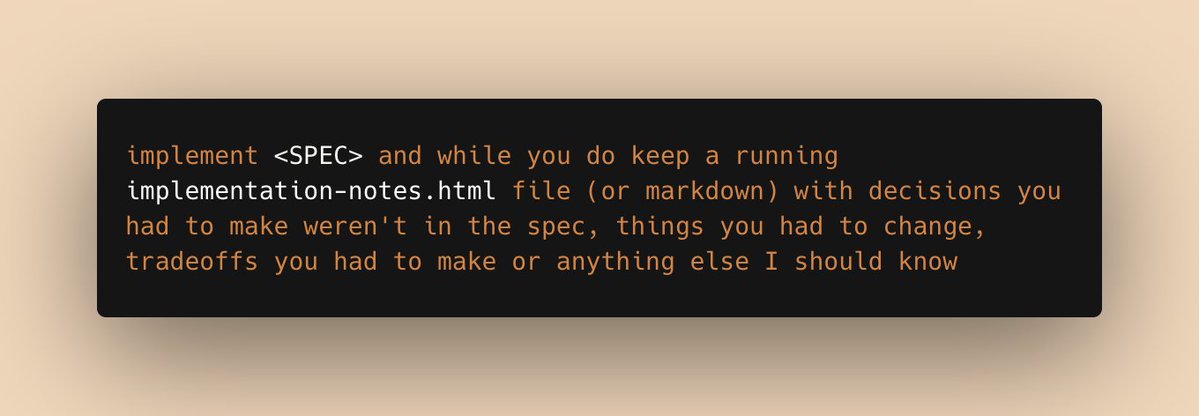
a prompt I've been using a lot recently:
implement <SPEC> and while you do, keep a running implementation-notes.html file (or markdown) with decisions you had to make weren't in the spec, things you had to change, tradeoffs you had to make or anything else I should know
Notebook LM으로 만드는 효과적인 학습 전략
큰 그림 → 이해 → 정리 → 테스트까지
Notebook LM을 "AI 요약툴"이 아니라
하나의 학습 시스템처럼 사용하는 방법
STEP 1. 큰 그림 잡기
(1) 전체 흐름 먼저 잡기
→ [AI 오디오 오버뷰] - '요약'
PDF / 교재 / 논문 / 슬라이드 넣고
2~5분 정도 먼저 듣기
(2) 내용 빠르게 이해
→ [동영상 개요] - '요약'
텍스트만 읽을 때보다
흐름 이해가 훨씬 빨라짐
(3) 큰 그림 구조화
→ [마인드맵]
챕터 단위로 생성해서
개념 연결 구조 확인
"외울 정보"→ "연결된 구조"로 보이기 시작
(4) 핵심 내용 시각 압축
→ [인포그래픽]
복잡한 내용을
이미지처럼 기억하기 쉬워짐
타래로 계속⤵️



![VibeEverything's tweet photo. Notebook LM으로 만드는 효과적인 학습 전략
큰 그림 → 이해 → 정리 → 테스트까지
Notebook LM을 "AI 요약툴"이 아니라
하나의 학습 시스템처럼 사용하는 방법
STEP 1. 큰 그림 잡기
(1) 전체 흐름 먼저 잡기
→ [AI 오디오 오버뷰] - '요약'
PDF / 교재 / 논문 / 슬라이드 넣고
2~5분 정도 먼저 듣기
(2) 내용 빠르게 이해
→ [동영상 개요] - '요약'
텍스트만 읽을 때보다
흐름 이해가 훨씬 빨라짐
(3) 큰 그림 구조화
→ [마인드맵]
챕터 단위로 생성해서
개념 연결 구조 확인
"외울 정보"→ "연결된 구조"로 보이기 시작
(4) 핵심 내용 시각 압축
→ [인포그래픽]
복잡한 내용을
이미지처럼 기억하기 쉬워짐
타래로 계속⤵️](https://pbs.twimg.com/media/HH9rzgkbIAATRQQ.jpg)


