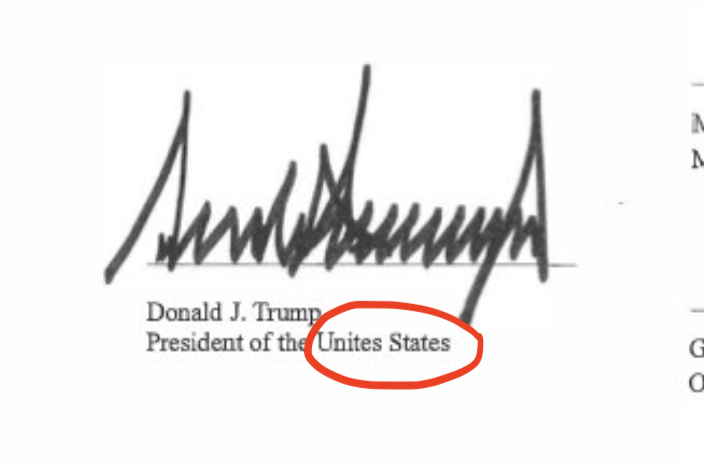
For the first time in its modern diplomatic history, the United States breaks its long-standing protocol and sets aside its usual pride to receive its Eastern peer!
The proceedings of the reception at Andrews Air Force Base were not mere formalities, but a public notice marking the end of the unipolar era, as the airport's behind-the-scenes details broadcasted unprecedented realities:
• Trump waits on the tarmac for more than 30 minutes before the arrival of the Chinese aircraft, and remains waiting—sticking to the tarmac—for over a full hour until the Chinese President's convoy departs.
• Total protocol submission: Beijing officials were the ones managing the scene and disembarked first; President Xi did not appear until an "OK" signal was given inward by the Chinese marshal.
• Firmness and composure versus American rushing: President Xi disembarks with confidence and calm, maintaining his composure brilliantly, guides Trump toward the Chinese delegation to introduce them, and speaks through his interpreter—imposing his language—while his wife, Mrs. Peng Liyuan, speaks directly in English with Melania.
• Manifestations of Chinese prestige: Playing the Chinese national anthem first, a 21-gun artillery salvo, the flyover of B-1 bombers alongside F-22 and F-16 fighters lined up on the tarmac, and Trump removing his glove to shake hands with utmost care!
Washington, which imposes sanctions on the world, breaks its reception rules (in an exception that has only occurred for Kennedy's visit to Macmillan in 1962 and Obama's reception of Pope Francis in 2015) to beg for an extension of the trade truce and to secure rare earths...
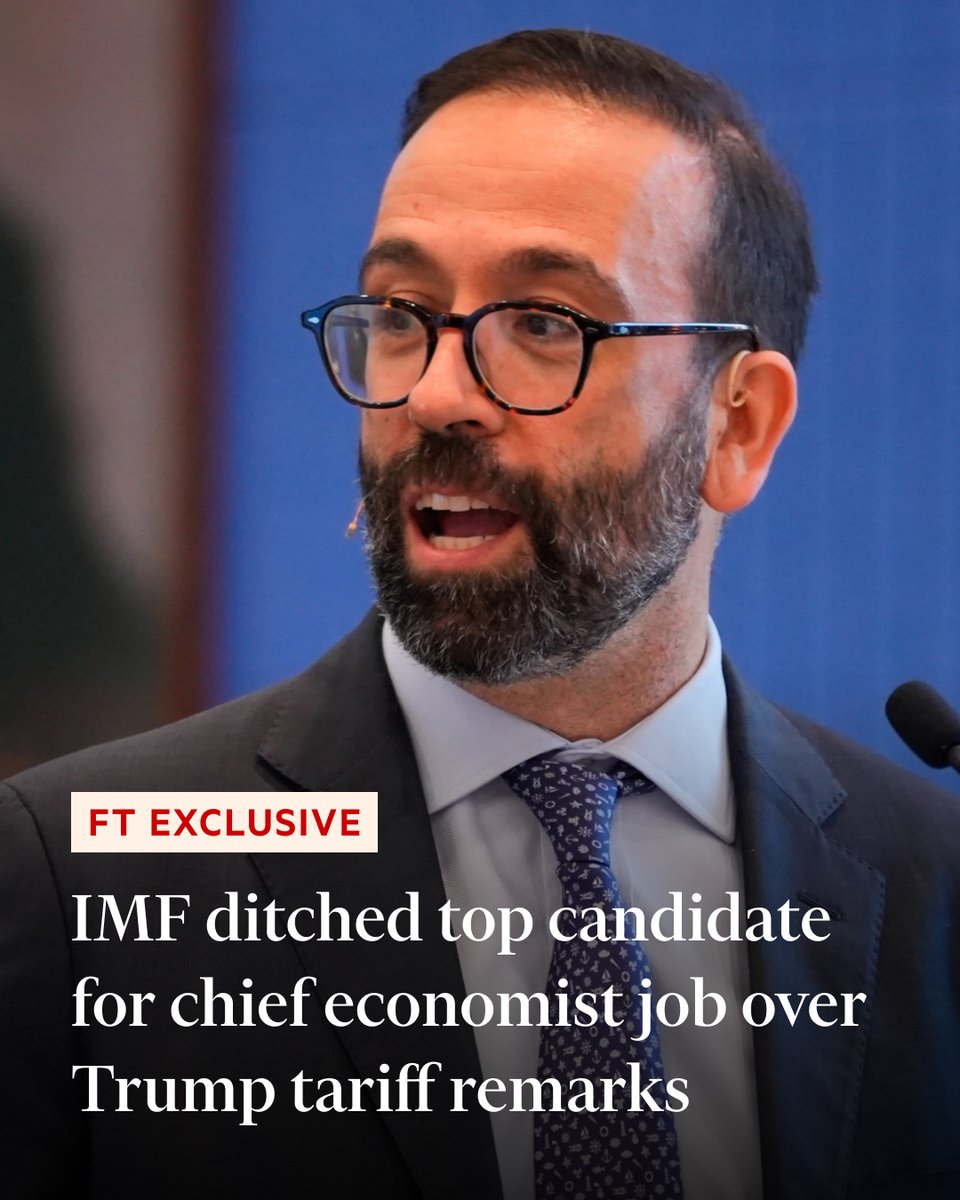
FT exclusive: The IMF dropped the lead candidate to become its new chief economist at the eleventh hour after he was found to have made critical remarks about the Trump administration’s economic policies, according to people briefed on the process https://t.co/mFDnehS5U9
I resigned from Anthropic today. I spent the last three years doing pretraining research at both OpenAI and Anthropic. Neither company is acting responsibly. They are racing straight to self-improving superintelligence and gambling with our lives. More thoughts below.
A few months after leaving the University of Nairobi, I was homeless. What rescued me was not the Kenyan economy. It was a South Sudanese friend from college who took me to Juba to help start a newspaper while he ran a bakery. We rode a Kampala Express bus out of River Road, and I fell in love with Uganda on the way, a country where a man with no money can still have a good evening. That is not true of Nairobi, where the venue is the velvet rope.
The bakery worked. The newspaper did not. Within months I was back in Nairobi, homeless again. Again, a South Sudanese friend picked me up and took me to Northern Bahr el Ghazal, where he employed me for a year alongside many other Kenyans. I earned enough to come home, resume journalism, hijack a girl and start a family. One foreigner's favour to another paid for the next ten years of my life.
On Wednesday at State House, President William Ruto told small-scale traders that foreigners running small businesses should close them within the week. He promised legislation barring foreigners from certain trades. Kenya wants investors who create jobs, he said, not hawkers. The deadline falls today.
I am not neutral on this. I have a career, a marriage and the best decade of my working life because other African countries let a broke Kenyan walk in and work.
The man the president wants to shut down is me, twelve years ago, in somebody else's capital.
Four to five million Kenyans work outside Kenya, by the government's own estimate, more than half of them in other African countries. They are nurses, teachers, hairdressers and hawkers, running precisely the businesses a Ugandan president could close on a Wednesday if he spoke the way ours did. In the twelve months to May 2025, Kenyans abroad sent home Sh931.8 billion, according to a joint KNBS, Central Bank and FSD Kenya household survey. The Central Bank's own 2025 figure, measured differently, is USD 5.04 billion. Either number beats tea, coffee, horticulture and tourism combined.
That is his claim, not mine. He has praised the diaspora at State House for exactly the behaviour he criminalised on Wednesday when other Africans do it here.
The answer to his argument sits twenty minutes from his office. Somalis fleeing the collapse of Siad Barre's state after 1991 ended up in Garissa Lodge, where tenants turned their beds into stalls by day. That is hawking with a mattress. It now holds more than seventy malls and some 25,000 shops, and is estimated to generate between thirty and forty per cent of the tax the Kenya Revenue Authority collects in Nairobi. Governor Johnson Sakaja once told this president, in public, that Eastleigh's economy is larger than Rwanda's. Every part of it began as what he announced he would close on Monday. Foreigners. Small businesses. No permits. The state's contribution was to raid it and deny it building approvals.
We have also measured this properly, on Kenyans. The World Bank and UNHCR study of Kakuma found the camp raised the host region's economic output by 3.4 per cent and local employment by 2.9 per cent, and modelled that letting refugees work and move freely would lift Turkana income per head by around 6 per cent. Not refugee income. Turkana income, in one of the poorest counties in Africa. The World Bank returned this May with the corollary: when aid was cut, host livelihoods fell with refugee incomes, because Turkana and Garissa traders sell into the camp economy.
None of which means the anger is invented. Kenyan traders are being destroyed, and a man losing his corner does not want a lecture. But look at what is destroying him. Credit that costs more than his margin. Cess collected three times on one crate of tomatoes. Cartels controlling imports and market access. A tax net that catches the mama mboga and misses the importer. Close every foreign-owned kiosk in Nairobi on Monday and every one of those is still standing on Tuesday.
The giveaway is Eastleigh's own last trade war. It was Somali shopkeepers shutting their malls in protest at Kenyan hawkers outside, who paid no rent and no licence and undercut them. The real fight in our informal economy is between people carrying overheads and people avoiding them. It has nothing to do with passports. Nationality is simply the version a politician can win without spending money. Fixing credit is slow and makes enemies with lawyers. A crackdown on foreigners is free and makes enemies only of people who cannot vote, ten months before an election.
It also contradicts his own policy. In March 2025 this administration launched the Shirika Plan at this same State House: the end of encampment, identity documents, tax numbers, bank accounts, business permits, and the right to live anywhere in Kenya without a movement pass. Eighteen months later the same president has ordered the people it was designed to bring into the economy to shut their shops. You cannot integrate people on Tuesday and evict them on Wednesday.
He cannot hide behind the public either. Stanford researchers put the question to more than 3,300 Kenyans. Sixty-seven per cent supported refugee work permits and financial inclusion, 69 per cent access to government services, 57 per cent freedom of movement. In July, when a Kenyan man was filmed accusing a Burundian trader of stealing his opportunity, the dominant public reaction was embarrassment. Not that the government cares about public opinion.
I did not arrive at this position cleanly. Those traders bothered me for most of a decade, and what I felt was not an economic judgement. Reporting changed it. The reason so many of them hawk on the streets all over is that we made every legal route impassable. A refugee has the right to work on paper and needs a Class M permit in practice, obtained through a process so slow and costly that law and reality have stopped speaking to each other. That question is before the High Court. Judgment is expected on Tuesday, the day after the president's deadline expires. We forced people into the informal economy and now propose to punish them for being in it.
So make the Class M permit fast and cheap, and informal trading becomes taxed trading. Implement Shirika on its own timetable. Enforce licensing against everyone equally, which is compliance, not nationality. Fix the credit, the cess and the cartels. And in the East African Community, whose free movement protocol we signed, behave as though we meant it.
None of this is charity. We have spent twenty years arguing that Kenyans should be welcome everywhere, and collecting nearly a trillion shillings a year on that argument. We do not get to make it in Doha and Atlanta and then unmake it on River Road because an election is coming.
Somebody's brother in Juba decided that a broke Kenyan with nowhere to sleep was worth a job. Everything I own descends from that decision. On Monday, this country proposes to make the opposite decision, thousands of times over, against people who are exactly who I was.
Eastleigh settled this argument thirty years ago. That we are still having it tells you it was never about economics.
@OpenUniKenya Mathematical Innovation and Technology of Education? What kind of courses are these? Improve on the progammes (e.g. energy, climate finance & risk, econometrics & operation research, Statistics & Data Science .
@AskMichaelTaiwo Dynamical Systems and Simulations, Measure and Integration Theory, and Topology all at masters level. Shitty assignments had a way of accumulating fast.
Following the rabid embrace of IMF and World Bank neoliberal policies in the 1980s, bwana Yoweri Museveni has been very successful in cheapening education and other higher qualifications. Realizing there would be no need for any public investment and local expertise (economy was in the hands of corporate capital from the western world) Museveni transformed himself into some form of AI engine or Google, with answers to each and every question; the ultracrepidarian. But If one man monopolizes all the answers, what happens to the future of the country's intellectual capital?"
Read Analysis: https://t.co/6x6izdGJU1
@YusufSerunkuma@jnyairo @wmnjoya@ObyObyerodhyamb@m_ogada@tony_mochama@ReginaldOduor@ArkAnudDinYaSin@WMutunga@NativeLandgrab@DavidNdii@KiamaKaara@jkobuthi@realoyungapala@johngithongo #IWentToAlliance #TheElephant #EliteMediocrity #Governance
Picture: KagutaMuseveni/X
Breaking news: Harvard faculty votes to cap the number of A's awarded in course grades, a big step in combatting the grade inflation that has been dumbing down our courses, conveying the wrong message to students, and making universities a national laughingstock.
Breaking news: Harvard faculty votes to cap the number of A's awarded in course grades, a big step in combatting the grade inflation that has been dumbing down our courses, conveying the wrong message to students, and making universities a national laughingstock.
Safaricom has been ordered to pay KShs 9,900,000.00 in total, that’s KShs 900,000.00 to each of the 11 petitioners for violating their constitutional rights to privacy, dignity and consumer protection.
The court found that Safaricom employees had accessed and shared private data, including financial transactions, betting activity,
and location details, with third parties such as betting companies.
Safaricom tried to blame “rogue employees,” but the court rejected that argument and held the company fully responsible as the data controller.
Justice Bahati Mwamuye made it clear that privacy is not just a paper right. Once personal data is exposed on that scale, the harm is real.
I feel that the compensation should have been higher.
Elon Musk's children will inherit almost nothing.
He's said this publicly and nobody paid attention because it contradicts every assumption people have about billionaires. The richest man in history plans to give his children no meaningful financial inheritance.
This is not a tax strategy. It's a philosophy. And once you understand it, you understand why Musk operates differently than every other billionaire alive.
The logic starts with his father.
Errol Musk was wealthy. Owned emerald mines in Zambia. Young Elon grew up around money. He has described his relationship with his father as the most damaging element of his entire childhood. Not the money itself. What the money did to the family's character.
He's said directly that inherited wealth destroyed more potential in his family than poverty ever could have. His father used money as control. As identity. As substitute for character.
When Elon left South Africa at 17 with almost nothing, he was running from inherited wealth as much as he was running toward opportunity.
Everything he's built since then has been fueled by a refusal to become his father.
This is the key that unlocks every confusing Musk decision.
Why does he work 100 hours a week when he could retire and live better than any king in history? Because stopping would mean he's just a man who has money. Like his father.
Why does he keep starting new companies when he could coast on Tesla and SpaceX forever? Because coasting would mean he's living off past success. Like inheriting. Like his father.
Why does he sleep on factory floors and wear the same clothes and live in a prefab house in Texas? Because luxury would mean he values money over mission. Like his father.
Why will his children inherit almost nothing? Because giving them money would do to them what his father's money did to his family.
Every project, every company, every 18 hour day, every factory floor nap is downstream of one psychological wound. The absolute refusal to become his father.
This is not weakness. This is the most powerful fuel source available to a human being.
A person running toward something can stop when they get tired. A person running from something never stops because the thing they're running from is inside them. It travels with them. There is no finish line. The fuel never runs out.
Most people look at Musk and see ambition.
I look at Musk and see a man who decided at 17 that he would rather build everything from nothing than live off anything from someone else.
That decision echoes in every rocket launch. Every factory. Every sleepless night.
The inheritance his children will receive is not money.
It's the example of what a human can build when he refuses to become his father.
That's worth more than any trust fund ever created.