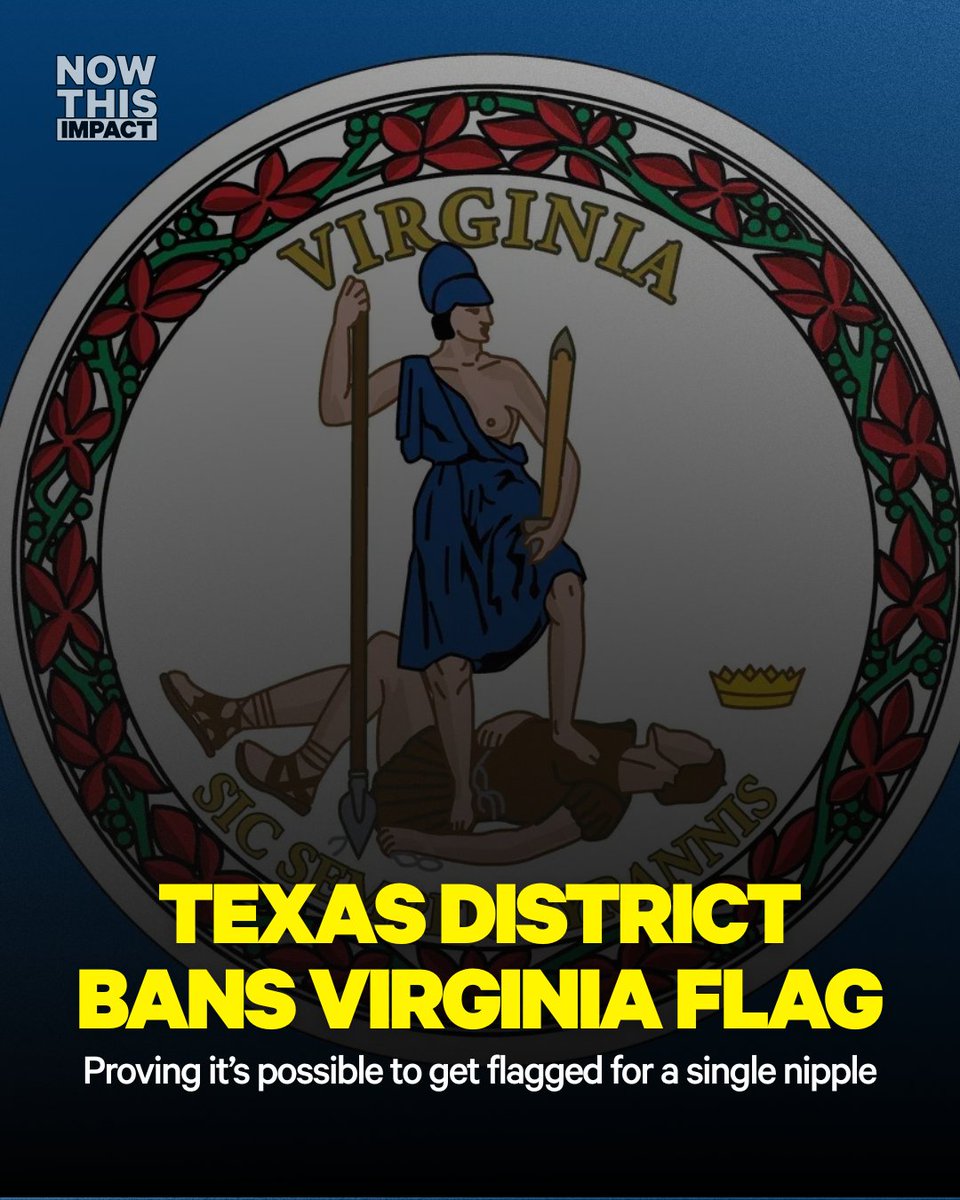
Throwback to my fundie childhood where books with “nude” pictures were coloured over with a black marker by library staff and my fundie textbooks had zero pictures of sculptures like Michelangelo’s David 🫠
A Texas school district near Houston has declared war on classical art, banning Virginia's state flag from elementary lessons because the Roman goddess Virtus dares to flash a bare breast.
The district scrapped the flag under its new 'no frontal nudity' policy, apparently deciding that 3rd graders can't handle a toga-clad symbol from 1861.
So I am speaking here as someone who was raised Christian fundamentalist and who was homeschooled K-12: anyone who wants to understand the forces behind the Trump administration needs to speak to ex- “fundie” kids
This 👇 is an interesting article on systems of governance in East Asia (China, Japan, Korea).
Apparently, I'm learning this from the article, there's an academic debate between the merits of "Confucian Democracy" versus "Confucian Meritocracy", with both systems aiming to reconnect East Asian countries with their Confucian traditions.
Why that aim? Because as the author acknowledges "in most East Asian democracies [i.e. Japan and South Korea], virtually all civil and political rights have been introduced from the West, not only by Western intellectuals, missionaries, and politicians but also by the progressive local elites.” And these countries have, as a result, largely lost touch with their governance traditions with "very few East Asians self-identify[ing] as Confucian" today.
So what are the basic tenets of respectively "Confucian Democracy" and "Confucian Meritocracy"?
Before I explain, it's important to remind that Confucianism is, first and foremost, about moral cultivation in individuals and society overall, ensuring that people develop virtuous character with the ultimate goal of creating a harmonious society where everyone fulfills their moral duties and responsibilities within a web of relationships, gradually elevating the moral character of the entire society.
So now, how do Confucian democracy and meritocracy respectively go about this?
Confucian democracy believes that everyone has equal moral potential and views political participation as a way for citizens to develop their moral character. As I understand it, unlike Western liberal democracy's focus on individual rights and personal autonomy, Confucian democracy tries to balance individual political participation with communal moral development and social responsibilities.
Confucian meritocracy, on the other hand, is very skeptical of "one person, one vote" systems: it believes that society should be led by the most morally cultivated and competent people, and as such emphasizes selecting leaders based on virtue and ability. It takes a more guided and structured approach to moral cultivation, seeing the government's role as promoting people's moral and material wellbeing, as opposed to it arising more organically in the "Confucian democracy" model.
At the risk of overly simplifying, Confucian democracy is closer to what Japan and Korea have, and Confucian meritocracy closer to China's model, bearing in mind that none of those countries today overtly revendicate a political system based on Confucianism.
The author of the article argues in favor of Confucian democracy, on the basis that given the fact that East Asian societies - she is probably mainly speaking here of South Korea and Japan - are pluralistic, with "citizens endorsing and practising different and sometimes multiple ethical and religious doctrines simultaneously", any attempt to impose a single Confucian conception of the 'common good' through meritocratic constitutionalism would be problematic. The author argues that this would perpetuate historical injustices, as it would mean once again imposing a system from above (this time a Confucian one) rather than allowing citizens to participate in crafting their own constitutional values.
People who follow my writings will, no doubt, not be surprised to learn that I differ.
First of all, there appears to be a fundamental contradiction in the author's position. If we accept that Confucian traditions in East Asian liberal democracies have been largely displaced by Western values and institutions, and that as the author herself admits "very few East Asians self-identify as Confucian", how can a "one person one vote" process - which by definition reflects current values and preferences - be expected to restore Confucian moral traditions? When a society has lost touch with its moral traditions, it cannot simply vote its way back to them as the very judgment needed to make that decision has been eroded.
The author's concern about 'imposing from above' misses the point that all successful moral education involves some degree of authority and guidance. Just as parents must guide their children's moral development rather than letting them 'democratically' determine their own values, societies sometimes need wise leadership to guide them back to their moral foundations.
It's actually the whole point of Confucianism, it's built on the understanding that moral cultivation requires guidance from those who have already achieved higher levels of moral development. This is why historically (and today in China, although again not overtly Confucian), Confucian systems emphasized rigorous selection and education of government officials. The idea that moral wisdom will somehow emerge organically from democratic deliberation among people who have lost their connection to Confucian traditions contradicts fundamental Confucian insights about how moral cultivation actually works.
As such "Confucian democracy" as described in the article is basically an oxymoron: it feels like it's less about preserving traditional Confucian moral cultivation and more about finding a way to cement the transition from traditional Confucianism to Western-style liberal democracy while acknowledging cultural heritage, leading to a system being "Confucian" in name only.
It all reminds me of Socrates' allegory of the 'Ship of State', where he compares a democratic society to a ship whose crew (the voters) has mutinied against the captain (the legitimate governing authority). The crew members, despite having no knowledge of navigation, convince themselves that anyone can pilot the ship and that nautical expertise is unnecessary or even suspicious. They take control of the vessel, start drinking and feasting, and praise as a 'skilled captain' and 'wise navigator' anyone who can help them gain control of the helm - not based on any actual sailing ability, but merely on their ability to persuade or manipulate the crew.
This allegory nicely mirrors the Confucian meritocrats' critique of democracy: the idea that anyone, regardless of their moral cultivation or competence, should have an equal say in steering the ship of state would have seemed as absurd to traditional Confucian thinkers as it did to Socrates. This parallel between classical Western and Confucian political thought also reflect the fact that the modern tension between democratic and meritocratic principles isn't just an East-Asian debate, but a universal question about the nature of good governance.
Interestingly we French had a - somewhat clumsy (as is often the case in France) - answer to this tension between liberal democracy and meritocracy with the creation in 1945 by Charles De Gaulle of the École Nationale d'Administration (ENA). The idea was to create a system where the highest ranks of civil service would be staffed through rigorous meritocratic selection and training, while operating within a "one-person one-vote" framework. Basically, you could vote, but you'd get to choose between people who'd been through a very rigorous meritocratic process and taught how to steer the "Ship of State" (you could also vote for non-"Énarques" but concretely since De Gaulle's passing 70% of French presidents were).
Unfortunately, the ENA largely lost its way and over time, instead of educating statesmen, it bit by bit became a factory that churned out technocratic elites steeped in neoliberal ideology and disconnected from the realities of ordinary citizens. Hollande and Macron, both Énarques, are perfect examples of this... In any case, this led to such strong popular resentment that ENA was eventually dissolved in 2021.
This is so French: De Gaulle had a truly excellent idea (like most of his initiatives), we messed it up big time and instead of reforming it to live up to its original ideals, we abandoned it completely, ending up with the worst possible outcome...
Anyhow, I digress... I guess the conclusion from all this is that the supposed dichotomy between 'Eastern' and 'Western' approaches to governance may be less relevant than the universal challenge of balancing popular consent with wise leadership. From Socrates to Confucius, from De Gaulle's ENA to modern China's attempts at meritocracy, we see recurring patterns in how societies struggle with this fundamental political challenge. The real question therefore isn't East versus West, but how any society can cultivate wise leadership and foster morality in society while maintaining legitimate authority.
I'm convinced, as Confucius was, that it all starts with moral and intellectual cultivation of individuals - precisely the kind of long-term, multi-generational cultural project that our consumption-driven, short-term-focused liberal democracies appear to have lost the capacity to undertake. The article's author's concern for pluralism is valid, but misplaced: opposing pluralism and traditional moral frameworks is a false dichotomy. True pluralism doesn't mean starting from scratch with each generation 'democratically' determining their own values: a society that's lost its capacity to cultivate and transmit moral wisdom across generations actually destroys pluralism and surrenders to moral entropy. The very condition of true pluralism is the preservation and transmission of diverse moral traditions, and you can only do that through some degree of guided moral development - yes, this means some degree of what the author mistakenly characterizes as problematic 'imposition,' but that's precisely how moral traditions have always been preserved and transmitted, in both East and West.
@MadSealCutter For real, Taobao is one of my favourite places to look for alternative and even out of print titles, both in Chinese and English. Bonus if I can get the CN translations of ENG language academic books that are out of print everywhere else.
@pplsartofwar By Asian NATO I assume they also mean SE Asia, which makes me laugh. It’s already impressive that ASEAN exists and that we tolerate each other well enough. Let’s leave it at that
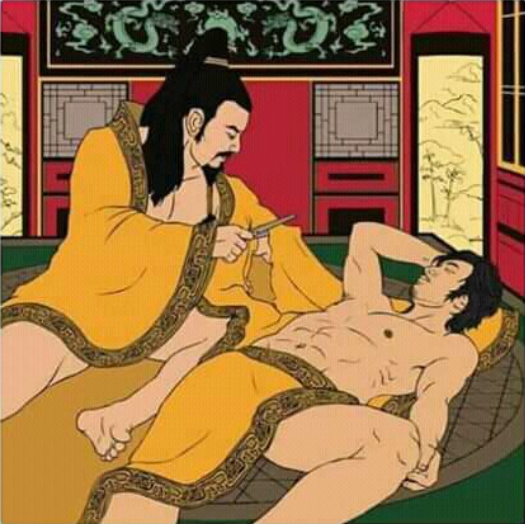
the emperor: heaven has deserted me! The harvest is poor and the people are in revolt all across the empire! All I have to rely upon is you, my trustworthy chief eunuch
the chief eunuch:
#Lichun is the first #SolARTerm of the year, meaning the start of the spring. This painting by Dai Xi (1801-1860) depicts the mountain in the early spring. The pine trees stand in each season, but the plum blossoms near the blue roof forecast the #BeginningOfSpring.
🗓️✏️
The modern West is pretty much the only place on earth where fat has unsexy, low-class connotations. Elsewhere, what Jean-François Bayart called "la politique du ventre" tends/tended to prevail, so let's take a closer look... (1/n)
Me in English:
It's a trap! *Star Wars meme*
Me in Chinese:
鸿门宴 *Fan Kuai dances*
Feels like I have to turn things to pop culture whenever I talk in English. Meanwhile I'm using historical references in Chinese.
Interesting parallel.
@PAstynome@pplsartofwar I am also reminded of Charlie Soong, the father of the Soong sisters. who purportedly converted to Christianity and made use of what it had to offer to grow his own wealth and power.