New from @Graham_Bowley@talasafie and I: To document the destruction of cultural heritage in Gaza since the start of Israel’s assault, we followed the history of Gaza’s Great Omari mosque, destroyed by an IDF airstrike on December 4.
https://t.co/JqT0swQZHx
We reported U.S.-Israeli strikes on or near schools and health care facilities, military justifications for targeting these sites and violations of international law.
https://t.co/aFTaBMcaSz
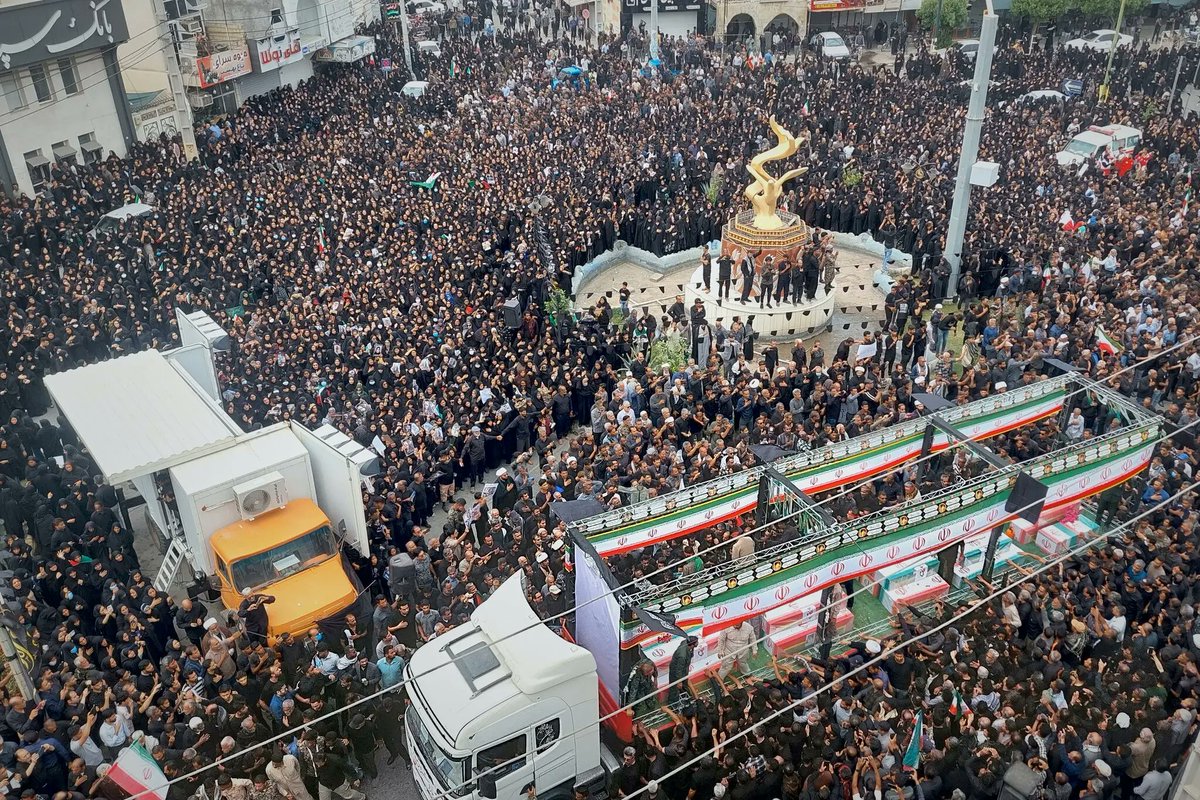
@iranwire Hello,
I am a reporter at the New York Times. We would like to use this image that you published for a story. Could you give us permission to use it in our story?
The first project I've been a part of at BBC Eye is a rare first hand account of people impacted by strikes in densely populated areas of Tehran, with @BBCNawal, @ruz_m_akgun, @jobrabkin, @RafidHossain44, Emile Costard and others. Watch our film here:
https://t.co/If7k1bh7dQ
NEW: Together with @ChrisOsieck@weatherwar & @wammezz we investigated the environmental impacts on the March 7 strikes on four different oil storage depots in Tehran and Karaj for @newlinesmag
Thank you to @kshaheen and @RashaElass for the edit and for making space for this reporting.
https://t.co/IZG1RWuF7Z
We identified at least 17 damaged U.S. sites and other installations, several of which have been struck more than once since the war began. Our analysis is based on satellite imagery, verified social media videos and statements by gov. officials.
https://t.co/GDFiQUob3s
NEW for @newlinesmag, @ChrisOsieck and I investigated a March 5 air strike on an EMS base and recreational
area in Zibashahr Park, Shiraz. 20 people were reportedly killed, including 3 medical workers.
A review of post-strike videos and images, along with satellite imagery and mapping data, shows that this civilian park was directly hit, raising questions about whether the incident was a case of mistaken targeting.
https://t.co/sRd4PVIGL7
Official statements placing U.S. forces in the area – along w/ analysis of social posts, videos, sat. images – suggest U.S. forces bombed a school in Minab, Iran during strikes targeting an IRGC base. Over 150 were killed, Iranian officials say. https://t.co/ZFIjTVPjBZ
@NeilPouney@EssexPR Hi, I work for The New York Times. Did you shoot this video? If so, may we use it in a story with credit to you? Our story would appear on our website, and other platforms as outlined here: https://t.co/tx7LbXlDrF
Iran has struck at least 11 U.S. military facilities since Saturday. @heytherehaley@riley_mellen and I found damage on or near communications and radar systems at 7 of them (no paywall link here) https://t.co/mADFCqvcGZ
‘Under this rubble, students are buried.' Videos show the aftermath of an apparent strike on a school. Iran says dozens of students were killed. Latest story with @ErikaSolomon@heytherehaley.
https://t.co/4RrdvJ5An6
Last May, Tennessee Highway Patrol joined ICE on the streets of Nashville.
We @LHreports + partners mapped the traffic stops and used 1M+ ICE records, dashcam video, and court files to show how supposed routine encounters became deportations.
The footage seems to contradict the Department of Homeland Security’s account of the event, which the agency said began after the victim approached the federal agents with a handgun and the intent to “massacre” them.
https://t.co/GQFpSP3Y4W
@jaypinho Thanks for the question @jaypinho. The key distinction here is between personal identity, such as name or face, and designation as a federal immigration agent, as opposed to, say, a police officer. Disclosure of the latter is required but the former is not.
The variety of federal forces deployed to support President Trump’s deportation and anticrime campaigns continues to expand. It can be hard to tell them apart or to understand what powers each agency has. Here is a guide to how these forces are operating.
https://t.co/8nA4nX88km