Excited to see a revised version of “Intertemporal pass-through” (iPT) out as a CEPR Discussion paper!
We now estimate iPT out of *two* different natural experiments in the UK: Brexit tariff announcements and changes National Insurance Contribution
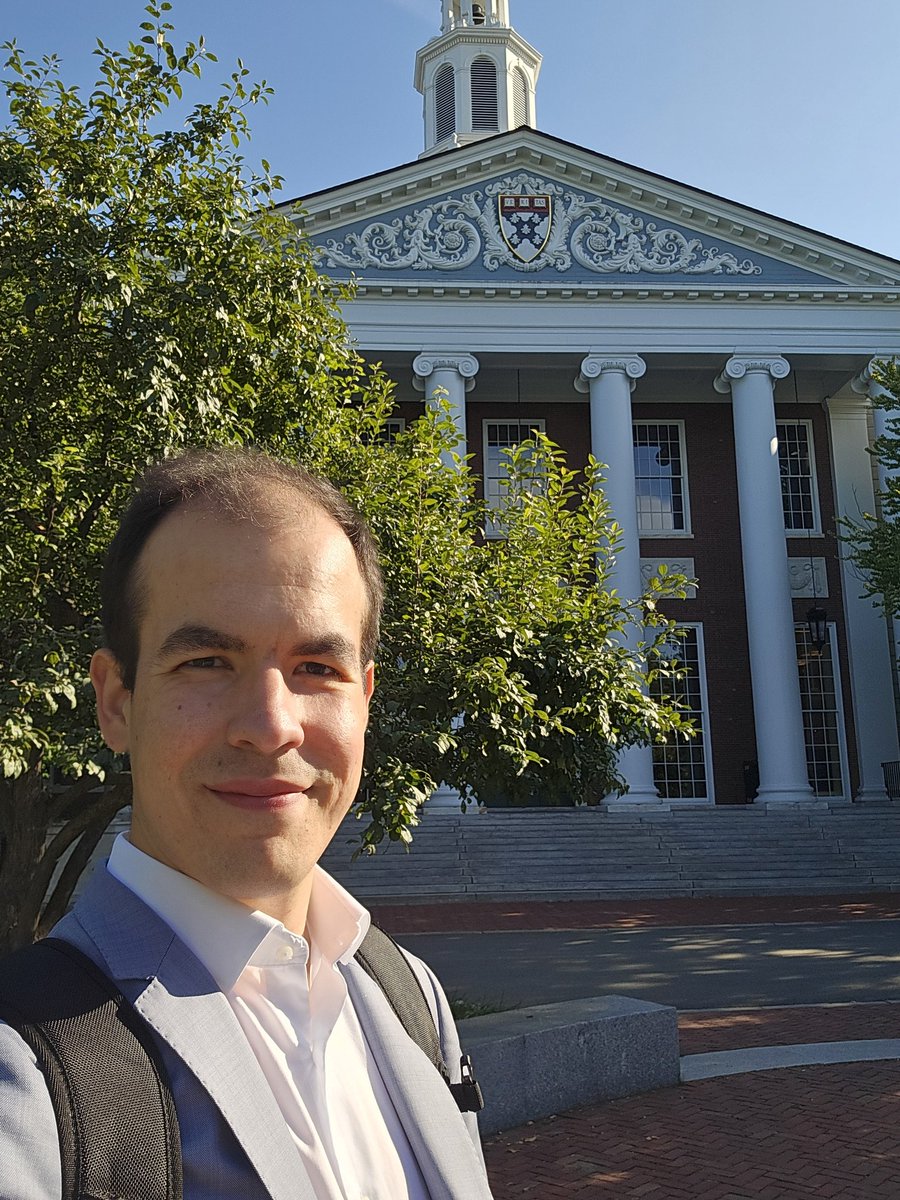
I had a great time at the 2025 @CebraOrg conference in Boston - huge thanks to the organisers and hosts @HarvardHBS@BostonFed !
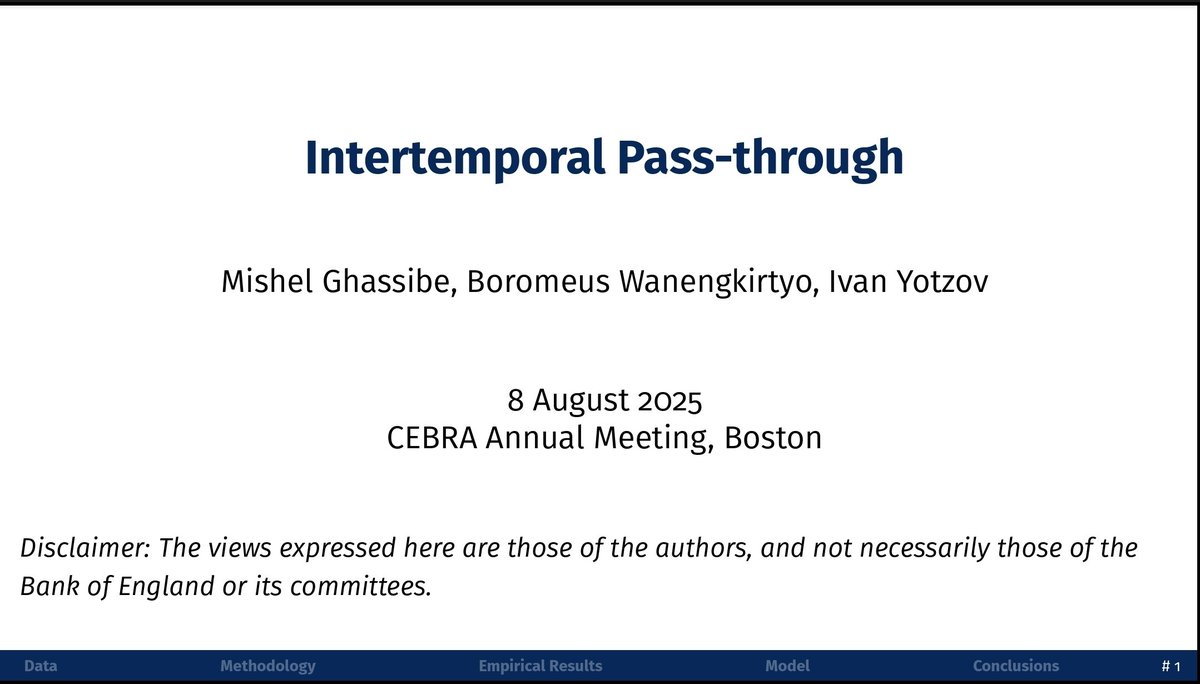
I presented "Intertemporal Pass-Through", joint work with @mickey_gb and @boromeusw
Absolutely thrilled to share a new working paper, joint with @mickey_gb and @boromeusw
We study ‘Intertemporal pass-through’ (iPT) - the sensitivity of firms’ desired prices to changes in expected future marginal costs.
Link: https://t.co/GM2GByq5WX
A short 🧵
Today’s BU post outlines an approach that uses central bank forecasts (and their errors) in order to learn more about the relationships among key variables of interest to the setting of monetary policy. https://t.co/mZEWgNODAM
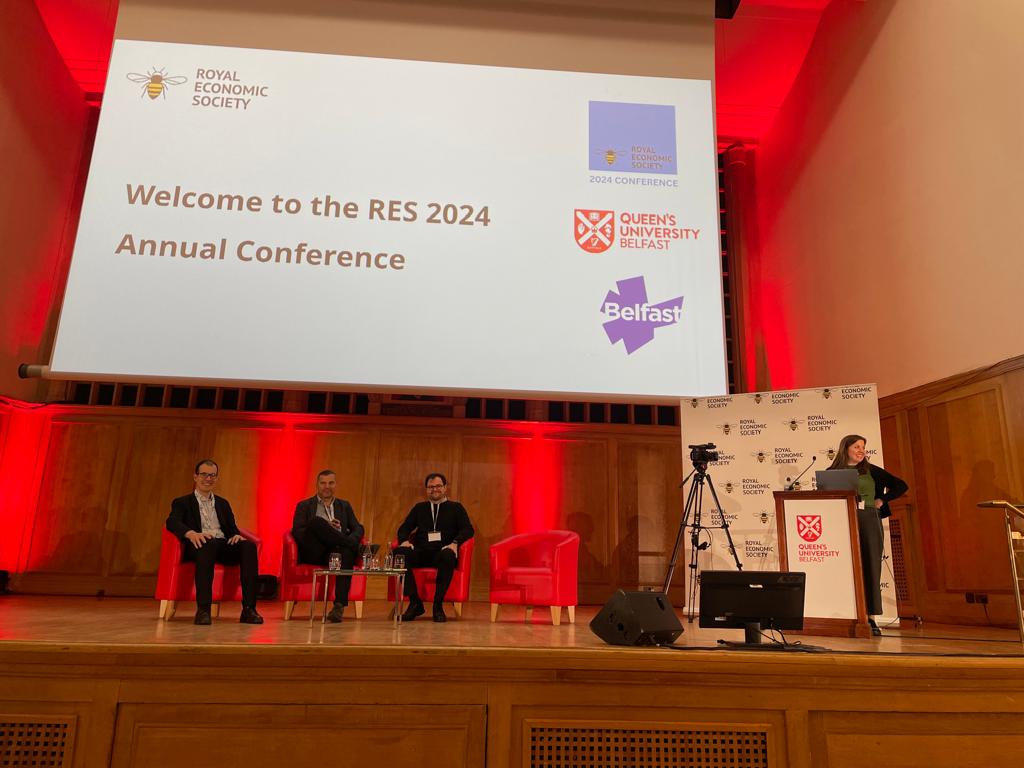
I had a great time in Belfast at the #RES2024
Always great to share the stage with @galinapotj@FedeDiPa & Marcus Buckmann. I presented new work on "Firming up Price Convexity" using @DMP_BoE data (draft coming soon)!
Thank you, @RoyalEconSoc!
⏳Just 3 days to get your application in for our 2024 PhD Internship Programme! ⏳
Applications close on Monday 5 February. Deadline is:
🇬🇧23.59 UK time 🕛
🇪🇺00.59 Central European Time 🕐
🇺🇸18.59 EST 🕖
Applications for our summer 2024 PhD Internship programme are now open! Great opportunity for PhD students to come to the BoE, work with our research team + get experience of working in a central bank. More details at: https://t.co/EMpUZQGnHd
Fellow economists, we've got a long ways to go when it comes to research on climate economics:
"the economics of climate change is only about twice as important as the economics of sport, in terms of the amount of research"
https://t.co/MBZQeuaNlE
h/t @GlennRudebusch
📢 We are hiring📢
A great chance to be part of our diverse + talented research team at a really interesting time. If you have a PhD / will have one by end 2024 please apply! Deadline is 13 Nov
https://t.co/EMpUZQFPRF
More details + application form at: https://t.co/mvJVADaROA
BU post develops alternative measure of corporate profits. Finds they have fallen since start of 2022, in line with previous energy shocks. But decline has not been uniform across firms: firms with more market power were more able to increase their margins
https://t.co/a87MEEFQTK
📗 The #NGFS has today published the key takeaways from a survey of 5⃣5⃣ central banks on the implications of #climatechange and the #netzero transition on their economies and #monetarypolicy, including areas for further analysis.
Read the full report at the link below ⤵️
SWP 1018 by Vania Esady, Bradley Speigner + Boromeus Wanengkirtyo (all BoE) looks at whether short- and long-term unemployment have different effects on inflation, finding evidence that effect of long-term unemployment is highly state-dependent…
https://t.co/qusVAJEkB7
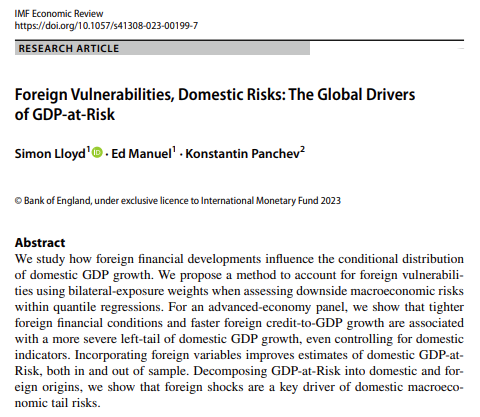
Publication: Simon Lloyd, Ed Manuel (BoE) + Konstantin Panchev (Oxford Uni) “Foreign Vulnerabilities, Domestic Risks: The Global Drivers of GDP-at-Risk” in IMF Economic Review.
I'm happy to share that my paper "Global Financial Cycles since 1880", jointly with Maik Wolters, is forthcoming in the International Journal of Money and Finance.
https://t.co/LUQqyCrDko
Are you working on "Financial Frictions and Zombie Firms"? Apply to this conference in Oxford organized by @BoE_Research, @wadhamoxford, @OxfordEconDept, @WineWaseda. Deadline January 20, 2023. Travel and accommodation in Wadham College covered by organizers!👇
If you are working on financial frictions, zombie firms, and firm dynamics or a related topic consider submitting your paper to our workshop on March 12, 2023. The deadline for applications is January 20, 2023.
https://t.co/aSmrxTFEIb
🚨Final call for applying to our PhD programme! 🚨
Applications close tomorrow 14 November at 2359 UK time (0059 CET // 1859 EST). Best of luck to all job market candidates!
Our Bank 🚇 blog post looks at underlying inflation in the UK, i.e. comovement across large set of disaggregated price items + using dynamic factor model. Energy price inflation has been broad based, but core price items such as services rising in sync too & can be persistent.
BU post looks at UK inflation + argues much is due to energy prices, but some evidence of broader based rise as typically more stable prices such as services have been increasing in sync. Authors suggest that part of the rise can be more persistent
https://t.co/XBaITMZU3s