Soil&aqueous geochemistry at Columbia Univ.'s Lamont-Doherty Earth Observatory. Looking for the intersection of chem & life in soil, sediments & ocean. Idahoan
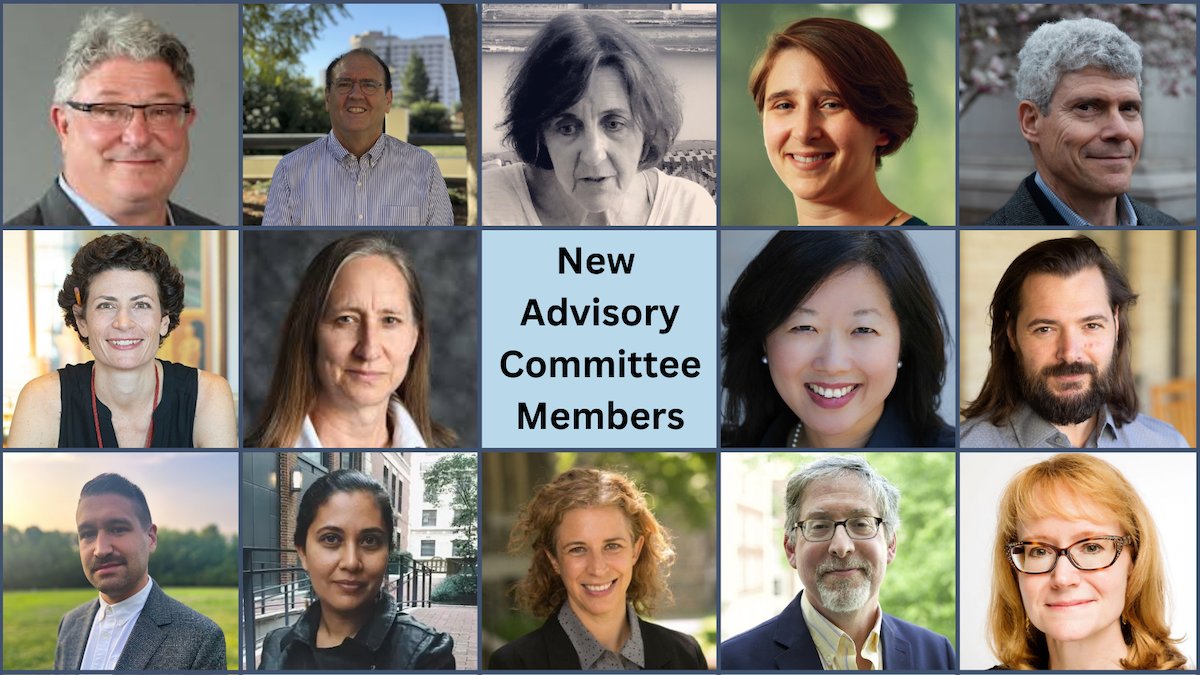
We are pleased to welcome 14 new members to our advisory committee! These faculty members join our diverse community of researchers and scholars. Learn more: https://t.co/XayT7JtRgR
We currently have three open tenure-track faculty positions at @Columbia in the area of Earth Science! Two are teaching focused in the Dept of Earth & Environmental Sciences (DEES) and one is a research focused position at @LamontEarth.
Now we are cooking with(out) gas. Great work to examine health benefits of cooking without gas in NYC. A great partnership between @weact4ej and @ColumbiaMSPH@LamontEarth and others.
New work from the @KathrinSchilli3 and the Metals lab at @ColumbiaMSPH working with @LamontEarth scientists Beizhan Yan and Khue Nguyen (and others) on a neglected exposure pathway to metals and other contaminants. Funded in part by @SRP_NIEHS via @Columbia_SRP and @CEHJNM
New #ColumbiaEHS & @UCBerkeleySPH study finds toxic metals in tampons from various brands, raising public health concerns due to the high potential for chemical absorption through vaginal skin. @KathrinSchilli3 #WomensHealth
https://t.co/2YH3Antgya
The Woodwell Climate team has been amazing to work with, so please consider applying for this opportunity! The postdoc hired through this project will work closely with me.
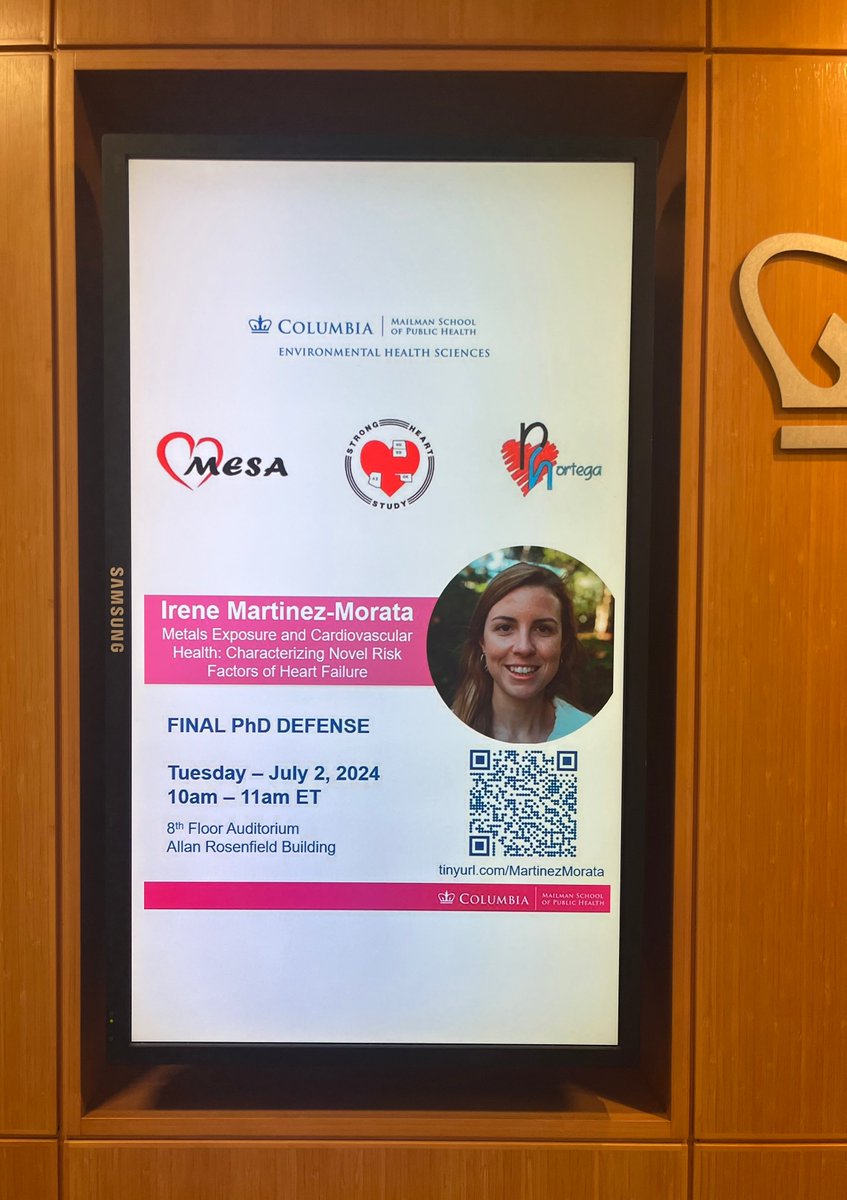
So excited about the upcoming PhD Thesis defense of our #ColumbiaEHS@Columbia_SRP superstar trainee @irenemmorata 💫 this coming Tuesday July 2nd at 10 am ET -- join in person or via zoom‼️ She'll rock it🎸
https://t.co/8D0oJ4XIsL
Applications of basic science and engineering take time to develop. In this case, many years. And involve a necessary jump into a natural environment. That jump is a challenge to achieve and this work is particularly meaningful in that regard. We look forward to what's next. 6/6
Finally, after considerable effort, the first field trial of our iron-based remediation methods. The Suns Jing and Yuqin used Fe(II) injections to remediate natural As contamination affecting an irrigation well in Western China. 1/ @SRP_NIEHS funded https://t.co/m0WNDqRb0f
Research involved long time collaborators Yan Zheng, Henning Prommer, our students, and Hung Sun, now a professor at Chinese Academy if Sciences but at one time the PhD student developing this work in my group. 5/
High pumping rates in irrigation wells limit contact time and interactions, but adsorption was still appreciable during the pump phase. Overall excellent work doing how we can successfully inject F(II)-nitrate into a week generate Stable ferric minerals and treat water. 4/
Magnetite and other Fe(III) minerals formed in the pore sources and effectively decreased As levels without decreasing pore volumes and flow. The complications come from asymmetry in mineralization around the well and dual domain flow. 3/
This work is essentially a push-pull experiment to remediate a region around an irrigation well. It was complicated to execute given the perturbed nature of the aquifer, but was successful. Modeling was necessary to figure out what happened (chemistry/Geobiol. is complicated) 2/
Arsenic remediation in highly-contaminated sites represents a challenge that requires active approaches. With collaborators Alyssa Barron, Henning Prommer, and others, we demonstrate how As is retained by in situ iron mineral formation, @SRP_NIEHS funded https://t.co/EdYZI1wirk
My friend and colleague Charlie Harvey doing the kind of research that you can only propose, fund and execute as a full professor. Great work to understand tropical peat forests.
Charles Harvey, a professor of civil and environmental engineering at MIT, spent over 15 years studying a peat bog in Brunei to produce a mathematical model for how much carbon any given bog contains. https://t.co/TmM3UOiIY1
An amazing idea. #openscience is perfect to actually make a tool (and data) that often is never reproduced. I want one of these for both education and research.
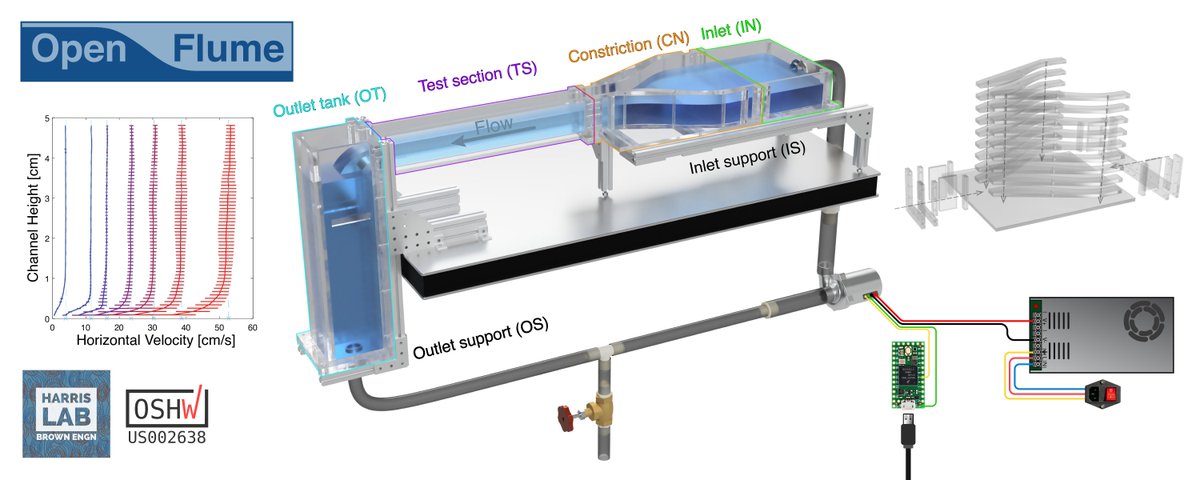
Our very first #flumefriday! Introducing OpenFlume: An accessible and reproducible benchtop flume for research and education. Certified Open Hardware by @oshwassociation. #harrislab#openscience
Build instructions: https://t.co/oPBvNsDzPX
Repository: https://t.co/zl3qXO7saY