I have a major result to share.
I’ve found conclusive forensic evidence that the top 4 Chinese AI labs—DeepSeek, Moonshot, MiniMax and Ant Group—have built their newest models on NVIDIA’s most advanced Blackwell chips, which are barred from export to China.
This sounds insane, but I discovered that almost every AI model carries a hidden signature of the GPU that trained it. When a model is first set up, the starting values of its weights are laid out in a pattern that depends on the exact GPU. Each combination of GPU and seed number produces a unique pattern—a sort of fingerprint of the hardware used to create the model. Traces of that pattern survive training into the published model.
Again, this evidence isn’t based on any insider information or leaking. It’s based on a forensic analysis of the model weights released by the companies themselves.
I searched more than six trillion combinations of chip layout and seed number and matched them to open-weights models. In doing so, I found conclusive evidence that six Chinese AI models—including DeepSeek-V4-Pro, Kimi K3, and MiniMax-M3—were initialized on NVIDIA Blackwell systems. Four of the models match Grace Blackwell, the GB200 and GB300 parts in NVIDIA’s flagship liquid-cooled rack-scale systems.
I then verified these results on real hardware. Running unmodified PyTorch with the seeds I’d recovered, a Blackwell B300 reproduced DeepSeek-V4-Flash’s untouched starting weights bit for bit, and a rented GB200 reproduced Kimi K3’s to a correlation of 0.999995. A Hopper H100 reproduced none of DeepSeek-V4-Flash’s, and changing the seed by one broke the match. (DeepSeek’s seed is 953049583 by the way.) The method also was verified to match 24 known open-weights models to the hardware that developers said they used.
It is exceedingly unlikely that these results are a coincidence. Across six trillion combinations, the best accidental match should reach only about 8 sigma (i.e., eight standard deviations above what random chance would produce). The real matches range from 49 to 1,385 sigma, and even the weakest single test hits 20.
These were data-center-scale training runs. With some analysis of release schedules and model details, I estimate that the largest, Kimi K3 and DeepSeek-V4-Pro, used 2,000 to 3,000 Blackwell GPUs each. Clusters of this size cost on the order of $150 to $200 million each to buy, and across these labs alone would add up to more than half a billion dollars of export-controlled GPUs, not counting experimental compute or otherwise. It’s quite likely that we see multi-billion dollar expenditure on export-controlled GPUs.
I am highly confident in this result, and it has been independently verified by senior researchers at OpenAI and Anthropic. You can read the full report at https://t.co/YOtzND0Jqk.
There is much more I’ve identified about these models through other forms of checkpoint forensics like this, and will have more to share soon.
@niloofar_mire@OpenAI dude i hate to break it to you but it’s totally fucking over for the human race and any & all nonartisanal (derives value from being done/created by a human) economic labor. we will soon all watch from the sidelines. it’s magnus carlsen vs stockfish 13 from here on out
@niloofar_mire@OpenAI dude i hate to break it to you but it’s totally fucking over for the human race and any & all nonartisanal (derives value from being done/created by a human) economic labor. we will soon all watch from the sidelines. it’s magnus carlsen vs stockfish 13 from here on out
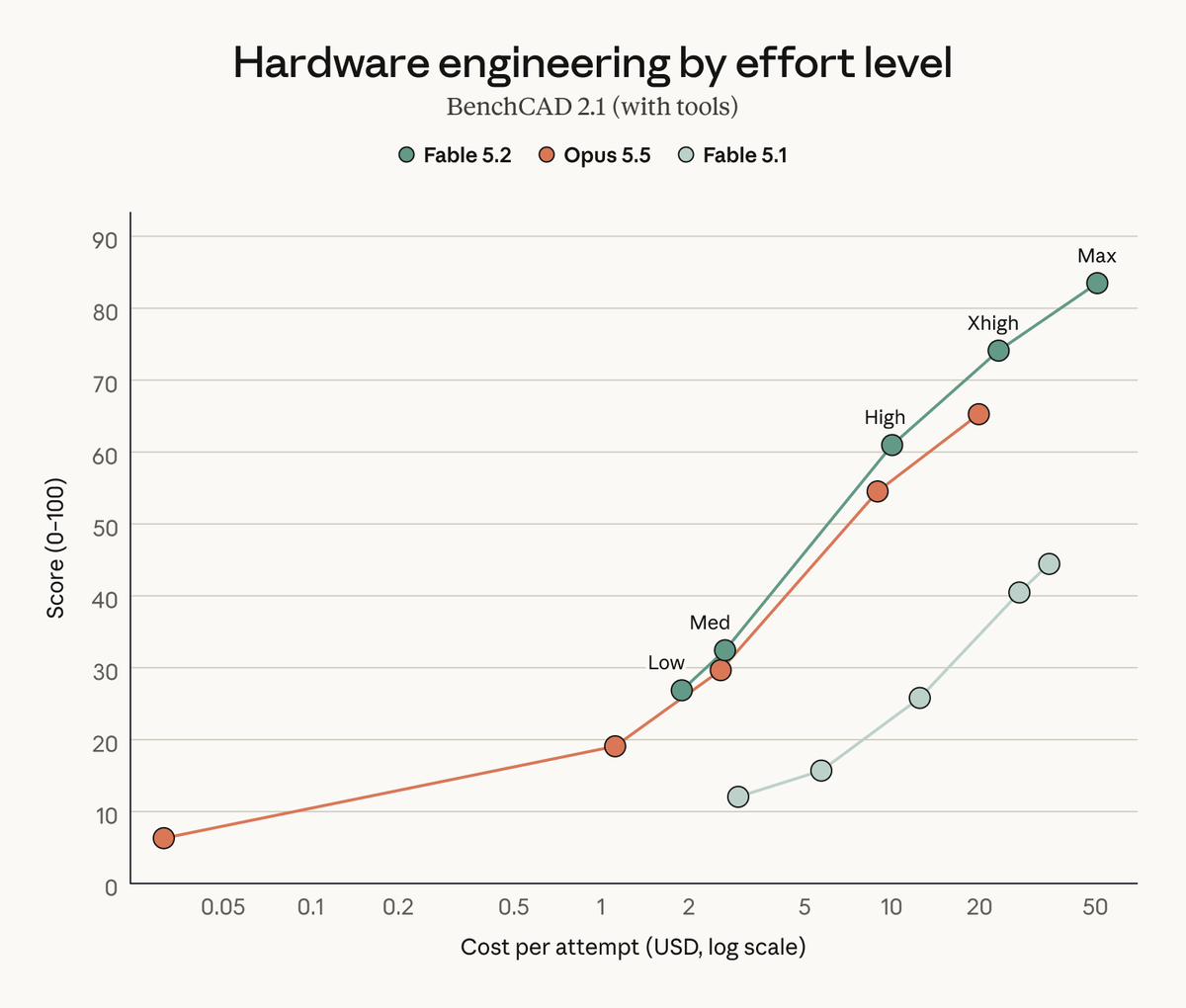
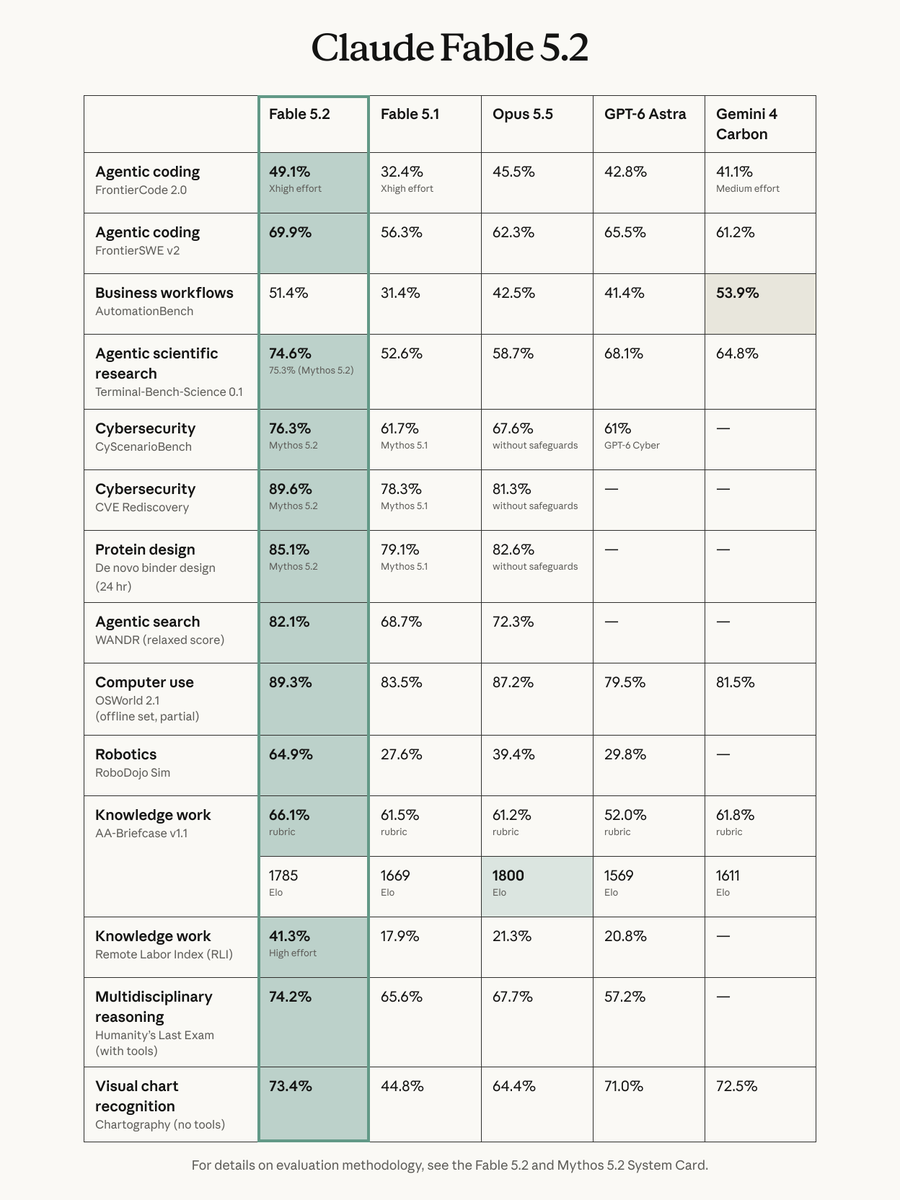
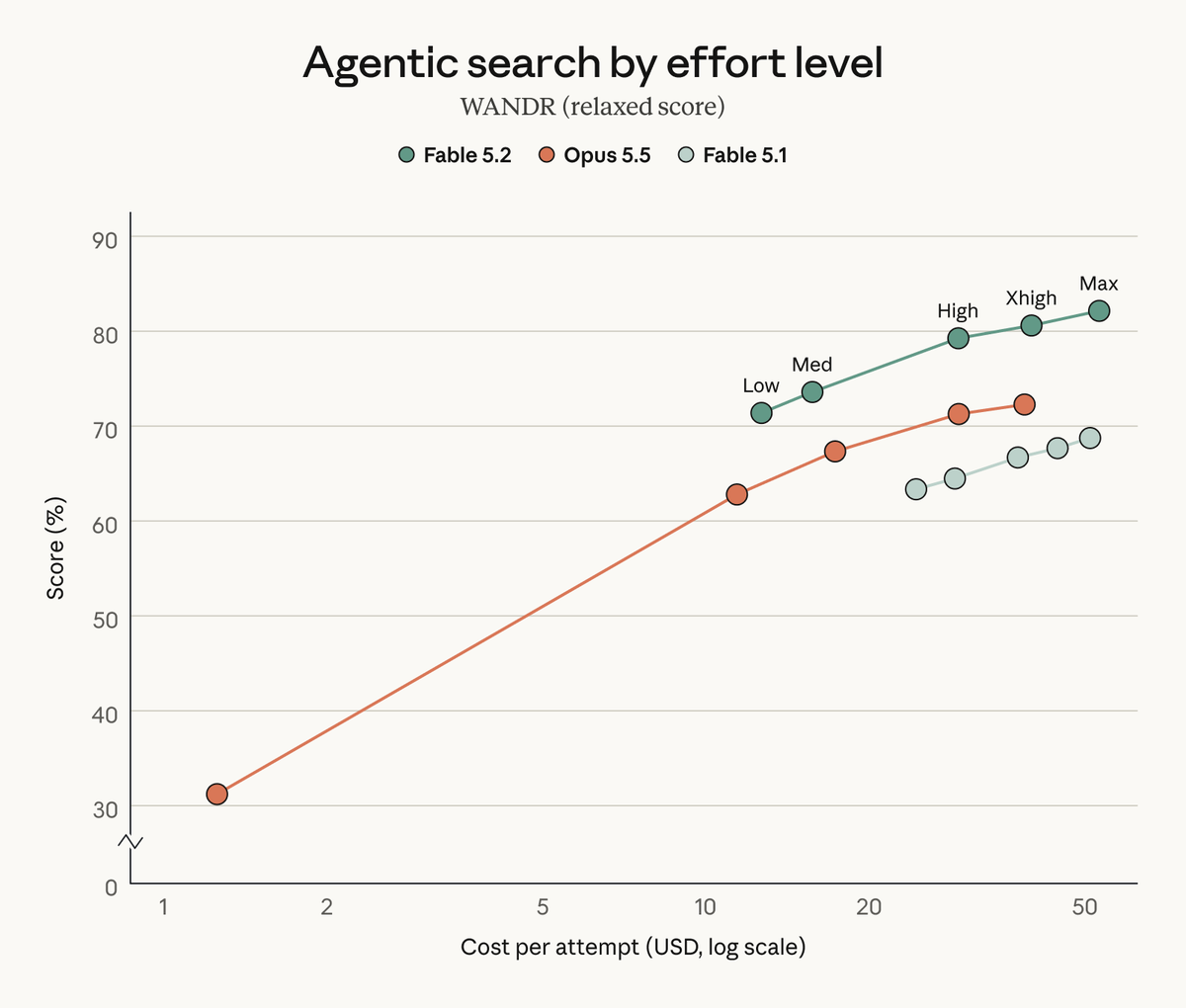
Fable 5.2 and Mythos 5.2 are a step above Opus 5.5 in almost all the capabilities we evaluated.
Testers have found that they communicate more clearly than past Fable and Mythos models. They generate outputs up to 30% faster than Fable 5.1 and Mythos 5.1.
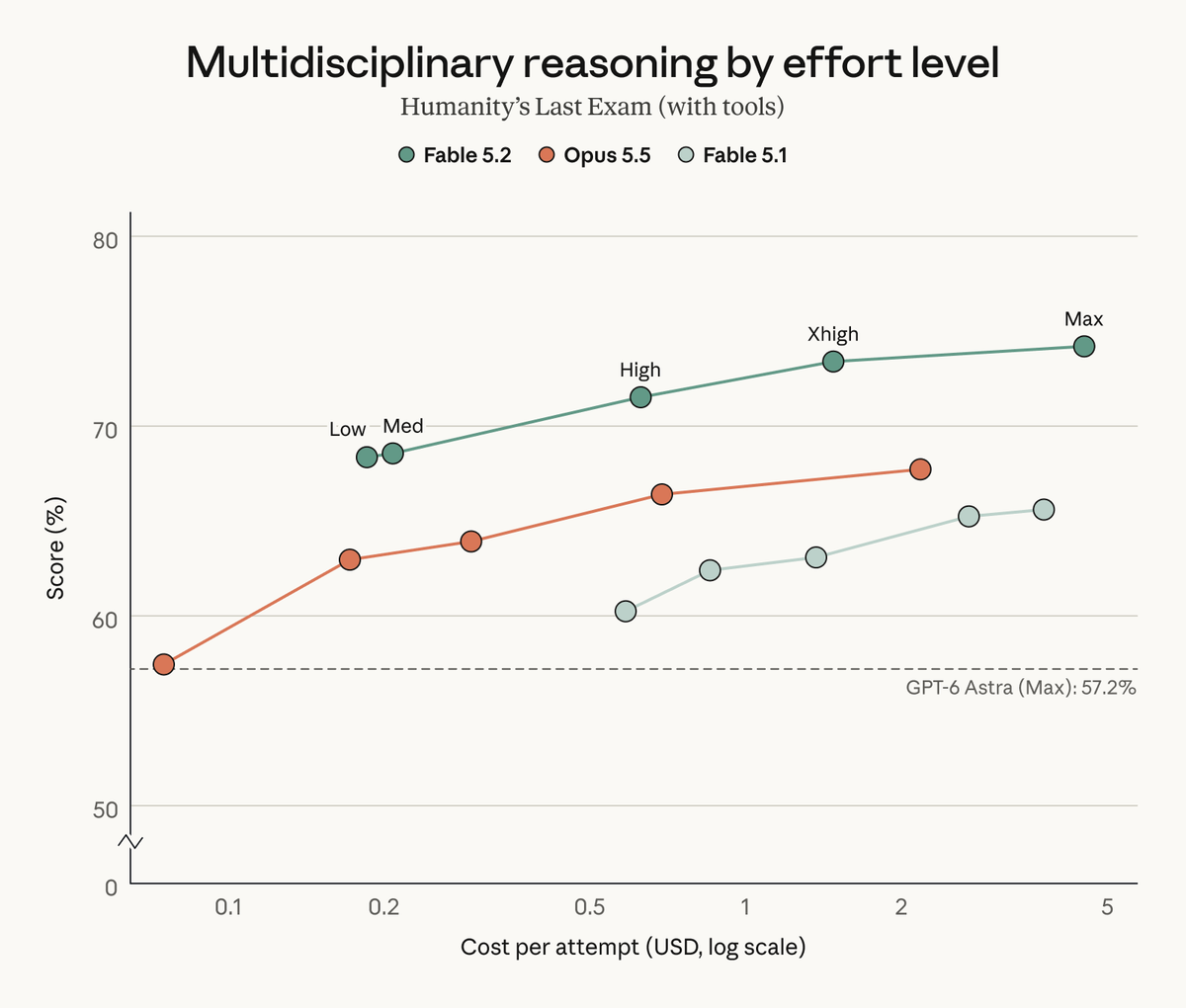
In early testing on FrontierCode 2.0, Fable 5.2 at High effort scored about level with Opus 5.5 at Max effort, for roughly half the cost per task. At Xhigh effort, it scored the highest of any released model tested.
Medium is the default in Claude apps and Claude Code.
Elon Musk on why Tesla doesn’t just build more factory space to accommodate increased Cybercab production:
“It is insanely fucking hard to build a high-volume factory. That’s why.”
I don’t know how integrated your software stack is but the demand for cyber security in operational technology will in the long term potentially exceed demand for strictly IT related cyber. Considering everyone and their cousins are trying to implement physical AI into their plants/fabs with digital twins, Chinese embedded chips and a few humans in the loop, there will come a point where the attack surface to cover is too big if not implemented properly.
So yeah might as well start early and prevent damage.
"Another aspect to consider is that Canada can simply no longer afford to purchase the bulk of its equipment from other nations....[w]hen Canada’s defence budget was around 1% of GDP and only 13% of that miserly budget was devoted to major equipment purchases, it did not matter if nearly all of that money was spent in other countries. However, with Canada committed to spending 3.5% of its GDP on defence by 2035, with reasonable estimates putting major equipment expenditures as high as 30% of that total, the arithmetic changes. At those levels, major equipment purchases would account for 1.05% of GDP, roughly eight times the 2014 share of 0.13%. The economic headwinds created if most of that spending were to leave the country every year, with nothing of direct economic value returning, are simply unsustainable. Canada must largely rely on its own industries for major equipment purchases to achieve and sustain its military spending commitments."