I don't think the software moat is gone
Good software products are as dynamic and changing as open source products, you can get Agent to copy one out quickly, but there is no way to replicate the journey of the software maker. That's the most valuable resource of a good product, and AGENT will never learn it.
I'm so happy! My daughter just turned 78 days old, and for the first time, she slept from 11:30 pm to 4:00 am without waking up. For the past two months, she'd wake up twice a night—my sleep got totally shredded, and I've been kind of sluggish during the day.
introducing anydoc
now your agents get 100x faster local parsing for pdf, docx, pptx & 10 more formats
- sub-5ms md conversion
- 500 docx files in 1.7s
- top quality across all 13 formats
- rust-based
- open source
already powering @firecrawl /parse
https://t.co/fVsRsYFNyC
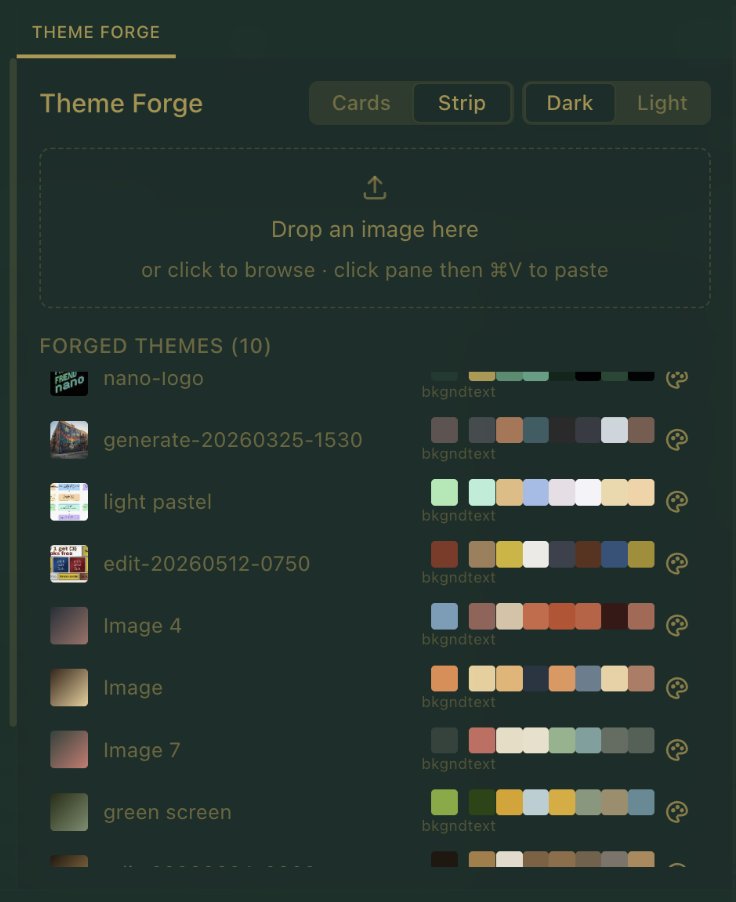
I made a color theme plug-in for the hermes-desktop app with the hermes-desktop app.
-drop in an image.
-colors are extracted.
-can swap out the order of colors
-each swatch has a color wheel for full customization.
just told hermes to read and learn the hermes-desktop SDK and described the plug-in.
then a few iterations and validations later...
get it here: (or tell your hermes-agent to)
https://t.co/FZ4WYnrp6W
@Teknium@imbabybrooklyn@sudoingX
Thanks for checking it out.
Yesterday it suddenly hit me: when you're building a small product in the early stages, why do you even need an X account?
I looked into a few projects recently and noticed none of them were actually managing an X account. Maybe for a small team with limited resources, an X account just isn't a required option.
One potential risk with Agent coding is over-engineering.
In day-to-day coding, we notice that the approaches and strategies Agent coding comes up with tend to be on the conservative side, and that conservatism can gradually pile up small amounts of over-engineering over long development cycles, until the whole project becomes bloated and hard to maintain. So recently I've been deliberately asking the Agent, in stages, to help me simplify the design. In engineering, a simple and robust design is the safer bet.
We’ve decided to open-source a multi-agent harness we use internally at YC.
We call it “QM” and it’s meant to be easy to customize, like Hermes or OpenClaw, but useful for a whole company. We use it across accounting, legal, events, and engineering (including building QM itself!).
The whole project is under an MIT license. It is cloud-first and has Slack and web UI natively.
I use a dual-monitor setup with one Chrome window on each screen.
The annoying part: Chrome keeps pinned tabs separately for every window.
I tried every tab manager I could find, but none solved this exact problem—so I built PinAllWindows.
Pin once. Available on both screens.
https://t.co/23SqqnVXc1
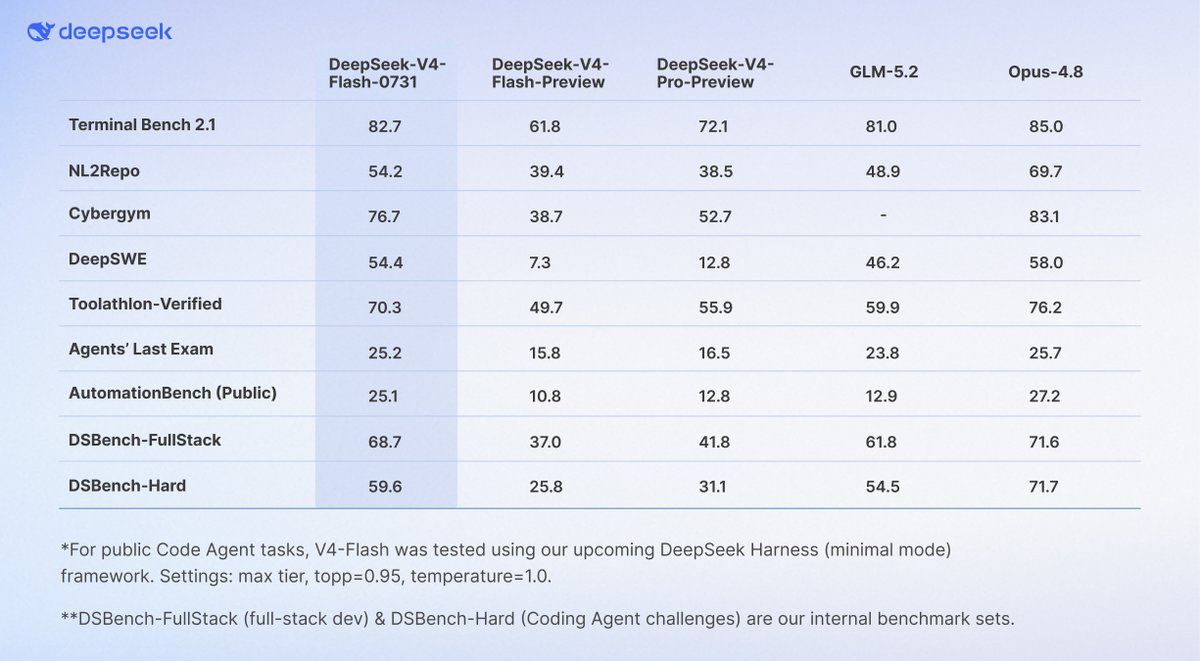
🚀 DeepSeek-V4-Flash Official API is now LIVE in public beta!
🔷 We’ve massively upgraded its Agent capabilities—benchmark scores are now far surpassing the V4-Pro-Preview. Check out the massive performance leap below! 👇
🔷 The official V4-Flash now natively supports the Responses API format and is fully adapted for Codex!
Check out the configuration details in our official API docs: https://t.co/smCwQZMeiq
After almost 10 years in the technology industry, I've seen too many programmers start their own products. They just use their imagination to make tools and build products, and most of them end up with nothing.
Being good at marketing is not just good for your marketing; it’s good for your product
So many technical people are building for imaginary audiences with no contact with the reality of how people actually perceive and use these products