Our original account, @BourseBazaar is compromised and X Support has been unable to help regain access.
So we are starting anew with @BourseBazaarFdn!
Follow us for wide ranging analysis on economic diplomacy and economic development in West and Central Asia.
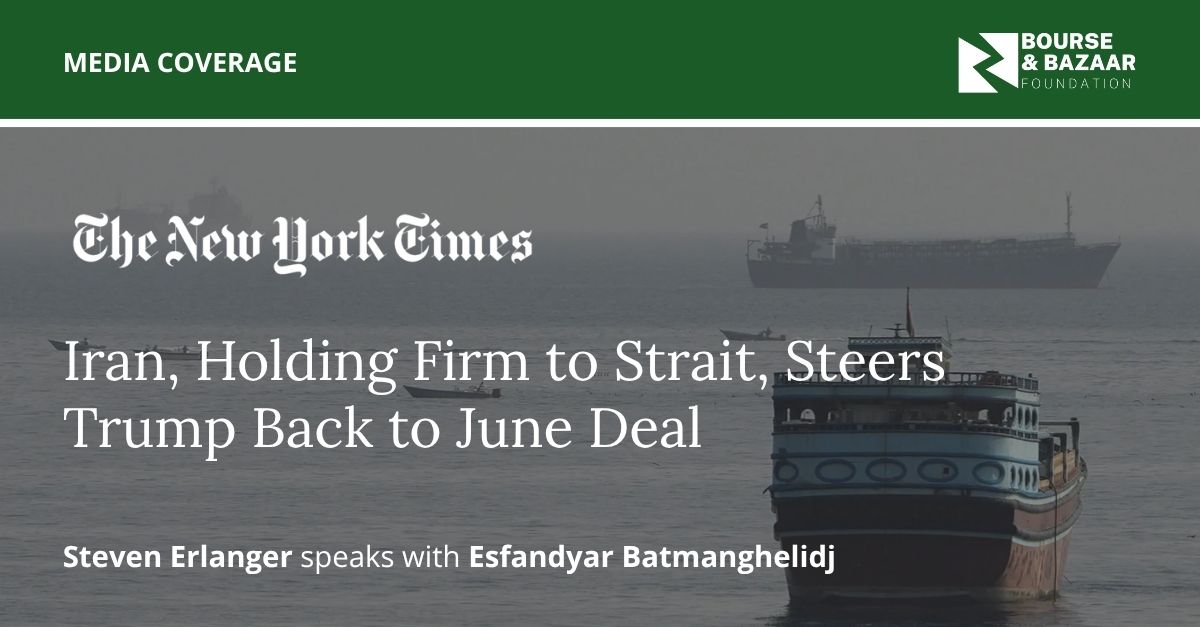
Bourse & Bazaar Foundation’s Founder and CEO @yarbatman spoke with @StevenErlanger at The New York Times for a recent article examining Iran’s conditions for reopening the Strait of Hormuz.
Esfandyar argues that Iran isn’t using Hormuz as a way to gain more concessions, but rather as a “commitment mechanism” for ensuring the U.S. will actually deliver on its promises made in the previous U.S.-Iran MOU before they give up leverage.
“The level of mistrust between Iran and the United States is so high that Tehran wants to ensure it gets the economic relief it has been promised, to enable reconstruction, before it gives up even partial control over the strait.”
Read the full article: https://t.co/b6zG1KHRCP
Bourse & Bazaar Foundation’s Executive Director of Research and Programs @MehranHaghirian spoke with @mithilagg at NBC News for a recent article examining Tehran’s conditions for reopening the Strait of Hormuz.
While the requirements are significant, Haghirian notes that they largely remain within the framework of the previous U.S.-Iran agreement. He argues that Tehran is seeking concrete steps or assurances before agreeing to reopen the Strait:
“They want to make sure that they get some of those things up-front, or at least there is a process for them before there is any movement on Hormuz.”
Read the full article: https://t.co/Kdwqupg4pE
A couple of weeks ago, Iran brought its first geothermal power plant online.
The Sabalan Geothermal Power Plant has a capacity of just 5.4 MW and took decades to complete. But it still offers hope for Iran's delayed push to decarbonize its energy system.
https://t.co/kNYzXchKq7
The UAE is exporting more oil. Iran is importing more manufacturing goods and food commodities.
The two countries don't just have a "truce." They are working together to boost resilience while they wait for Trump to give up on his war.
My latest:
https://t.co/PwxW6TtpUo
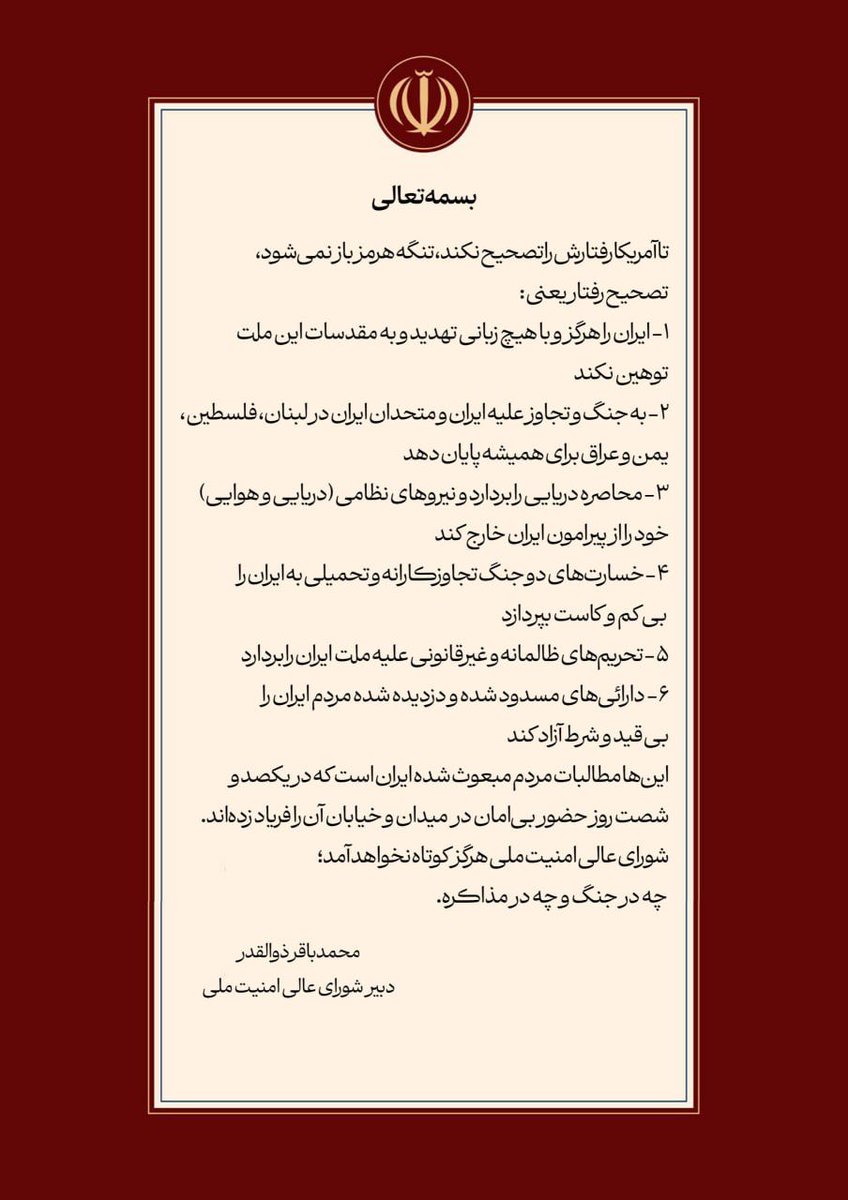
This new statement from Iran's Supreme National Security Council makes clear that "the Strait of Hormuz will not reopen until America corrects its behavior." It then sets out six conditions for the reopening of the strait. A lot of reporting has described these as "new" demands. But that is a misreading.
The SNSC statement sits squarely within the framework set out by the U.S.-Iran MOU. The six demands are essentially a restatement of key articles of the MOU. This is a constructive and encouraging signal.
Condition 1 states that the U.S. should "never threaten Iran in any language, nor insult this nation's sanctities." This condition aligns with Article 2 of the MOU, which states that the "Islamic Republic of Iran and the United States of America undertake to respect each other's sovereignty and territorial integrity and to refrain from interfering in each other's internal affairs."
Condition 2 states that the U.S. should "permanently end the war and aggression against Iran and Iran's allies in Lebanon, Palestine, Yemen, and Iraq." This is a restatement of Article 1 of the MOU, which calls for "the immediate and permanent termination of military operations on all fronts, including in Lebanon." The SNSC statement just stipulates that those fronts include Yemen, Palestine, and Iraq.
Condition 3 states that the U.S. will "lift the naval blockade and withdraw its military forces (naval and air) from Iran's surroundings." Similar language is in Article 4 of the MOU. That article commits the U.S. to "fully end the naval blockade" and "remove its forces from the proximity of the Islamic Republic of Iran."
Condition 4 states that the U.S. should "pay in full, without deduction, the damages of the two aggressive wars imposed on Iran." This is a somewhat more definitive articulation of Article 6 of the MOU, which commits the U.S. to develop a plan for the "reconstruction and economic development of the Islamic Republic of Iran."
Condition 5 and 6 call for sanctions relief and the release of frozen assets. These commitments are included in Articles 7 and 11 of the MOU.
Overall, the SNSC is calling for the full implementation of the MOU as a precondition for fully opening the strait. This is a far more constructive approach than it is being made out to be. Rather than add new, maximalist demands given the failure of the Trump administration to implement the MOU, Iran's leaders are basically giving Trump a second chance to make good on promises he has already made in the Islamabad Memorandum.
Making clear that the Strait of Hormuz won't open until there is a comprehensive agreement is a kind of commitment mechanism. Trump will only walk away from this war if he can claim he won, but he won't be able to do that if traffic in the strait remains depressed. So Iran's leaders are using the reopening of the strait as a kind of commitment mechanism. This is a strategy mainly built around political logic, not economic leverage, which would anyway require Iran to keep traffic in the strait as close to zero as possible. That's not what's happening.
How can the Trump administration trust that Iran actually wants a deal? Well, it is the only party that has actually shown in the last six weeks that it is willing to take steps towards correct implementation of the MOU. Article 5 commits Iran to "conduct dialogue with the Sultanate of Oman, to define the future administration and maritime services in the Strait of Hormuz." That is precise what Iran has done.
The Iran-Oman deal that is shaping up on a new TSS will allow a modest recovery in vessel traffic through the strait. That is a move by Iran to help give regional countries some relief and to boost credibility in its own diplomacy.
So Iran isn't actually setting out to make a final deal with the U.S. harder to achieve. Iran could have made much more expansive and extreme demands—why not make reopening of the strait contingent on certain actions taken by Israel, for example?
The SNSC is a body in which policy is set by consensus. This statement reflects that a consensus for pragmatic engagement persists among senior Iranian leaders. The MOU set out the basic structure of a political viable and technically feasible comprehensive agreement and Iran is insisting on its implementation.
However, Iran taking a constructive approach doesn't mean that getting a deal is going to be easy. We have to recognize the significant degree of incompetence, dysfunction, and distraction within the White House. There are a lot of things that are easy for most world leaders that are nonetheless hard for Trump and his cabinet. This is why they fumbled implementation of the MOU six weeks ago.
My hope is that regional countries will be given even more responsibility to get a final deal over the line.
Spoke with @StevenErlanger about how Iran’s leaders are aiming to use the status of the Strait of Hormuz as a kind of commitment mechanism to ensure Trump implements the various provisions of the MOU.
Gift link here:
https://t.co/elF4tkncv8
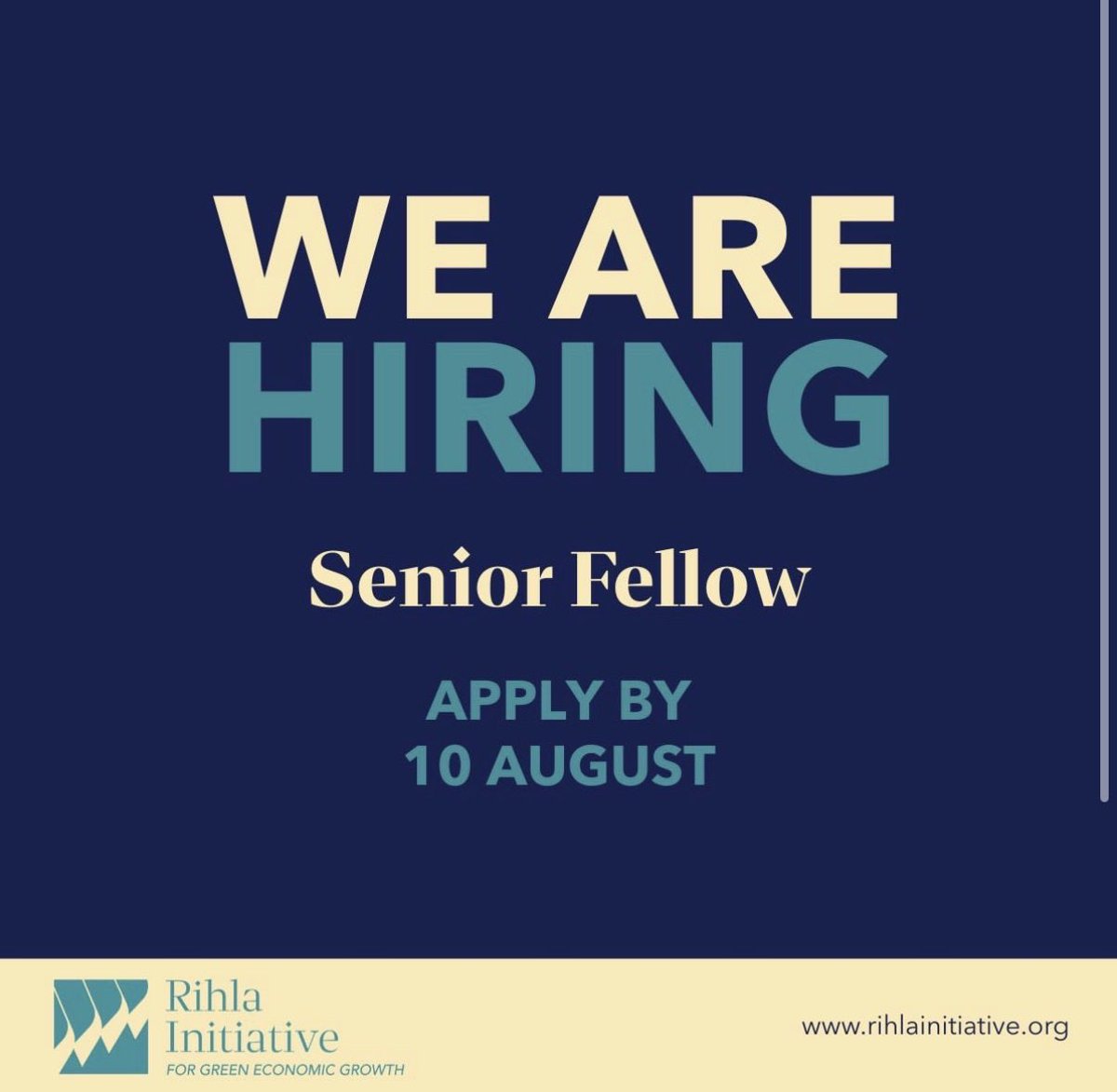
We are hiring a SENIOR FELLOW to join the next phase of the Rihla Initiative for Green Economic Growth, a flagship project of the Bourse & Bazaar Foundation focused on GCC climate finance, industrial policy, & sustainable development in the Global South.
https://t.co/n5YymJOdr4
It is imperative to understand what Iranian “control” of the Strait of Hormuz actually means beyond the 60-120 days.
Iran has had, and will continue to have, oversight of the Strait by virtue of geography. But the question is what “control” means in practice. Does it mean stopping ships bound for the US, Israel, or Europe? If so, would that apply to all vessels or only military assets? What about dual-use cargo sourced from the region, such as helium used in missile production? Would those ships be stopped or attacked?
If fees are imposed on all vessels rather than only oil tankers, what is the enforcement mechanism? What happens if payment is refused? Is the IRGC expected to seize the ship and crew, or force payment through threat of attacks?
Are service fees imposed on all inbound commercial vessels? It would largely be an own goal. Those costs would ultimately be passed on to importers, businesses, and consumers through higher prices. If the objective is to strengthen Iran’s economy after the war, increasing the cost of imports is a counterproductive place to start.
And if an undesirable or unauthorized ship is attacked after the agreement enters into force, what guarantees are there that shipowners and insurers will not revert to wartime operating conditions and stop movement?
We are still in a wartime situation, and a temporary Iran–Oman arrangement for the next 60-120 days will see a greater degree of Iranian control than would be acceptable during peacetime. But if a final agreement is reached, the wartime tactics cannot continue. The moment unilateral control and attacks on shops become the norm again, the next crisis begins which can very likely lead to another war and never ending regional tensions.
The future administration and maritime services of the Strait need to be discussed with the other five GCC littoral states and Iraq, as also recognized in the MoU. That is the only way to build a durable arrangement that serves the long-term prosperity of all eight littoral states, but Iran most of all.
Iran and the UAE are working together to outlast Trump.
In this new analysis, @yarbatman examines how renewed UAE-Iran trade and financial ties are helping both countries navigate the ongoing war in the Persian Gulf.
Spanning oil exports, food security, and access to critical industrial goods, revitalized commercial pathways are strengthening resilience on both sides.
Read more: https://t.co/Zlnuxqb9hD
X @Support is completely useless and after a year of trying to regain access to our original account by filling out countless forms, we have decided to just start over.
Follow us at @BourseBazaarFdn for a whole lot of really incisive analysis on West and Central Asia!