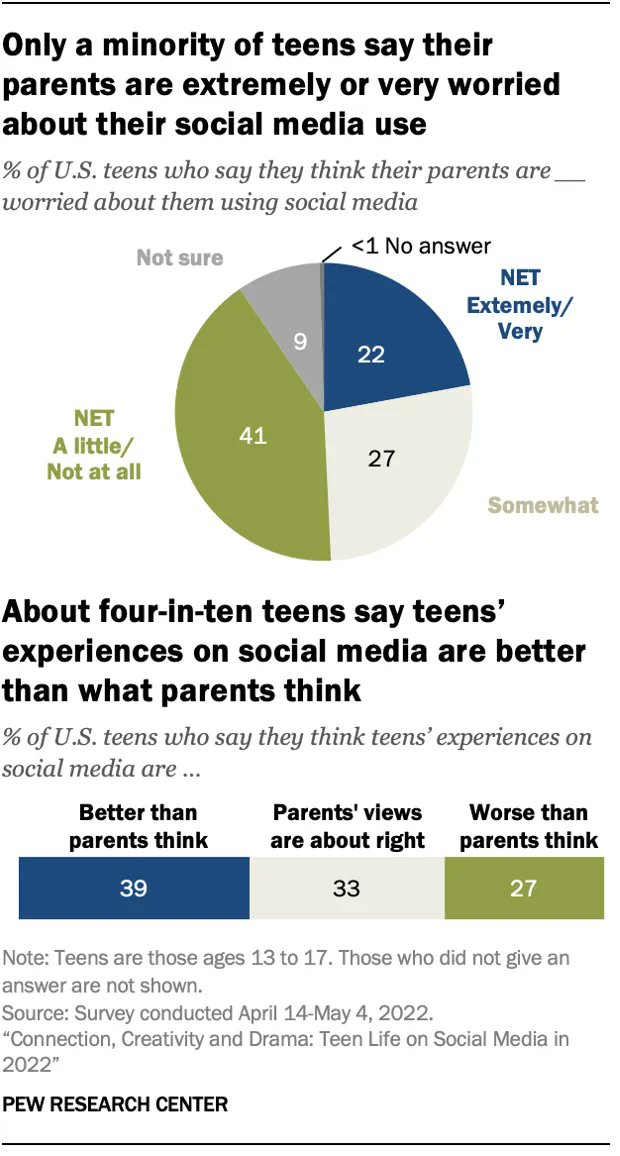
Really interesting survey data. Social media seems to fall into the "everything in moderation" category of risky behaviors, yet it's blamed for so much of the mental health epidemic among teens.
22% of teens say their parents are extremely or very worried about their social media use. 39% of teens also say their experiences on social media are better than parents think, while 27% say their experiences are worse than parents think. https://t.co/uyZuz3FdBy
@Anna_D12@DanJRich@DWalkerdine@Inner_Drive@EvidenceInEdu@m_chiles@adamboxer1 I don’t think it’s helpful to think of _a_ formative or _a_ summative assessment, since the same assessment data can be used formatively or summatively. To me, the terms make more sense as descriptions of the conclusions we draw from the assessment outcomes.
@Dean_of_math It takes a while, but it's kind of amazing when students eventually realize this is your intent (though some never seem to escape feeling victimized by assessment.)
If Twitter crashes and you need to find me, the hell you will. I've got a two day head start on you, which is more than I need. I speak a dozen languages, know every local custom, I'll blend in, disappear, you'll never see me again.
Note to self: next year devote an entire day of the circular motion unit to describing and analyzing everything in this video. ⛸️
Sidenote: it's totally ok to show "Christmas Eve on Sesame Street" as long as it is after Halloween 😏
#iteachphysics
@helenrey I like having 10-12 grade students read and discuss a factsheet on local climate impacts, then play the EPA's "Generate: A Game of Energy Choices" and finally write a position paper applying their knowledge. https://t.co/95AUhS0A0O
@bravesearth The concept that magnetic potential energy can be transferred to electric potential energy and vice versa. HS-PS3-5 using energy bar charts as models. Start simple by modeling magnets attracting, pie tins repelling off Van de Graaf, then move up to generators & electromagnets.